Why Depression and Anxiety So Often Come Together — and How to Treat Both
Nearly half of people with major depression also have an anxiety disorder, and anxiety usually comes first. What the genetics, symptom research and treatment trials show — and where to start.

Depression and anxiety come together far more often than chance would predict. In the WHO World Mental Health Surveys of 74,045 adults in 24 countries, 45.7% of people with lifetime major depression also had a lifetime anxiety disorder (Kessler et al., 2015). This depression and anxiety comorbidity has three main drivers: overlapping genetic risk, symptoms that act as bridges between the two conditions, and avoidance habits that keep both going. The practical upside is that therapies aimed at those shared processes can treat both at once.
Key Takeaways
- Close to half of adults with major depression also meet criteria for an anxiety disorder; having both is common, not a sign of unusual fragility.
- Anxiety usually starts first: in 68% of people with both conditions, the anxiety disorder began earlier, which makes early anxiety care a chance to prevent depression.
- A 2025 genetics study of more than 1 million people with psychiatric diagnoses grouped depression, anxiety and PTSD into one shared "internalizing" genetic factor.
- Having both is harder: more severe impairment, more suicidal thoughts and lower remission rates with a first antidepressant.
- Transdiagnostic therapy such as the Unified Protocol works about as well as disorder-specific therapy, and fewer people drop out of it.
How Common Is Depression and Anxiety Comorbidity?
Comorbidity means having two or more conditions at the same time. The best cross-country data comes from the WHO World Mental Health Surveys, which interviewed adults face to face with the same diagnostic instrument in 27 surveys. Among people with major depressive disorder (MDD), the overlap with anxiety showed up at every time frame the researchers measured:
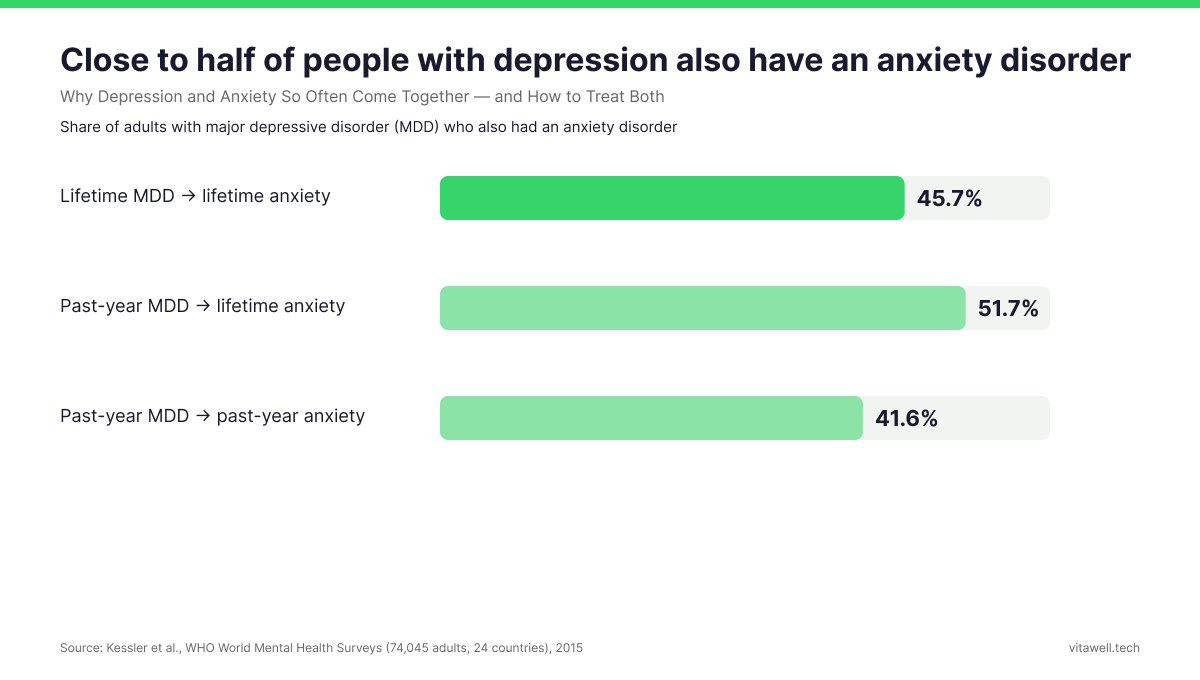
- 45.7% of people with lifetime MDD had at least one lifetime anxiety disorder.
- 51.7% of people with MDD in the past 12 months had a lifetime anxiety disorder.
- 41.6% of people with MDD in the past 12 months had an anxiety disorder in those same 12 months.
Women and previously married people had consistently higher rates of both MDD and comorbid anxiety. The scale matters: the World Health Organization (2025) reports that more than 1 billion people live with a mental health condition, with anxiety and depression the most common, and estimates that the two together cost the global economy about US$1 trillion a year.
These are survey-based estimates, and rates vary between countries. Still, the pattern is consistent enough that clinicians now treat "depression plus anxiety" as a normal presentation rather than a rare one.
Which Comes First? Anxiety Usually Leads
Most articles on this topic stop at "they often occur together." The same WHO survey data shows something more useful: the order in which they appear. Among people with both conditions, the anxiety disorder started first in 68% of cases, depression started first in 13.5%, and both began at the same age in 18.5%.
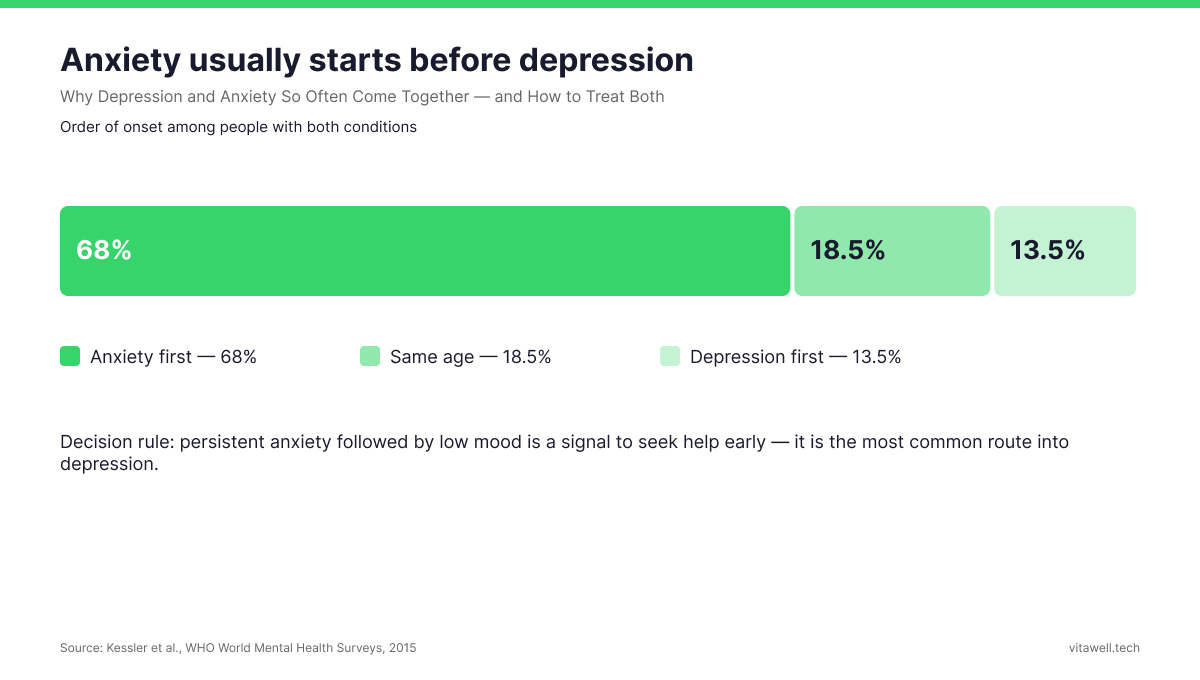
The authors interpret this carefully. Anxiety appears to act mainly as a risk marker for depression starting, but as a causal risk factor for depression lasting. In plain terms, anxiety often signals that depression may follow, and untreated anxiety seems to help keep depression going once it starts.
A practical decision rule follows from this. If you have had persistent anxiety for months and now notice low mood, loss of interest or exhaustion, treat that as a reason to get help sooner, not later. Addressing anxiety early is one of the few chances to interrupt the most common route into depression. The survey design is observational, so it shows timing, not proof that treating anxiety prevents depression in every case.
What the Largest Psychiatric Genetics Study Actually Found
In December 2025, the Psychiatric Genomics Consortium published the largest cross-disorder genetics analysis to date in Nature. As summarized by the Harvard Gazette (2025), the team led by Andrew Grotzinger and Jordan Smoller compared the genomes of more than 1 million people with at least one of 14 psychiatric disorders against about 5 million people without a diagnosis.
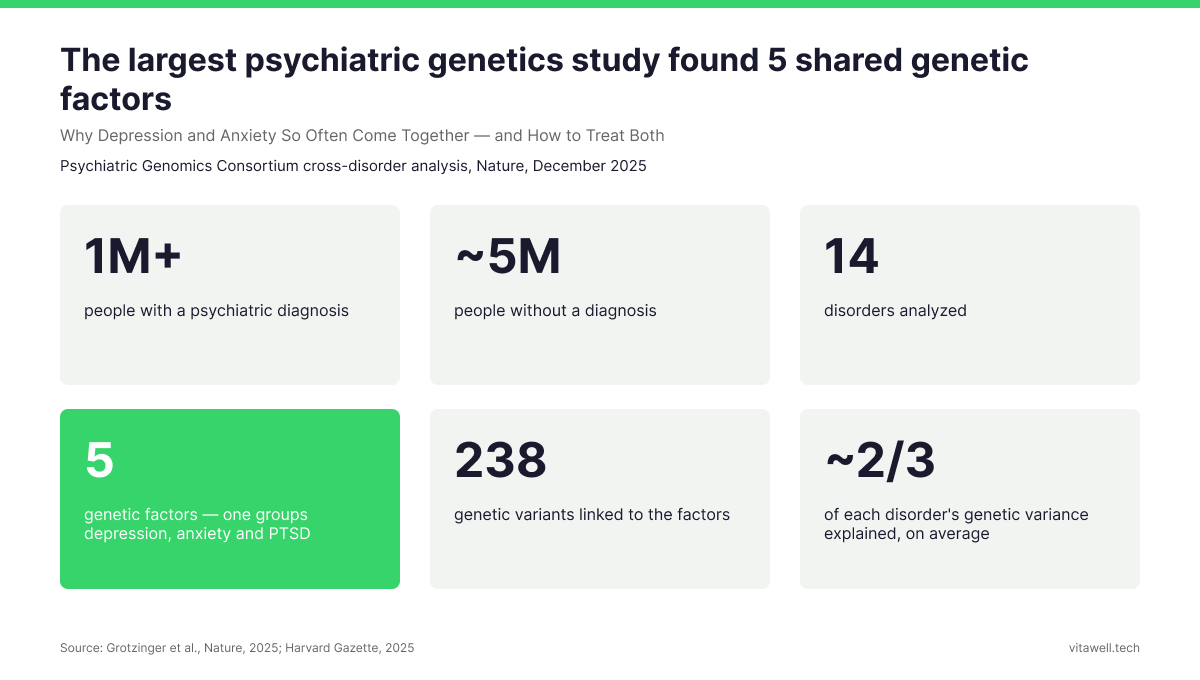
The study used genome-wide association data, which scans millions of common DNA variants for links to a condition. It found that the 14 disorders sort into five genetic factors involving 238 variants:
- Internalizing: depression, anxiety and PTSD.
- Compulsive: obsessive-compulsive disorder, anorexia nervosa and Tourette syndrome.
- Psychotic: schizophrenia and bipolar disorder, where 70% of the genetic signal for schizophrenia is also linked to bipolar disorder.
- Neurodevelopmental: autism and ADHD.
- Substance use disorders.
According to the Nature paper (Grotzinger et al., 2025), these five factors explain on average around two-thirds of each disorder's genetic variance. For the internalizing group, the genes involved were enriched in oligodendrocytes, the brain cells that build the insulating sheaths around nerve fibers and help maintain the brain's wiring.
Fact Check: The "90% Shared Genetic Risk" Claim
Popular coverage of this study often says depression, anxiety and PTSD share "90% of their genetic risk." That figure does not appear in the Harvard Gazette or the other summaries of the paper reviewed for this article. What those sources do report is a particularly strong genetic correlation between major depression, anxiety and PTSD, strong enough to place them in one factor. "Strongly correlated" is accurate; a precise 90% could not be verified, so it is left out here.
Genetics Is a Predisposition, Not a Sentence
Shared genetic risk describes probability across large groups. It does not predict what will happen to one person. Common variants each add a tiny amount of risk, and life events such as chronic stress, loss or early adversity strongly shape whether that risk turns into illness. The genetics mainly explains why the two conditions cluster, and why a single treatment approach can help with both.
How the Two Conditions Feed Each Other
Genes explain a shared starting point. Symptom research explains why the two conditions amplify each other once they begin.
Bridge Symptoms
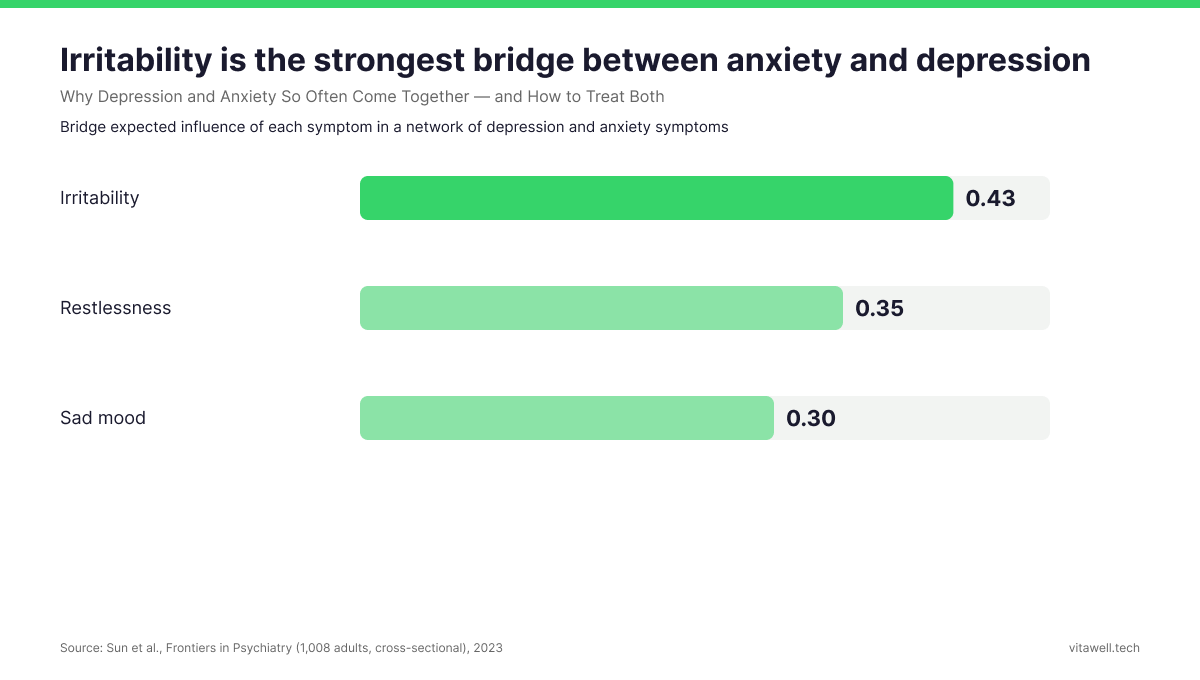
Network analysis treats each symptom as a node and measures how strongly it connects to others. A "bridge symptom" is one that links the depression cluster to the anxiety cluster. In a 2023 network study of 1,008 adults (Sun et al., Frontiers in Psychiatry), nearly half had comorbid symptoms, and the strongest bridges were:
- Irritability (bridge expected influence 0.43)
- Restlessness (0.35)
- Sad mood (0.30)
This was a cross-sectional study during a COVID-19 outbreak, so it cannot show which symptom causes which. It does suggest that irritability and restlessness, often dismissed as "just stress," may be the points where anxiety spills into depression.
The Avoidance Loop
Avoidance is the behavior that most often keeps both conditions in place. A typical loop looks like this:
- Ongoing stress produces background worry and tension.
- Tension disrupts sleep, which drains energy and lowers mood.
- Low mood reduces motivation to do things that once felt rewarding.
- Pulling back from activities removes positive experiences, deepening depression.
- Depression adds self-critical thoughts that feed worry.
- More worry leads to more avoidance, and the loop restarts.
Emotional Sensitivity as a Common Thread
Neuroticism is the personality trait of experiencing negative emotions intensely and recovering from them slowly. It is one of the most consistent predictors of both depression and anxiety, and it has a substantial genetic component. It is not a character flaw. As VitaWell's piece on emotional intensity and how to use it explains, high sensitivity can also come with depth and empathy. The Unified Protocol described below was built specifically to target this shared emotional reactivity.
Why Having Both Is Harder to Live With and Treat
Comorbidity is not just two problems added together. The data shows the combination is heavier than depression alone:
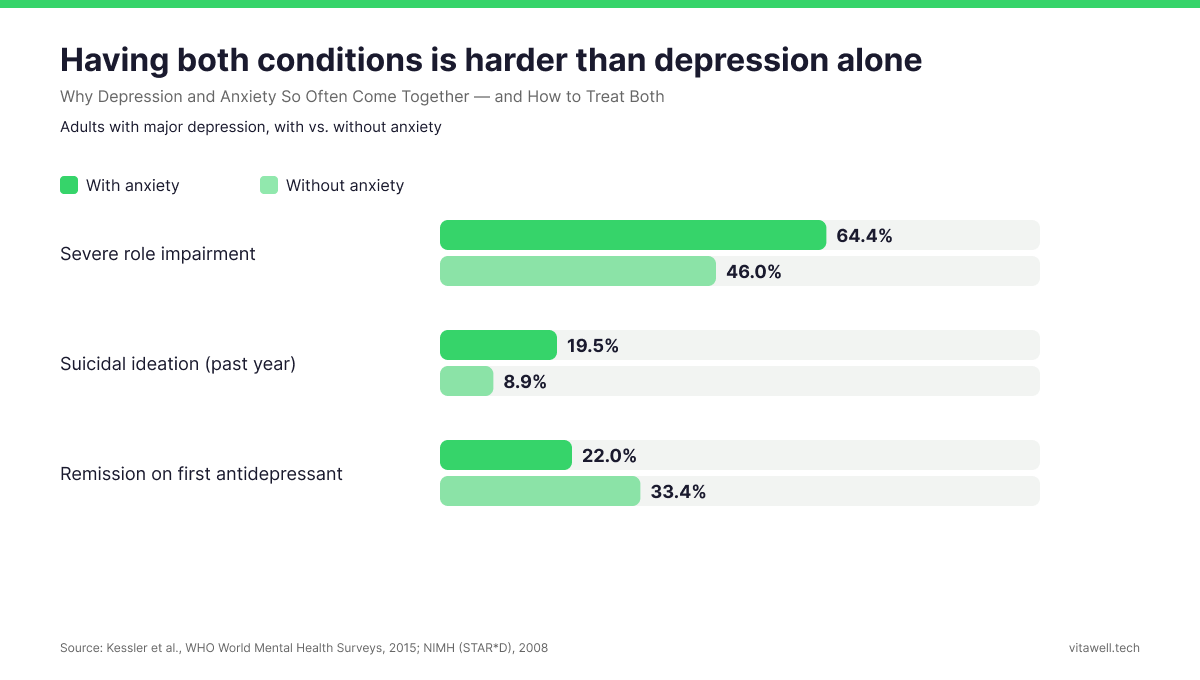
- Daily functioning: in the WHO surveys, 64.4% of people with anxious depression reported severe role impairment, compared with 46.0% of people with depression alone.
- Safety: suicidal ideation in the past year was 19.5% with comorbid anxiety versus 8.9% without.
- Treatment response: in the large STAR*D trial, 53% of 2,876 participants had anxious depression. According to the National Institute of Mental Health (2008), only 22% of them became symptom-free with the first antidepressant, compared with 33.4% of those without anxiety.
The STAR*D finding comes from a single trial with one medication sequence, so it does not mean antidepressants fail in anxious depression. It means people with both conditions often need more steps, more time or a combined approach. A slow start is common, not a sign that recovery is out of reach.
Treating the Shared Root: Transdiagnostic Therapy
Transdiagnostic treatment targets the processes that several diagnoses share, instead of running one protocol for depression and another for anxiety. The best-tested example is the Unified Protocol for Transdiagnostic Treatment of Emotional Disorders (UP), developed at Boston University. It works through five core skills:
- Understanding emotions and what they are for.
- Mindful, non-judgmental awareness of emotions in the moment.
- Cognitive flexibility: noticing automatic thoughts and testing alternatives.
- Countering emotional avoidance and emotion-driven behaviors.
- Facing physical sensations and situations that trigger strong emotions.
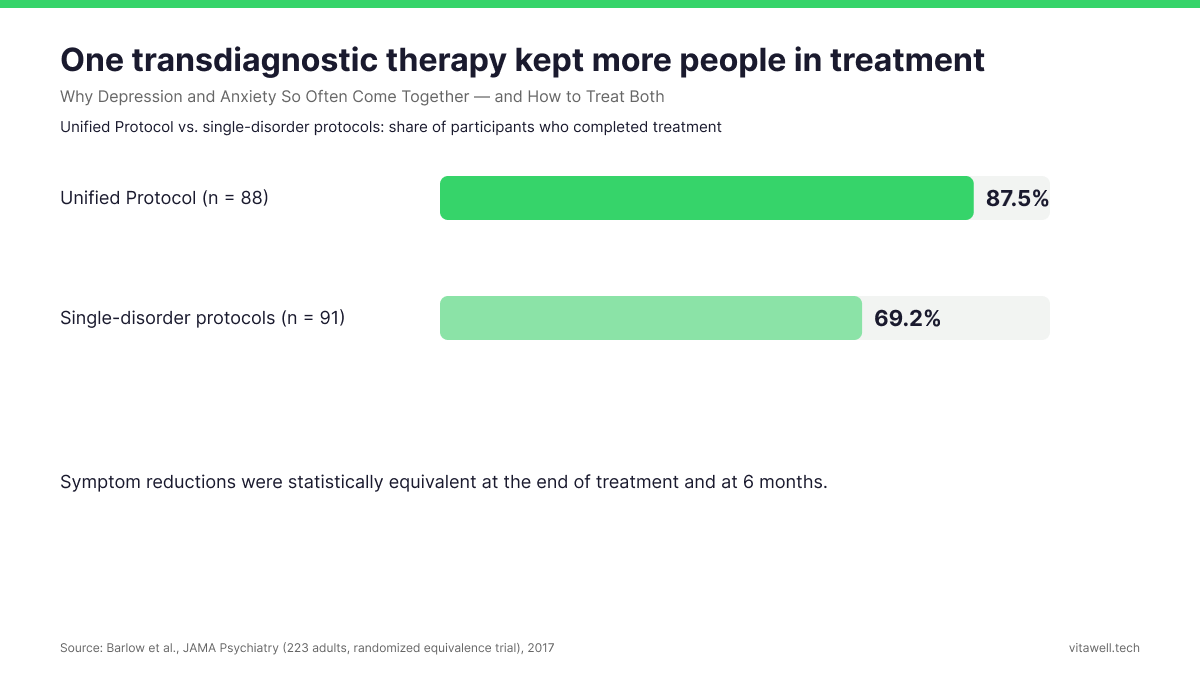
In a randomized equivalence trial in JAMA Psychiatry (Barlow et al., 2017), 223 adults with a principal anxiety disorder received the UP, a disorder-specific protocol or a waitlist. The UP produced symptom reductions statistically equivalent to the disorder-specific treatments, both at the end of treatment and 6 months later. It also kept more people in treatment: 87.5% completed the UP versus 69.2% for the single-disorder protocols.
A 2021 meta-analysis of 19 randomized and 13 uncontrolled trials (2,183 participants) found a moderate effect for the UP against control conditions (g = 0.452) and a large effect from baseline to 3–6 month follow-up (g = 1.113), with no difference between anxiety and depression measures. Here g is a standardized effect size: around 0.5 is moderate, 0.8 or above is large.
Other options with good evidence include acceptance and commitment therapy (ACT), mindfulness-based cognitive therapy for recurrent depression, and medication combined with psychotherapy for moderate to severe cases. Exercise also acts on both conditions: a 2026 umbrella review in the British Journal of Sports Medicine (Munro et al., 2026) pooled 800 studies with 57,930 participants for depression and 258 studies with 19,368 participants for anxiety. It found medium effects for depression and small-to-medium effects for anxiety, with aerobic, group-based and supervised exercise working best for depression.
A 4-Week Plan That Targets Both at Once
The table below turns the shared processes into one weekly focus each. It is a self-help starting point that maps onto the skills used in transdiagnostic therapy, not a replacement for treatment.
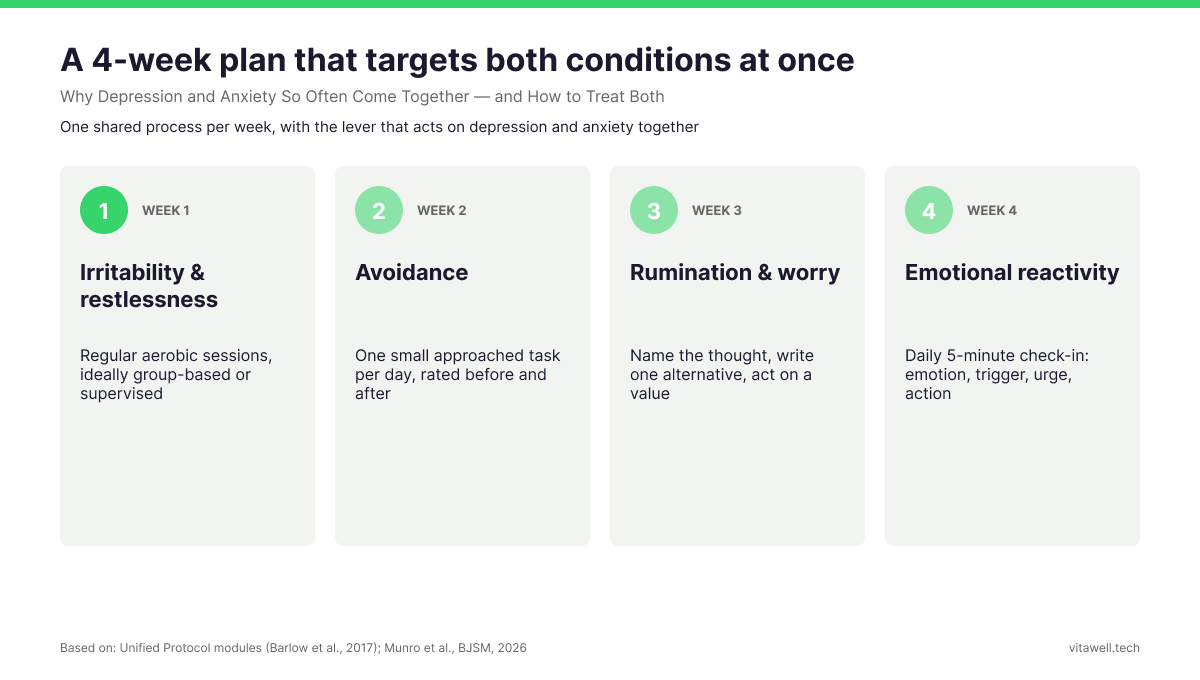
| Week | Shared process | How it feeds depression | How it feeds anxiety | Lever that targets both | Evidence behind it |
|---|---|---|---|---|---|
| 1 | Irritability and restlessness | Conflict, guilt, withdrawal | Keeps the body on high alert | Regular aerobic sessions, ideally group-based or supervised | Umbrella review of RCTs (Munro 2026); bridge-symptom data is cross-sectional |
| 2 | Avoidance | Fewer rewarding experiences | Fear is never tested, so it grows | One small approached task per day, rated before and after | Core UP module; RCT (Barlow 2017) |
| 3 | Rumination and worry | Replays past loss and failure | Rehearses future threat | Name the thought, write one alternative, then act on a value | Cognitive flexibility module; meta-analysis (2021) |
| 4 | Emotional reactivity | Lows feel intense and last longer | Fear of the feeling itself | Daily 5-minute check-in: emotion, trigger, urge, what you did | Emotion-awareness module; meta-analysis (2021) |
How to use it day to day:
- Track mood and worry together once a day on a 0–10 scale, so you can see how they move in tandem; VitaWell's review of which mental health apps actually help covers what to look for in a tracker.
- In week 1, pick an activity you can repeat; the article on how exercise builds emotional strength explains why consistency beats intensity.
- Keep a fixed wake time all four weeks, and avoid turning sleep into another source of worry, a trap described in the article on sleep apps that can worsen insomnia.
- In week 3, practice stepping back from thoughts rather than arguing with them, as outlined in how you relate to your thoughts.
- Bring your tracking notes to any appointment; they make it easier to describe how the two conditions interact.
When to Talk to a Professional
Contact a doctor, psychologist or psychiatrist if:
- Low mood, loss of interest or constant worry has lasted two weeks or more.
- Symptoms are affecting work, relationships or basic self-care.
- You have had anxiety for a long time and now notice signs of depression.
- Self-help steps have not helped after a few weeks.
- You have any thoughts of harming yourself. In that case, seek help now: contact local emergency services or a crisis line (in the US, call or text 988).
Tell your clinician about all your symptoms, including ones that seem unrelated, and ask whether they offer a transdiagnostic approach such as the UP or ACT.
Frequently Asked Questions
Can you have depression and anxiety at the same time?
Yes, and it is common. In WHO survey data from 24 countries, 41.6% of adults with major depression in the past year also had an anxiety disorder in that same year. Clinicians can diagnose both, and many treatments are designed to address both together rather than one at a time.
Which usually comes first, anxiety or depression?
Anxiety, in most cases. Among people with both conditions in the WHO World Mental Health Surveys, anxiety began first in 68%, depression first in 13.5%, and both at the same age in 18.5%. This makes persistent anxiety a useful early signal to seek support before depression develops.
Is anxious depression harder to treat?
It often takes longer. In the STAR*D trial, 22% of people with anxious depression became symptom-free on the first antidepressant, versus 33.4% without anxiety. That does not mean treatment fails; it means people may need further steps, a different medication, psychotherapy, or a combination before they recover fully.
Can one therapy treat both depression and anxiety?
Yes. Transdiagnostic therapies target shared processes such as avoidance and emotional reactivity. The Unified Protocol matched disorder-specific therapies in a 223-person randomized trial, and a 2021 meta-analysis of 19 randomized trials found it improved both anxiety and depression measures to a similar degree.
Are depression and anxiety genetic?
Partly. A 2025 study of more than 1 million people with psychiatric diagnoses placed depression, anxiety and PTSD in one shared genetic factor. Genes raise risk but do not decide outcomes: stress, life events, relationships and treatment strongly shape whether that predisposition ever turns into illness.
Conclusion
Depression and anxiety travel together because they share genetic roots, connect through bridge symptoms such as irritability and restlessness, and are held in place by the same avoidance loop. Anxiety usually arrives first, which makes it an early warning worth acting on. The encouraging part is that one well-designed treatment can work on both, and small daily levers, from aerobic exercise to approaching avoided tasks, push in the same direction. VitaWell's AI life planner can help you build these weekly focuses into your Health and Rest goals and track mood and worry side by side, so progress in one area supports the other.
Related on VitaWell
- Perinatal Mental Health: Why Depression and Anxiety During and After Pregnancy Are Still Going Undetected — how the same pair of conditions shows up during pregnancy and why it is so often missed.
- Music for Anxiety: How Many Minutes Actually Help, According to a Clinical Trial — a simple, evidence-based tool to lower the restlessness that bridges anxiety and low mood.
- Why Your Body Reacts to Stress So Fast — The Science of Fight, Flight, and Freeze — the stress biology behind the tension that often starts the cycle.
This article is for informational purposes only and is not medical advice. If you are struggling with your mental health, please speak with a qualified healthcare professional.
Sources
- Why Mental Disorders So Often Travel Together — Psychology Today
- Kessler et al., 2015 — Anxious and non-anxious major depressive disorder in the WHO World Mental Health Surveys
- Grotzinger et al., 2025 — Mapping the genetic landscape across 14 psychiatric disorders (Nature)
- Harvard Gazette, 2025 — New research finds 5 genetic signatures shared by 14 psychiatric disorders
- News-Medical, 2025 — What separates and unites 14 psychiatric disorders
- Sun et al., 2023 — Depression and anxiety: a network analysis perspective (Frontiers in Psychiatry)
- NIMH, 2008 — Co-occurring anxiety complicates treatment response for major depression (STAR*D)
- Barlow et al., 2017 — The Unified Protocol vs single-disorder protocols: randomized equivalence trial (JAMA Psychiatry)
- Meta-analysis, 2021 — Efficacy of the Unified Protocol for emotional disorders
- Munro et al., 2026 — Effect of exercise on depression and anxiety: umbrella review (BJSM)
- World Health Organization, 2025 — Over a billion people living with mental health conditions