Can GLP-1 Medications Like Ozempic Help Protect Your Brain and Lower Dementia Risk?
New research links GLP-1 medications like Ozempic and Wegovy to significantly lower dementia risk — but the story is more nuanced than the headlines suggest.

GLP-1 receptor agonists — medications like semaglutide (Ozempic, Wegovy) and liraglutide — are associated with 33 to 67 percent lower rates of dementia in people with type 2 diabetes, according to multiple large observational studies. These drugs cross the blood-brain barrier and appear to reduce neuroinflammation, improve glucose metabolism in neurons, and protect against vascular damage — all pathways involved in Alzheimer's and vascular dementia. The most critical distinction the data draw: current evidence supports prevention in people at metabolic risk, not treatment once dementia has set in.
Key Takeaways
- Two independent large studies found semaglutide users had 33–67% lower rates of Alzheimer's disease compared to other diabetes medications.
- GLP-1 receptors are present throughout the brain; these drugs may reduce neuroinflammation and improve glucose utilization in neurons.
- A Phase 2b clinical trial (ELAD) found liraglutide slowed cognitive decline by 18% and reduced brain volume loss by approximately 50% in people with mild Alzheimer's.
- A Phase 3 trial of oral semaglutide (EVOKE) in established Alzheimer's disease failed to outperform placebo — suggesting prevention, not treatment, is the relevant window.
- People with type 2 diabetes and obesity who have not yet developed dementia stand to benefit most; direct dementia prevention trials are ongoing.
What Are GLP-1 Drugs and How Do They Reach the Brain?
GLP-1 (glucagon-like peptide-1) receptor agonists were developed to treat type 2 diabetes and obesity by mimicking a gut hormone that stimulates insulin release and reduces appetite. What researchers did not fully anticipate was their reach into the brain. The brain accounts for approximately 20% of the body's total glucose consumption, according to National Geographic's coverage of emerging GLP-1 neuroscience, making glucose regulation directly relevant to cognitive health.
GLP-1 receptors are expressed throughout the central nervous system, particularly in the hippocampus and hypothalamus — regions involved in memory and metabolic control. Animal studies show that GLP-1 agonists cross the blood-brain barrier, reduce amyloid-beta accumulation, lower neuroinflammatory markers, and promote neuronal survival. Maintaining adequate energy supply to neurons is a central concern in brain aging research; compounds that support cellular energy metabolism in neurons, like creatine, have also attracted interest for similar reasons, though through very different mechanisms.
Human observational data now suggest these mechanisms translate into real-world dementia risk reduction — with caveats that the research community is actively working to resolve through randomized trials.
What Observational Studies Show: 33–67% Lower Dementia Risk
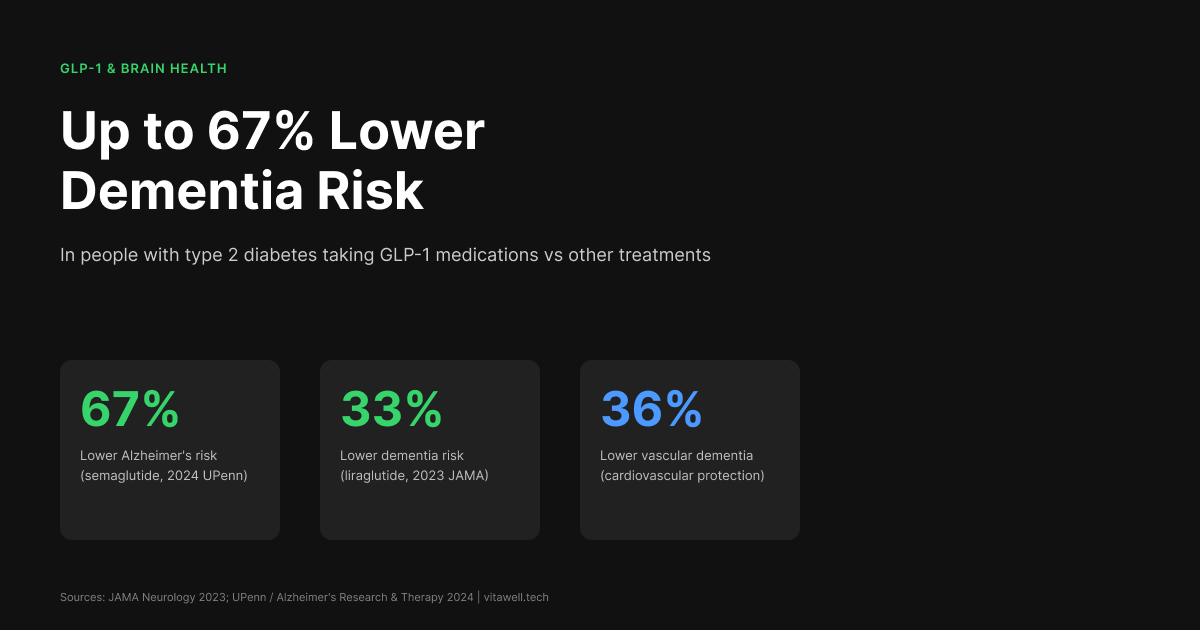
The largest dataset on this question comes from Case Western Reserve University researchers who analyzed electronic health records from 1,094,761 patients with type 2 diabetes in the United States. People prescribed semaglutide had a hazard ratio of 0.33 for Alzheimer's disease compared to those taking insulin — a 67% lower risk — and a hazard ratio of 0.59 (41% lower risk) compared to other GLP-1 receptor agonists, per the full peer-reviewed 2025 analysis. The 3-year cumulative incidence of Alzheimer's was 0.16% in the semaglutide group versus 0.33% in the general type 2 diabetes population — roughly half the rate.
A separate analysis published in JAMA Network Open in 2025, covering more than 200,000 adults with type 2 diabetes and obesity, found GLP-1 receptor agonists were associated with a 33% lower risk of dementia and neurodegeneration overall.
These numbers align with what lifestyle-focused brain aging research has consistently shown: the conditions that damage the vascular system — insulin resistance, chronic inflammation, hypertension — are the same conditions that drive Alzheimer's pathology. GLP-1 drugs address several of these simultaneously.
Observational data, however, have important limits. People prescribed semaglutide tend to be under closer medical supervision, may have better healthcare access, and may differ from comparison groups in dozens of unmeasured ways. These confounders cannot be fully excluded without randomized controlled trials.
Your Heart Is Your Brain's Best Defense
One mechanism that is not speculative: cardiovascular protection. Vascular dementia — caused by restricted blood flow to the brain — is the second most common form of dementia after Alzheimer's. The JAMA Network Open study that found 33% lower overall dementia risk also found a 27% lower risk of ischemic stroke in GLP-1 users, and a separate observational analysis found a 36% lower risk of vascular dementia specifically among people taking GLP-1 receptor agonists.
Semaglutide's cardiovascular benefits are among the most robustly demonstrated effects in the drug class, established through large randomized trials (SUSTAIN-6, SELECT) that were not designed with dementia in mind. By reducing atherosclerosis, lowering blood pressure, and decreasing inflammation in vessel walls, GLP-1 drugs protect the vascular architecture that the brain depends on for oxygen and glucose delivery.
Sleep quality and cardiometabolic health are tightly connected: poor sleep raises cardiovascular risk markers that also increase dementia vulnerability — another modifiable factor that works alongside any pharmacological approach to brain protection.
What Clinical Trials Actually Found
Randomized trials tell a more nuanced story than the observational data alone suggest.
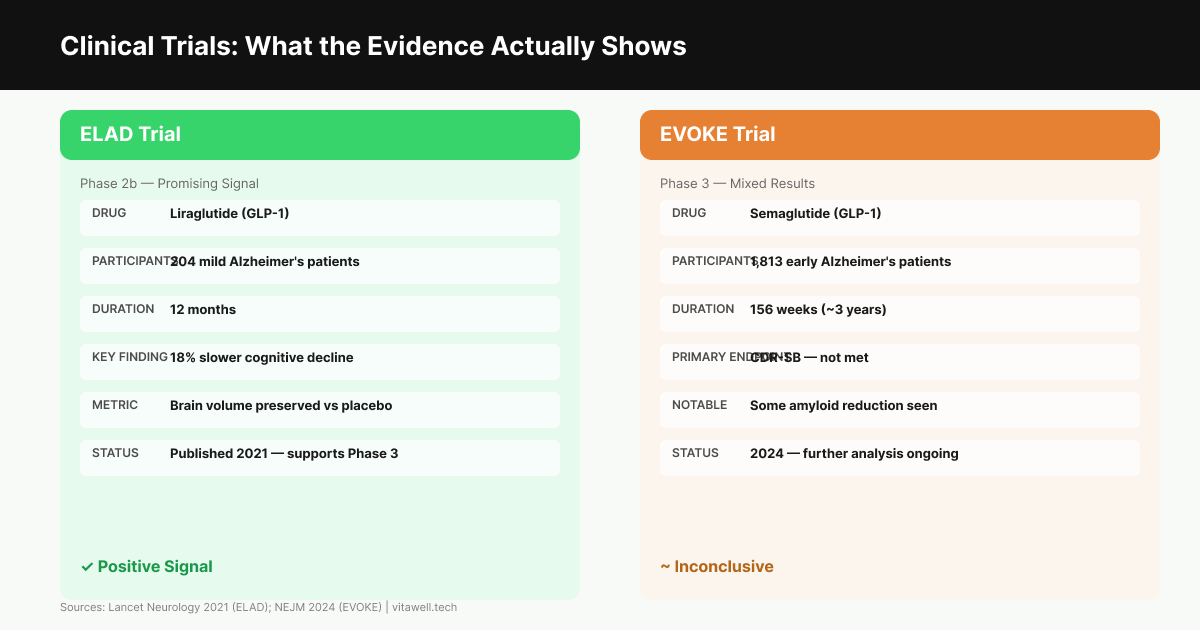
A Phase 2b trial called ELAD (Evaluating Liraglutide in Alzheimer's Disease), conducted at University College London with 204 patients who had mild Alzheimer's disease, found that daily liraglutide injections slowed cognitive decline by 18% over 12 months and reduced brain volume loss by approximately 50% compared to placebo, as reported at the 2024 Alzheimer's Association International Conference. These are encouraging signals, though the trial was small and the primary endpoint was not formally met; replication in a larger Phase 3 study is needed before clinical conclusions can be drawn.
The more sobering data point comes from the EVOKE trial: 1,813 patients with early Alzheimer's disease were randomized to oral semaglutide or placebo and followed for 156 weeks. Oral semaglutide did not outperform placebo on the primary cognitive endpoint (CDR-SB), reported at the AAIC 2025 meeting. The drug failed to modify disease once Alzheimer's pathology was established.
The distinction matters enormously: the population that may benefit is people with metabolic risk who have not yet developed dementia, not people who already have it. Prevention and treatment require different interventions at different windows in the disease timeline.
Who Is Most Likely to Benefit
The evidence framework below synthesizes current data for different populations, allowing you to assess where you or someone you care for stands relative to this research:
| Population | Evidence Strength | Likely Benefit | Key Limitation |
|---|---|---|---|
| Type 2 diabetes + no dementia | Observational (strong), 1M+ patients | 33–67% lower Alzheimer's risk (HR 0.33–0.59) | Confounding; no RCT confirmation yet |
| Obesity + metabolic syndrome + no dementia | Observational (moderate), 200K+ patients | 33% lower dementia risk overall | Multiple confounders; mixed populations |
| Mild cognitive impairment (not yet dementia) | Phase 2b RCT (small, n=204) | 18% slower decline; ~50% less brain volume loss | Small trial; primary endpoint missed |
| Mild/early Alzheimer's disease | Phase 3 RCT (n=1,813) — EVOKE | No benefit observed (CDR-SB not met) | Established disease may be too late |
| Advanced Alzheimer's disease | No data | Unknown | No trials planned |
People who currently take GLP-1 medications for diabetes or obesity — and are not yet diagnosed with dementia — appear to be in the most favorable position relative to current evidence. This matches the broader principle in neurology that neurodegenerative diseases are far easier to prevent than to reverse.
A Brain Health Protocol: What You Can Actually Do
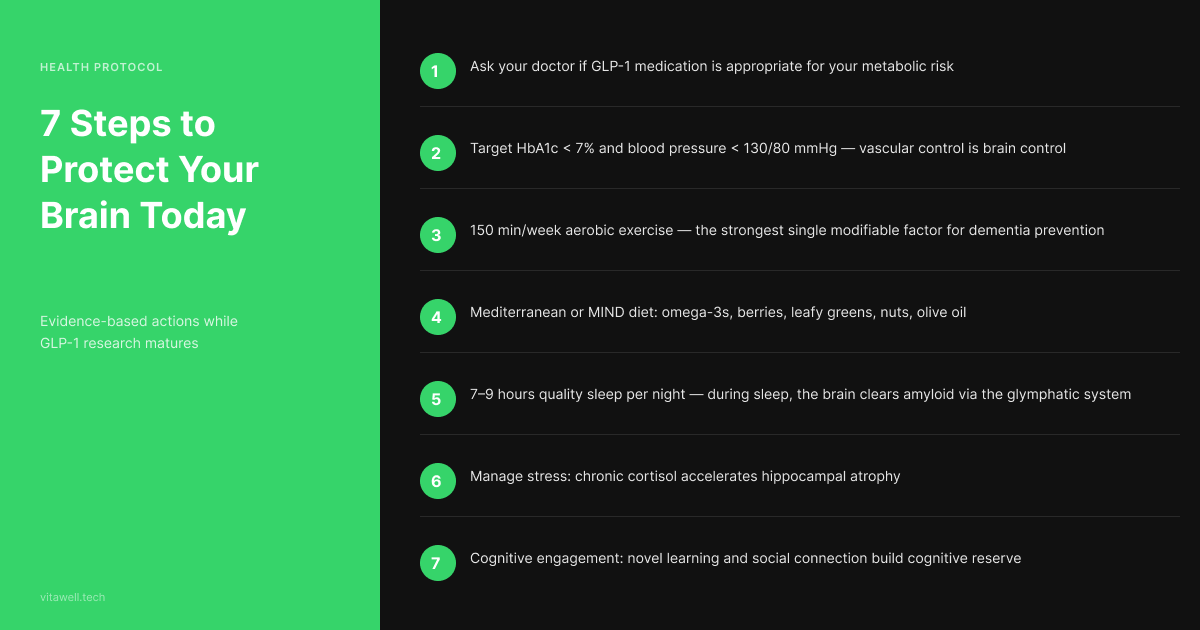
GLP-1 drugs are prescription medications requiring a clinical indication. Here is what the evidence supports as a full protocol for anyone managing metabolic health with brain protection in mind.
If you are prescribed a GLP-1 medication:
- Continue the medication as directed; do not alter your regimen based on brain-health hopes alone
- Target HbA1c below 7% — the Case Western data suggest metabolic control, not just the drug itself, is driving brain benefit
- Monitor blood pressure and aim for below 130/80 mmHg; hypertension independently doubles dementia risk
- Prioritize 7–9 hours of sleep per night — sleep is when the glymphatic system clears amyloid-beta from the brain
- Add 150 minutes of moderate aerobic activity per week, which has independent evidence for reducing dementia risk
If you are not currently prescribed a GLP-1 medication:
- Focus on the same downstream targets: glycemic control, blood pressure, sleep quality, and regular movement
- Annual fasting glucose screening after age 45, or earlier with family history of diabetes or dementia
- Mediterranean or MIND dietary pattern — both associated with lower dementia risk in meta-analyses
- Discuss your cardiovascular risk profile with your doctor; managing it is managing your dementia risk
When to Talk to Your Doctor
Seek a conversation with your healthcare provider if you:
- Have type 2 diabetes or obesity and want to understand whether a GLP-1 medication makes sense for your overall health, including brain health
- Notice changes in memory, word-finding, or executive function — these warrant formal cognitive assessment regardless of what medications you take
- Have a first-degree relative with early-onset Alzheimer's or vascular dementia — your risk profile and screening schedule may need adjustment
- Are currently taking insulin or other diabetes medications and wonder whether semaglutide or another GLP-1 drug might be appropriate
Do not use this article to self-prescribe or to discontinue prescribed medications.
Frequently Asked Questions
Do GLP-1 drugs like Ozempic prevent Alzheimer's disease?
Current evidence does not support calling them Alzheimer's prevention drugs. Large observational studies find 33–67% lower rates of Alzheimer's in people with type 2 diabetes who take semaglutide compared to other treatments. These studies cannot rule out confounding, and no randomized trial has confirmed a causal protection effect in people without established dementia.
Can GLP-1 medications treat existing Alzheimer's disease?
Probably not, based on current evidence. The EVOKE Phase 3 trial — 1,813 patients with early Alzheimer's, 156 weeks of follow-up — found oral semaglutide did not outperform placebo on cognitive decline. The liraglutide ELAD Phase 2b trial found signals of benefit in mild Alzheimer's but was too small to draw firm conclusions.
How do GLP-1 drugs affect the brain?
GLP-1 receptors are present in the hippocampus and other brain regions. The drugs may reduce neuroinflammation, improve neuronal glucose metabolism, limit amyloid-beta accumulation, and protect vascular integrity. Human data do not yet confirm which mechanism is driving the associations between GLP-1 use and lower dementia rates.
Who should consider asking their doctor about GLP-1 drugs for brain health?
Adults with type 2 diabetes or obesity who have not yet developed cognitive symptoms are the population for whom current evidence is most relevant. The drugs carry established clinical indications — diabetes, obesity, cardiovascular risk reduction — and brain health is a secondary consideration at this stage, not a standalone prescribing reason.
Are there risks to taking GLP-1 drugs for dementia prevention?
GLP-1 receptor agonists have known side effects including nausea, vomiting, pancreatitis risk, and potential concerns about thyroid C-cell tumors in people with certain genetic predispositions. Benefit-risk depends on individual health context and must be evaluated with a physician, not from dementia prevention headlines alone.
Conclusion
The GLP-1 story on brain health is one of the most consequential unfolding chapters in dementia research. The observational data — 33 to 67 percent lower dementia rates across studies covering more than 1.2 million patients — are striking by any standard. The mechanistic pathways are biologically plausible. And the cardiovascular protection these drugs deliver is well-established and independently relevant to brain aging.
What is not yet established: whether these drugs cause dementia prevention, what dose and duration matter most, and whether the benefit extends to people without diabetes or obesity. The EVOKE trial's failure also defines a clear boundary: by the time Alzheimer's is diagnosed, it may be too late for GLP-1 drugs to help.
The practical implication is managing metabolic health now — with or without a GLP-1 prescription — as an investment in cognitive reserve. For the tens of millions already taking these medications, the emerging brain data are an unexpected benefit that larger trials over the next five years will define more precisely.
Related on VitaWell
- 4 Science-Backed Lifestyle Habits That Slow Brain Aging — Covers the evidence-based lifestyle interventions — sleep, exercise, diet, and social connection — that complement any pharmacological approach to brain protection.
- What fMRI Research Reveals About Gratitude and Your Brain — Explores how positive psychological practices alter brain structure and function, a parallel lens on non-pharmacological neuroprotection.
- How Coffee May Help Slow Down Aging — Examines another compound with emerging evidence for neurodegenerative protection, relevant context for readers exploring multiple prevention strategies.
This article is for informational purposes only and does not constitute medical or pharmaceutical advice. Consult a qualified healthcare provider before making any changes to your medications or treatment plan.
Sources
- Healthline — Can Ozempic Protect the Brain and Lower Dementia Risk?
- Nimer et al., 2025 — Semaglutide and Alzheimer's disease risk in 1,094,761 patients with type 2 diabetes (PMC)
- JAMA Network Open, 2025 — GLP-1 receptor agonists and dementia/neurodegeneration risk in type 2 diabetes and obesity
- AAIC 2024 — Liraglutide ELAD Phase 2b results: 18% slower cognitive decline in mild Alzheimer's
- NeurologyLive, 2025 — EVOKE Phase 3 trial: oral semaglutide fails primary endpoint in Alzheimer's
- Medical News Today — GLP-1 drugs and 36% lower vascular dementia risk
- National Geographic — How GLP-1 drugs could protect the brain (glucose metabolism and neurological pathways)