
How Quality Sleep Protects Your Brain When You Have Heart Disease or Diabetes
New UK Biobank research (408,977 adults) shows that quality sleep counteracts the brain-damaging effects of heart disease, diabetes, and stroke—protecting both brain volume and cognition.

A landmark 2026 study of 408,977 adults found that people with heart disease, diabetes, or stroke who maintain good sleep quality have significantly larger brain volumes and sharper cognitive function than those with the same conditions who sleep poorly. Good sleep cannot prevent cardiometabolic disease—but it can meaningfully protect the brain against its damage. The difference comes down to five specific sleep dimensions that together determine how much protection you actually get.
Key Takeaways
- A 2026 UK Biobank study (408,977 adults) found that good sleep protects brain volume and cognition even in people with heart disease, diabetes, or stroke
- Five sleep dimensions matter: duration, chronotype alignment, insomnia absence, no snoring or apnea, and daytime alertness
- Sleep clears brain waste via the glymphatic system—a mechanism that works roughly 60% harder during sleep and can be disrupted by even a single bad night
- People with cardiometabolic conditions face compounded brain consequences when both CMD and poor sleep are present
- Improving all five sleep dimensions is one of the highest-leverage brain-protection strategies available to people managing a cardiometabolic condition
What the Research Found: Sleep as a Brain Shield for Heart Disease and Diabetes
Researchers at UTHealth Houston analyzed data from 408,977 adults enrolled in the UK Biobank, a large population cohort study. Of those participants, approximately 54,000 had been diagnosed with at least one cardiometabolic condition (CMD)—type 2 diabetes, coronary heart disease, or stroke—and around 35,000 had undergone brain MRI scans. This combination of scale, clinical depth, and imaging data makes the 2026 study by Miao et al. one of the most comprehensive examinations of sleep, cardiometabolic disease, and brain health to date.
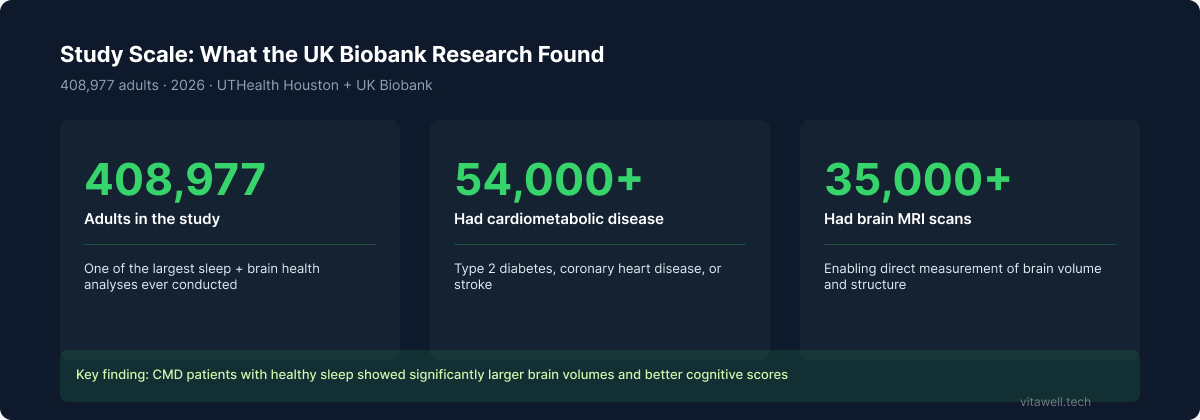
The finding at the center of the study: CMD participants who met criteria for healthy sleep showed significantly larger total brain volume, gray matter volume, and white matter volume compared to CMD participants with poor sleep. They also performed better on cognitive tests measuring global cognition, reasoning, and processing speed. The researchers describe this as sleep "mitigating" the brain-damaging effects of cardiometabolic disease—not eliminating them, but substantially reducing their impact.
The practical implication is direct: if you have heart disease, diabetes, or a history of stroke, improving your sleep quality is one of the few modifiable factors with demonstrated potential to preserve your brain. The question is which aspects of sleep matter most—and that is where the five-dimension framework becomes essential.
The Five Sleep Dimensions That Protect the Brain—and Why CMD Patients Need All Five
The study did not measure a single variable like "hours slept." It assessed five distinct dimensions of sleep quality, and healthy sleep required meeting criteria across all of them. This nuance matters: sleeping eight hours but doing so at inconsistent times, or sleeping long but waking unrefreshed due to undiagnosed apnea, may not provide the same brain protection.
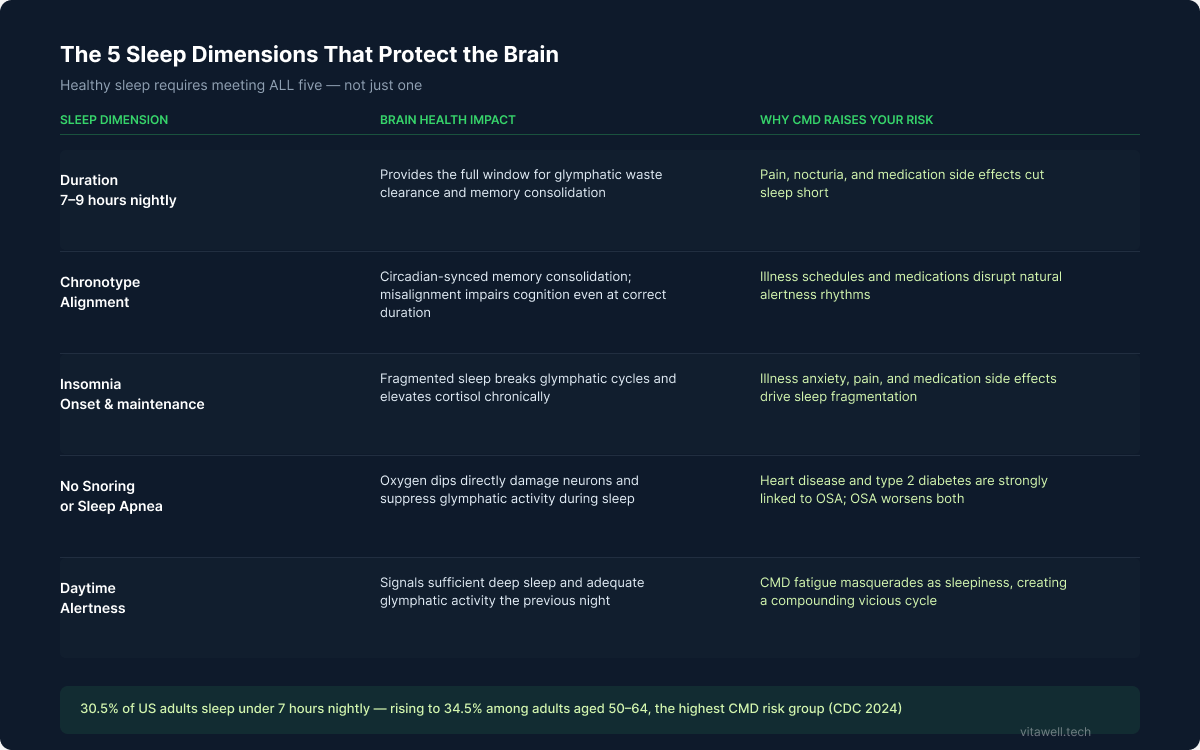
Research from the CDC's National Health Interview Survey 2024 found that 30.5% of US adults sleep fewer than seven hours nightly, and that figure rises to 34.5% among adults aged 50–64—precisely the age group with the highest cardiometabolic disease burden. Only 54.8% of US adults report waking up well-rested most or every day—meaning nearly half of the population most at risk for CMD is already sleeping poorly.
Here is how each dimension works, why it matters for brain health, and why cardiometabolic disease specifically raises the risk of failing it. This comparison is not covered by any of the current news coverage of the study:
| Sleep Dimension | What It Measures | Brain Health Impact | Why CMD Raises Your Risk | Priority Action |
|---|---|---|---|---|
| Duration (7–9h) | Total hours slept nightly | Provides window for glymphatic waste clearance and memory consolidation | Pain, nocturia, medication effects cut sleep short | Track nightly hours; aim for 7–9h consistently |
| Chronotype alignment | Match between sleep timing and internal clock | Circadian-synced memory consolidation; misalignment impairs cognition independent of duration | Illness management disrupts schedules; medications alter alertness rhythms | Keep bed and wake times within 30 min across all 7 days |
| Insomnia (onset and maintenance) | Sleep efficiency and continuity | Fragmented sleep breaks glymphatic cycles and elevates cortisol | Illness anxiety, pain, medication side effects drive insomnia | CBT-I is first-line; sleep restriction therapy shows strongest evidence |
| Snoring / Sleep apnea | Breathing interruptions during sleep | Oxygen dips damage neurons directly; suppresses glymphatic activity | Heart disease and type 2 diabetes are strongly linked to OSA; OSA worsens both conditions | Screening is essential; CPAP is the most effective treatment |
| Daytime sleepiness | Restorative quality of night sleep | Signals insufficient deep sleep and inadequate glymphatic activity | CMD fatigue masquerades as sleepiness, creating a vicious cycle | Identify and treat the upstream cause: apnea, insomnia, or short duration |
Aligning your sleep timing with your natural chronotype—the biological preference for morning or evening sleep windows—supports circadian-driven memory consolidation. If you are curious how morning routine and circadian rhythm alignment can reinforce your sleep schedule, the evidence there complements what the brain-imaging data shows.
Three Pathways: How Poor Sleep and Cardiometabolic Disease Damage the Brain Together
Poor sleep and cardiometabolic disease do not simply add their harms together—they interact through at least three distinct biological mechanisms, each amplified when both conditions are present.
Pathway 1 — The Glymphatic System: Your Brain's Overnight Cleaning Crew
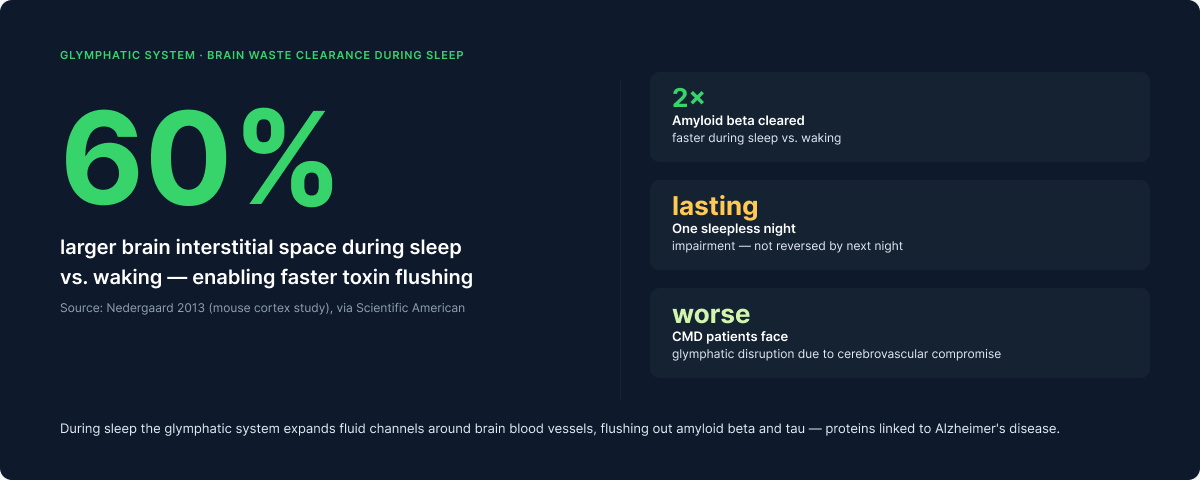
During sleep, the brain undergoes a physical cleansing process driven by the glymphatic system—a network of channels surrounding blood vessels that flush cerebrospinal fluid through brain tissue. In a landmark study, researchers found that the interstitial space in the mouse cortex expanded by approximately 60% during sleep compared to waking, allowing amyloid beta (a protein linked to Alzheimer's disease) to be cleared nearly twice as fast. In a 2021 study on humans, researchers found that after 24 hours of sleep deprivation, tracer clearance from the brain slowed dramatically—and critically, did not recover after a single night of good sleep. For CMD patients, whose cerebrovascular function is already compromised, this glymphatic disruption compounds further.
Pathway 2 — Chronic Inflammation: A Double Hit
Poor sleep reliably raises circulating levels of inflammatory markers including IL-6, TNF-alpha, and C-reactive protein. Cardiometabolic conditions independently drive chronic low-grade inflammation—insulin resistance, atherosclerosis, and elevated blood glucose all trigger persistent immune activation. When both sleep disruption and CMD are present, the inflammatory burden on the brain accelerates. Chronic neuroinflammation degrades synaptic connections, damages myelin, and accelerates the progression from mild cognitive impairment to dementia. The relationship between nervous system and chronic inflammation extends directly into the brain's long-term structural integrity.
Pathway 3 — Metabolic Disruption and Insulin Resistance
Sleep deprivation worsens insulin sensitivity independent of diet or exercise, raising fasting blood glucose and impairing glucose uptake in the brain—particularly harmful for people with type 2 diabetes. For people with heart disease, poor sleep raises cortisol and activates the sympathetic nervous system, elevating blood pressure and increasing the risk of nocturnal cardiac events. These metabolic consequences close a feedback loop in which CMD impairs sleep, and poor sleep worsens CMD, while simultaneously threatening brain health through each pathway above.
Self-Score Your Sleep Using the Same Five-Dimension Framework as the Researchers
The same five dimensions the study used to categorize "healthy sleep" can be applied practically as a personal audit. Assign yourself 0 (not met) or 1 (met) for each:
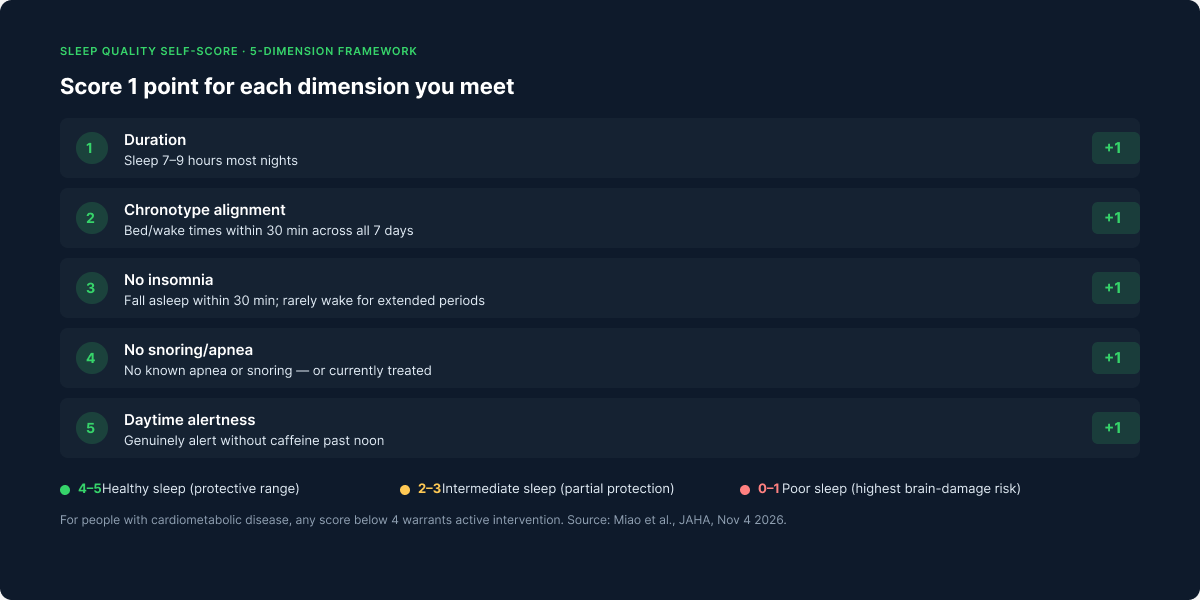
- Duration: Do you sleep 7–9 hours most nights? (1 = yes; 0 = no)
- Chronotype alignment: Are your bed and wake times within 30 minutes of each other every day of the week? (1 = yes; 0 = no)
- Insomnia: Do you fall asleep within 30 minutes and rarely wake for extended periods? (1 = yes; 0 = no)
- No snoring or apnea: Do you have no known snoring or apnea—or if diagnosed, are you currently being treated? (1 = yes; 0 = no)
- Daytime alertness: Do you feel genuinely awake without relying on caffeine past noon? (1 = yes; 0 = no)
Score interpretation: 4–5 = healthy sleep (the protective range from the study); 2–3 = intermediate sleep (partial protection); 0–1 = poor sleep (highest risk for brain damage). For CMD patients, any score below 4 warrants active intervention. If screen and light exposure keeps you alert late at night, building a digital-free evening routine is one of the most accessible first steps.
A Sleep Protocol for People With Cardiometabolic Conditions
This seven-step protocol addresses each of the five dimensions in order of leverage for people managing heart disease, diabetes, or stroke:
- Screen for sleep apnea first. Obstructive sleep apnea (OSA) is the single most impactful modifiable sleep problem for CMD patients. It directly causes oxygen deprivation to the brain during sleep, worsens blood pressure, disrupts glucose regulation, and suppresses glymphatic activity. Ask your cardiologist or endocrinologist for a sleep study referral if you snore, wake gasping, or feel unrefreshed regardless of hours slept.
- Treat confirmed apnea with CPAP. Continuous positive airway pressure (CPAP) is the most effective treatment for OSA. Studies have shown CPAP use is associated with lower blood pressure in hypertensive patients and modest improvements in HbA1c in some people with type 2 diabetes, making it a cardiovascular and metabolic intervention as much as a sleep one.
- Establish a fixed sleep-wake schedule. Choose bed and wake times that align with your natural chronotype and hold them within 30 minutes every day, including weekends. Consistency trains the circadian system to deepen sleep stages.
- Apply CBT-I principles for insomnia. Cognitive behavioral therapy for insomnia (CBT-I) is the first-line treatment recommended over sleep medications, which can interact with cardiac and antidiabetic drugs. The core techniques—sleep restriction, stimulus control, and relaxation training—are available via digital programs.
- Build a digital-free wind-down buffer. Set a 60–90-minute screen-off period before bed. Dim overhead lights; blue-spectrum light suppresses melatonin and delays sleep onset, further fragmenting your glymphatic window.
- Time nocturnal symptom management. If nocturia (frequent night urination—common with diuretics and high blood glucose) or pain interrupts your sleep, review medication timing with your prescriber. Shifting diuretics to morning can materially reduce sleep fragmentation.
- Reassess at four weeks using your five-dimension score. Tracking progress on each dimension separately is more actionable than a global sleep quality impression.
A note on GLP-1 agonists: some patients on semaglutide or tirzepatide have reported improvement in sleep apnea severity as weight loss progresses—a secondary benefit worth discussing with your prescriber.
When to Talk to a Professional
Seek professional evaluation for any of the following: persistent insomnia lasting more than three weeks despite consistent sleep hygiene—this warrants referral to a CBT-I therapist or sleep medicine specialist. Snoring, witnessed breathing pauses, waking up gasping, or an Epworth Sleepiness Scale score of 10 or higher indicate a likely sleep study is needed. Daytime sleepiness severe enough to impair driving or working requires urgent evaluation. Any new sleep symptom that began after starting a cardiac or antidiabetic medication should be reviewed with the prescribing physician before making unilateral changes.
Frequently Asked Questions
Can improving sleep quality really protect your brain if you have diabetes?
The 2026 UK Biobank study found that people with type 2 diabetes who met healthy-sleep criteria maintained larger brain volumes and better cognitive test scores than those with diabetes and poor sleep. The protection is not complete—diabetes still affects the brain—but the difference was statistically significant across both structure and function. Improving sleep is a meaningful intervention.
What are the most important aspects of sleep quality for brain health?
The study identified five equally relevant dimensions: duration, chronotype alignment, absence of insomnia, absence of snoring or sleep apnea, and daytime alertness. Meeting all five—rather than optimizing a single dimension—provided the strongest brain protection. Sleep apnea is particularly impactful because it causes direct oxygen deprivation and suppresses glymphatic activity.
How does sleep help remove harmful proteins from the brain?
During sleep, the glymphatic system flushes cerebrospinal fluid through brain tissue, clearing metabolic waste including amyloid beta and tau—proteins linked to Alzheimer's disease. Research showed brain interstitial volume rises 60% during sleep, clearing amyloid beta roughly twice as fast as during waking. Even one sleepless night can impair this clearance in ways a single recovery night cannot fully reverse.
What sleep changes should people with heart disease prioritize first?
Screening for obstructive sleep apnea is the highest-priority first step. Heart disease and OSA are strongly linked—OSA elevates blood pressure, stresses the heart during sleep, and suppresses the brain's glymphatic system simultaneously. After ruling out or treating OSA, the next priority is a consistent sleep-wake schedule, followed by CBT-I if insomnia is present.
How much sleep do people with cardiometabolic conditions need?
The same range as healthy adults: 7–9 hours nightly. What differs is that CMD patients face more obstacles to achieving this—pain, nocturia, medication effects, anxiety—and the brain consequences of falling short are more severe. Meeting the 7–9h target consistently, combined with the other four sleep dimensions, appears to substantially reduce brain damage risk.
Conclusion
The 2026 UK Biobank study offers a clear message: two people can carry the same diagnosis of heart disease or diabetes and end up with very different brains. Sleep quality—across five measurable dimensions—is a substantial part of what creates that difference. It is not the only variable, and it does not eliminate cardiometabolic risk. But it is one of the most modifiable ones, and the evidence now shows it matters more than previously understood. If you have a cardiometabolic condition, your sleep plan is part of your brain health plan. Explore VitaWell's Rest and Health sections for more evidence-backed guidance on building the sleep foundation your brain depends on.
Related on VitaWell
- Depression and Anxiety Together: What the Research Says About Comorbidity — mental health conditions often co-occur with poor sleep and cardiometabolic disease
- Padel and Health: More Than Just Physical Fitness — physical activity improves both cardiometabolic health and sleep quality
- Do Mental Health Apps Actually Work? New Research Reveals Who Benefits and Who Doesn't — digital tools for health monitoring and behavior change
This article is for informational purposes only and does not constitute medical advice. Consult your physician or a qualified sleep specialist before making changes to your sleep management plan, especially if you have heart disease, diabetes, or a history of stroke.
Sources
- Miao Y. et al., "Healthy sleep mitigates the association between cardiometabolic disease and poorer cognitive and brain health," Journal of the American Heart Association, Nov 4 2026
- CDC National Health Interview Survey 2024, Data Brief No. 559
- Nedergaard M. 2013 (mouse glymphatic); Eide P.K. et al. 2021 (human glymphatic); via Scientific American