Burnout Recovery: Why Your Nervous System Still Feels Stuck and What Rebuilds Capacity
Why a vacation rarely fixes burnout, how long recovery really takes, which recovery tools have evidence, and a 12-week plan to rebuild your capacity.

Burnout recovery takes longer than rest alone because chronic stress changes how your stress system and brain respond, and those changes unwind slowly. In a 7-year follow-up of 217 people treated for stress-related exhaustion, 73% still reported reduced stress tolerance. The good news: recovery is real and measurable, and it comes faster from daily detachment, breathing practice and a gradual return of load than from one long break.
Key Takeaways
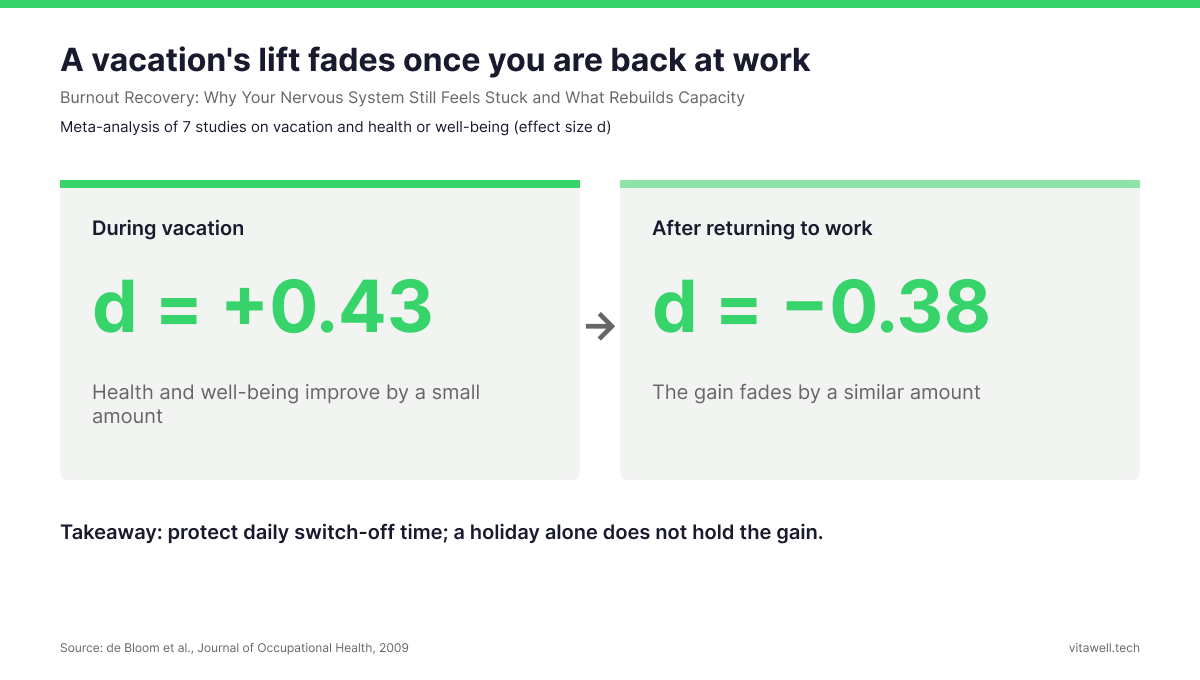
- A vacation helps, but the benefit fades soon after you return to work; a meta-analysis of 7 studies found the effect largely disappears.
- Clinical burnout can leave lingering fatigue and low stress tolerance for years, so expect months of rebuilding, not weeks.
- Daily mental detachment from work is one of the best-supported recovery levers (r = -0.36 with exhaustion across 7,007 employees).
- Five minutes a day of slow breathing with long exhales improved mood more than mindfulness in a 2023 randomized trial.
- Popular ideas such as adrenal fatigue are not supported by evidence, and polyvagal theory is a useful map rather than settled science.
What Burnout Does to Your Nervous System
The World Health Organization's ICD-11 (2019) describes burnout as an occupational phenomenon with three parts: exhaustion, growing mental distance or cynicism toward your job, and a reduced sense of effectiveness. It is common. In Gallup's State of the Global Workplace 2026 report, 40% of employees worldwide said they felt a lot of stress during the previous day.
A stress system that stays switched on
Your stress response is built for short threats: heart rate rises, stress hormones such as cortisol increase, and attention narrows. Our guide to how fight, flight and freeze work explains that system in detail. Burnout develops when the threat never fully ends, so the system keeps firing without the recovery phase it was designed to have.
That is why the symptoms feel physical: heavy fatigue that sleep does not fix, a short fuse, trouble concentrating and a sense of emotional flatness.
What brain scans show
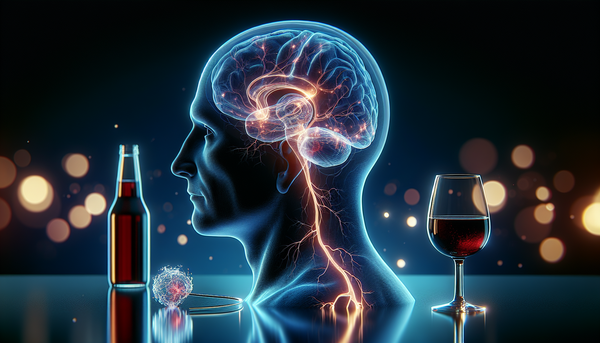
In a study published in Cerebral Cortex, Ivanka Savic and colleagues scanned 40 people with chronic work stress and 40 matched controls. As Oxford University Press summarized the findings, the stressed group had a thinner medial prefrontal cortex, the region involved in planning and emotional control, and a larger amygdala, the brain's threat detector. The larger the amygdala, the higher the perceived stress.
The study was cross-sectional, so it cannot prove stress caused these differences, and early follow-up data suggesting they may reverse were preliminary. Still, it fits what people describe: worse focus and a hair-trigger reaction to small stressors.
Why a Vacation Didn't Fix It
Many people take time off, feel better, and then crash within weeks. The data predicts this. A meta-analysis by de Bloom and colleagues (2009) of 7 studies found vacations improved health and well-being by a small amount (effect size d = 0.43), but after people returned to work the benefit faded by a similar amount (d = -0.38).
What protects recovery is not the length of the break but what happens every evening. A 2017 meta-analysis by Wendsche and Lohmann-Haislah pooled 91 samples and 38,124 employees. Psychological detachment, meaning not thinking about work during time off, was linked to lower exhaustion (r = -0.36 across 7,007 employees) and better sleep (r = 0.30).
The decision rule that follows: if you have to choose, protect daily switch-off time before planning a bigger holiday. A vacation recharges; detachment keeps the charge.
How Long Burnout Recovery Really Takes
Popular articles often promise recovery in three to six months. For mild burnout that may be realistic, but data from clinical cases is more sobering. In a Swedish follow-up study by Glise and colleagues (BMC Psychology, 2020), 217 former patients of a stress clinic answered questions 7 years after first seeking care:
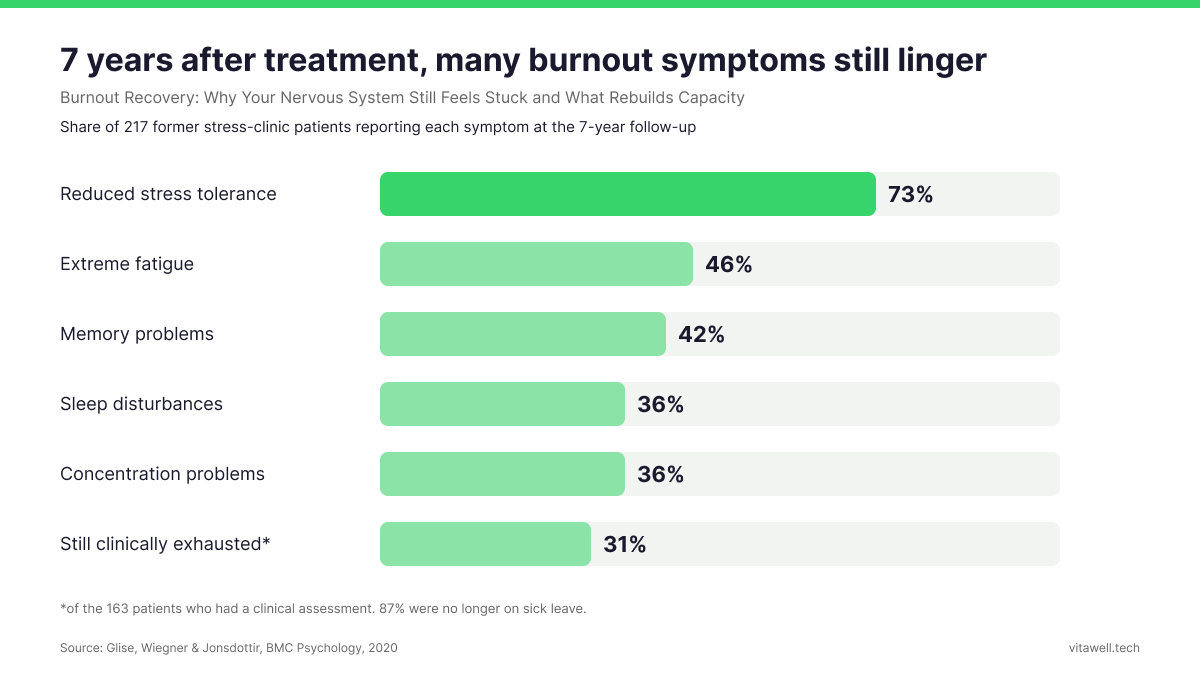
- 73% still reported reduced stress tolerance
- 46% reported extreme fatigue
- 42% reported memory problems
- 36% reported sleep disturbances and 36% concentration problems
- 31% of the 163 who had a clinical assessment still met the criteria for exhaustion
The same study shows the other side: 87% were no longer on sick leave. Most people got back to work and daily life; many simply did so with a lower ceiling for stress than before. That is why the rest of this article treats recovery as rebuilding capacity, not returning to an old normal.
Polyvagal Theory: A Useful Map, Not Settled Science
Many burnout guides explain recovery with polyvagal theory, developed by Stephen Porges. It describes three states: safe and social, mobilized (fight or flight), and shut down. Burnout is often described as being stuck in the shutdown state.
The language helps many people put words to numbness and collapse. The physiology is disputed, though. In a 2023 paper in Biological Psychology, psychophysiologist Paul Grossman argued that all five basic premises of the theory face serious challenges or likely refutations. Use the three states as a self-check vocabulary, but do not treat them as a diagnosis.
Which Burnout Recovery Tools Have Evidence
Advice online mixes solid findings with guesses. The table grades the most common recommendations by the strength of the evidence behind them.
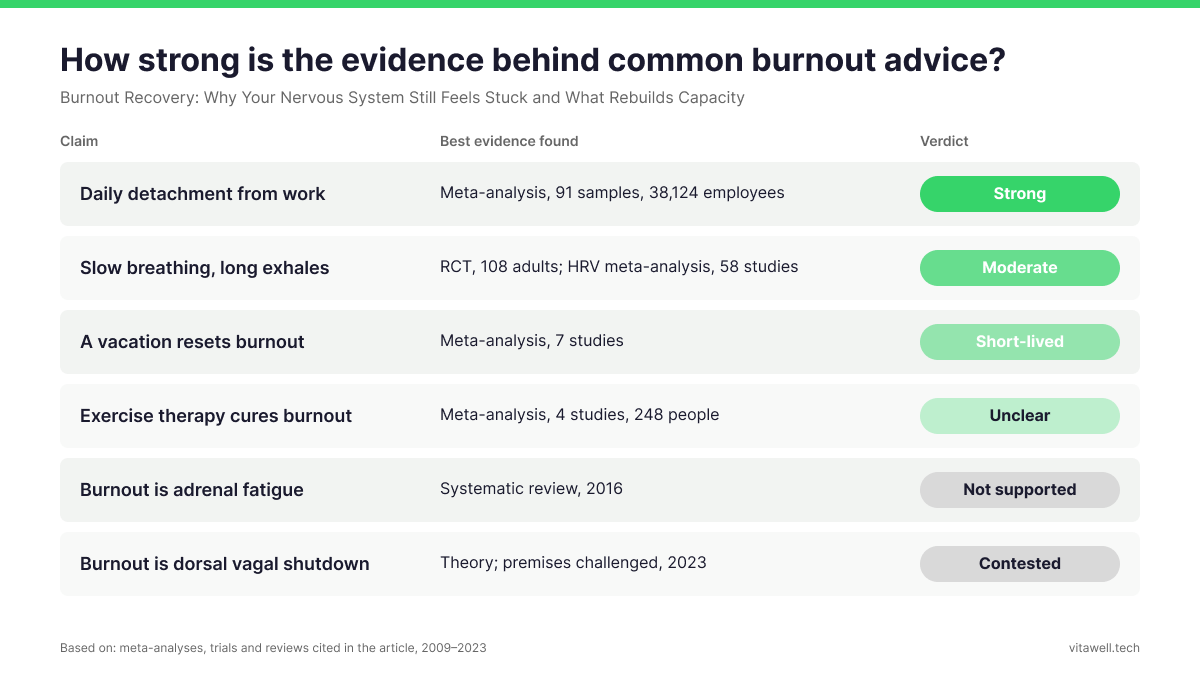
| Recovery claim | Best evidence found | Verdict | What to do with it |
|---|---|---|---|
| Daily detachment from work aids recovery | Meta-analysis, 91 samples, 38,124 employees (2017) | Strong (correlational) | Set a fixed shutdown time; keep work apps off your phone in the evening |
| Slow breathing with long exhales improves mood | Randomized trial, 108 adults (2023); HRV biofeedback meta-analysis, 58 studies (2020) | Moderate | Do 5 minutes of cyclic sighing daily |
| A vacation resets burnout | Meta-analysis, 7 studies (2009) | Short-lived benefit | Take breaks, but pair them with daily detachment |
| Exercise therapy cures burnout | Meta-analysis, 4 studies, 248 people (2018) | Unclear | Move for general health; do not expect it to fix burnout alone |
| Burnout is adrenal fatigue | Systematic review (2016) | Not supported | Skip adrenal tests and supplements sold for it |
| Burnout is dorsal vagal shutdown | Theoretical; premises challenged (2023) | Contested | Use as a metaphor, not a diagnosis |
Two rows need context. The exercise meta-analysis by Ochentel and colleagues (2018) found no clear difference between exercise and control groups, but it included only 4 small trials, so the honest answer is "unknown," not "useless." And a systematic review by Cadegiani and Kater (BMC Endocrine Disorders, 2016) concluded that adrenal fatigue is not a substantiated condition.
The 5-Minute Breathing Reset With the Best Trial Data
In a randomized trial by Balban and colleagues (Cell Reports Medicine, 2023), 108 adults practised either a breathing technique or mindfulness meditation for 5 minutes a day over 28 days. Breathwork lowered breathing rate more than mindfulness, and cyclic sighing produced the biggest rise in positive mood. Participants were healthy volunteers, not burnout patients, so treat it as a low-risk daily tool rather than a cure.
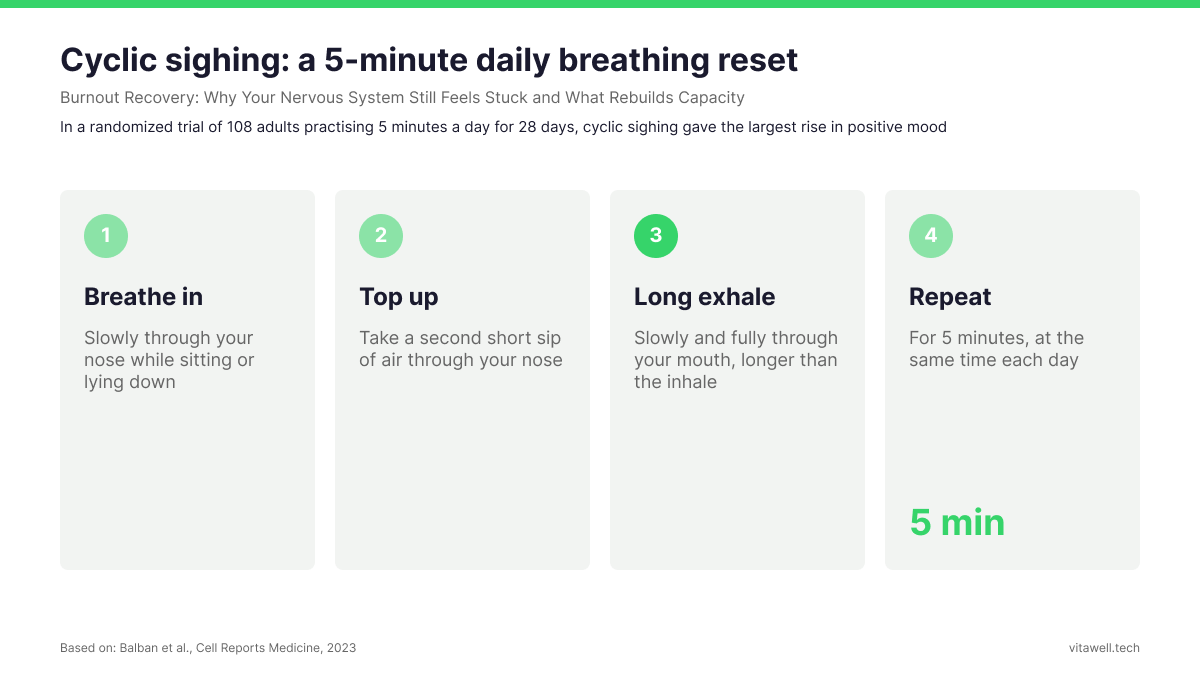
- Sit or lie down and breathe in slowly through your nose.
- When your lungs feel nearly full, take a second short sip of air through your nose.
- Breathe out slowly and fully through your mouth, longer than the inhale.
- Repeat for 5 minutes, ideally at the same time each day.
If you want feedback, heart rate variability (HRV), the beat-to-beat variation in your heart rhythm, can be trained with biofeedback. A meta-analysis by Lehrer and colleagues (2020) of 58 studies found the largest effects for anxiety, depression and anger.
A 12-Week Plan to Rebuild Capacity
This plan combines the best-supported tools into a sequence. The idea is to add load only when your energy holds steady, the same principle athletes use in structured rest and recovery.
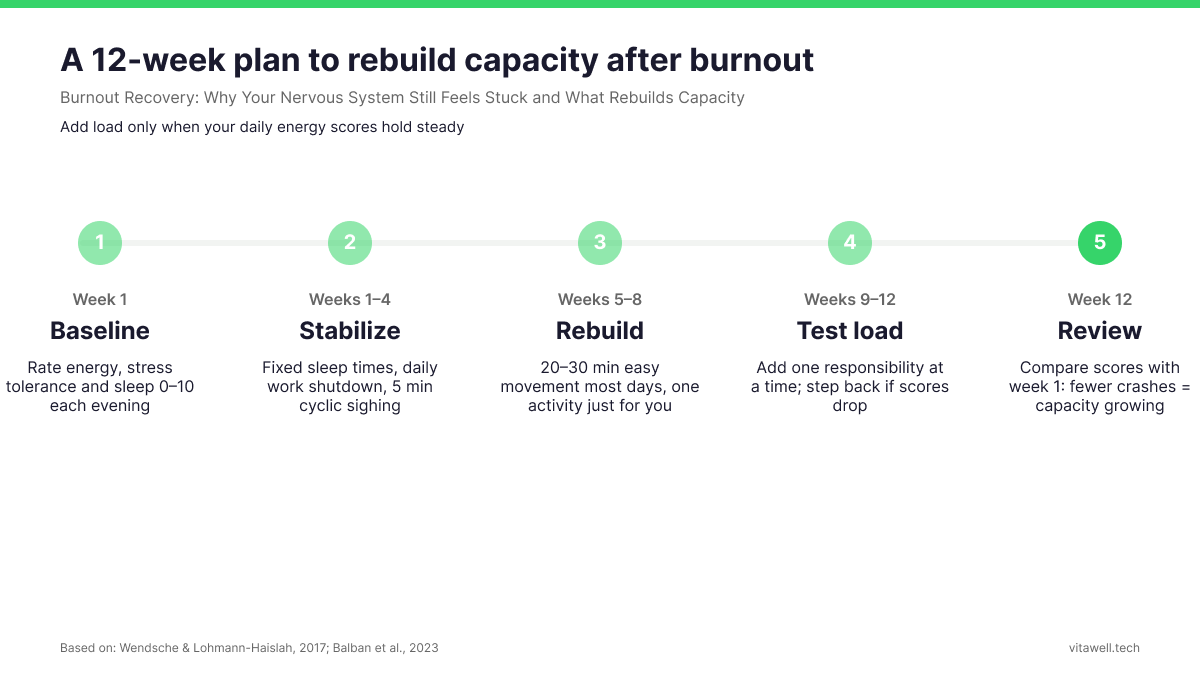
- Week 1, baseline: rate your energy, stress tolerance and sleep from 0 to 10 each evening. Write down the three tasks that drain you most.
- Weeks 1–4, stabilize: fixed sleep and wake times, a daily work shutdown time, and 5 minutes of cyclic sighing. Cut or delegate one draining task.
- Weeks 5–8, rebuild: add 20–30 minutes of easy movement on most days and one activity that is only for you. Keep the shutdown time.
- Weeks 9–12, test load: take on one extra responsibility at a time. If your scores drop for a week, step back to the previous level.
- Week 12, review: compare your scores with week 1. Rising averages with fewer crashes mean capacity is growing, even if it is not yet where it used to be.
Rebuilding Identity After Burnout
Burnout often erodes more than energy. People describe losing track of what they enjoy and who they are outside work. Recovery can involve grief for the version of yourself that could push through anything, and the Glise data suggests some people do end up with lasting new limits.
Self-criticism makes this harder. Treating setbacks with the patience you would offer a friend, a practice psychologists call self-compassion, is explored in our article on choosing self-compassion over self-optimization. Three questions to revisit monthly: What gave me energy this month? What did I agree to out of habit? What limit did I respect that I would have ignored before?
When to Talk to a Professional
- Exhaustion or low mood lasts most days for more than two weeks despite rest.
- You lose interest in almost everything, or have thoughts of harming yourself.
- Sleep, appetite or memory problems keep getting worse.
- You cannot get through a normal workday, or symptoms return each time you try.
A doctor can rule out conditions that mimic burnout, such as depression, anemia or thyroid problems. Psychological treatment and a planned, gradual return to work are the usual next steps; managers can find team-level fixes in our piece on why the best employees burn out. If you have thoughts of suicide, contact local emergency services or a crisis line now.
Frequently Asked Questions
How long does it take to recover from burnout?
It depends on severity. Mild burnout can ease within a few months of lower load and better recovery habits. Clinical exhaustion takes longer: in a Swedish 7-year follow-up, most people were back at work, but 73% still reported reduced stress tolerance. Plan for gradual gains over months and track them weekly.
Why am I still exhausted after a vacation?
Vacations help, but the effect is small and fades soon after you return. A meta-analysis of 7 studies found the gain in well-being was roughly cancelled out after work resumed. Recovery holds better when you detach from work every evening, not only during holidays.
Can burnout permanently damage the brain?
There is no proof of permanent damage. A brain-imaging study found a thinner medial prefrontal cortex and a larger amygdala in people under chronic work stress, but it compared groups at one point in time. Early follow-up data hinted the differences may reverse, and the brain stays adaptable throughout life.
Does exercise help burnout recovery?
Possibly, but the evidence is thin. A 2018 meta-analysis of 4 small trials found no clear effect of exercise therapy on burnout scores. Exercise still benefits sleep, mood and heart health, so gentle, regular movement is worth keeping. Just do not rely on it as your only recovery tool.
Conclusion
Burnout recovery is slower than most advice admits, and that is not a personal failure. The evidence points to a few things that matter most: daily switch-off time, a short breathing practice, steady sleep, and adding load back one step at a time. Start with tonight's shutdown time and 5 minutes of cyclic sighing. If you want a structure that keeps rest, health and work in balance while you rebuild, VitaWell can turn this 12-week plan into daily steps across your life areas.
This article is for informational purposes only and is not medical advice. Talk to a qualified healthcare professional about persistent exhaustion or mental health symptoms.
Sources
Psychology Today — How to Rebuild Your Capacity and Find Balance