Eating Peanuts Every Day May Cut Your Type 2 Diabetes Risk by 11% — What a New Study Found
A 2026 study in the American Journal of Clinical Nutrition found that daily peanut eating changes blood lipids in ways linked to 11% lower type 2 diabetes risk — but the story is more nuanced than the headline suggests.
A November 2026 study in the American Journal of Clinical Nutrition found that a blood-based "peanut lipidomic signature" (PeLS)—a fingerprint of eating peanuts, measured from blood samples—was associated with an 11% lower risk of type 2 diabetes, largely through changes in body weight. The same lipid signature showed no protective effect on cardiovascular disease. Researchers used 25g of whole skin-on peanuts or 32g of peanut butter daily in a 6-month clinical trial, then validated the finding in a 27,548-person cohort. Here's what the science actually shows, what it doesn't, and what a serving of peanuts looks like in practice.
Key Takeaways
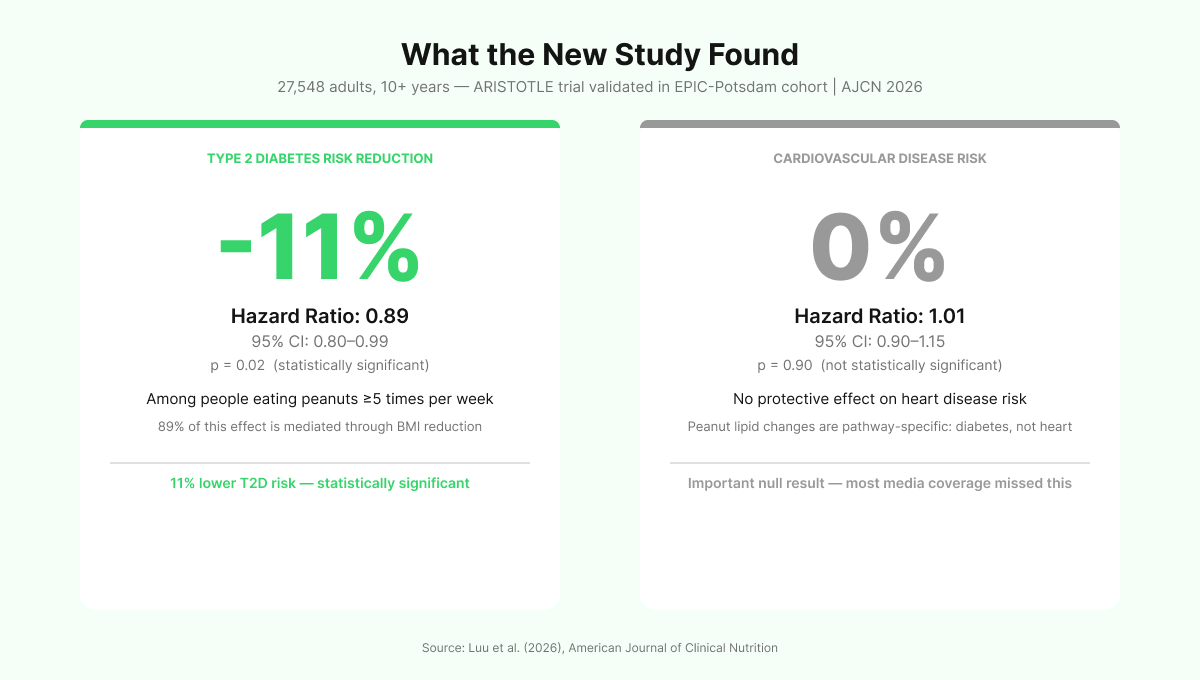
- An 11% lower type 2 diabetes risk (HR 0.89, 95% CI 0.80-0.99) was linked to the peanut lipidomic signature in a November 2026 AJCN study validated in 27,548 adults.
- Body weight (BMI) explained 57%-100% of the protection — peanuts likely help largely by influencing body composition, not through a direct blood-sugar mechanism.
- The same lipid signature showed zero effect on cardiovascular disease risk (HR 1.01, 95% CI 0.90-1.15) — a null result most articles miss entirely.
- Study dose: approximately 20-25 skin-on peanuts (~25g) or 2 tablespoons of natural peanut butter (32g) daily.
- PeLS is a rare objective dietary biomarker validated in a large cohort — it doesn't rely on self-reported food diaries, which makes it methodologically stronger than most nutrition research.
What the New Study Found: 11% Lower Diabetes Risk
The study published in the American Journal of Clinical Nutrition combined two research arms to identify and validate the peanut lipidomic signature. The first was the ARISTOTLE trial: 63 adults (44 women, 19 men) enrolled at the University of Barcelona consumed one of three diets for six months — 25g of whole roasted skin-on peanuts, 32g of peanut butter, or a control butter containing peanut oil according to the EurekaAlert press release. All three groups received some peanut-derived fat, which is an important caveat about the control arm.
Blood lipids were measured before and after the trial. Researchers identified 51 lipid compounds that shifted with peanut consumption, with the strongest changes in very long-chain saturated fatty acids (VLCSFAs) found in sphingolipids and ceramides as reported by Sci.News. This panel of shifted lipids became the PeLS—a blood-based fingerprint of peanut eating.
That fingerprint was then tested in the EPIC-Potsdam cohort: 27,548 German adults followed for more than a decade, including 774 who developed type 2 diabetes and 547 who developed cardiovascular disease per the DZD German Diabetes Center. The result: a one-standard-deviation increase in PeLS score corresponded to a hazard ratio of 0.89 (95% CI 0.80-0.99)—an 11% reduction in type 2 diabetes risk.
For context: 40 million Americans have been diagnosed with diabetes, and 115.2 million have prediabetes according to the Peanut Institute Foundation. An 11% reduction in population-level risk, achievable with an affordable everyday food, would be clinically meaningful at scale.
The Two-Part Study Design: How Researchers Built a Blood Fingerprint of Peanut Eating
What makes the 2026 AJCN study methodologically unusual is the biomarker approach. Most diet-and-disease studies rely on food frequency questionnaires—self-reported estimates of what people eat that are notoriously unreliable. PeLS is different: it's a panel of blood lipids that change measurably in response to peanut consumption, allowing researchers to objectively confirm dietary exposure rather than trusting memory.
As Dr. Ines Dominguez-Lopez, one of the study's lead authors, described it: "This is not merely a simple increase in fat levels, but a complex remodeling of the lipidome." The 51 lipid changes identified were dominated by very long-chain saturated fatty acids—specifically C24:0 (lignoceric acid)—concentrated in sphingolipids and ceramides. These are fats that peanuts contain in relatively high amounts compared to other foods.
Dr. Matthias B. Schulze of the DZD added: "We have uncovered a potential biological marker that links dietary fat quality to metabolic outcomes." That the biomarker was developed in a controlled trial and then validated in a large cohort—rather than simply described observationally—gives PeLS more scientific credibility than most dietary biomarkers published to date.
The Weight Story: Why BMI Explains Most of the Protection
Here is the most important nuance in the study: BMI accounted for approximately 89% of the association between PeLS and lower type 2 diabetes risk (with the range spanning 57% to 100% across different statistical models) per Medical News Today's analysis.
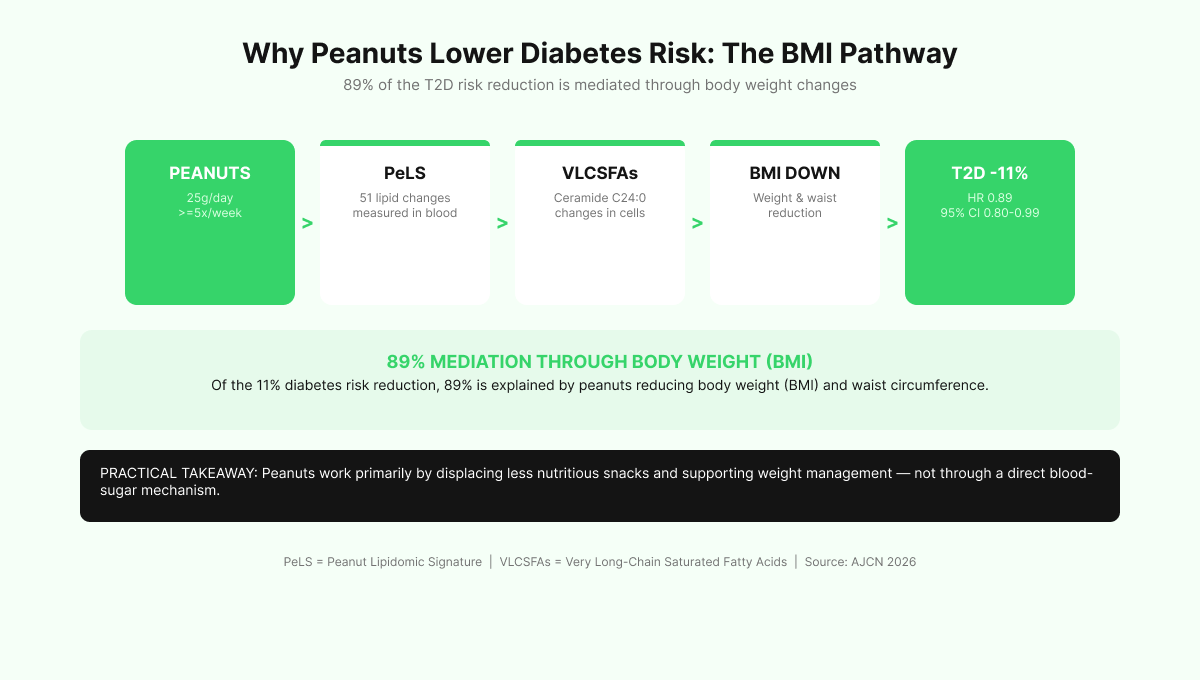
What this means practically: the peanuts most likely reduced diabetes risk primarily because they helped people maintain or slightly reduce body weight—not because the specific lipid changes directly lowered blood sugar or insulin resistance. The displacement effect is the most likely mechanism: when peanuts replace ultra-processed snacks, people consume more protein (7g per 25g serving), more fiber, and more satiating unsaturated fats, which collectively support weight management.
The lipidomic changes in ceramides may themselves play a role in the remaining portion of the effect, but the weight pathway appears dominant. This is not a failure of the finding—it's a clarification. Peanuts work. The main pathway is weight-related. And that's entirely consistent with decades of research on plant-based protein and metabolic health.
The Surprising Finding: Peanuts Didn't Lower Heart Disease Risk
One result from the 2026 study did not receive much attention in media coverage: peanuts showed no protective effect on cardiovascular disease. The hazard ratio for CVD per standard-deviation increase in PeLS was 1.01 (95% CI 0.90-1.15) per analysis of the AJCN data—a flat null result that sits squarely at 1.0 with a confidence interval crossing it in both directions.
This matters because there is a persistent popular claim that nuts, including peanuts, protect the heart. Some older observational studies supported this, but the 2026 AJCN data, using an objective biomarker rather than self-reported intake, found no CVD benefit. This doesn't mean peanuts are harmful to the heart—the confidence interval shows no elevated risk either—but it does suggest the metabolic effects of the peanut lipid signature are pathway-specific: relevant to diabetes risk (largely via weight), less relevant to cardiovascular outcomes.
Not All Saturated Fats Are the Same: Why Peanut Fats Differ From Butter
The VLCSFAs concentrated in peanuts—particularly C24:0 lignoceric acid—are chemically and metabolically distinct from the saturated fats found in butter and red meat. Butter's dominant saturated fats are medium-to-long chain: lauric (C12:0), myristic (C14:0), and palmitic (C16:0). These shorter chains enter circulation quickly and have well-documented inflammatory and LDL-elevating effects at high intake.
C24:0, with its 24-carbon chain, is processed differently. It concentrates primarily in sphingolipids and ceramides in cell membranes, where it appears to influence insulin signaling pathways rather than directly raising LDL. A 2025 study published in Cardiovascular Diabetology found that higher plasma ceramide C24:0 levels were associated with approximately 54% lower type 2 diabetes hazard per the PMC study—a finding that provides mechanistic support for the PeLS results.
This is also relevant to other beneficial compounds in peanuts and legumes: peanuts contain phytic acid, polyphenols, and plant sterols that may work alongside VLCSFAs in modulating metabolic risk. The chain-length difference is an easy mental model: think of carbon chains like rungs on a ladder—butter's shorter rungs versus peanuts' very long rungs behave completely differently in human metabolism.
How Much Should You Eat? A Practical Guide
The ARISTOTLE trial used two specific doses per the trial protocol: 25g of whole roasted skin-on peanuts — roughly 20 to 25 peanuts, or one small handful — or 32g of natural peanut butter — approximately 2 tablespoons. Peanuts have a glycemic index of 13-14 (on a scale where glucose = 100), making them one of the lowest-GI protein-rich foods available.
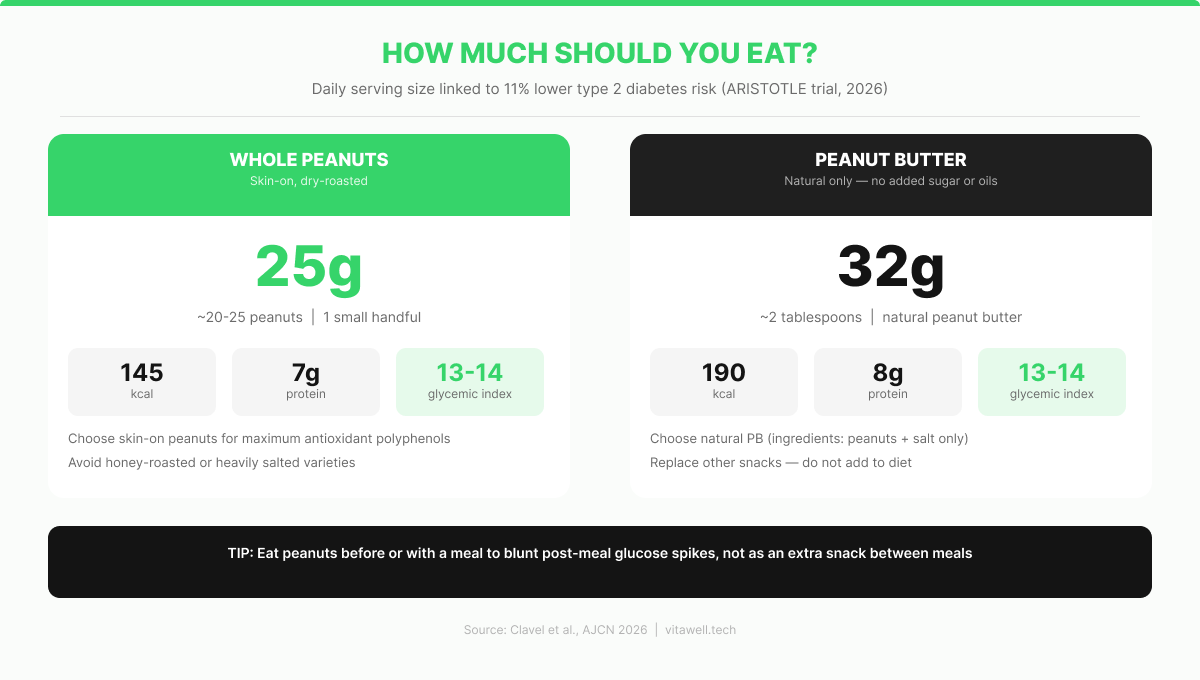
Practical guidance for adding peanuts to your routine: choose skin-on peanuts, as the skin contains polyphenols; for peanut butter, choose natural varieties (ingredient list: peanuts, salt) rather than those with added sugar or palm oil; and use peanuts to replace — not add to — existing snacks. The displacement of ultra-processed snacks is likely a key driver of the benefit.
Peanuts vs. Tree Nuts for Diabetes Prevention
Peanuts are technically legumes, not tree nuts — they grow underground and are botanically related to lentils and chickpeas. But nutritionally they behave similarly to almonds and walnuts, and both show comparable evidence for diabetes risk reduction. A landmark 2002 Harvard Nurses' Health Study following 83,000+ female nurses over 16 years found that eating peanuts or tree nuts five or more times per week was associated with a 27% lower risk of type 2 diabetes per the Peanut Institute Foundation. At 25g serving sizes, peanuts deliver approximately 7g of plant protein—the highest of any nut—along with 19 essential vitamins and minerals. And replacing 5% of calories from animal protein with plant protein was associated with a 23% lower T2D risk in a separate analysis (Malik et al., 2016). One concrete advantage of peanuts over tree nuts: cost.
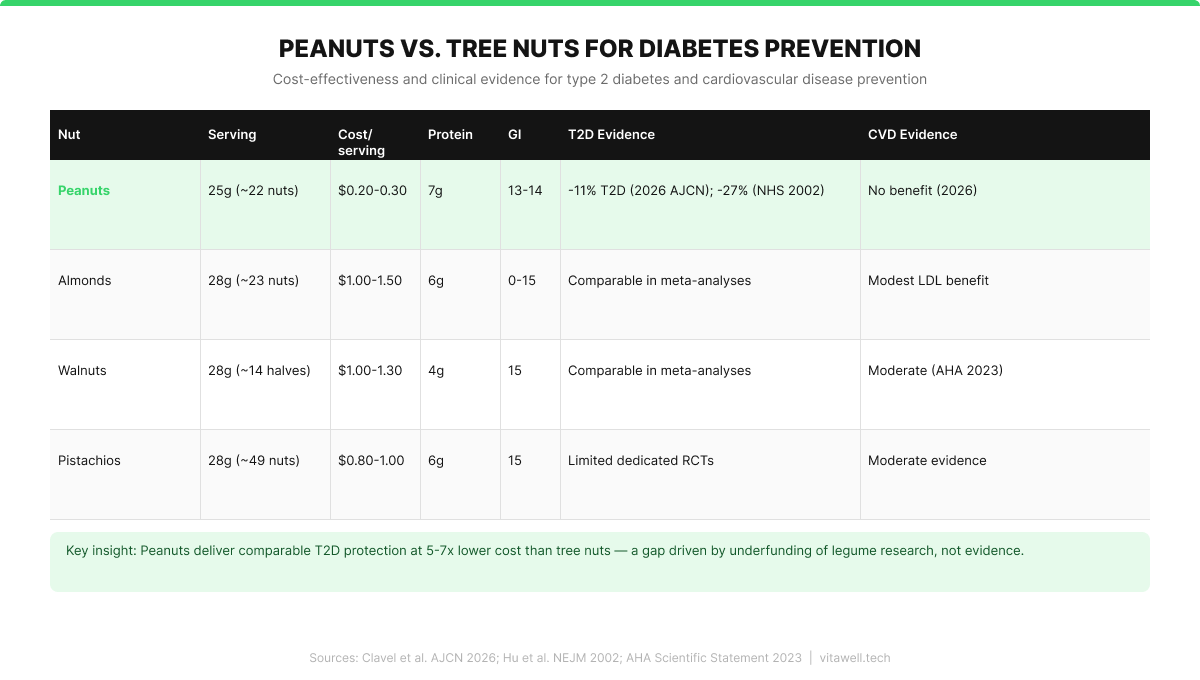
| Nut | Serving size | Cost per serving | Protein | GI | T2D evidence | CVD evidence |
|---|---|---|---|---|---|---|
| Peanuts | 25g (~22 nuts) | $0.20–0.30 | 7g | 13–14 | 11% lower (2026 AJCN); 27% lower (2002 NHS) | No benefit (2026 AJCN) |
| Almonds | 28g (~23 nuts) | $1.00–1.50 | 6g | 0–15 | Comparable in meta-analyses | Modest LDL benefit |
| Walnuts | 28g (~14 halves) | $1.00–1.30 | 4g | 15 | Comparable in meta-analyses | Moderate AHA evidence |
| Pistachios | 28g (~49 nuts) | $0.80–1.00 | 6g | 15 | Limited dedicated RCTs | Moderate evidence |
Peanuts cost 3 to 5 times less per serving than tree nuts, making them accessible for sustained daily use across income levels — an underappreciated advantage in population health terms.
Important Caveats: What This Study Can't Tell You
The 2026 AJCN study has real strengths—the PeLS biomarker, the two-stage validation, the large cohort—but also notable limitations that most coverage underplays. The ARISTOTLE trial enrolled 63 young, generally healthy adults. These participants did not have diabetes or prediabetes, which limits direct extrapolation to people managing metabolic disease. Association in a cohort (even a well-validated one) cannot prove causation. And the study's control arm included peanut oil, meaning all participants received some peanut-derived fat—the control was not a true "peanut-vs.-nothing" comparison.
Funding transparency: the study acknowledged support from the Peanut Institute Foundation, with researchers noting the funder had no role in study design, data collection, or analysis. This is standard disclosure and consistent with how industry-funded food research is typically structured—but it is worth noting when evaluating the findings.
The Bottom Line: How Peanuts Fit Into a Broader Diabetes Prevention Strategy
Peanuts are not a cure or a pharmaceutical. They are one practical, affordable tool in a broader approach to metabolic health. The 2026 AJCN evidence is real: an objective blood biomarker, validated in nearly 28,000 people, showing 11% lower diabetes risk. The main pathway is weight-related, which makes the advice operationally simple: eat peanuts instead of less nutritious snacks.
Distributing short walks throughout the day has shown even stronger blood sugar benefits in a 2026 randomized trial on blood sugar control from movement breaks—and that effect combines naturally with a peanut-based snack strategy. For dietary approaches that more directly target blood sugar management, additional strategies exist. Peanuts are most powerful as part of a stack.
Your Diabetes Prevention Daily Stack:
- Swap one processed snack for 25g skin-on peanuts or 2 tablespoons of natural peanut butter.
- Take a 5-minute walk after each main meal to independently activate GLUT4 glucose uptake.
- Limit refined carbohydrate snacks — replace them, don't simply add peanuts on top.
- Choose skin-on roasted peanuts or natural peanut butter without added sugar.
- If using a continuous glucose monitor (CGM), track your personal blood sugar response to validate the effect.
When to Talk to a Professional
Consult your doctor or a registered dietitian before making significant dietary changes if you have been diagnosed with type 1 or type 2 diabetes and are adjusting snack habits that may affect your blood sugar or medications; if you have a known peanut allergy (approximately 1-2% of the U.S. population has a peanut allergy, and some reactions are severe); if you have peanut sensitivity or other gastrointestinal conditions; if you use a CGM and notice unexpected blood glucose patterns; or if you are pregnant or breastfeeding. A registered dietitian nutritionist (RDN) can help you integrate peanuts and other legumes into an overall diabetes prevention or management plan.
Frequently Asked Questions
How many peanuts a day does it take to lower diabetes risk?
The ARISTOTLE trial used 25g of skin-on peanuts — roughly 20 to 25 peanuts or one small handful. This is the dose at which the peanut lipidomic signature was developed and then validated against diabetes outcomes in 27,548 adults. Smaller amounts may still have benefit; larger amounts add calories without proven additional benefit for diabetes risk.
Are the saturated fats in peanuts bad for you?
Peanuts' saturated fats are predominantly very long-chain (C24:0 lignoceric acid), which behave differently from the medium-chain saturated fats in butter and red meat. Rather than raising LDL cholesterol in the typical pattern, peanut VLCSFAs concentrate in cell-membrane ceramides where they appear to influence insulin signaling pathways. The 2026 study found no cardiovascular harm alongside the diabetes benefit.
Can peanut butter have the same diabetes-prevention effect as whole peanuts?
The ARISTOTLE trial included both. The 32g peanut butter arm produced a similar shift in blood lipids (the PeLS) as the 25g whole peanut arm. Natural peanut butter without added sugar or palm oil is a valid alternative. Heavily processed peanut butter with added sugars likely dilutes the benefit.
Do peanuts protect your heart?
Based on the 2026 AJCN data with objective biomarker measurement: not significantly. The peanut lipidomic signature showed no protective effect on cardiovascular disease (HR 1.01). Some older observational studies suggested heart benefits from nuts broadly, but those relied on self-reported intake. The 2026 biomarker-validated data found the lipid changes from peanuts are pathway-specific—diabetes-relevant, not cardiovascular.
Is it the peanuts or the weight loss they cause that reduces diabetes risk?
Largely the weight effect: BMI accounted for approximately 89% of the PeLS-to-T2D risk association in the 2026 study. Peanuts appear to help primarily by supporting weight maintenance when replacing less nutritious snacks — the lipidomic changes in ceramides may account for a portion of the remaining risk reduction, but the weight pathway is dominant.
Conclusion
The 2026 American Journal of Clinical Nutrition study adds a methodologically unusual layer to nutrition science: an objective blood-based fingerprint, not self-reported data, linking daily peanut consumption to measurably lower type 2 diabetes risk. The 11% reduction is real—and the fact that it's largely mediated through body weight makes it operationally straightforward. The simplest translation: replace at least one ultra-processed snack per day with a small handful of skin-on peanuts or two tablespoons of natural peanut butter. The null cardiovascular result is an honest reminder that nutrition effects are pathway-specific. No single food prevents everything—but peanuts, at a price point accessible to nearly everyone, have now earned a stronger evidence base than most superfoods at a fraction of the cost.
Related on VitaWell
- Eating Late and Metabolic Syndrome Risk — How the timing of your meals interacts with the same metabolic pathways this article covers.
- Daily Avocado and Mango May Lower Blood Pressure in Prediabetes — Another everyday food with specific evidence for metabolic risk reduction.
- 3 Lifestyle Changes That Reduce Chronic Disease Risk — The broader framework of lifestyle habits that compound with daily food choices.
This article is for informational purposes only and does not constitute medical advice. Consult a qualified healthcare provider before making changes to your diet or health routine.
Sources
- Medical News Today — Peanut-related blood fats linked to lower type 2 diabetes risk
- American Journal of Clinical Nutrition 2026 — Peanut lipidomic signature and type 2 diabetes risk
- EurekaAlert, November 2026 — Peanut consumption and blood lipid profile
- DZD German Diabetes Center — Peanut consumption affects lipid profile
- Sci.News — Peanut consumption and lower diabetes risk
- Cardiovascular Diabetology, 2025 — Ceramide C24:0 and type 2 diabetes hazard
- Peanut Institute Foundation / PRNewswire — New insights into peanuts' role in diabetes prevention