
How Your Genes Affect LDL Cholesterol: Why Saturated Fat Is Riskier for Some People
New research shows people with high genetic risk for LDL cholesterol respond more strongly to saturated fat in their diet — making what you eat even more critical if your genes predispose you to high cholesterol.

If saturated fat raises your LDL cholesterol more than it does your neighbor's, your genes may explain why. A large observational study of over 20,000 postmenopausal women found that those with a high polygenic score for LDL — meaning their DNA makes them more likely to produce excess LDL — saw a much stronger spike in LDL cholesterol from eating saturated fat than women with lower genetic risk. The finding reframes genetic risk: having the "bad" genes is not a reason to give up on diet, but a signal that diet matters more for you, not less.
Key Takeaways
- People with high genetic risk for LDL cholesterol respond more strongly to saturated fat in their diet than those with lower genetic risk.
- An observational study of 20,940 postmenopausal women found that almost all heart disease cases over a 10-year follow-up occurred in those with the highest polygenic risk scores.
- Genetic susceptibility does not override diet — it makes dietary intervention more urgent, not less.
- Low-carb and ketogenic diets showed no cardiovascular benefit for genetically at-risk women, and may worsen LDL in this group.
- Knowing your genetic risk can help you and your doctor set smarter, personalized cholesterol targets.
What Is LDL Cholesterol and Why Does It Matter?
Low-density lipoprotein (LDL) is often labeled "bad" cholesterol because elevated levels allow it to build up as plaque inside artery walls — a process called atherosclerosis. Over time, this narrows arteries and raises the risk of heart attack and stroke. Cardiovascular disease (CVD) is the most common cause of death worldwide, accounting for roughly one-third of all global deaths, according to the World Health Organization.
LDL is not the only marker that matters, but it is the one most directly targeted by both diet and medication. The American Heart Association (AHA) explains that there is no single "normal" LDL level for every person. Someone at average risk may aim to keep LDL below 100 mg/dL, while those at high or very high cardiovascular risk may need to push toward 70 mg/dL or even 55 mg/dL, according to the American Heart Association. The right target depends on your age, medical history, and — as newer research is making clear — your genetics.
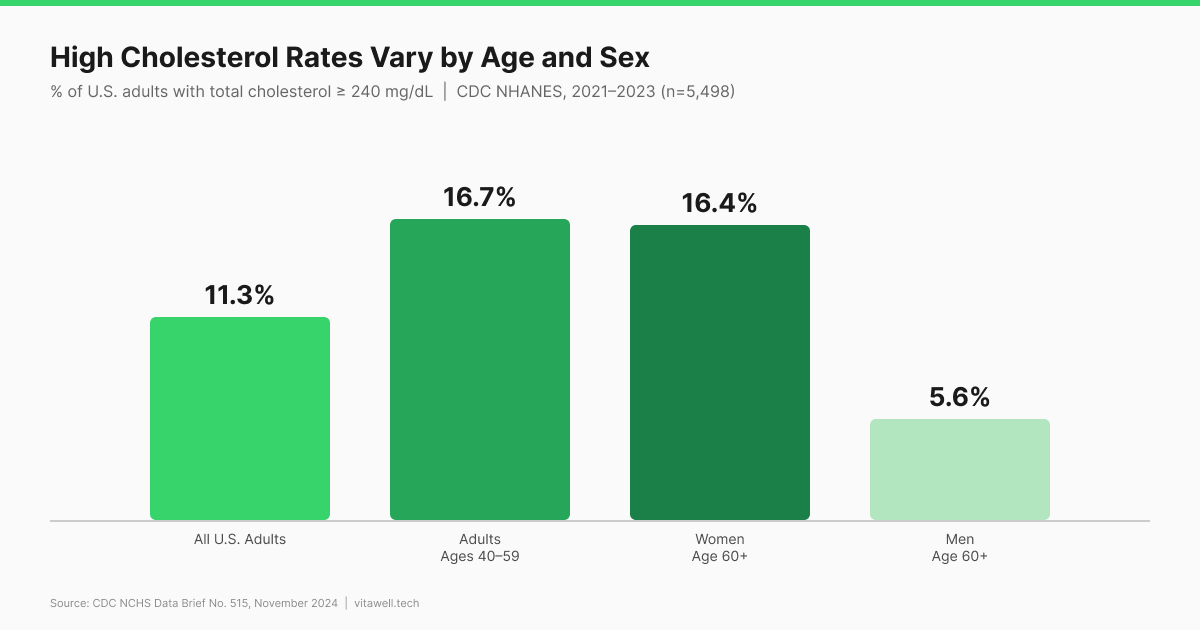
High cholesterol is more common than many people realize. Data from the National Health and Nutrition Examination Survey (NHANES) found that 11.3% of U.S. adults aged 20 and older had high total cholesterol (defined as 240 mg/dL or above) during August 2021 through August 2023, based on a sample of 5,498 adults, according to a November 2024 CDC NCHS Data Brief. The numbers are strikingly unequal by age and sex: 16.7% of adults aged 40 to 59 had high cholesterol, and among women 60 and older, the rate climbed to 16.4% — compared with just 5.6% for men in the same age group.
The key insight missed by most general cholesterol guidance: LDL is shaped jointly by your diet AND your genetic makeup, and the two do not operate independently. For people with certain gene variants, saturated fat can be a much more powerful driver of LDL elevation than the standard advice suggests.
The Role of Genetics: How Your DNA Sets Your LDL Baseline
Genetics influences cholesterol in two ways. The first is familial hypercholesterolemia (FH), a monogenic condition in which a single gene mutation causes the liver to remove far less LDL from the bloodstream than normal. FH affects approximately 1 in 250 people in its heterozygous (single-copy) form, according to the CDC, making it one of the most common inherited conditions. People with FH typically have LDL levels above 190 mg/dL regardless of diet and usually require medication. The AHA also lists family history and FH as leading causes of high LDL.
The second, and more widespread, form of genetic influence is polygenic — meaning it comes from many common gene variants, each contributing a small nudge to LDL levels. When these variants are summed into a single score, the result is called a polygenic score (PGS), and it can predict a person's LDL "set point" far better than any single gene test.
What Is a Polygenic Score for LDL?
A polygenic score for LDL (PGS_LDL) aggregates hundreds or thousands of small genetic effects to estimate a person's overall inherited tendency toward higher or lower LDL production. It is not a diagnosis — most people with a high PGS_LDL will never develop heart disease — but it is an increasingly useful tool for identifying who might benefit most from early or aggressive cholesterol management.
A major 2026 study published in the Journal of the American College of Cardiology: Advances used data from the Women's Health Initiative (WHI) to test how much genetic risk shaped the relationship between diet and LDL. The study included 20,940 postmenopausal women, with a median age of 65; about half identified as non-Hispanic white and 33% as Black. Each participant's diet was assessed using a 122-item food frequency questionnaire, and each was assigned a PGS_LDL score. Women above the cohort median PGS had higher baseline LDL levels, more existing atherosclerotic cardiovascular disease (ASCVD), and were more likely to be on lipid-lowering therapy — confirming that the PGS was capturing real biological differences.
How Saturated Fat Hits Harder When You Have High Genetic Risk
Here is where the study's most consequential finding emerges. For women in the lower half of the polygenic score distribution, the association between saturated fat intake and LDL cholesterol was modest — the kind of modest effect that standard dietary advice is calibrated around. But for women in the upper PGS range, the same saturated fat intake was associated with a much stronger LDL response.
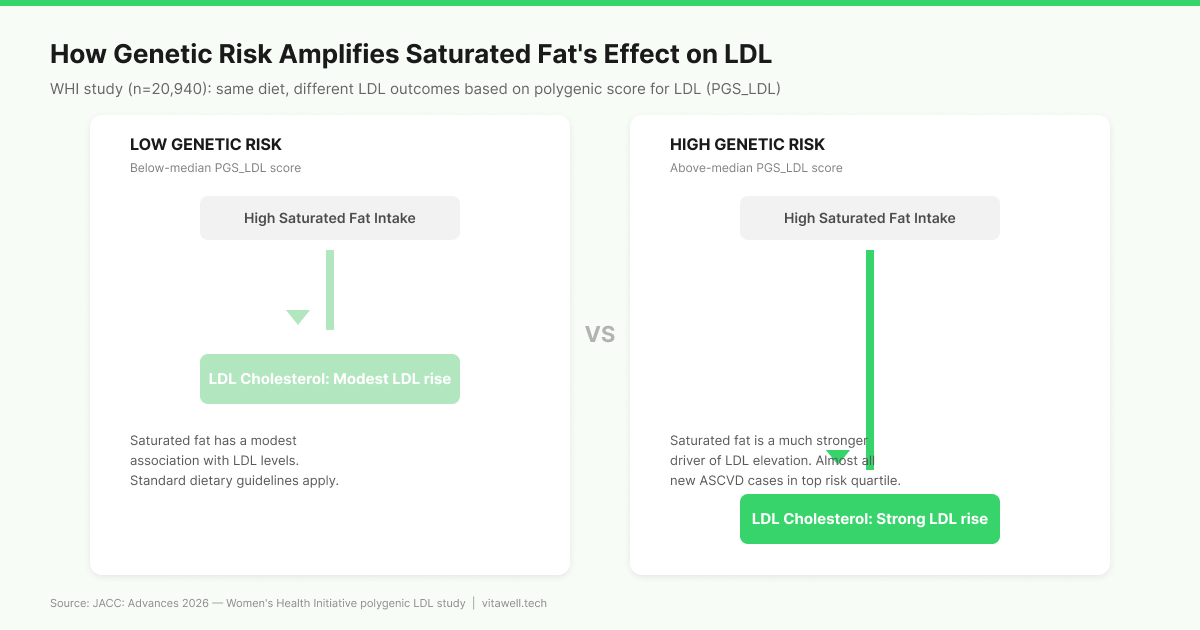
This matters enormously for cardiovascular outcomes. Among the 16,835 participants who had no prevalent ASCVD at the study's start, 1,582 — or 9.4% — developed incident ASCVD within 10 years. Almost all new cases occurred in women in the top quartile of polygenic risk. The study design was observational, meaning it cannot prove that saturated fat caused the events, but the consistency of the association across a large, diverse cohort is notable.
"This study reinforces that genetic susceptibility is not a fixed sentence — it is a signal that tells us where environmental interventions, like diet, can have the greatest impact," said Thomas M. Holland, MD, MS, of Rush University, commenting on the findings.
Yu-Ming Ni, MD, of MemorialCare, added that for patients who know they have a genetic predisposition to high LDL, reducing dietary saturated fat becomes one of the most actionable steps they can take — arguably more impactful than for someone without that predisposition.
The key reframe: genetic risk amplifies the importance of diet, it does not eliminate it. The table below summarizes how saturated fat strategy should shift based on genetic risk level.
| Genetic Risk Level | Polygenic Score | Expected LDL Response to Saturated Fat | Daily Saturated Fat Target | Recommended Monitoring |
|---|---|---|---|---|
| Low | Below cohort median | Modest association | General guidelines (~10% of calories) | Standard lipid panel every 5 years |
| Moderate | Near cohort median | Moderate association | Aim for <7% of calories | Annual lipid panel; discuss targets with doctor |
| High | Top quartile PGS | Strong association | Strict limit: <5–6% of calories | Frequent monitoring; consider specialist |
| Familial hypercholesterolemia | Monogenic (1 in 250) | Very high baseline LDL regardless of diet | Medical nutrition therapy + medication typically required | Genetic testing + specialist care |
Why Keto Diets Don't Help — and May Hurt — Genetically At-Risk People
A common assumption is that any diet low in carbohydrates is heart-protective because it lowers triglycerides and can improve HDL. The WHI study challenges this assumption for people at high genetic risk for LDL elevation.
Among participants who followed a low-carbohydrate, high-fat eating pattern — consistent with ketogenic or very low-carb principles — there was no evident cardiovascular benefit compared to those eating higher-carbohydrate diets. More concerning, this dietary approach may increase LDL-C specifically in those who are genetically predisposed to high LDL, the study suggests, though the authors emphasize that the protocol did not directly test a formal ketogenic diet.
Şebnem Ünlüişler, of the London Regenerative Institute, notes that this finding highlights a broader principle in nutritional science: dietary strategies must be calibrated to the individual. "What reduces risk for one person can amplify it for another, particularly when genetic factors are in play," she observed.
The practical implication: if you have a family history of high cholesterol or have been told you carry genetic variants linked to elevated LDL, a keto or high-fat diet may not be the cardiovascular tool you expect it to be. This is a conversation worth having with your doctor before making major dietary shifts.
Practical Steps to Lower Saturated Fat (Especially If You Have High Genetic Risk)
The study reinforces the well-established dietary advice to reduce saturated fat, while adding urgency for those with genetic risk. Here is a concrete seven-step checklist grounded in the research findings and expert guidance:
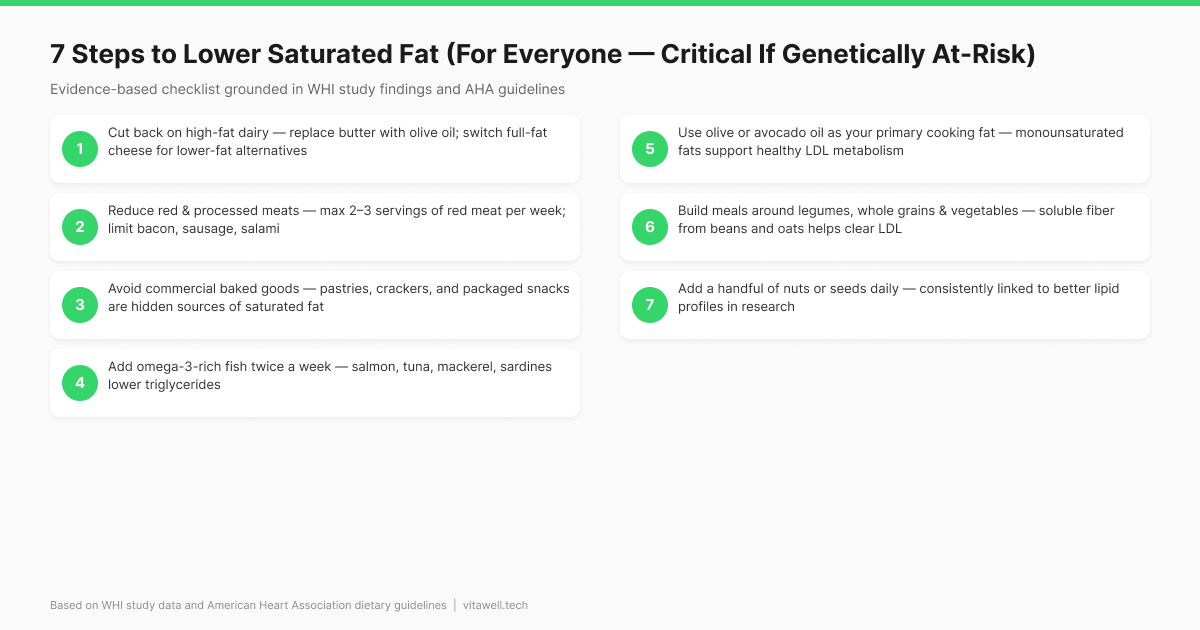
- Cut back on high-fat dairy: replace butter with olive or avocado oil; switch full-fat cheese for smaller portions of lower-fat alternatives.
- Reduce red and processed meats: aim for no more than two to three servings of red meat per week; limit processed meats (bacon, sausage, salami) to occasional use.
- Avoid baked goods and ultra-processed foods: commercial pastries, crackers, and packaged snacks are common hidden sources of saturated and trans fats.
- Add omega-3-rich fish twice a week: salmon, tuna, mackerel, and sardines help lower triglycerides and support overall cardiovascular health.
- Use olive or avocado oil as your primary cooking fat: these provide monounsaturated fats that support healthy LDL metabolism.
- Build meals around legumes, whole grains, and vegetables: soluble fiber from beans, lentils, and oats actively helps clear LDL from the bloodstream.
- Add a handful of nuts or seeds daily: research consistently links tree nuts and seeds to better lipid profiles — see VitaWell's guide to healthy fat sources for specific options.
Exercise is a complementary lever. Regular aerobic and resistance training can modestly lower LDL while improving HDL and reducing overall cardiovascular risk — for a data-backed breakdown, VitaWell's piece on exercise for heart health covers what a 31-trial meta-analysis found. For the full picture of how cholesterol fits into broader cardiovascular risk, see heart health guidelines on the evolving heart-kidney-obesity connection.
What Genetic Testing Can (and Can't) Tell You About Your Cholesterol
Polygenic risk scores for LDL are not yet a standard part of clinical care, but they are increasingly available through direct-to-consumer genetic testing services. These tests can offer useful context, but they come with caveats: they are population-based estimates, not individual predictions, and they do not account for all relevant gene variants.
The more immediately actionable step is standard cholesterol screening. The AHA recommends that most adults begin getting a fasting lipid panel every five years starting at age 19. Children should be screened between ages 9 and 11.
For postmenopausal women in particular, the data are a strong reminder: 16.4% of women aged 60 and older in the U.S. have high total cholesterol, more than three times the rate of men in the same age group (5.6%), according to CDC NHANES data. Regular monitoring after menopause — when estrogen's protective effect on LDL declines — is especially important.
A flag for FH: if your LDL remains persistently above 190 mg/dL despite dietary changes, that may indicate familial hypercholesterolemia and warrants a conversation with your doctor about genetic workup and medication.
When to Talk to a Professional
Cholesterol management is a conversation best held with a healthcare provider who knows your full medical history. Consider scheduling an appointment if:
- Your LDL is above 130 mg/dL (or above 100 mg/dL with other cardiovascular risk factors)
- Your total cholesterol is at or above 240 mg/dL
- You have a first-degree relative with early-onset heart disease or very high cholesterol
- Your LDL remains elevated despite sustained dietary changes
- You are postmenopausal and have not had a lipid panel in the past two years
A standard lipid panel is a simple blood test. If FH is suspected, additional genetic testing can identify specific mutations. When LDL is very high, statins and other lipid-lowering medications are safe, well-studied options — diet is an important complement, but not a substitute for medication when levels are significantly elevated.
FAQ
Can genes cause high LDL even if I eat a healthy diet?
Yes. People with familial hypercholesterolemia (FH) or high polygenic LDL scores may have elevated LDL regardless of their diet, because their liver is genetically less efficient at removing LDL from the bloodstream. For FH in particular, diet alone is rarely sufficient to reach safe LDL targets, and medication is typically necessary. For polygenic risk, diet remains important — but its effect size is larger in those with high genetic risk, making compliance more critical.
What is a normal LDL cholesterol level?
There is no single universal target. The American Heart Association advises that many adults aim for LDL below 100 mg/dL, while those at high cardiovascular risk may need to reach 70 mg/dL, and very high-risk patients 55 mg/dL or lower. Your doctor will set a goal based on your overall risk profile, not a population average.
Does saturated fat raise LDL in everyone?
Saturated fat raises LDL across most population groups, but the magnitude of the effect varies considerably depending on genetics. The 2026 Women's Health Initiative analysis found that saturated fat had a modest association with LDL in women with low polygenic LDL scores, but a much stronger association in women with high polygenic scores. In other words, the same diet can produce very different LDL outcomes depending on your inherited risk.
Is a keto diet bad for LDL cholesterol?
For people with high genetic risk for LDL elevation, a ketogenic or very high-fat diet may worsen LDL levels, based on the WHI study data. For people with average or low polygenic risk, the effect is less clear and varies by the specific fats consumed. If you have a known genetic predisposition to high LDL, discuss any planned shift to a high-fat diet with your cardiologist or primary care provider before starting.
How can I find out if I have a genetic risk for high cholesterol?
For familial hypercholesterolemia, genetic testing is available through clinical labs and can identify specific mutations. For polygenic risk, direct-to-consumer services such as 23andMe offer PGS reports, though clinical interpretation varies. The simplest starting point is a standard fasting lipid panel: persistently high LDL — especially above 190 mg/dL — is a prompt to discuss genetic factors with your doctor.
Conclusion
Your genes do not decide your LDL fate — but they do set the terms. For people with high polygenic risk, dietary saturated fat is a more powerful driver of LDL elevation and cardiovascular disease risk than standard population-level advice conveys. The practical message is clear: if you have a family history of high cholesterol, have been screened and found to have elevated LDL, or fall into a higher-risk demographic group, reducing saturated fat is one of the most targeted steps you can take. It is not a guarantee, but the evidence suggests it carries more benefit for you than for someone without that genetic profile. Regular screening, an honest conversation with your doctor, and a Mediterranean-style dietary pattern remain the most reliable tools in hand.
Explore more evidence-based guidance in the VitaWell Health section.
Related on VitaWell
- It's Never Too Late: How a High-Quality Plant-Based Diet Can Reduce Your Risk of Alzheimer's — A plant-forward diet has benefits that extend beyond cholesterol, including protection against cognitive decline.
- Berries as Superfoods: Are Antioxidants the Real Hero? — Berries are among the most heart-supportive foods you can add to your plate, and this article explains why.
- New WHO Guidelines Reveal How to Prevent Up to 45% of Dementia Cases — What You Can Do Today — The lifestyle factors that protect your heart also protect your brain.
This article is for informational purposes only and does not constitute medical or nutritional advice. Consult your healthcare provider before making significant changes to your diet or cholesterol management plan.
Sources
- MedicalNewsToday — "High saturated fat intake may spike LDL cholesterol in people with genetic risk"
- JACC: Advances, 2026 — Women's Health Initiative polygenic LDL study
- American Heart Association — "What Your Cholesterol Levels Mean" (reviewed Mar 2026)
- CDC NCHS Data Brief No. 515 — "Total and High-density Lipoprotein Cholesterol in Adults: United States, August 2021–August 2023" (Nov 2024)
- CDC Genomics — "How Common is Familial Hypercholesterolemia?"
- World Health Organization — Cardiovascular diseases fact sheet