
New WHO Guidelines Reveal How to Prevent Up to 45% of Dementia Cases — What You Can Do Today

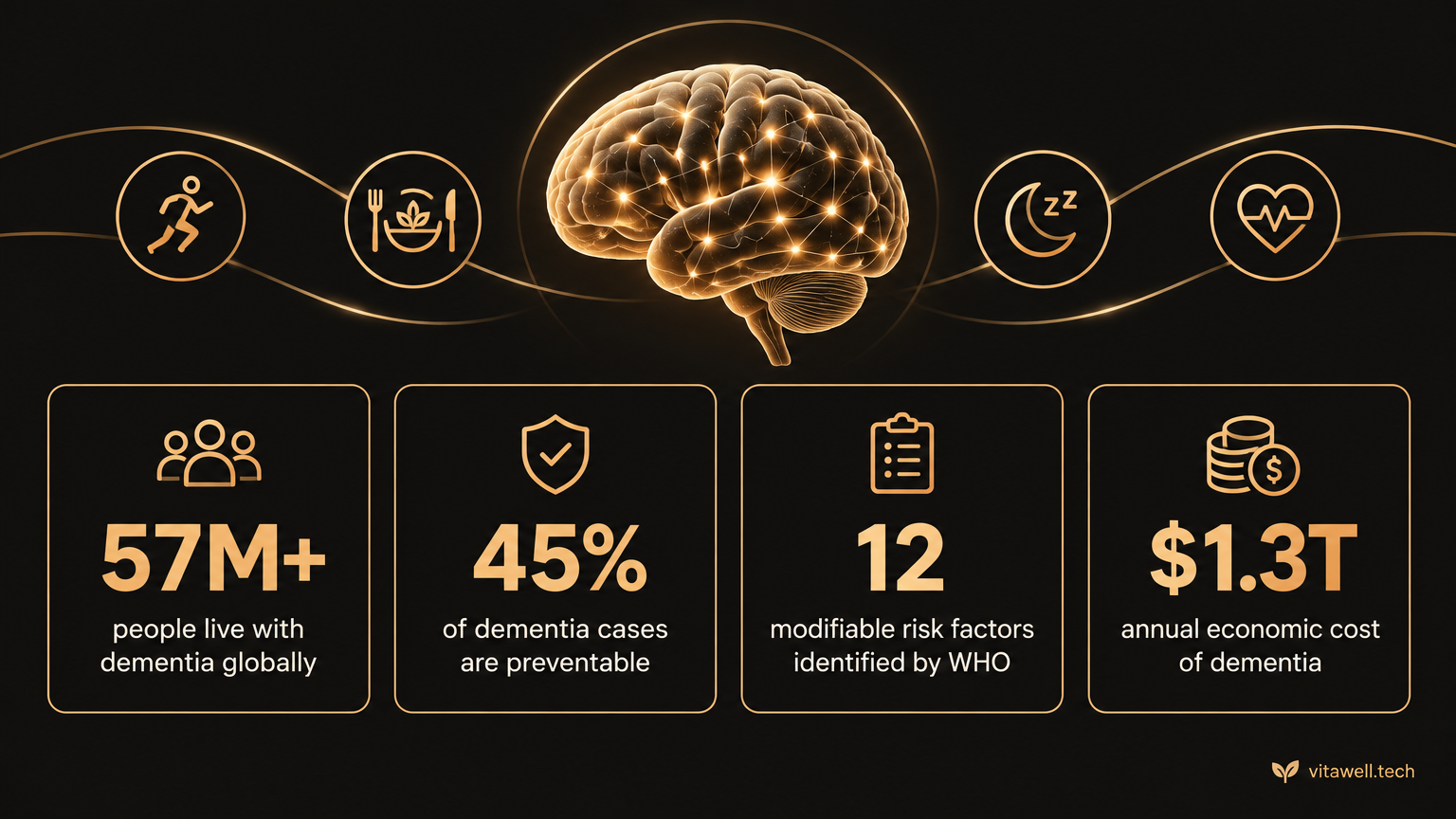
A disease that affects more than 57 million people worldwide just received a powerful new prevention playbook. On July 15, 2026, the World Health Organization released its second edition of guidelines on reducing the risk of cognitive decline and dementia — and the headline finding is remarkable: up to 45% of all dementia cases could be delayed or entirely prevented. The actions required are largely within your control.
What Is Dementia and Why Are New Guidelines Needed?
Dementia is not a single disease. It is an umbrella term covering a group of symptoms affecting memory, thinking, and the ability to carry out daily activities. Alzheimer's disease is the most common form, accounting for approximately 60 to 70 percent of all cases. Worldwide, more than 57 million people live with dementia, and nearly 10 million people receive a new diagnosis every year. Dementia costs the global economy an estimated $1.3 trillion annually. The 2026 WHO update incorporates new research on environmental risk factors, personalized multidomain interventions, and a clearer understanding of which individual lifestyle changes produce the greatest protective effects.
The 45% Figure — What Does It Really Mean?
Up to 45% of dementia cases worldwide are attributable to modifiable risk factors. The WHO organizes its recommendations into four broad categories: healthy behaviours; management of physical health conditions such as obesity, diabetes, high blood pressure, high cholesterol, and hearing loss; environmental risk factors, specifically air pollution (new in 2026); and multidomain interventions combining multiple lifestyle changes at once.
Cognitive Activity — Keeping Your Brain Sharp and Building Reserve
One of the key protective concepts in the 2026 WHO guidelines is cognitive reserve — the brain's ability to compensate for damage by drawing on its existing neural networks. The WHO recommends cognitive training, stimulation activities, and mentally challenging pursuits for adults with normal cognition or mild cognitive impairment: tabletop games, reading aloud, arithmetic, learning a new language, or playing a musical instrument. Professor Ryuta Kawashima of Tohoku University confirmed: you merely need consistency, challenge, and curiosity to keep your brain sharp.
Social Connection — Why Loneliness Is a Hidden Dementia Risk
Approximately one in four older adults reports feeling socially isolated. The 2026 guidelines estimate that eliminating social isolation globally could prevent around 5% of all dementia cases. Social interactions keep the brain active, stimulate communication networks, build cognitive reserve, and reduce chronic stress. Scheduling regular phone calls, joining local clubs, volunteering, or attending shared meals all contribute meaningfully when done consistently.
Physical Activity — The Most Evidence-Backed Brain Protector
Physical activity has the strongest and most consistent body of evidence of all lifestyle interventions reviewed. Regular exercise is associated with lower risk of Alzheimer's disease, lower risk of cognitive decline, and lower rates of all-cause dementia. It also helps slow the progression of symptoms in people who already have cognitive impairment. The protective effect is most pronounced when maintained over long periods at moderate to high intensity — walking briskly for 30 minutes a day, five days a week, meets the threshold for meaningful benefit. Exercise improves cardiovascular health, reduces blood pressure, improves blood sugar regulation, reduces inflammation, and promotes growth of new neurons in the hippocampus.
Alcohol and Tobacco — What the Research Shows
Alcohol
Alcohol is causally linked to more than 200 health conditions and is responsible for an estimated 2.6 million deaths globally each year. The WHO estimates removing alcohol from society entirely would prevent approximately 1% of all dementia cases. Reducing consumption from heavy to moderate also lowers risk. Abstaining for 6 to 12 months can produce measurable improvements in cognitive function.
Tobacco
The evidence suggests smoking during middle life is more closely linked to dementia risk than smoking during old age, meaning quitting sooner produces greater long-term benefit. The WHO recommends healthcare providers offer cessation support to all adults who use tobacco.
Diet and Nutrition — Why a Balanced Plate Beats Supplements
The 2026 guidelines recommend against routine use of Vitamin B, Vitamin E, omega-3, and multivitamin supplements unless a diagnosed deficiency exists. Three dietary patterns show particularly strong associations with positive cognitive outcomes: the Mediterranean diet, the DASH diet, and the MIND diet. These are rich in vegetables, fruits, whole grains, legumes, nuts, and fish; limited in red meat, sugar, and processed foods; and rich in antioxidants and anti-inflammatory compounds that protect brain cells over time.
Managing Health Conditions That Raise Dementia Risk
Several chronic medical conditions significantly raise dementia probability. Managing them proactively is among the most practical steps any adult can take:
- Obesity: dietary restriction interventions are recommended for adults with overweight or obesity
- Type 2 diabetes: associated with a 50 to 100 percent greater dementia risk; blood sugar management is directly relevant to brain health
- Hypertension: one of the most firmly established dementia risk factors; sustained high blood pressure damages the small blood vessels supplying the brain
- Dyslipidemia: statins may protect against dementia by reducing cholesterol and inflammation; reducing animal product intake is also recommended
Hearing Loss — The Overlooked Risk Factor That Could Prevent 7% of Cases
Hearing loss affects approximately one in five adults and often goes undiagnosed for years. When people lose the ability to hear clearly, they disengage from conversations, withdraw from social situations, and reduce their daily cognitive stimulation. If hearing loss were fully addressed globally, the WHO estimates up to 7% of all dementia cases could be prevented — making it one of the most impactful modifiable risk factors on the entire list. The guidelines note that hearing aids may be associated with a reduced risk of dementia.
Air Pollution — The Most Important New Addition to the 2026 Guidelines
The most notable change in the 2026 WHO guidelines is the addition of air pollution as an official dementia risk factor. The guidelines now recommend reducing exposure to both ambient outdoor air pollution (particularly fine particulate matter, PM2.5) and household air pollution. PM2.5 particles are roughly 30 times smaller than the width of a human hair, produced by vehicle emissions, industrial activity, wildfires, and domestic wood burning. They are small enough to cross the blood-brain barrier, where they trigger inflammation, oxidative stress, and neurodegeneration. Dr. David Perlmutter called this the most notable new recommendation, reflecting a growing body of evidence that PM2.5 promotes neuroinflammation and contributes directly to neurodegeneration. Practical steps include monitoring local air quality, using indoor air purifiers, avoiding heavy-traffic routes during exercise, and supporting clean energy policies.
The Power of Multidomain Interventions — Why Combining Changes Works Best
The 2026 WHO guidelines explicitly endorse multidomain interventions — programmes that combine several lifestyle changes at once. A study published in The Lancet enrolled at-risk older adults in Latin America in a 2-year programme with supervised dance exercise classes four days per week plus personalized dietary advice. Compared with a control group receiving minimal information, the multidomain group showed significant cognitive improvements. The programme was affordable, culturally relevant, and enjoyable — proof that powerful brain health interventions do not need to be expensive or extreme.
Where to Start: A Practical Roadmap to Reducing Your Dementia Risk
Dr. David Perlmutter offered a clear starting point: build a lifestyle that keeps metabolism healthy, prioritize regular physical activity, eat in a way that controls blood sugar and reduces inflammation, remain socially connected and mentally engaged, and minimize avoidable exposures such as smoking and air pollution. Here is a practical prioritized action plan:
- Get a health check. Know your blood pressure, blood sugar, cholesterol, and hearing levels. Early awareness enables early action.
- Move more. Aim for at least 150 minutes of moderate-intensity physical activity per week.
- Eat for your brain. Focus on a Mediterranean or MIND-style diet. Skip supplements unless your doctor identifies a specific deficiency.
- Quit smoking and reduce alcohol. Both steps deliver benefits far beyond dementia prevention.
- Stay socially connected. Schedule regular social activities and treat them like appointments.
- Challenge your brain. Learn a language, take up chess, read broadly, engage in stimulating conversations.
- Address hearing loss. If you suspect hearing difficulties, see a specialist and use hearing aids if prescribed.
- Reduce air pollution exposure. Monitor local air quality, use indoor air filtration, and advocate for clean energy in your community.
The 2026 WHO guidelines represent the most comprehensive and evidence-backed dementia prevention roadmap ever published. Nearly half of all dementia cases may be preventable through the same lifestyle habits that protect the heart, manage weight, and support mental health. Start now, start small, and stay consistent.
Sources
Medical News Today: WHO dementia prevention guidelines update