
Ultra-Processed Foods and Heart Disease: What the Latest Research Says — and the Swaps That Can Help
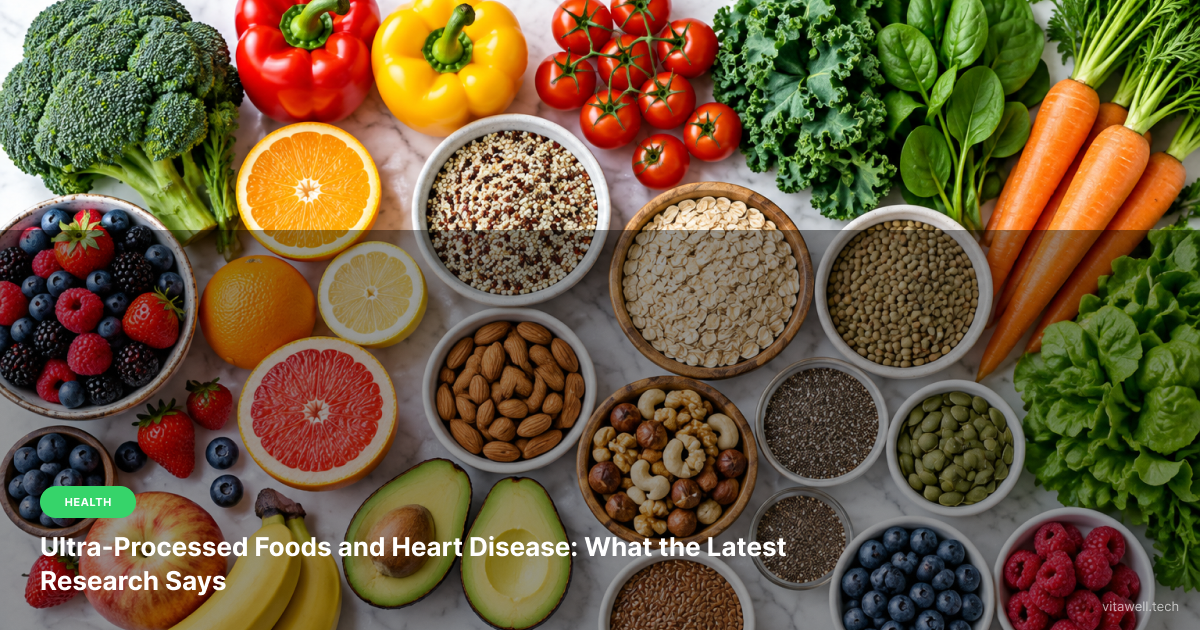
The foods in most shopping carts may be quietly raising the risk of a heart attack. That is the central warning in a major new clinical consensus statement published in the European Heart Journal in May 2026, authored by experts from the European Society of Cardiology. Their conclusion is direct: ultra-processed foods are a significant and underappreciated driver of cardiovascular disease — and the medical community needs to start treating them that way.
What Are Ultra-Processed Foods? A Science-Based Definition
Ultra-processed foods (UPFs) are not simply "processed" — virtually all foods undergo some degree of processing. The distinction lies in degree and kind. UPFs are foods that have been fundamentally altered from their original form and reconstituted using industrial ingredients and additives not typically found in a home kitchen: emulsifiers, artificial flavorings, hydrogenated oils, colorings, thickeners, and preservatives. They are engineered for palatability, long shelf life, and convenience — not nutrition.
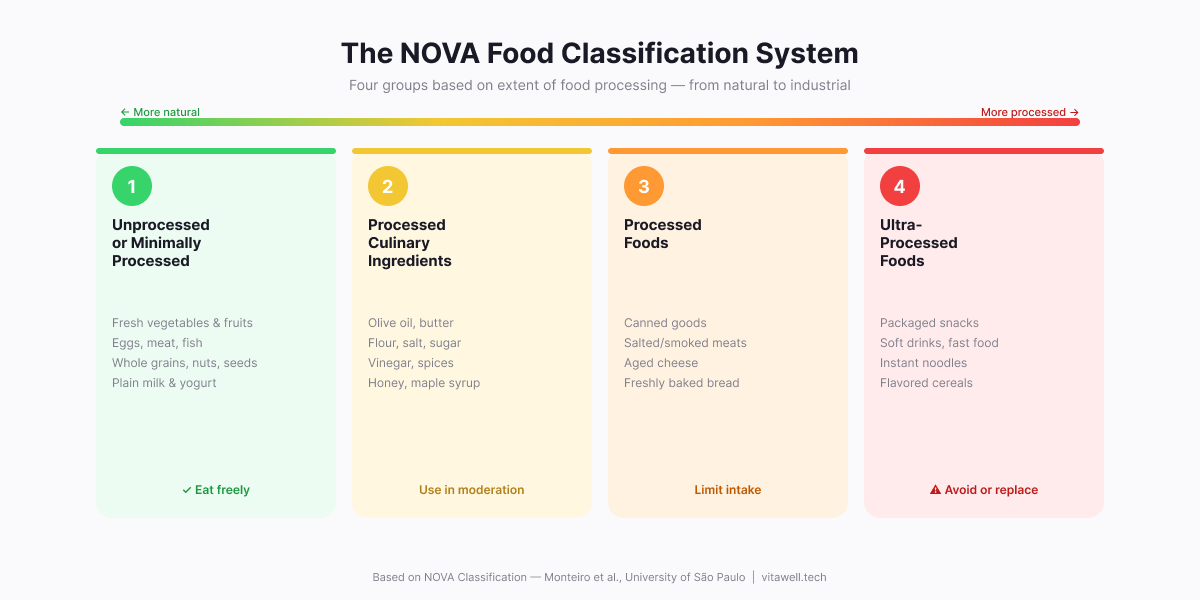
The NOVA food classification system, developed by researchers at the University of São Paulo and now widely used in academic research, divides foods into four groups based on the extent of processing. UPFs fall into Group 4 — the most heavily processed. Common examples include packaged snack foods, soft drinks and energy drinks, instant noodles and soups, ready-made frozen meals, processed meats such as hot dogs and deli slices, flavored and sweetened cereals, and most fast food.
How Do You Spot an Ultra-Processed Food?
The simplest rule: if the ingredient list contains substances you would not find in a standard kitchen — words like carrageenan, maltodextrin, sodium nitrite, or Red 40 — the product is almost certainly ultra-processed. One important caution raised by European scientists: many foods marketed as "natural," "organic," or "plant-based" are still ultra-processed. A plant-based burger made with methylcellulose and pea protein isolate remains a UPF. Marketing language is not a reliable guide.
What the New Research Found — And the Numbers Are Striking
The May 2026 European Heart Journal consensus statement synthesized all published research on UPFs and cardiovascular health, producing what is now the clearest and most authoritative scientific picture to date. The authors — cardiologists, nutritional epidemiologists, and public health scientists — reached conclusions that should prompt both patients and their doctors to rethink the role of processed food in everyday eating.
The Cardiovascular Risk by the Numbers
According to the consensus statement, adults who eat the highest amounts of ultra-processed foods face significantly elevated cardiovascular risk:
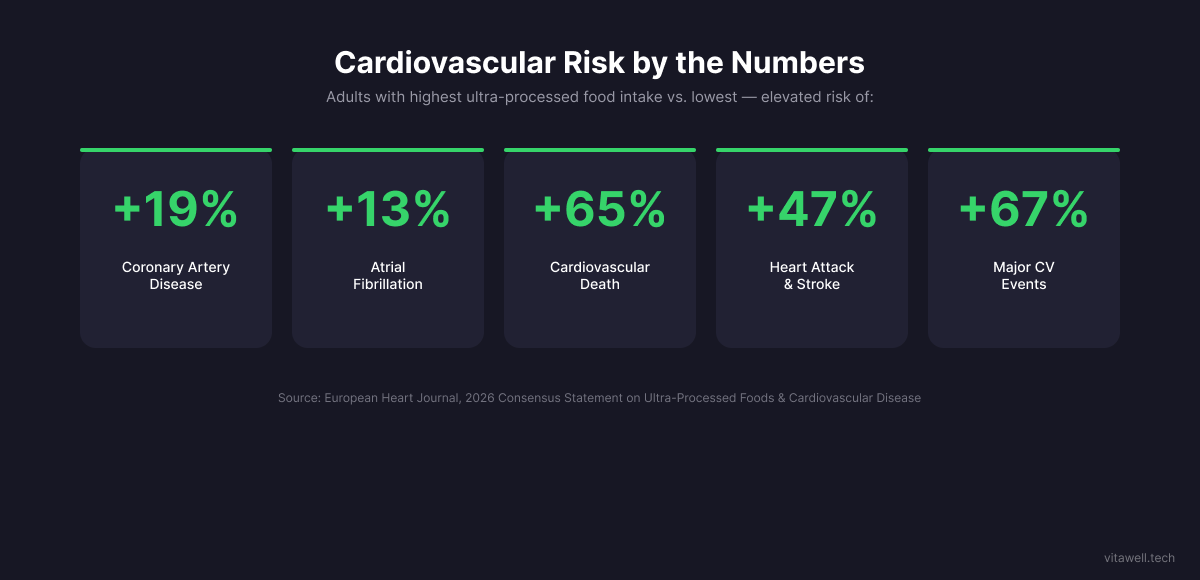
- A 19% higher risk of coronary artery disease compared to those with the lowest UPF intake
- A 13% higher risk of atrial fibrillation (AFib), an irregular heart rhythm that significantly raises stroke risk
- Up to a 65% higher risk of dying from cardiovascular disease
- A February 2026 Florida Atlantic University study found a 47% higher risk of heart attack and stroke among highest UPF consumers
- An ACC-highlighted analysis found that ~9 servings per day was linked to a 67% higher risk of major cardiovascular events — and each additional daily serving raised risk by more than 5%
Why Ultra-Processed Foods Are So Dangerous for Your Heart
The link between UPFs and heart disease is not a coincidence. Researchers have identified multiple biological pathways through which ultra-processed foods inflict cardiovascular damage.
They Fuel the Big Risk Factors
UPFs are strongly associated with the core drivers of heart disease:
- Obesity: UPFs are calorie-dense, nutrient-poor, and engineered to encourage overeating
- Type 2 diabetes: High sugar content and refined starches contribute to insulin resistance over time
- Hypertension: UPFs are among the leading sources of dietary sodium, directly linked to elevated blood pressure
- Dyslipidemia: UPFs raise LDL cholesterol and lower HDL cholesterol through trans fats and refined oils
They Trigger Hidden Damage
Beyond familiar pathways, UPFs cause harm through mechanisms that are increasingly well documented:
- Systemic inflammation: Emulsifiers like polysorbate 80 promote low-grade intestinal inflammation, a recognized driver of cardiovascular disease
- Gut microbiome disruption: Ultra-processed diets reduce microbial diversity and promote pathogenic bacteria, with downstream effects on heart health
- Packaging contaminants: Many UPFs leach endocrine-disrupting chemicals such as BPA and phthalates, associated with increased cardiovascular risk
Beyond the Heart — The Broader Health Toll
The damage from UPFs extends well beyond the cardiovascular system. Research has linked high UPF consumption to:
- Increased cancer mortality
- Accelerated cognitive decline and higher dementia risk
- Reduced bone density and muscle mass
- Fertility problems in women
- A 2025 study estimated UPF consumption causes more than 120,000 preventable deaths in the United States every year
What Doctors Are Now Being Asked to Do
One of the most striking aspects of the European Heart Journal consensus is its explicit call for doctors to change how they talk with patients about food. Most dietary guidelines focus on nutrients — recommending limits on saturated fat and sodium. What they rarely address is the level of food processing itself.
The European scientists argue this is a critical gap. A food can be low in saturated fat and still be ultra-processed — and therefore still harmful. Luigina Guasti, MD, co-author of the statement, noted: "Ultra-processed foods, made from industrial ingredients and additives, have largely replaced traditional diets. This evidence has not yet made its way into the advice we give to patients on healthy eating."
The consensus recommends that medical professionals promote patient understanding of food labeling, specifically counsel those at elevated cardiovascular risk, and advocate for updated public health guidelines that address food processing level — not just nutrient content.
How to Identify Ultra-Processed Foods in Your Daily Diet
Understanding which foods qualify as UPFs is the first practical step. For everyday shoppers, there are simple heuristics that work better than trusting brand marketing.
Red-Flag Ingredients to Watch on Labels
When reading ingredient lists, these are warning signs of ultra-processing:
- Hydrogenated or partially hydrogenated oils
- High-fructose corn syrup or glucose-fructose syrup
- Artificial colors (Red 40, Yellow 5, Blue 1)
- Carrageenan, xanthan gum, or guar gum
- Maltodextrin
- Sodium nitrite or nitrate
- Acesulfame potassium, aspartame, or sucralose
The Supermarket Trap — Products That Sound Healthy But Aren't
Some of the most widely consumed UPFs are sold under health-oriented branding:
- Flavored yogurts labeled "low fat" or "with fruit"
- Granola bars and protein bars
- Plant-based processed meats (burgers, sausages)
- Diet sodas and zero-sugar energy drinks
- Vitamin-enriched white bread and cereals
- Flavored oat milks with additives
The Best Science-Backed Swaps to Reduce Your Risk
Eliminating all ultra-processed foods at once is unrealistic for most people. Research suggests that even partial substitution — replacing some UPFs with minimally processed whole foods — yields meaningful cardiovascular benefit. A practical approach is to make one swap per week until healthier choices become default habits.
- Packaged snacks → nuts, seeds, and whole fruit. Almonds, walnuts, apple slices with nut butter, or sunflower seeds provide fiber and healthy fats without additives.
- Processed meats → legumes, fish, eggs, or poultry. Lentils, canned chickpeas, canned tuna, or grilled chicken are protein-rich without nitrates or excess sodium.
- Refined grain products → whole grains. Oats, brown rice, quinoa, and whole-grain sourdough bread provide fiber that feeds beneficial gut bacteria.
- Soft drinks → water, herbal tea, or sparkling water with fresh fruit. This one change eliminates sugar, artificial sweeteners, and acidic compounds in one step.
- Ready-made frozen meals → batch-cooked whole-food meals. Two hours of weekend cooking can replace several UPF-heavy weekday meals.
- Flavored yogurts → plain Greek yogurt with fresh fruit. Plain full-fat Greek yogurt with berries provides probiotics, protein, and natural sweetness without added sugars.
How Much Ultra-Processed Food Is Too Much?
Researchers have not identified a completely safe level of UPF consumption. What the data shows is a clear dose-response relationship — the more you eat, the higher your risk. The average American consumes approximately 60% of their daily calories from ultra-processed foods. While experts are not calling for zero tolerance, they are calling for conscious reduction, particularly for those with elevated blood pressure, blood sugar, or cholesterol.
As a guiding framework, the Mediterranean diet and the DASH diet — both proven to reduce cardiovascular risk — naturally minimize ultra-processed foods by emphasizing vegetables, fruits, whole grains, legumes, fish, and olive oil.
Conclusion
Ultra-processed foods are no longer just a nutritional concern — they are a cardiovascular risk factor in their own right, with a growing body of evidence linking them directly to coronary artery disease, atrial fibrillation, heart attacks, stroke, and early death. The new European Heart Journal consensus is clear: the science is strong enough that doctors should be discussing this with every patient, especially those already at risk.
The encouraging news is that you do not need a perfect diet to benefit. Every whole-food swap you make reduces your exposure to harmful additives and gives your cardiovascular system something it can actually use. Start where you are. Read one label today. Make one swap this week. Over time, those small choices add up to a meaningfully healthier heart.
Sources
Healthline — Ultra-Processed Foods Linked to Heart Disease, but Healthy Swaps May Lower Risk