
Not All Fruits and Vegetables Are Equal: Which Ones Actually Protect Your Heart
You already know that eating more fruits and vegetables is good for you. But a major new study reveals something surprising: the specific fruits and vegetables you choose matter far more than how many you eat. In fact, fewer than one in five people — even those who dutifully eat their five-a-day — are getting enough of the compounds proven to meaningfully lower heart disease risk. Here is what the science says, and what you can start eating today to make a real difference.
What Are Flavanols and Why Do They Matter for Your Heart?
Flavanols are a naturally occurring class of plant compounds called polyphenols. They are found in a wide variety of foods including fruits, vegetables, tea, cocoa, and certain legumes. Unlike vitamins or minerals, flavanols are not classified as essential nutrients — but decades of research have established them as powerful protectors of cardiovascular health.
How do flavanols protect your heart? The mechanisms are multiple and well-studied. Flavanols improve endothelial function — the ability of blood vessel walls to relax and dilate properly — which directly reduces blood pressure and the strain placed on the heart. They also lower systemic inflammation, which is a core driver of atherosclerosis (the buildup of plaque in arteries). Additionally, flavanols positively modulate lipid profiles, improving the balance between LDL and HDL cholesterol. The cumulative effect of these actions, sustained over time, is a significantly reduced risk of cardiovascular events and cardiovascular-related death.
The COSMOS Trial: The Science Behind 500mg Per Day
The strongest evidence for flavanols and heart health comes from the COSMOS (COcoa Supplement and Multivitamin Outcomes Study) randomized controlled trial — the largest clinical trial ever conducted on polyphenols. COSMOS researchers found that consuming 500 milligrams of flavanols per day was associated with a reduction in cardiovascular disease death risk of up to 27%.
This 500mg/day threshold became the scientific benchmark: the amount at which flavanols demonstrably move the needle on heart health. The critical question then became: can people realistically reach 500mg/day through a standard healthy diet?
Why ‘Five-a-Day’ Is Not Enough on Its Own
A major new study published in June 2026 in the journal Food & Function set out to answer exactly that question. Researchers from the University of Reading, Harvard Medical School, the University of California Davis, and Mars, Inc., tracked the diets of more than 30,000 participants across the United Kingdom and the United States using biomarker measurements — a gold standard for accuracy, since they measure what people actually absorbed, not just what they reported eating.
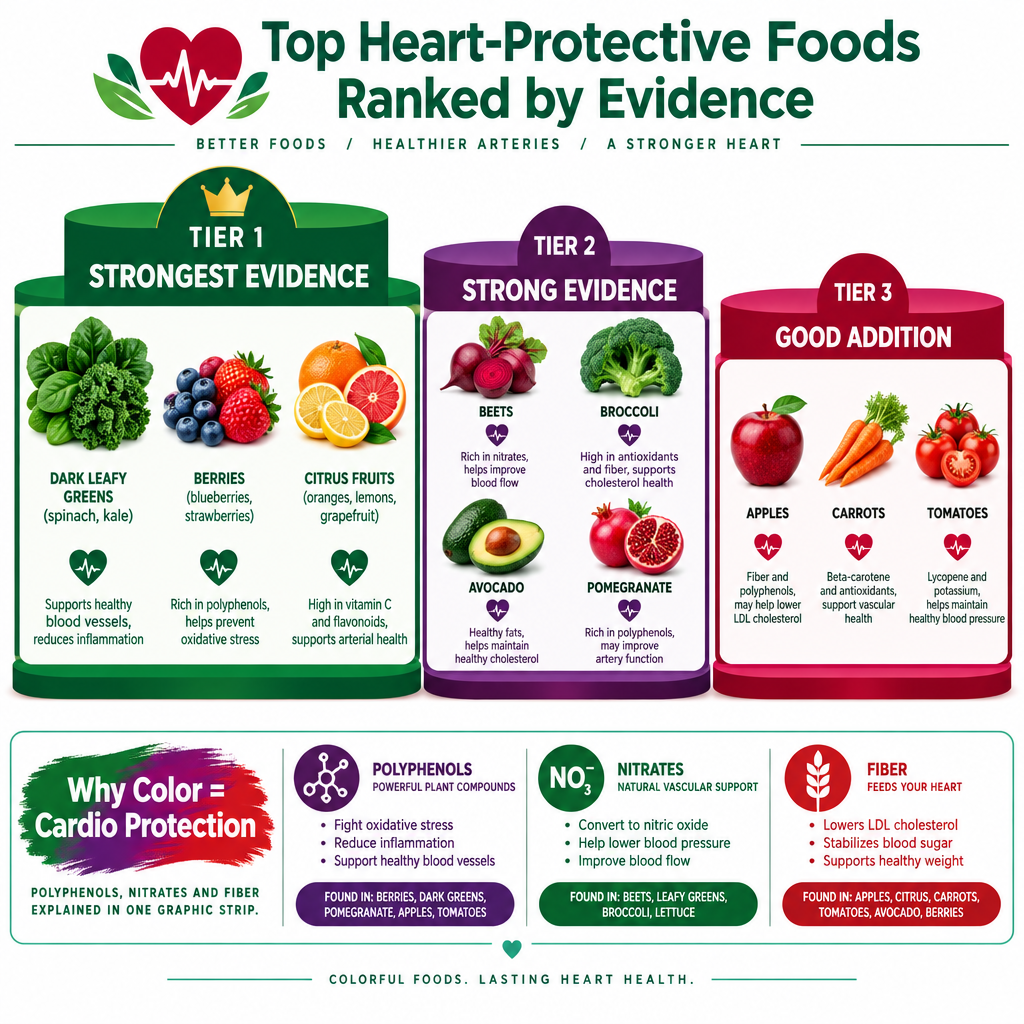
The findings were striking: the vast majority of participants fell well short of 500mg/day of flavanols, even those who followed current dietary guidelines and regularly ate five portions of fruit and vegetables. Fewer than one in five people achieved the protective threshold.
The reason is that most of the fruits and vegetables people typically choose are actually low in flavanols. Common staples that people count toward their five-a-day but provide very little flavanol value include:
- Bananas
- Carrots
- Broccoli and most cruciferous vegetables
- Lettuce and leafy greens
- Peppers and courgettes
- Potatoes and sweet potatoes
None of these are bad for you — they provide important fiber, vitamins, and minerals. But if cardiovascular protection is your goal, relying on them alone will not get you to 500mg of flavanols.
As the study’s lead author, Dr. Javier Ottaviani of UC Davis and Mars Edge, explained: “Flavanols can significantly reduce the risk of dying from cardiovascular disease, but only if you consume enough of them. Most people assume that eating plenty of fruit and vegetables covers this, but what this research shows is that the specific choices you make matter far more than the total amount. Including a handful of blackberries, a whole apple, or having a cup of green tea alongside your meal could make a real difference to how much of these beneficial compounds you actually consume and absorb from the diet.”
Professor Gunter Kuhnle of the University of Reading added: “Five-a-day is the right message, but we may need to think more carefully about which five. Different fruits and vegetables offer very different nutritional benefits beyond vitamins and minerals, and as our understanding of these compounds grows, there is a real opportunity to make dietary guidance more specific and more effective.”
The Top Flavanol-Rich Fruits and Vegetables
Based on data from large nutritional databases, including research published in Advances in Nutrition, here are the ten foods with the highest flavanol content per typical portion:
- Plums (500g, roughly one punnet): approximately 450mg of flavanols
- Cranberries (250g, roughly one punnet): approximately 300mg of flavanols
- Blackberries (200g, roughly one punnet): approximately 250mg of flavanols
- Green tea (one 250ml cup): approximately 200mg of flavanols
- Broad beans / fava beans (80g, a small handful): approximately 140mg of flavanols
- Cherries (400g, roughly one punnet): approximately 130mg of flavanols
- Apples with skin (200g, one medium apple): approximately 110mg of flavanols
- Strawberries (200g, roughly one punnet): approximately 90mg of flavanols
- Blueberries (150g, roughly one punnet): approximately 80mg of flavanols
- Pinto beans (40g, two tablespoons dry): approximately 70mg of flavanols
Why Berries, Apples, and Tea Stand Out
Among the top performers, berries, apples, and tea are particularly practical for everyday life. They are widely available, affordable year-round (fresh or frozen), versatile, and easy to add to meals you already eat.
A few important nuances about bioavailability worth knowing: for apples, the skin is essential — peeled apples lose the majority of their flavanol content, so always eat apples whole with the skin on. Whole fruit is preferable to juice, as processing and pasteurization significantly reduce flavanol content in commercial fruit juices. For tea, green tea brewed for 3–5 minutes at around 80°C preserves its flavanol content better than boiling-temperature brewing. And frozen berries retain most of their flavanol content, making them an excellent, cost-effective option when fresh berries are not in season.
Practical Tips to Increase Your Flavanol Intake
You do not need to overhaul your entire diet to meaningfully increase your flavanol intake. Michelle Routhenstein, a preventive cardiology dietitian at EntirelyNourished, recommends choosing one or two flavanol-rich foods you genuinely enjoy and making them a consistent daily habit. Here are practical ways to get started:
- Add a handful of berries (blackberries, blueberries, or strawberries) to your morning yogurt, oatmeal, or smoothie
- Replace an afternoon coffee with a cup of green or black tea
- Snack on a whole apple (with skin) instead of processed snacks between meals
- Add a handful of cherries or plums to your lunch
- Swap your usual side vegetable for broad beans or pinto beans a few times per week
- If you enjoy dark chocolate, choose varieties with 70% or higher cocoa content, which are also high in flavanols
As Routhenstein explains: “Small, enjoyable habits are often the most effective way to increase flavanol intake and support long-term heart health. Someone who enjoys berries could add them to breakfast several times per week, while a tea drinker might benefit from incorporating a daily cup of green or black tea.”
Should Dietary Guidelines Be Updated?
The findings of this study raise an important question: should national dietary guidelines become more specific about which fruits and vegetables to prioritize? Currently, the NHS Eatwell Guide, the US Dietary Guidelines, and most national health recommendations focus on total quantity — a simple, accessible message that has been promoted for decades. The new research suggests that adding a layer of specificity, encouraging the public to favor flavanol-rich choices within their five-a-day, could significantly improve cardiovascular outcomes without requiring people to eat more overall.
That said, experts are careful to frame this in context. Routhenstein points out that many people still do not meet basic fruit and vegetable recommendations, and that ensuring adequate overall produce intake remains the first priority. Flavanol optimization is a valuable refinement for those already eating well — not a replacement for getting produce into the diet in the first place. The broader message is not to obsess over single nutrients, but to build a diverse, plant-rich dietary pattern where flavanol-rich foods earn their place through unusually robust cardiovascular evidence.
Conclusion
The science is clear: flavanols are among the most powerful dietary compounds for protecting heart health, and 500mg per day is the threshold at which they significantly reduce your risk of dying from cardiovascular disease. The challenge is that most people are falling far short of that target — not because they are eating too few fruits and vegetables, but because they are choosing the wrong ones. The fix is simple: a handful of blackberries, a medium apple with its skin, a cup of green tea. You do not need to eat more. You need to eat smarter.
Sources
'5 a day': Which fruit and veg are best for heart health and why? — Medical News Today