Why Limits Unlock Creativity: The Science of Creative Constraints and How to Use Them
Why Limits Unlock Creativity: The Science of Creative Constraints and How to Use Them
We're taught that creativity thrives on freedom. The more options we have, the more possibilities we can explore. Yet some of the most enduring and beloved creative works in history—the sonnet, the haiku, the jazz standard, the 280-character tweet—are defined not by what they allow, but by what they forbid. As composer Igor Stravinsky once observed: "Without a resisting foundation that sets limits, directed movement is not possible." A recent meta-review of 145 empirical studies confirms this paradox: moderate constraints maximize creativity. This article explores why limitations unlock creative potential and how you can deliberately design constraints to unlock your best work.
The Creativity Paradox: Why More Freedom Often Leads to Less
The Decision Fatigue Trap
Unlimited options exhaust the brain before the creative work even begins. Neuroscience reveals the mechanism: when facing unlimited choices, the prefrontal cortex—the part of your brain responsible for deliberate decision-making—becomes depleted. This cognitive fatigue forces the brain to default to low-effort, uncreative outputs. An unlimited creative brief doesn't liberate your imagination; it exhausts your decision-making capacity before you've produced a single idea.
This phenomenon, called decision fatigue, explains why the most creative people often work within self-imposed structures. When your brain must first navigate infinite possibilities, it has less processing power left for actual creative work.
The Abundance-to-Resourcefulness Shift
Constraints trigger a fundamental psychological shift: from an abundance mindset to a resourcefulness mindset. When options are limited, the brain activates its problem-solving mode, searching more deeply rather than broadly across possibilities. This focused search—constrained in scope but intense in depth—produces more original and higher-quality solutions than scattered exploration across unlimited territory.
Consider these six moments of creative paralysis that constraints can immediately solve:
- Staring at a blank document for 30 minutes without writing a word
- Feeling overwhelmed when a project has "no restrictions" or unclear boundaries
- Producing mediocre work when given a blue-sky creative brief with zero parameters
- Spending more time deciding what to work on than actually working on it
- Feeling uninspired when tools are too powerful or the range of options too numerous
- Avoiding starting a personal project because "anything is possible" feels paralyzing
Each of these moments dissolves when you introduce a single clear constraint. The constraint narrows the problem, making it solvable.
What History's Greatest Creators Knew About Limits
The Power of Form: Sonnets, Haiku, and Jazz Standards
William Shakespeare didn't create immortal sonnets despite the form's restrictions—he created them because of them. The sonnet's 14-line structure and iambic pentameter didn't constrain his genius; they concentrated it. Every word carries weight. Every syllable matters. The form forced him to distill emotion into precision.
Similarly, master haiku poets like Matsuo Bashō didn't experience the 5-7-5 syllable structure as a prison. They understood it as an engine. The constraint created tension that made each word count exponentially more than it would in free verse. When you have exactly 17 syllables to capture a moment of transcendence, every syllable becomes sacred.
Jazz musicians know this truth intimately. They improvise infinitely within a fixed harmonic structure—the 12-bar blues, the changes of a standard. The form is not the constraint; the form is the engine that powers the improvisation. Thousands of variations exist within the structure precisely because the structure exists.
The Oulipo Movement and Radical Literary Constraints
The Oulipo (Ouvroir de littérature potentielle, or Workshop of Potential Literature) took literary constraints to radical extremes. Georges Perec wrote an entire 300-page novel, "La Disparition" (A Void), without using the letter "e"—the most common letter in French. No "e." Three hundred pages. This constraint didn't diminish the novel; it created a linguistic puzzle that forced Perec to find pathways through language that would never have occurred under normal circumstances.
Raymond Queneau created "Cent Mille Milliards de Poèmes" (100,000 Billion Poems) using constraint-based structure. Through mechanical combination of word choices within fixed positions, he generated more poems than could be read in a human lifetime. The constraint became a generator of infinite variation.
Oulipo writers understood a fundamental truth: extreme formal constraints force the mind through routes it would never have found in open territory. The constraint doesn't limit creativity; it routes it toward undiscovered paths.
Film and Visual Art: Dogme 95 and Beyond
In 1995, filmmaker Lars von Trier issued the Dogme 95 manifesto—a radical constraint-based approach to filmmaking. The rules were strict: shoot only on location, use natural light only, handheld camera mandatory, no genre plots, no superficial action. These weren't artistic choices. They were restrictions designed to strip away artifice and force raw authenticity.
The constraint list includes famous forms defined entirely by their limitations:
- The sonnet: 14 lines, iambic pentameter, specific rhyme scheme
- The haiku: 5-7-5 syllable structure
- Twitter/X: character limits that reshaped written communication globally
- Jazz standards: fixed harmonic framework for infinite improvisation
- The Oulipo movement: self-imposed linguistic rules
- Dogme 95: radical filmmaking restrictions
Each form exists because of what it forbids, not despite it.
The Psychology and Neuroscience of How Constraints Work
Constraints Define the Search Space
Imagine searching for a restaurant in a city with infinite options versus a city with 20 highly-rated restaurants. The first scenario creates decision paralysis. The second enables decisive action. This principle applies directly to creative work.
When everything is possible, the creative search space is infinite and exhausting. The brain doesn't know where to look or how to evaluate progress. When constraints define what's allowed and what's forbidden, the brain can search that defined space deeply rather than spreading thin across infinite territory. Research confirms this: when task instructions explicitly limit the solution space, the originality of proposed solutions increases. Constraints don't narrow the output—they deepen it.
The Inverted U-Curve: Finding the Optimal Constraint Level
A 2022 meta-review of 145 empirical studies established a critical pattern: the inverted U-curve model of constraints and creativity. At one extreme (few or no constraints), creativity languishes. There's no pressure to find creative solutions; abundant options encourage comfortable, uncreative defaults. At the other extreme (severe constraints), creativity is crushed. No viable paths remain; the problem becomes unsolvable.
The peak of creative output occurs in the middle zone: enough constraint to focus the search and create productive pressure, but not so much that all viable routes are blocked. This is the optimal creative zone. Too little pressure produces complacency and mediocrity. Too much pressure produces frustration and paralysis. The middle ground is where breakthroughs happen.
How to Intentionally Design Constraints for Your Creative Work
Don't wait for external constraints to happen to you. Engineer them deliberately. Here are five types of constraints you can self-impose:
- Time constraints: Set a hard deadline shorter than feels comfortable. The Pomodoro Technique's 25-minute sprint. The one-hour writing session with the timer visible. Time pressure activates urgency and eliminates perfectionist stalling. The best first drafts are often written too fast to overthink.
- Form constraints: Choose a specific structure and work only within it. If you write, try a six-word story first, or a single paragraph, or a strict list format. If you draw, work only within a 3-inch square. If you compose, use only a specific scale. The form defines the problem and lets your creative energy solve it rather than defining the problem itself.
- Resource constraints: Limit your tools intentionally. Write with one font and one color. Compose using only three chords or a single instrument. Design with only two colors. Limiting tools forces ingenuity and produces cohesion that unlimited resources rarely achieve.
- Scope constraints: Narrow the topic to a single specific angle. Instead of "write about love," write about "the moment you first realized a relationship was ending." Specificity is the constraint, and specificity is what produces work that resonates universally.
- Rule constraints: Self-impose rules that exclude specific options. "No adjectives in this paragraph." "Every sentence must be under ten words." "Write only in second person." Rules redirect habitual patterns and force novel solutions.
Beyond Art: Applying Creative Constraints to Work, Learning, and Life
Constraints in Professional Creativity and Innovation
Research on music songwriting teams shows a clear pattern: teams that work within shared, defined constraints produce more consistently creative output than teams with unlimited scope. The constraints coordinate collaborative creativity. When everyone knows the limits, creative energy compounds rather than scatters.
In corporate settings, breakthrough innovation often emerges from the tightest briefs. "Build this in two weeks with a three-person team and no external dependencies." Budget constraints, timeline restrictions, and tool limitations that feel like obstacles are often the very engines of innovation. The constraint forces creative problem-solving.
Constraints in Learning and Habit-Building
Deliberate practice theory reveals that expertise isn't built through volume of practice—it's built through focused practice. Practicing every scale on the piano is less effective than mastering a single challenging passage. Learning a language: spending a month communicating only in writing accelerates specific language skills dramatically. The focused constraint transforms general exposure into targeted, deep learning.
When you're learning anything, designing a narrow constraint isn't limiting your learning—it's concentrating it where it matters most.
Here are six constraints you can implement this week:
- Write one page every morning—no more, no less—before checking your phone
- Work on any creative project in 25-minute timed sprints only
- Limit any new project to three primary tools or methods
- Spend one week learning one specific micro-skill (one chord, one recipe technique, one brushstroke)
- Set a word count limit for all emails: under 100 words each
- Define a scope constraint for your next work project: one goal, one metric, one week
Conclusion
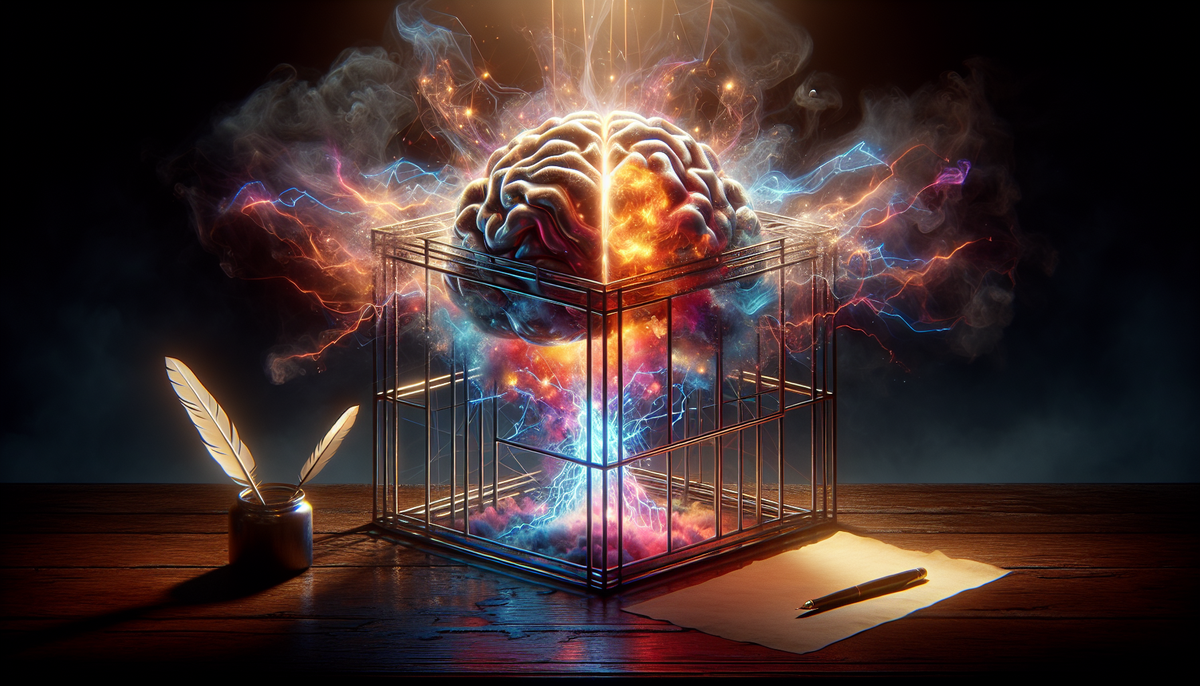
A constraint is not a cage. It is a lens that concentrates creative force. Igor Stravinsky didn't compose in spite of musical rules and limitations—he composed through them, using them as the foundation for expression. Shakespeare didn't write despite the sonnet form—the form is what made the poems possible. The form is what forced precision.
The blank page is not freedom. It is the enemy of creation. Freedom without structure is paralysis. The most creative act you can perform today may be to choose your limits deliberately—to understand that constraints are not obstacles to creativity but the very foundation upon which all great creative work is built. Discover what becomes possible when you stop seeking unlimited options and start working within chosen boundaries.