How Your Identity Makes You Vulnerable to Misinformation — and How to Stay Clear-Headed
How Your Identity Makes You Vulnerable to Misinformation — and How to Stay Clear-Headed
What if the beliefs you feel most certain about are the ones most likely to be wrong?
Most of us assume misinformation spreads because people are gullible or unintelligent. But that's a dangerous misunderstanding. Some of the most educated, analytically sharp people hold wildly false beliefs — not because they're stupid, but because their brains are working exactly as they evolved to work. The problem isn't that our minds are weak. It's that they're protecting something far more important than accuracy: your identity.
Identity Protection Cognition (IPC) is the mechanism that explains why intelligent people fall for misinformation. In this framework, we don't evaluate information as true or false first. We evaluate it as safe or threatening to who we are. This isn't a failure of intelligence — it's a predictable feature of human psychology. Understanding this mechanism is the first step to defending against it.
Why Smart People Fall for Misinformation: The Identity Trap
Here's what research consistently shows: intelligence is not the main protective factor against misinformation. A high IQ doesn't inoculate you against false beliefs. What does matter is motivation — specifically, what you're motivated to believe.
This happens through a process called motivated reasoning. When a belief is tied to identity, something fundamental shifts. Your brain stops running in accuracy-seeking mode and switches to identity-protecting mode. You're no longer asking "Is this true?" You're asking "Is accepting this true or false the safe choice for who I am?"
The Mechanics of Identity Protection Cognition
Beliefs function as badges of membership in affinity groups. According to SAGE Journals research from 2026, accepting information that contradicts a core belief isn't just admitting you're factually wrong — it signals a threat to your social belonging. Your brain processes it almost like a survival threat.
Consider a straightforward example: a person raised in a particular political tradition who encounters evidence contradicting a core policy belief. At the purely informational level, the evidence might be compelling. But at the identity level, accepting it means something far larger: questioning the worldview of your parents, your community, and the people you trust most. The psychological cost is astronomical. So the brain doesn't consciously weigh evidence fairly. It mobilizes defenses.
The Overlapping Identity Effect
Single identity-belief bundles are vulnerable. But when multiple identities attach to the same belief, that belief becomes nearly impenetrable.
A person's political identity might attach to a particular economic belief. But that same belief is also bundled with their professional identity (as someone in a particular industry), their regional identity, their moral identity (beliefs about fairness), and their identity as a member of a trusted community. When a single piece of information threatens all of these simultaneously, the brain's identity-protection system goes into overdrive. The more identities bundled with a belief, the harder it is to update with new evidence.
Consider six of the most common identity-belief bundles that people rarely question:
- Political party affiliation and economic policy beliefs — your beliefs about taxation, regulation, and market economics become inseparable from your political tribe
- Religious community membership and moral or scientific views — beliefs about medicine, education, and social issues become woven into spiritual identity
- Professional identity and beliefs about one's industry — doctors, lawyers, and engineers develop beliefs about their fields that are reinforced by professional community membership
- Nationality and beliefs about historical events — national identity shapes how citizens interpret their country's past and present
- Dietary and lifestyle identity (vegan, paleo, CrossFit, etc.) and health claims — lifestyle choices become identity markers, and any threat to that lifestyle identity is treated as a personal attack
- Sports fandom and beliefs about athletes' character — fans defend their team's players against criticism in ways that have nothing to do with actual evidence
The Neuroscience: What Happens in the Brain During Motivated Reasoning
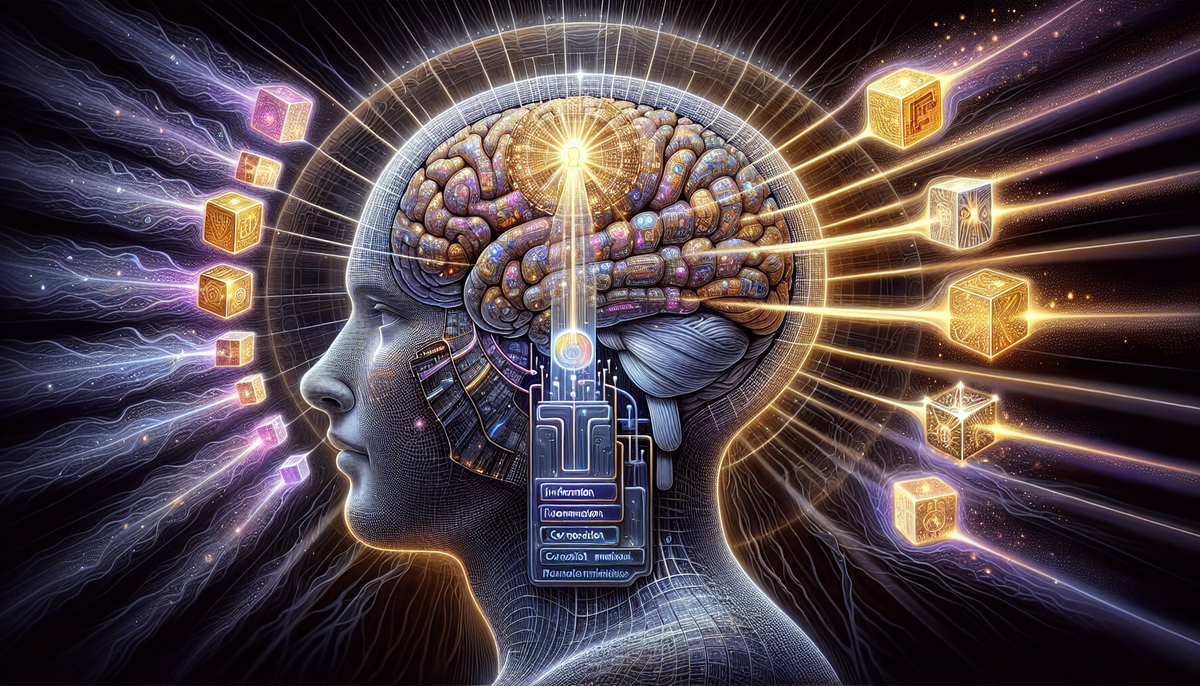
Neuroimaging research from 2024 (published through PMC/NIH databases) shows that the brain doesn't passively receive information and evaluate it objectively. Instead, it actively defends preferred beliefs. When encountering information that threatens an identity-attached belief, multiple brain networks activate simultaneously: the mentalizing network (which interprets social meaning), the value-encoding network (which calculates what matters), and the error-detection network (which identifies threats). The brain treats factual challenges to identity-congruent beliefs like social threats.
The Feeling of Certainty Is Not Evidence of Accuracy
Here's the insidious part: motivated reasoning feels exactly like clear thinking from the inside. You're not aware that your brain has shifted into identity-protection mode. Emotional certainty and logical accuracy are completely different processes. You can feel 100% confident and be factually wrong — because your brain stopped evaluating evidence fairly and started defending a predetermined conclusion.
Three mechanisms drive this illusion of clarity:
Confirmation bias is the tendency to actively seek information that supports existing beliefs while ignoring contradicting signals. You don't consciously decide to avoid contrary evidence. You simply notice supporting evidence more readily.
Disconfirmation bias means you subject contradicting evidence to dramatically higher scrutiny than supporting evidence. The same level of methodological rigor that you dismiss in a study contradicting your belief becomes acceptable when the same methodology supports your belief.
The prior attitude effect describes how your initial beliefs shape how all subsequent information is interpreted. New information doesn't update your beliefs through a neutral process — it's filtered through the lens of what you already believe. The same news story will be interpreted as evidence for completely different conclusions depending on the reader's starting beliefs.
Which Information Are We Most Vulnerable to Getting Wrong
Not all misinformation catches us equally. The topics where we're most vulnerable are those that correlate directly with identity. Information about issues tied to identity is dramatically higher risk for misinformation acceptance.
Six high-risk information categories deserve particular attention:
- Political news and election-related claims — electoral information is processed through tribal lenses
- Health claims that originate from trusted in-group sources — medical misinformation spreads fastest within communities bound by shared identity
- Economic narratives that validate your social class or financial worldview — beliefs about wealth, poverty, and economic fairness are deeply identity-tied
- Religious or moral topics tied to community membership — these beliefs are woven into social belonging
- Information about in-group versus out-group behavior — we're vulnerable to believing negative things about "them" and positive things about "us"
- Personal finance advice that confirms existing spending or investing habits — our financial beliefs are identity-protective
The social conformity amplifier compounds these vulnerabilities. When misinformation circulates within an in-group, the social pressure doesn't just add to the identity pressure — it multiplies it. Research on vaccine hesitancy in certain communities reveals that the hesitancy is socially rewarded because it reinforces group belonging. The false belief becomes a signal: "I'm one of you. I reject what outsiders believe. I'm loyal to our community." Under these conditions, the most intellectually rigorous person in the group will resist accurate information because accepting it signals group disloyalty.
5 Cognitive Strategies to Evaluate Information More Objectively
The good news: identity-protective processing can be interrupted. There are science-backed tools that activate accuracy motivation and bypass the automatic identity-defense pathway. These aren't about willpower or trying harder. They're about changing which cognitive systems you engage.
- The "Consider the Opposite" Technique — Before accepting a claim, actively generate the strongest possible argument against it. Spend genuine time on this — don't strawman the opposing view. Find the most compelling version of the counterargument. This isn't about changing your mind on the spot. It's about stress-testing your belief. Research shows that even briefly considering legitimate opposing arguments measurably weakens identity-protective reasoning around that belief.
- Pre-mortems — Ask yourself: "What evidence would prove this wrong?" before accepting a claim. Do this explicitly, in writing if possible. If you cannot answer that question, you're likely holding an unfalsifiable belief rather than an evidence-based one. Unfalsifiable beliefs are almost always identity-protective beliefs dressed up as factual claims.
- Steel-manning — Before dismissing an opposing view, represent it in its strongest, most charitable form. If you can't articulate why someone intelligent might hold the opposite position, you don't understand the disagreement well enough to have a strong opinion. Steel-manning reveals which of your disagreements are actually about facts and which are about identity.
- Accuracy Nudges — Simply pausing and asking yourself "is this accurate?" activates a measurably different cognitive pathway than the default identity-checking mode. A 2024 meta-analysis in PNAS analyzing 31 studies confirms this: the simple shift in focus from "does this align with my worldview?" to "is this accurate?" improves discrimination between true and false information. The effect is modest but reliable across demographics.
- Inoculation and Prebunking — Learn to recognize manipulation tactics before you encounter them in the wild: false dichotomies, emotional language, scapegoating, appeals to fear, appeals to tribal loyalty. When you can recognize what a manipulation looks like before encountering it, the manipulation loses most of its power. Cross-cultural research shows that prebunking dramatically reduces the effectiveness of misinformation across all age groups and education levels.
Building an Identity That Values Truth, Not Tribal Loyalty
The deepest solution isn't a technique or a cognitive trick. It's a values-level reorientation. The goal is making accuracy and intellectual honesty part of who you are — building what researchers call an "accuracy identity."
When updating your beliefs becomes a sign of strength rather than weakness, the entire dynamic shifts. You're no longer protecting a fixed set of beliefs. You're protecting your identity as someone who pursues truth.
Epistemic Humility as a Strength
A 2024 meta-analysis of 31 studies published in PNAS examined what actually protects people against misinformation. The researchers expected to find that smarter people were more resistant. Instead, they found that people who engaged in analytical thinking were more resistant — but not because they were more intelligent. They were more resistant because analytical thinking correlates with motivation to be accurate.
Here's what's remarkable: analytical thinking can be cultivated. It's not a fixed trait. The willingness to say "I don't know" or "I was wrong" isn't just morally admirable — it's cognitively protective. When you build an identity around truth-seeking rather than belief-protection, your brain stops mobilizing defenses against contradicting evidence. You can actually evaluate information fairly.
Choosing Communities That Reward Truth-Seeking
The social environment shapes which beliefs feel safe. Your identity is not a solo project — it's built in relationship with communities. If the communities you belong to punish people who change their minds, you'll resist changing your mind, even with overwhelming evidence.
Seek out and build communities that celebrate being corrected rather than punishing it. Communities matter more than individual willpower.
Five traits distinguish communities that build intellectual integrity from those that exploit identity-based reasoning:
- They celebrate when members change their minds based on evidence — changing beliefs is framed as growth, not failure
- They model uncertainty and "I don't know" as legitimate responses — leaders in the community demonstrate intellectual humility
- They distinguish between attacking ideas and attacking people — disagreement doesn't trigger defensive responses
- They expose members to diverse perspectives rather than reinforcing echo chambers — you hear opposing views from credible sources within the community
- They prize accuracy over in-group loyalty when the two conflict — truth wins, even if it challenges group consensus
Conclusion: Identity as Vulnerability and Strength
Misinformation doesn't primarily target your ignorance. It targets your identity. The most dangerous false beliefs are the ones that feel like loyalty. They're beliefs that signal "I belong here. I'm one of you."
The path to clearer thinking isn't to abandon your values and communities. It's to make truth-seeking itself one of your core values. When being accurate becomes part of who you are, the misinformation machine loses its most powerful lever. Your identity stops being a vulnerability and becomes your greatest protection.