
Why Eating After 9 PM When You're Stressed Is Destroying Your Gut Health — What New Research Shows
Most people know that eating junk food is bad for gut health. But new research suggests the clock on your wall may matter just as much as the contents of your plate. A landmark study presented at Digestive Disease Week (DDW) 2026 found that combining chronic stress with late-night eating creates a compounding, synergistic disruption to the gut microbiome — one that is significantly worse than either habit on its own. Understanding why, and what to do about it, could be one of the most practical gut health insights of the decade.
When You Eat Matters as Much as What You Eat — The Chrononutrition Principle
What is chrononutrition?
Chrononutrition is the science of how the timing of meals interacts with the body's internal biological clock — the circadian system. Every cell in your body, including those lining your gut, operates on a roughly 24-hour rhythm governed by this circadian clock. This system coordinates not just your sleep-wake cycle but also the timing of hormone releases, digestive enzyme production, gut motility, and even the feeding behavior of the trillions of bacteria that make up your microbiome.
Key hormones that intersect with chrononutrition include cortisol, which peaks in the morning and falls in the evening; ghrelin, the hunger hormone that follows its own daily rhythm; and melatonin, which rises in the evening to signal sleep onset. When you eat large meals late at night, you are sending food into a digestive system that is biologically transitioning toward rest — with falling enzyme levels, slowing gut motility, and hormones optimized for sleep rather than digestion.
How the digestive system operates on a schedule
Your gut is not a passive tube that processes food identically at 8 AM and 10 PM. Research has shown that gut motility — the muscular contractions that move food through the digestive tract — is significantly slower in the evening. Enzyme production for digestion is lower at night. Even the gut microbiome has been shown to follow daily oscillations in composition and metabolic activity, with different microbial populations becoming more or less active depending on the time of day.
This means that the same meal eaten at 7 PM versus 10:30 PM after a stressful day will be processed very differently — with the late meal generating more fermentation, more metabolic stress on the gut lining, and greater disruption of the microbial communities that depend on circadian regularity.
What the New Chrononutrition-Stress Axis Study Found
Study design and scale
The study drew on two complementary datasets. The first was the National Health and Nutrition Examination Survey (NHANES), a large-scale U.S. epidemiological study with 11,149 participants, providing data on dietary timing, self-reported stress levels, and health outcomes. The second was the American Gut Project, a citizen-science microbiome study with 4,157 participants who contributed stool samples for microbiome analysis alongside self-reported dietary patterns and stress measures.
Using both datasets allowed researchers to observe population-level associations (NHANES) while directly measuring what was happening in the gut microbiome (American Gut Project). This two-pronged approach gives the findings unusual credibility — anchored in actual microbial measurement, not just self-report data.
The key findings
The results were striking and consistent across both datasets:
- Chronic stress alone was associated with significantly reduced gut microbiome diversity as measured by the Shannon Index.
- Late-night eating (consuming a substantial portion of daily calories after 9 PM) alone was also associated with reduced microbiome diversity.
- When both factors were present simultaneously, the reduction in diversity was greater than the sum of both individual effects — indicating a synergistic, compounding interaction.
- The combined effect was observed across different demographic groups, dietary patterns, and body mass categories, making this a broadly applicable finding.
The Shannon Index, the standard scientific tool for measuring gut microbiome diversity, reflects how many different species are present and how evenly distributed they are. A higher score means a more resilient, healthy microbiome. A lower score is associated with inflammation, weaker immunity, and greater risk of gut-related disease.
Stressed Late-Night Eaters — How the Two Factors Compound Gut Health Risk
Most health risks add together. Smoking and high cholesterol each independently raise your risk of heart disease, and having both raises it further — roughly by addition. But some risk factors interact synergistically, where the combination is worse than the sum of its parts. The chrononutrition-stress axis appears to operate this way.
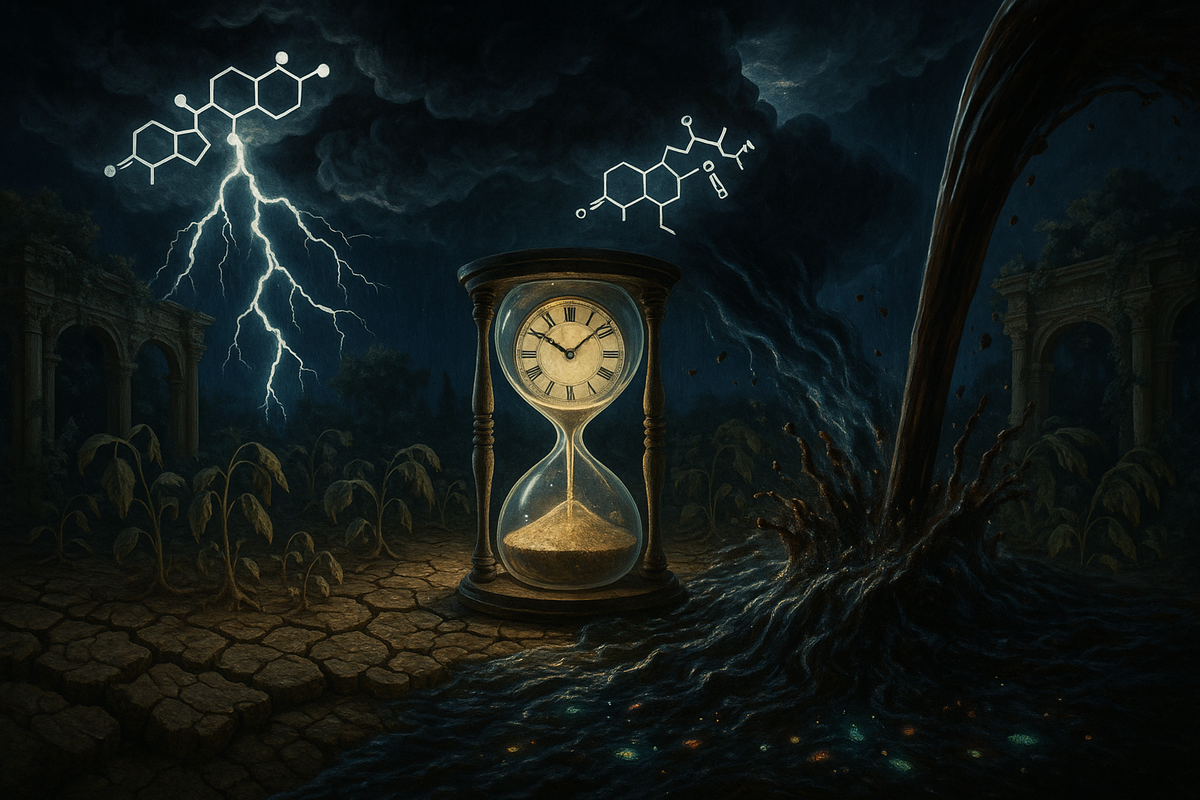
Think of your gut microbiome as a garden. Stress is a drought — it stresses the plants, reduces diversity, and makes the ecosystem more vulnerable. Late-night eating is flooding the garden at midnight, when plants are in their rest phase and the soil is not ready to absorb water. Neither is great alone. But doing both simultaneously means flooding during a drought-stressed state — the damage is dramatically compounded.
The biological mechanisms involve several interconnected pathways. When you are under chronic stress, cortisol levels remain elevated into the evening when they would normally be low. Elevated cortisol delays gastric emptying, meaning food sits in the stomach longer. It also increases intestinal permeability — sometimes called leaky gut — by disrupting the tight junction proteins that hold gut epithelial cells together. Adding a late meal to this already-stressed system means the gut is managing a digestive workload at a time when its enzyme output is low, its motility is reduced, and its lining is already compromised by stress hormones.
Scientists use the term "allostatic load" to describe the cumulative biological burden of chronic stress on the body. A high allostatic load fundamentally changes how every organ system — including the gut — responds to incoming demands. A late meal in a high-allostatic-load state is simply more disruptive than the same meal in a calm, daytime state.
How Stress and Late Eating Disrupt Your Gut Microbiome Diversity
What microbiome diversity means and why it matters
Gut microbiome diversity refers to the variety of microbial species living in your intestinal tract. A diverse microbiome — reflected in a higher Shannon Index score — is consistently associated with better immune function, reduced systemic inflammation, better mental health outcomes, more stable blood sugar regulation, and lower risk of diseases ranging from inflammatory bowel disease to depression.
Conversely, low microbiome diversity — or dysbiosis — is a state of ecological imbalance in the gut linked to obesity, type 2 diabetes, irritable bowel syndrome, autoimmune conditions, and mood disorders. The microbiome is not just a passive passenger; it is an active regulator of your physiology, producing neurotransmitters, short-chain fatty acids that feed the gut lining, vitamins, and signaling molecules that directly influence immune and nervous system function.
The specific microbial disruptions observed
Under conditions of chronic stress and late-night eating, research points to consistent patterns of microbial disruption:
- Declines in beneficial bacterial genera including Lactobacillus and Bifidobacterium, which produce lactic acid and support gut barrier integrity and immune regulation.
- Reduction in butyrate-producing bacteria such as Faecalibacterium prausnitzii and Roseburia species — essential for colonocyte health and anti-inflammatory signaling.
- Increases in pro-inflammatory bacterial species and opportunistic pathogens that thrive when the gut environment is disrupted.
- Disruption of the normal daily oscillation of the microbiome — healthy guts show predictable daily rhythms in microbial composition that are blunted under circadian disruption and chronic stress.
The gut-brain axis: a two-way stress highway
One of the most consequential aspects of the chrononutrition-stress axis is that the gut-brain relationship runs in both directions. Stress disrupts the gut; but a disrupted gut also amplifies the stress response. The vagus nerve, which connects the gut and brain bidirectionally, transmits signals about gut health directly to the brain's stress-response centers. When gut dysbiosis increases intestinal inflammation, these signals travel to the brain, lowering mood, increasing anxiety, and reducing stress resilience.
This creates a feedback loop: stress causes late-night eating, late-night eating worsens gut health, poor gut health worsens the stress response, which makes it harder to resist late-night eating. Breaking this cycle requires understanding both ends of the loop.
Does the Type of Late-Night Snack Matter? Why Even Healthy Night Snacks Can Harm Your Gut
A natural question: if you must eat late, does choosing healthier food — fruit instead of chips, yogurt instead of ice cream — undo the damage? The short answer is: partially, but not enough to fully offset the timing problem.
The timing disruption of circadian rhythms occurs primarily because of the act of eating itself, not just the nutritional content. When you consume calories in the evening, your gut, liver, and peripheral tissues receive a signal that contradicts the circadian clock's sleep preparation mode. This affects gene expression in gut epithelial cells, disrupts the normal oscillation of microbial populations, and increases metabolic stress — regardless of whether those calories came from a banana or a bag of chips.
That said, food quality does matter to a degree. Some late-night choices are meaningfully less damaging than others. Fermented foods like kefir and yogurt with live cultures introduce beneficial bacterial strains that may partially offset microbial disruption. Protein-forward, low-sugar options such as a small portion of plain Greek yogurt or a handful of nuts are better tolerated and cause less metabolic disruption. High-sugar, high-fat snacks — ice cream, pastries, chips — cause the greatest metabolic disruption because they require maximal active processing in an already-compromised system. The key takeaway: healthier late-night food choices reduce harm but do not eliminate it. The timing issue remains regardless of snack quality.
Why Circadian Rhythm Disruption Links Late Eating to Long-Term Chronic Disease Risk
The consequences of habitual late-night eating under stress extend well beyond gut discomfort. Research increasingly links circadian disruption to serious long-term health outcomes through several interconnected mechanisms:
- Metabolic syndrome: Evening eating shifts fat and glucose metabolism toward storage. Insulin sensitivity is lowest at night, meaning carbohydrates and fats are more likely to be stored as body fat when consumed late.
- Type 2 diabetes: Habitual late eating disrupts the normal daily rhythm of insulin secretion and glucose regulation, increasing postprandial blood glucose spikes and contributing to insulin resistance over time.
- Cardiovascular disease: Gut dysbiosis driven by late eating and stress increases systemic inflammation, a key driver of atherosclerosis. Elevated evening cortisol also directly elevates blood pressure and heart rate.
- Depression and anxiety: Gut-brain axis disruption from chronic dysbiosis reduces production of serotonin — approximately 90% of which is produced in the gut — and alters the composition of gut-derived neurotransmitter precursors, contributing to mood disorders.
- Immune dysfunction: Low microbiome diversity impairs the gut's ability to train and modulate immune responses, increasing susceptibility to both infections and autoimmune conditions.
Shift workers — people who work nights or rotating schedules and are chronically misaligned with natural light-dark cycles — represent a natural human experiment in long-term circadian disruption. Studies of shift workers consistently show elevated rates of all the conditions listed above, providing powerful evidence that circadian timing is a major determinant of long-term health.
Should You Never Eat After 9 PM? The Practical Reality
The research does not call for a universal prohibition on eating after 9 PM. Meal timing is shaped by work schedules, family obligations, social norms, cultural traditions, and chronotype — the individual variation in when people naturally feel hungry, energetic, and ready to sleep.
What the research does support is a practical guideline rather than a rigid rule: aiming to finish your last substantial meal at least 2 to 3 hours before your typical bedtime provides meaningful protection for circadian alignment and gut health. For someone who sleeps at midnight, that means finishing dinner by 9-10 PM. For someone who sleeps at 10 PM, it means a 7-8 PM cutoff. The key factor is not an arbitrary clock time but the relationship between your eating window and your sleep timing. Even evening chronotypes — natural night owls — show clear benefits from avoiding food in the 2-3 hour window before sleep.
Personalized Advice — How Shift Workers and High-Stress Lifestyles Should Adapt the Science
Not everyone has the luxury of eating dinner at 6 PM and winding down by 9. Shift workers, new parents, healthcare professionals, and people in demanding careers often eat when they can. Here are evidence-based strategies for minimizing gut health damage in these situations:
- Prioritize meal composition when timing is unavoidable. Choose protein-forward, low-sugar, moderate-fiber meals. Avoid high-fat, high-sugar combinations that require maximal metabolic processing in a compromised state.
- Practice stress reduction before and after late meals. Even a 5-10 minute breathing exercise or a short walk before a late meal can meaningfully lower cortisol, improve gastric motility, and reduce the stress-eating compounding effect.
- Use strategic light exposure to reset your circadian clock. Morning bright light exposure anchors your circadian rhythm and makes your body's biological timing more robust and resistant to disruption from late meals.
- Maintain consistency in your eating window, even if it's later than ideal. A consistent eating window — even if shifted — is less damaging than an irregular, unpredictable one. The gut microbiome adapts better to a consistent late schedule than to chaotic meal timing.
- Support the gut microbiome proactively. Prioritize prebiotic foods (garlic, onions, oats, asparagus) and probiotic foods (yogurt, kefir, sauerkraut) in your regular diet to maintain microbial diversity despite timing pressures.
How to Structure Your Meal Timing to Protect Your Digestive Health
For those with flexibility in their schedules, a science-backed daily meal timing framework looks like this:
- Eat your largest meal earlier in the day. Research consistently shows that a larger breakfast or lunch and a lighter dinner is associated with better metabolic outcomes, healthier body weight, and better gut microbial diversity.
- Aim for a daily eating window of 8 to 10 hours. Time-restricted eating — consuming all calories within a defined window aligned with daylight hours — supports circadian rhythm integrity and gut microbiome health.
- Finish your last meal at least 2 to 3 hours before bedtime. This allows gastric emptying to largely complete before sleep, reduces overnight metabolic disruption, and gives the gut microbiome time to transition into its overnight rest-and-repair mode.
- If late eating is unavoidable, keep it light and protein-forward. A small portion of protein with minimal added sugar is the least disruptive late-evening option.
- Build a consistent evening wind-down routine. Stress management and sleep hygiene are inseparable from gut health. A calm, consistent pre-sleep routine — reduced blue light, relaxation practices, consistent sleep time — helps lower evening cortisol and creates the physiological conditions for gut recovery overnight.
The goal is not perfection; it's consistency. Even three to four days per week of improved meal timing can meaningfully shift your gut microbiome composition over weeks to months. The gut is remarkably responsive to behavioral change when that change is sustained.
Conclusion
The science is clear: stress and late-night eating are individually damaging to your gut. Combined, they create a compounding disruption to the gut microbiome that is substantially worse than either factor alone. The DDW 2026 study, drawing on data from more than 15,000 people, puts large-scale empirical weight behind what chrononutrition researchers have been observing in smaller studies for years.
The good news is that meal timing is one of the most modifiable aspects of lifestyle. Moving your last meal one hour earlier, building in 10 minutes of stress reduction before dinner, and aiming for a consistent eating window are small changes with outsized potential impact on gut health. This week, take a look at your evening eating patterns. Are you regularly eating close to bedtime during your most stressed hours? If so, you now have the research-backed context to understand why that combination is harmful — and a clear, practical framework for making it better.