
A Plant-Forward, Lower-Fat Diet May Actually Slow Your Biological Aging — Here's What the New Science Says
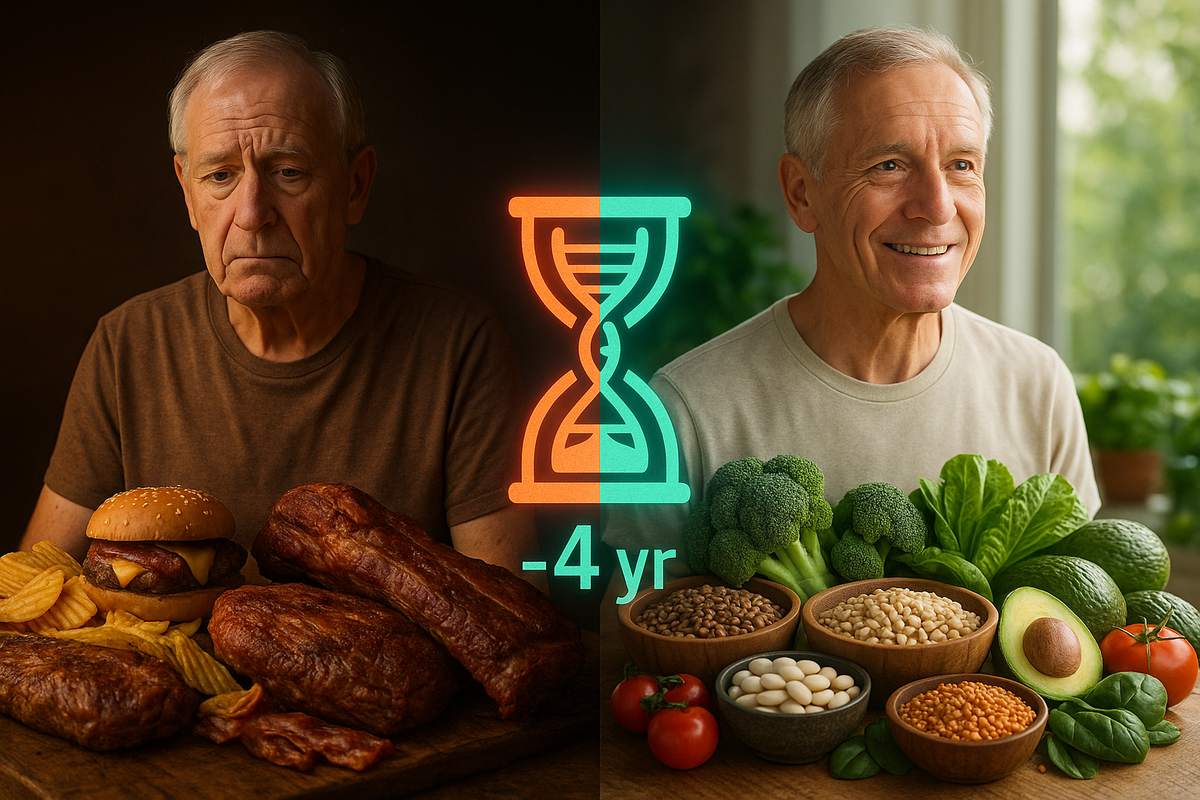
A new Australian study has found that just four weeks of eating differently can measurably reduce biological age in adults aged 65 to 75. The research, published in Aging Cell in May 2026 by scientists at the University of Sydney's Charles Perkins Centre, tested four distinct dietary patterns and found that an omnivorous, lower-fat, higher-carbohydrate diet produced an estimated 4.1-year reduction in biological age based on a 20-biomarker profile. Semi-vegetarian diets also showed meaningful improvements. The group that kept eating their usual high-fat diet showed no change at all. While this is early-stage research that needs longer-term confirmation, the findings add important new evidence to a growing body of science connecting diet quality directly to the pace of biological aging.
Biological Age vs. Chronological Age — Why the Difference Matters for Your Health
What is chronological age and why it doesn't tell the whole story
Chronological age is simply the number of years you have been alive since birth. It increases uniformly for everyone. But chronological age is a surprisingly poor predictor of health outcomes, functional capacity, and disease risk. Two people who are both 70 years old can be worlds apart biologically — one may have the physiology of a 60-year-old, while the other carries the biological burden of an 80-year-old. What determines which is closer to your reality is your biological age.
What is biological age and how is it measured?
Biological age is a measure of how well your body is actually functioning, assessed using physiological biomarkers rather than a calendar. By analyzing markers like blood cholesterol levels, fasting insulin, and C-reactive protein (a key marker of systemic inflammation), scientists can build a composite picture of how a body is aging relative to chronological norms. A biological age lower than your chronological age suggests your body is functioning more youthfully than your years would predict. A higher biological age indicates accelerated physiological aging.
This distinction matters because biological age is malleable. Unlike chronological age, which only moves forward, biological age can be shifted in either direction by lifestyle factors — diet, exercise, sleep, stress management, and more. That is the premise that makes research like this University of Sydney study so significant.
What the University of Sydney Study Set Out to Test in Adults Aged 65–75
Study origin and leadership
The study was led by Dr. Caitlin Andrews and supervised by Associate Professor Alistair Senior, both from the University of Sydney's School of Life and Environmental Sciences and the Charles Perkins Centre. It was conducted as part of the Nutrition for Healthy Living study and the findings were published in the peer-reviewed journal Aging Cell in May 2026. The central question: can specific changes to diet produce measurable, rapid improvements in aging biomarkers in older adults?
Who the participants were
The study enrolled 104 participants meeting the following criteria:
- Aged 65 to 75 years
- Non-smokers
- No major health conditions: specifically no type 2 diabetes, cancer, or renal or liver disease
- BMI range 20–35
- Non-vegetarian at baseline
Participants were randomly assigned to one of four dietary interventions, each followed for four weeks. The randomized controlled design strengthens the reliability of the findings relative to purely observational dietary studies.
What the study was designed to test
The researchers designed the study to tease apart two independent dietary variables: the source of protein (omnivorous vs. semi-vegetarian) and the macronutrient ratio (higher fat/lower carb vs. lower fat/higher carb). By crossing these two variables, they created four distinct dietary conditions that allowed them to assess the independent and combined effects of plant protein and fat reduction on aging biomarkers.
The Four Diet Types Compared — Omnivorous vs. Semi-Vegetarian, High-Fat vs. High-Carb
All four diets were designed to provide 14% of total energy from protein. The four groups were:
- OHF — Omnivorous High Fat: approximately 50% fat, 36% carbohydrates, with half of protein from animal sources. This group's diet most closely resembled participants' habitual eating patterns and served as the closest thing to a control condition.
- OHC — Omnivorous High Carbohydrate: 28–29% fat, 53% carbohydrates, half protein from animal sources. A standard omnivorous diet with substantially reduced fat and increased complex carbohydrates.
- VHF — Semi-Vegetarian High Fat: approximately 50% fat, 36% carbohydrates, with 70% of protein coming from plant sources. Higher plant protein, but fat level unchanged from the OHF group.
- VHC — Semi-Vegetarian High Carbohydrate: 28–29% fat, 53% carbohydrates, with 70% plant protein. The most plant-forward and lowest-fat diet of the four.
The intervention lasted four weeks for each participant, and biological age was assessed using a composite of 20 blood-based biomarkers before and after the dietary period.
Which Dietary Change Produced the Biggest Drop in Biological Age Markers
The results across the four groups were striking in their clarity:
- OHF (Omnivorous High Fat): no meaningful change in biological age biomarker profile.
- OHC (Omnivorous High Carbohydrate): estimated biological age reduction of approximately 4.1 years — the largest reduction, with the highest degree of statistical confidence.
- VHF (Semi-Vegetarian High Fat): approximately 3.2-year biological age reduction.
- VHC (Semi-Vegetarian High Carbohydrate): approximately 2.9-year biological age reduction.
The pattern reveals something important: reducing dietary fat was the most consistent driver of biological age improvement across both omnivorous and semi-vegetarian groups. Comparing OHF to OHC — where the only difference was fat/carb ratio, not protein source — reveals a 4.1-year improvement from fat reduction alone. Comparing OHF to VHF — where the only difference was protein source, not fat level — reveals a 3.2-year improvement from shifting toward plant protein alone. The combination of both changes (VHC) actually showed slightly less improvement than either change alone, possibly due to statistical interactions or individual variability across the four groups.
Critically, the OHF group — the one closest to a standard Western omnivorous eating pattern high in fat — showed no improvement at all. This is a direct indication that simply eating as usual provides no anti-aging dietary benefit from the diet itself.
Why Plant-Based, Lower-Fat Eating Appears to Rapidly Affect Aging Processes
The biomarkers that changed — and what they mean
The biological age score in this study was computed from 20 biomarkers. The most significant included:
- LDL cholesterol (low-density lipoprotein): elevated LDL accelerates arterial plaque formation and vascular aging
- Fasting insulin: elevated fasting insulin reflects insulin resistance and metabolic aging
- C-reactive protein (CRP): the primary blood marker of systemic inflammation, elevated CRP is strongly associated with accelerated aging across multiple organ systems
- Additional biomarkers of liver function, kidney function, blood glucose regulation, and immune activity
Each of these biomarkers responds relatively quickly to dietary changes — within days to weeks — which is why a four-week intervention was able to produce detectable shifts in the composite biological age score.
How a lower-fat diet affects these markers
Reducing dietary fat — particularly saturated fat from animal sources — has well-established, rapid effects on LDL cholesterol. Within two to four weeks of reducing saturated fat intake, most people show measurable LDL reductions. Reduced fat intake also lowers the inflammatory signaling from adipose tissue, contributing to lower CRP. When the fat reduction is replaced with whole food complex carbohydrates (as opposed to refined carbs), insulin sensitivity tends to improve rather than worsen, because fiber-rich carbohydrates slow glucose absorption and reduce postprandial insulin spikes.
How plant protein sources contribute independently
Replacing animal protein with plant protein (legumes, tofu, whole grains, nuts) brings additional biological benefits beyond simply reducing saturated fat. Plant proteins arrive packaged with fiber, phytonutrients, and antioxidants that have independent anti-inflammatory effects. Dietary fiber specifically reduces CRP, improves gut microbiome diversity, and supports the production of short-chain fatty acids that directly protect the gut lining and modulate systemic inflammation. These effects compound over time and represent a mechanistic explanation for why plant-forward diets consistently associate with longevity in population studies.
What Dietitians Say — Promising Findings but Important Caveats to Understand
Nutrition scientists and dietitians responding to this research describe the findings as genuinely promising while urging appropriate caution in interpretation. The speed of the biological age shift — four weeks — is remarkable, but it also raises a key question: are these changes durable, or do they represent temporary fluctuations in biomarker levels that normalize when participants return to their usual diet?
Biological age composite scores based on blood biomarkers can shift relatively quickly in response to acute physiological changes including short-term dietary shifts, changes in hydration, recent illness, or even seasonal variation. This does not mean the changes observed are not real — they are real improvements in meaningful health markers — but it does mean they should not be interpreted as permanent reversal of underlying aging processes after just four weeks.
The researchers themselves are measured in their conclusions. Dr. Andrews stated directly: "It's too soon to say definitively that specific changes to diet will extend your life. But this research offers an early indication of the potential benefits of dietary changes later in life." Associate Professor Senior added: "Longer term dietary changes are needed to assess whether dietary changes alter the risk of age-related diseases." This is precisely the kind of scientific restraint that gives the research credibility.
What dietitians do note is that plant-forward and lower-fat dietary patterns are already well-supported by independent evidence for reducing cardiovascular disease, type 2 diabetes, and cancer risk. So even without certainty about the biological age framing, these dietary patterns are consistent with broader health recommendations.
Limitations of the Study — Can 4 Weeks of Dietary Changes Really Reverse Aging?
The duration problem
Four weeks is a very short window for drawing conclusions about aging, which is a process that unfolds over decades. The biomarker shifts observed reflect measurable physiological improvements — lower cholesterol, reduced inflammation — but whether these translate into long-term reductions in disease risk and mortality remains untested. The researchers explicitly acknowledge this limitation and call for longer-term trials.
The sample size and population constraints
With 104 participants, this is a relatively modest study. All were Australians aged 65–75 with no major health conditions, limiting generalizability to younger adults, people with chronic disease, or populations with different dietary baselines and food cultures. The results are a strong hypothesis-generator but not a definitive population-level finding.
Biological age score as a proxy measure
The biological age score used in this study is derived from 20 blood biomarkers — a useful and clinically meaningful approach, but a different methodology from epigenetic aging clocks (like the Horvath clock or DunedinPACE), which measure DNA methylation patterns and are considered by many researchers to be more precise measures of biological aging at the cellular level. The biomarker composite score is more susceptible to short-term fluctuations than epigenetic measures.
What the researchers call for next
Both Dr. Andrews and Associate Professor Senior call for longer-term dietary intervention trials across wider age ranges and more diverse populations before making clinical recommendations. This research is an important first step, not a final answer.
Practical Takeaway — Which Plant Foods and Carbs to Actually Prioritize, and Which to Avoid
If the findings motivate you to shift toward a more plant-forward, lower-fat eating pattern, it is important to understand what "high carbohydrate" means in this research context. The carbohydrates in the OHC diet were not refined sugars and white bread — they were whole food carbohydrates from grains, legumes, and vegetables. Food quality within the macronutrient category matters as much as the macronutrient ratio itself.
Foods to prioritize:
- Legumes — lentils, chickpeas, black beans, kidney beans — for plant protein, fiber, and very low saturated fat
- Whole grains — oats, brown rice, quinoa, barley, whole wheat — for complex carbohydrates with high fiber content
- Vegetables in abundance — especially leafy greens, cruciferous vegetables, and colorful varieties — for micronutrients and antioxidants
- Fruits — especially berries, citrus, and apples — for fiber and polyphenols
- Tofu and tempeh — high plant protein, minimal saturated fat, anti-inflammatory phytoestrogens
- Nuts and seeds in moderate portions — high fat but predominantly unsaturated; portion-control is key
Foods to reduce:
- High-fat animal products — processed meats, fatty cuts of red meat, full-fat dairy in large daily quantities
- Refined carbohydrates — white bread, pastries, sugar-sweetened beverages — which were not the carb sources in the study and offer none of the fiber benefits
- Ultra-processed foods regardless of macronutrient profile — these tend to be high in both saturated fat and refined carbohydrates simultaneously
How Plant-Forward Eating Fits Into the Broader Science of Healthy Aging
This University of Sydney study does not stand in isolation. It joins a large and converging body of evidence from multiple independent research traditions all pointing toward the same dietary direction. The Mediterranean diet, consistently ranked among the most evidence-supported dietary patterns for longevity, shares the key characteristics of the OHC and VHC groups: lower saturated fat, abundant vegetables and legumes, substantial whole grain intake, and reduced animal fat.
The Blue Zones — regions of the world with the highest concentrations of people living past 100 — in Sardinia (Italy), Okinawa (Japan), Ikaria (Greece), Nicoya (Costa Rica), and Loma Linda (California) all eat predominantly plant-forward diets with low animal fat and high complex carbohydrates. Okinawan centenarians traditionally derived 85% of their calories from sweet potatoes, vegetables, and grains. Sardinians emphasize legumes, sourdough bread, and locally grown vegetables. These populations are not eating low-fat by deliberate design — they are eating this way because it is their traditional food culture, and the result is some of the lowest rates of cardiovascular disease, dementia, and cancer in the world.
The gut microbiome science reinforces this picture further. Higher dietary fiber from plant foods consistently improves gut microbiome diversity — a measure independently associated with slower biological aging, reduced systemic inflammation, stronger immune function, and better metabolic health. The mechanisms connecting plant-forward eating to slower aging are multiple, mutually reinforcing, and increasingly well-documented.
The University of Sydney study adds to this picture by providing direct, experimental evidence that even a four-week shift toward lower fat and more plant foods produces measurable biological age improvements in older adults. This is not a magic solution, and it is not the final word on diet and aging. But it is a meaningful signal, consistent with the broader science, that what you eat is one of the most powerful levers you have over how quickly your body ages.
Conclusion
A four-week dietary intervention produced an estimated 4.1-year reduction in biological age in adults aged 65–75 who followed a lower-fat, higher-carbohydrate eating pattern. Semi-vegetarian diets showed improvements of 2.9–3.2 years. The group that maintained their usual high-fat diet showed no change. While longer-term research is essential before drawing definitive conclusions, these findings are consistent with decades of evidence linking plant-forward, lower-saturated-fat diets to better health outcomes and slower aging across multiple biological systems.
You do not need to become fully vegetarian or adopt a strict low-fat regimen overnight. The research suggests that meaningful shifts — more legumes, more whole grains, more vegetables, less processed meat and saturated fat — can begin moving your biological markers in the right direction within weeks. That is an encouraging message, and one that invites you to take one practical step toward a more plant-forward plate starting today.