Values Over Goals: A New Approach to Health, Career, and Relationships
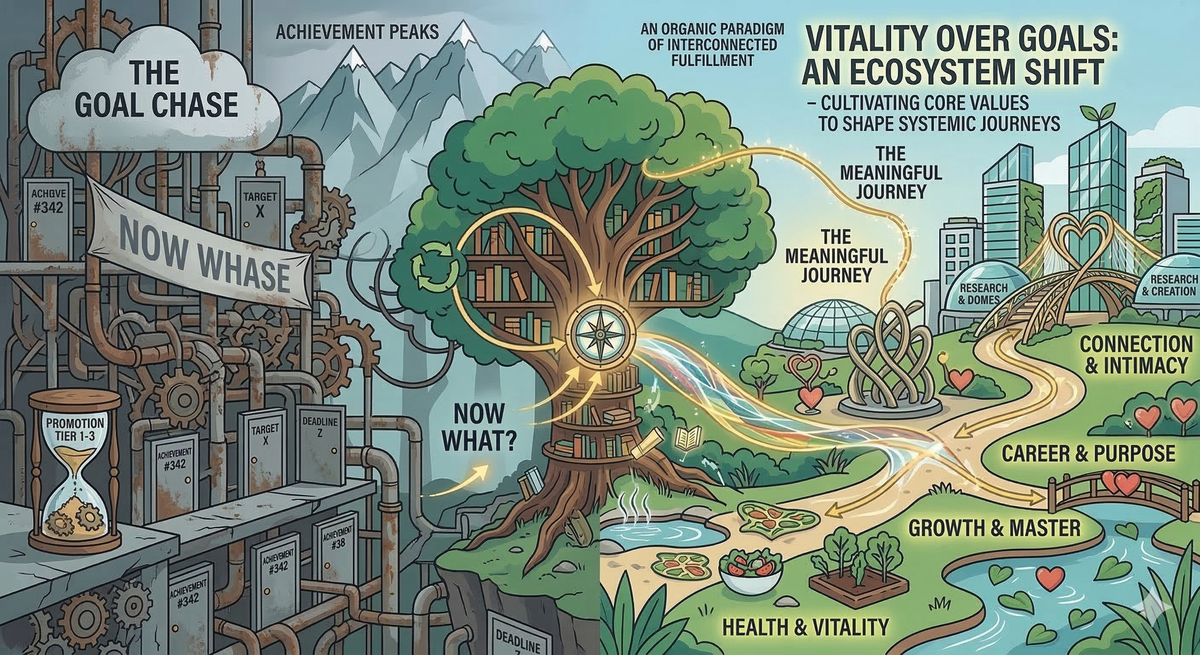
Every January, millions of people sit down with fresh notebooks and ambitious intentions. They write down goals like losing thirty pounds, earning a promotion, or finding a life partner. By February, most of these resolutions have faded into distant memories, replaced by frustration and self-criticism. This cycle repeats year after year, leaving countless individuals wondering why they cannot seem to achieve lasting change despite their best efforts.
The problem is not a lack of willpower or discipline. The problem is the approach itself.
What if the entire framework of goal-setting, while useful in certain contexts, is fundamentally incomplete? What if there is a more sustainable and fulfilling alternative that actually leads to the health, career success, and meaningful relationships we desire?
Enter the concept of values over goals—a paradigm shift that is transforming how thoughtful people approach personal development and life design. Rather than fixating on specific outcomes that may or may not bring lasting satisfaction, this approach encourages building your life around your core values. These deeply held principles act as an internal compass for daily actions, guiding every decision you make without the pressure of artificial deadlines or the emptiness that often follows achievement.
Goals are destinations on a map. Values are the compass that helps you navigate the entire journey. When you understand this distinction, everything changes.
This comprehensive guide will explore why a goal-only mindset often fails, reveal the transformative power of living a value-driven life, and provide you with practical tools to identify and integrate your personal values into your health routines, career development, and relationships. By the end, you will have a new framework for creating lasting change and building a truly meaningful life.
The Problem with a Goal-Only Mindset
Before we can fully appreciate the power of values, we need to understand why the traditional goal-setting approach, despite its popularity, often leaves people feeling unfulfilled, exhausted, and stuck in cycles of temporary motivation followed by disappointment [1].
 Viktoria Samokhval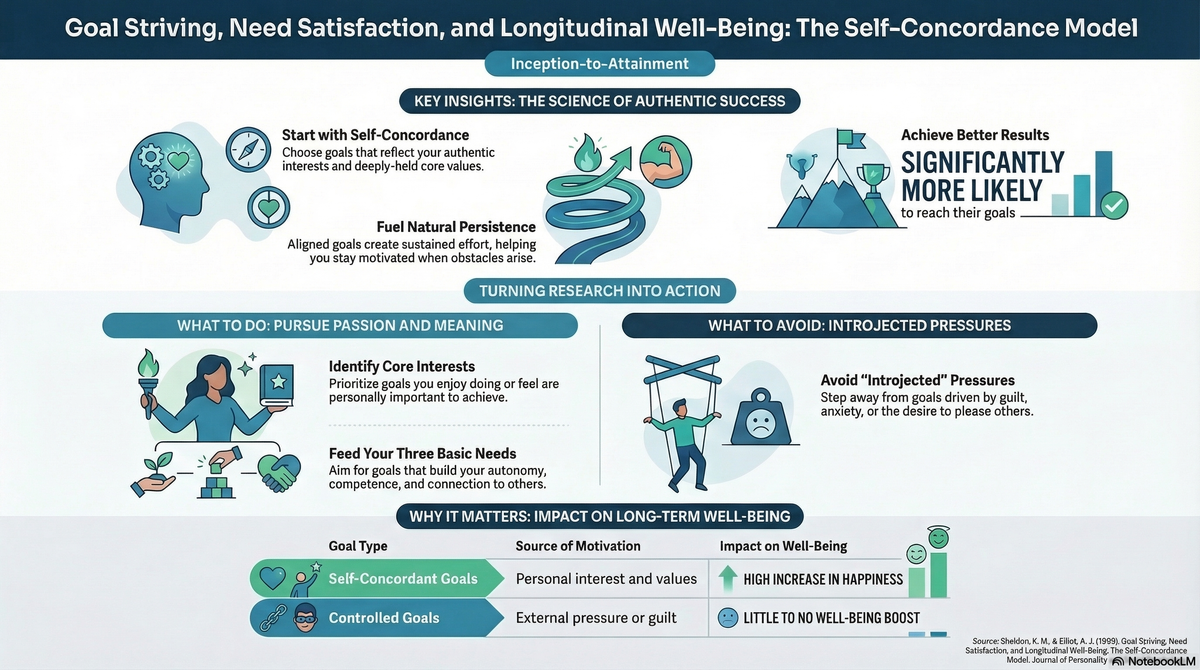
[1]
The Finish-Line Fallacy and Burnout
Picture this scenario: After months of grueling effort, you finally achieve a major career milestone. You land that dream job, receive that promotion, or hit your target revenue. There is a moment of celebration, perhaps a dinner with friends or a brief vacation. But within days or weeks, something unexpected happens. The euphoria fades, and you are left with an unsettling question: "Now what?"
This experience, which researchers and psychologists have studied extensively, is often called the "arrival fallacy" or what we might call the finish-line fallacy. It is the mistaken belief that once we reach a specific goal, we will finally be happy, satisfied, or complete [2]. The reality is far different.
 Viktoria Samokhval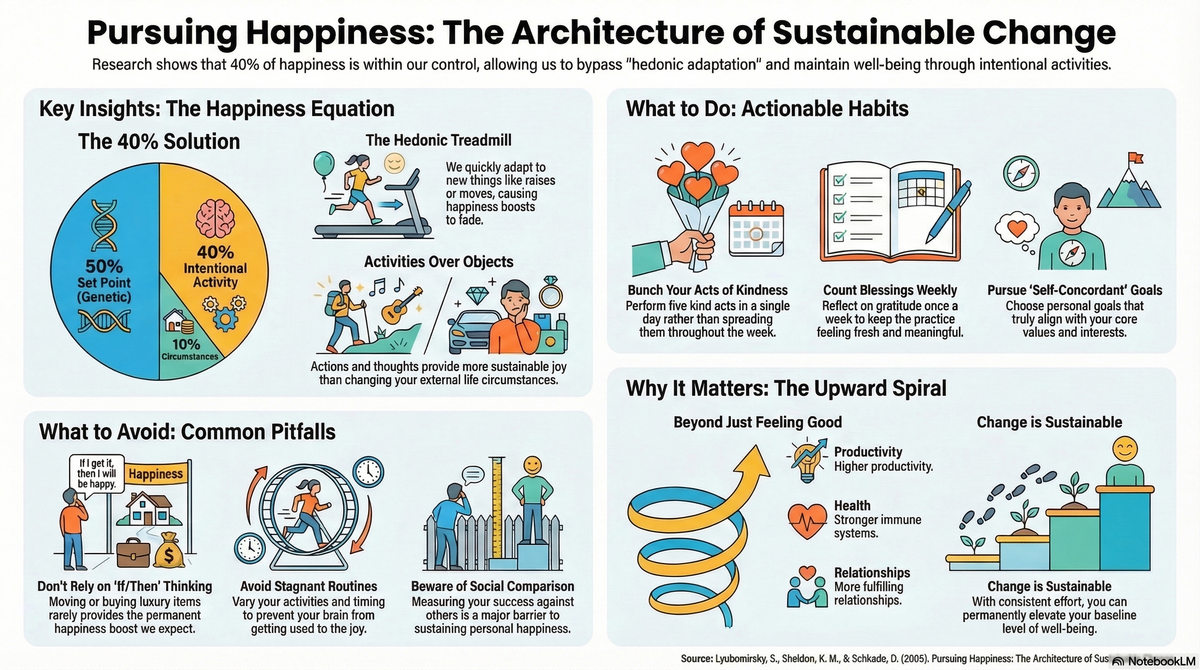
[2]
When your entire sense of motivation and purpose is tied to achieving specific goals, you set yourself up for a predictable pattern:
- You identify an ambitious goal and feel excited about the possibility
- You work intensely toward that goal, often sacrificing other important areas of life
- You either achieve the goal and feel momentary satisfaction, or you fail and feel defeated
- In either case, you quickly identify a new goal to chase, restarting the cycle
This constant chase for the next thing creates a treadmill effect. No matter how fast you run, you never actually arrive anywhere meaningful. The destination keeps moving, and you exhaust yourself in pursuit of something that cannot deliver what it promises.
The consequences of this pattern extend far beyond disappointment. The relentless pursuit of goals without a deeper foundation often leads directly to burnout [3]. When you push yourself toward arbitrary targets without connection to your values, you deplete your physical, emotional, and mental resources. Your body breaks down. Your relationships suffer. Your creativity withers.
 Viktoria Samokhval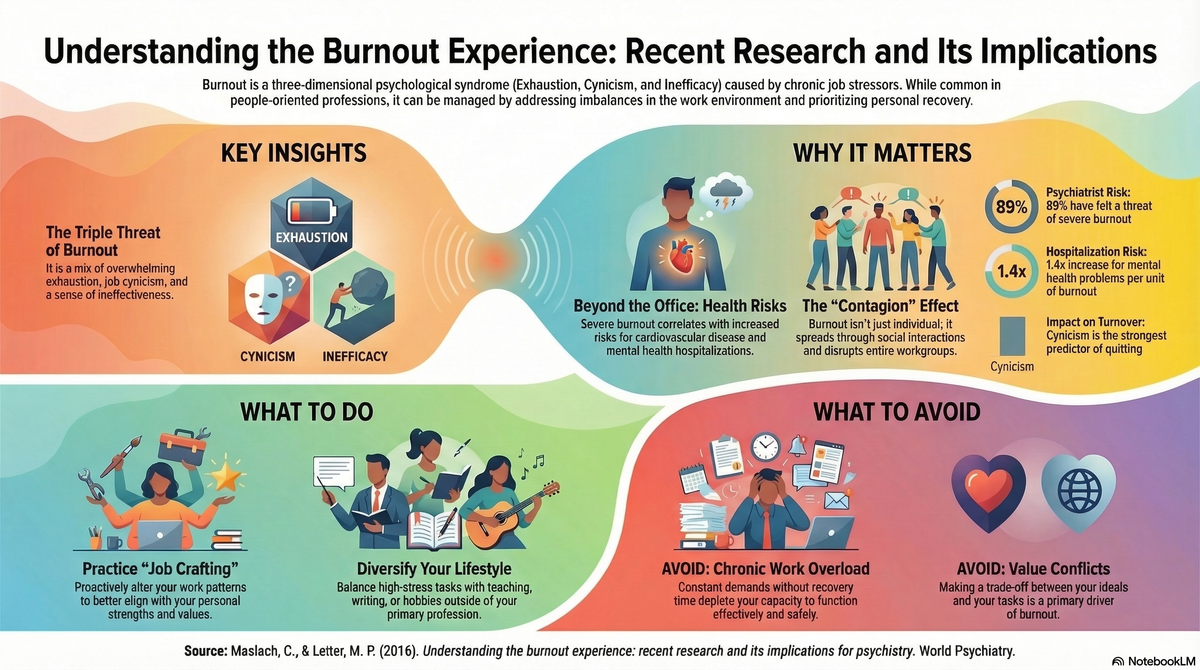
[3]
Burnout is not simply about working too hard. It is about working toward things that do not nourish your soul. You can work incredibly hard on projects aligned with your core values and feel energized rather than depleted. But when your efforts serve goals disconnected from who you really are, even moderate effort can drain you completely.
The Trap of Inflexibility
Goals, by their very nature, are rigid structures. They specify exactly what you want to achieve, by when, and often how you will measure success. This specificity can be helpful for short-term projects, but it becomes a liability when life inevitably throws curveballs.
Consider someone whose primary goal is to become a senior manager at their company within three years. They have mapped out every step: the certifications they need, the relationships they must cultivate, the projects they should lead. Then the company restructures, eliminating the position they were targeting. Or they discover, two years into their plan, that management does not actually suit their strengths or interests. Or a family health crisis requires them to reduce their work hours temporarily.
In each case, the rigid goal becomes a source of stress rather than motivation. The person feels like a failure not because they did anything wrong, but because circumstances changed in ways they could not control.
This inflexibility also creates problems when goals do not actually align with our inner compass. Many people set goals based on external expectations—what their parents wanted, what society celebrates, what their peers are pursuing. They achieve these goals and feel hollow because the accomplishment never belonged to them in the first place.
A person might spend years pursuing a medical degree because their family values prestige and security, only to realize they are deeply unhappy practicing medicine. Their goal was achieved, but their values—perhaps creativity, autonomy, or adventure—were completely ignored.
This misalignment between goals and values is one of the primary causes of the widespread dissatisfaction and meaninglessness that affects so many high achievers. They have everything society told them to want, yet something essential is missing.
The Power of a Value-Driven Life
If goals alone cannot provide lasting fulfillment, what can? The answer lies in shifting your focus from specific outcomes to the ongoing expression of your core values. This approach transforms personal development from a series of finish lines into a continuous journey of growth, contribution, and self-awareness.
Values as a Compass for Daily Decisions
Every day presents dozens of decisions, from the mundane (what to eat for breakfast) to the significant (whether to accept a job offer). Without a clear framework for making these choices, decision fatigue accumulates, and we often default to whatever requires the least effort or whatever others expect of us.
Core values simplify this process dramatically. When you know what matters most to you—truly matters, not what you think should matter—decisions become clearer. Each choice becomes a simple question: Does this option align with my values or conflict with them?
Imagine your core value is health, understood broadly as physical vitality, mental clarity, and emotional wellbeing. Now consider a typical morning decision: Should you hit the snooze button three times or get up for your planned exercise? Without a values framework, this becomes a battle of willpower, with your exhausted morning self fighting against your ambitious evening self who made the plan.
With a values framework, the question shifts. You are not asking whether you feel like exercising. You are asking whether pressing snooze aligns with your value of health. The answer is obvious, and while you might still choose snooze occasionally, you do so consciously, understanding the tradeoff you are making.
This same clarity extends to career decisions. If one of your core values is growth, defined as continuous learning and skill development, you will naturally gravitate toward opportunities that challenge you, even if they pay less or carry more risk. When offered a comfortable position that would allow you to coast on existing skills, you will recognize it as misaligned with who you are, regardless of how attractive it might look on paper.
Values also guide relationship decisions. If you deeply value connection—authentic intimacy and mutual understanding—you will invest time and energy in relationships that offer this potential while gradually stepping back from relationships that remain superficial despite your efforts.
The stress reduction that comes from values-based decision-making is significant [4]. Much of our anxiety around choices stems from uncertainty about what we should want. When your values are clear, the path forward, while not always easy, is usually apparent.
 Viktoria Samokhval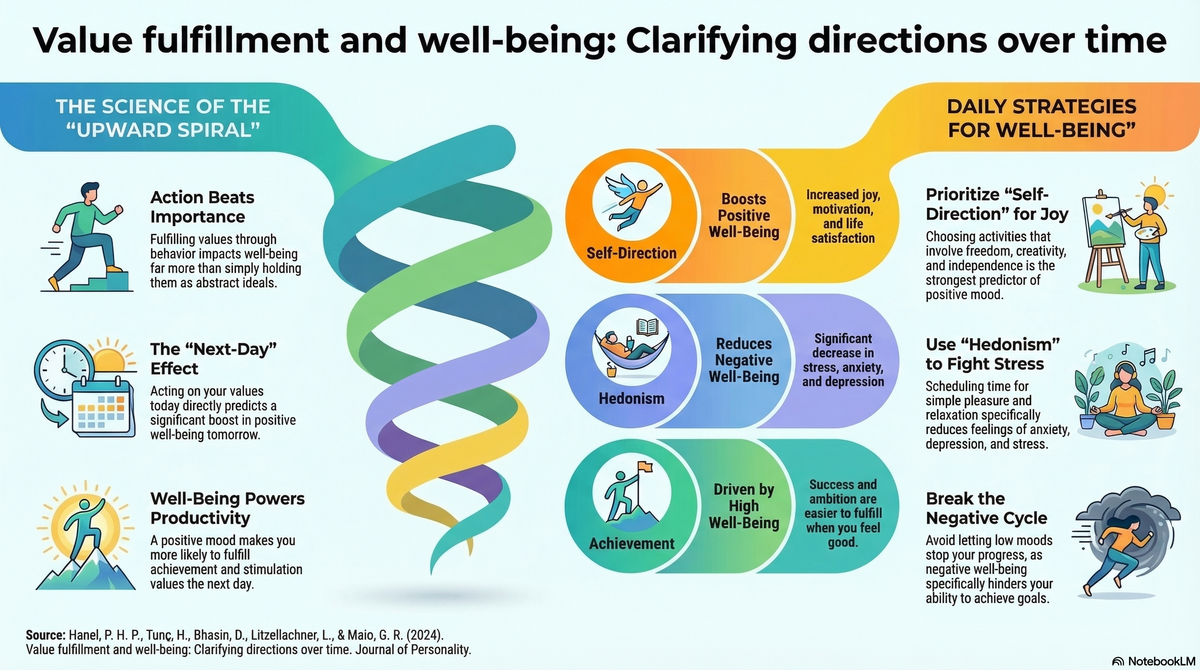
[4]
Building Consistency and Resilience
Goals tend to produce short bursts of effort. You decide to get fit, work out intensely for a few weeks, and then gradually stop as initial motivation fades. You commit to professional development, complete a course or two, then let your learning stagnate. These patterns are so common that entire industries exist to capitalize on them, selling gym memberships and course subscriptions that most people never fully use.
Values work differently because they are ongoing rather than completable. You cannot finish valuing health or check off growth as done. These commitments continue throughout your life, evolving in expression but constant in importance.
This ongoing nature encourages consistent action rather than sporadic effort. When health is a value, you do not exercise to lose twenty pounds by summer. You exercise because moving your body is an expression of who you are. Some weeks you move more, some less, but the underlying commitment remains steady because it is not tied to a specific target.
Values also provide remarkable resilience when specific efforts fail. Missing a workout does not mean abandoning your goal. It means you had one day where your expression of health looked different than planned. Tomorrow offers another opportunity to live your value, without the shame spiral that often accompanies goal failure.
This resilience extends to major setbacks. If your career value is contribution—making a meaningful difference through your work—losing a job does not mean losing yourself. Your value remains intact, ready to be expressed through new opportunities. The specific vehicle changed, but your core direction did not.
Habits and systems naturally emerge from values-based living. When you are committed to growth as a value, you naturally develop systems for continuous improvement: regular reading, skill practice, reflection routines. These processes become part of your identity rather than temporary programs you adopt and abandon.
A Deeper Sense of Progress and Fulfillment
Goals provide momentary satisfaction upon completion. Values provide ongoing fulfillment through continuous alignment. This difference is profound and explains why many successful people feel empty while many "ordinary" people living according to their values feel deeply content.
When you live by your values, every aligned action becomes meaningful. Cooking a nutritious meal is not just food preparation; it is an expression of your value of health. Mentoring a colleague is not just a task; it is an expression of your value of service. Having a deep conversation with your partner is not just relationship maintenance; it is an expression of your value of connection.
This perspective transforms the mundane into the meaningful. Your entire life becomes purpose-filled because purpose is not something you achieve but something you express continuously through aligned actions.
The concept of progress also shifts in valuable ways. Goal-based progress is binary: you have either achieved the goal or you have not. Values-based progress is continuous: every day offers opportunities to more fully embody what matters most to you. There is always room to grow, deepen, and refine without the pressure of pass-fail evaluation.
This ongoing sense of purpose contributes significantly to psychological wellbeing. Research consistently shows that meaning is essential for human flourishing, and meaning comes not from achievement but from alignment between who we are and how we live [5].
 Viktoria Samokhval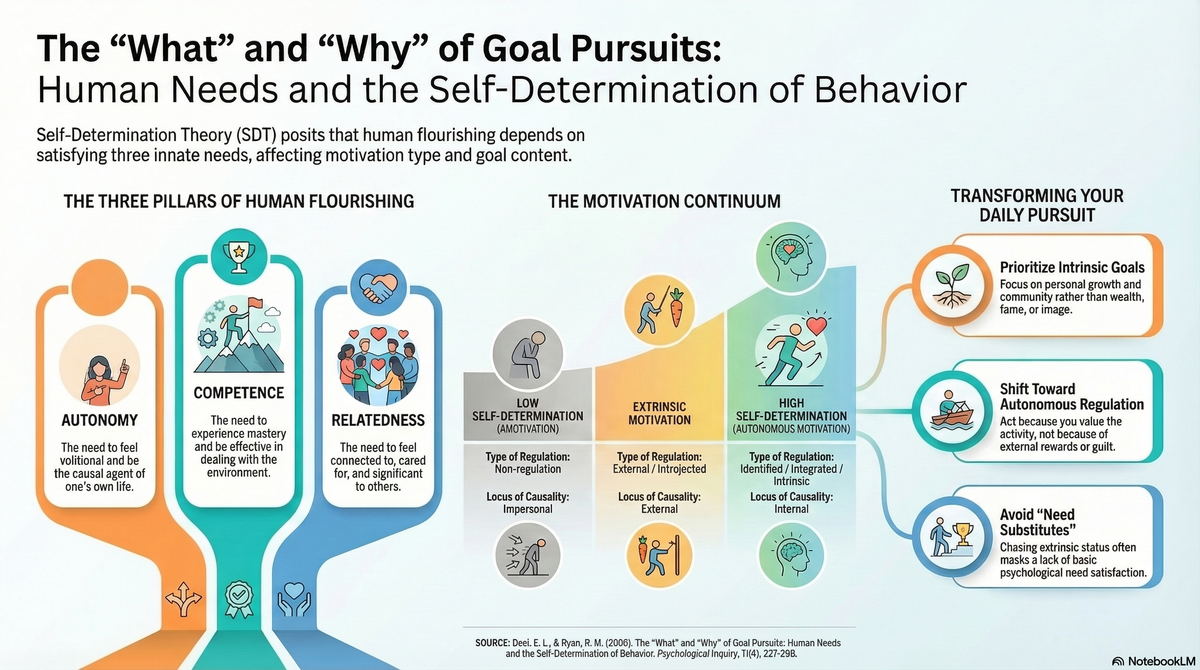
[5]
How to Identify and Live by Your Core Values
Understanding the power of values is one thing; actually identifying and integrating them into your life is another. This section provides practical guidance for uncovering your authentic values and using them as the foundation for decisions in health, career, and relationships.
Step-by-Step Guide to Finding Your Values
Many people have never explicitly identified their core values. They have intuitions and preferences but have not articulated the principles that guide their choices. The following process will help you move from vague feelings to clear understanding.
Step 1: Reflect on Peak Experiences
Think about moments in your life when you felt most alive, engaged, and fulfilled. These are not necessarily your happiest moments but the times when you felt most fully yourself.
Ask yourself these reflection questions:
- When did I feel most alive and energized?
- What was I doing when I lost track of time completely?
- What accomplishments make me genuinely proud, regardless of external recognition?
- When did I feel most at peace with my choices?
- What activities would I continue even without pay or recognition?
Write down specific examples without editing or judging. Look for patterns across these experiences. If many peak moments involve helping others, service might be a core value. If they involve solving complex problems, intellectual challenge might be central to who you are.
Step 2: Examine What Bothers You
Your frustrations and irritations often reveal values by showing their absence or violation. When something deeply bothers you, it usually conflicts with something you care about intensely.
Consider:
- What behaviors in others frustrate you most?
- What news stories or social issues make you angry?
- What situations make you feel drained or resentful?
- When have you felt your boundaries were crossed?
If dishonesty deeply bothers you, integrity is likely a core value. If chaos and disorder drain you, structure or harmony might be important. If feeling controlled makes you resentful, autonomy is probably essential.
Step 3: Review a Values List
Sometimes we struggle to articulate values because we lack vocabulary. Reviewing a comprehensive list can help you recognize and name what you already know about yourself.
Here are example values organized by major life spheres:
Health and Vitality
- Physical wellness
- Energy and strength
- Balance and moderation
- Self-care
- Longevity
Growth and Learning
- Curiosity
- Mastery
- Wisdom
- Self-improvement
- Adaptability
Career and Purpose
- Achievement
- Excellence
- Impact
- Creativity
- Leadership
- Innovation
- Service
Relationships and Connection
- Intimacy
- Loyalty
- Compassion
- Community
- Belonging
Financial and Security
- Stability
- Abundance
- Generosity
- Independence
- Responsibility
Recreation and Joy
- Adventure
- Play
- Beauty
- Humor
- Presence
Contribution and Legacy
- Service
- Justice
- Influence
- Mentorship
- Sustainability
Spirituality and Meaning
- Faith
- Gratitude
- Transcendence
- Purpose
- Inner peace
Read through these slowly. Notice which words create a resonance, a feeling of recognition. These are candidates for your core values.
Step 4: Narrow and Prioritize
Having twenty values is the same as having none. True core values are few in number because they represent non-negotiable priorities that guide difficult tradeoffs.
From your reflections and list review, identify your top ten values. Then cut to seven. Then five. Finally, select three to five values that feel absolutely essential to who you are.
This narrowing is difficult but important. It forces you to distinguish between things you appreciate and things you require for a meaningful life.
Step 5: Define Your Values in Your Own Words
Generic definitions are less powerful than personal ones. Take each of your core values and write a brief statement explaining what it means specifically to you.
For example, if growth is a core value, your definition might be: "Growth means continuously developing my capabilities and understanding, not for external validation but for the joy of becoming more fully myself. It means embracing challenges, learning from failures, and never becoming complacent."
These personal definitions transform abstract concepts into practical guides for daily decision-making.
Step 6: Test Through Action
Values discovered through reflection must be tested through action. For the next month, consciously try to align your choices with your identified values. Notice how it feels when you succeed and when you fall short.
You may discover that some values you selected intellectually do not actually drive your behavior. Others may emerge as more important than you initially realized. Allow your understanding to evolve through this real-world testing.
Aligning Actions with Values in Key Life Spheres
Once you have identified your core values, the next challenge is translating them into specific actions within your health routines, career development, and relationships. Abstract values become powerful when they guide concrete behaviors.
Health: From Value to Action
Let us say one of your core values is vitality, which you define as maintaining the physical and mental energy to fully engage with life and pursue what matters.
This value can translate into numerous specific actions:
Daily practices aligned with vitality:
- Beginning each day with movement that energizes rather than depletes you
- Eating foods that provide sustained energy rather than quick spikes and crashes
- Protecting sleep as essential infrastructure for everything else you want to do
- Taking breaks throughout your workday to maintain mental freshness
- Choosing social activities that leave you feeling more alive rather than drained
With vitality as your compass, you are not exercising to hit an arbitrary number on a scale. You are moving because movement is an expression of your commitment to being fully alive. This shift in perspective makes healthy habits more sustainable because they are connected to identity rather than outcome.
When you miss a workout, you do not feel like a failure chasing a goal. You simply recognize that today, vitality was expressed differently, and tomorrow offers new opportunities for alignment.
Career: From Value to Action
Suppose one of your core values is creativity, defined as bringing novel ideas into reality and finding innovative solutions to meaningful problems.
This value reshapes how you approach career development:
Career practices aligned with creativity:
- Actively seeking projects that allow for innovation rather than routine execution
- Volunteering for assignments where the path forward is unclear
- Blocking time for ideation and experimentation, even when immediate deliverables are pressing
- Building relationships with colleagues who challenge your thinking
- Saying no to work that would keep you busy but creatively stagnant
- Evaluating job opportunities based on creative potential rather than just title or salary
With creativity as a core value, job satisfaction becomes less about external markers like promotion or compensation and more about whether your work allows you to express who you are. You might choose a role with less prestige that offers more creative freedom, understanding that alignment produces fulfillment while misalignment produces emptiness regardless of status.
Values alignment in career development also provides clarity during transitions. If you are considering a new opportunity, the question becomes: Will this role allow me to express my core values more fully? This lens simplifies complex decisions.
Relationships: From Value to Action
Perhaps one of your core values is connection, defined as cultivating deep, authentic relationships where mutual understanding and support flourish.
This value guides relationship behaviors:
Relationship practices aligned with connection:
- Scheduling intentional time with your partner, family, and close friends
- Putting away devices during conversations to be fully present
- Asking questions that invite deeper sharing rather than surface exchanges
- Expressing vulnerability by sharing your own fears, hopes, and struggles
- Following up on things people have shared with you previously
- Being willing to address conflict rather than avoiding it, since genuine connection requires honesty
- Gradually reducing investment in relationships that remain superficial despite effort
With connection as a value, you are not maintaining relationships because you should or because others expect it. You are investing in relationships because deep connection is essential to who you are.
This perspective helps with the often-difficult decisions about where to spend limited time and energy. Not all relationships need to be deep, but you ensure that some relationships receive the attention required for genuine intimacy.
Integrating Values Across Spheres
Your core values should create coherence across different life areas. If health, creativity, and connection are your three primary values, they should guide decisions in all spheres, not just the ones most obviously related.
Your career choices should support your health, not undermine it. Your health practices should support your creativity, not leave you too exhausted to think. Your relationships should support your creative work, not distract from it entirely.
This integration is the essence of life design—crafting a life where different elements reinforce rather than compete with each other. Values make this possible because they provide a consistent framework across contexts.
Conclusion
The cultural obsession with goal-setting has left countless people exhausted, empty, and wondering why success does not feel like they expected. The problem is not that these people lack discipline or ambition. The problem is that they have been given an incomplete map for the journey of a meaningful life.
Values over goals is not an abandonment of achievement or ambition. It is a recognition that lasting fulfillment comes not from what you accomplish but from who you become and how consistently you live in alignment with your deepest principles.
Your core values provide direction for every decision in health, career, and relationships. They simplify choices, build consistency, create resilience, and generate an ongoing sense of purpose that goal achievement cannot match.
The journey to a values-driven life begins with self-awareness—honestly examining what matters most to you rather than accepting what you think should matter. It continues with integration—aligning your daily actions with your identified values across all life spheres. And it deepens over time through reflection and refinement, as your understanding of your values grows more nuanced and your expression of them grows more consistent.
Goals have their place as milestones along the way. But they are not the destination. There is no destination. There is only the ongoing journey of becoming more fully yourself through continuous alignment between your values and your life.
You do not need to achieve anything more to start living a meaningful life. You need only to clarify what matters most and begin expressing those values through your choices, starting today.
What are your core values? What would your life look like if every decision flowed from those principles? These questions do not have quick answers, but engaging with them is itself the beginning of transformation.
The meaningful life you seek is not waiting at the end of your goal list. It is available right now, in this moment, through alignment with who you truly are. That is the power of values over goals—a compass for the journey rather than an obsession with the destination.
References
-
Sheldon, K. M., & Elliot, A. J. Goal striving, need satisfaction, and longitudinal well-being: The self-concordance model.
Journal of Personality and Social Psychology, 1999. 76(3), 482–497. -
Lyubomirsky, S., Sheldon, K. M., & Schkade, D.Pursuing happiness: The architecture of sustainable change.
Review of General Psychology, 2005. 9(2), 111–131. -
Maslach, C., & Leiter, M. P. Understanding the burnout experience: Recent research and its implications for psychiatry.
World Psychiatry, 2016. 15(2), 103–111 -
Hanel, P. H. P., Tunç, H., Bhasin, D., Litzellachner, L. F., & Maio, G. R. Value fulfillment and well-being: Clarifying directions over time.
Journal of Personality, 2024. 92(4), 1037–1049. -
Deci, E. L., & Ryan, R. M. (2000). The “what” and “why” of goal pursuits: Human needs and the self-determination of behavior.
Psychological Inquiry, 2000. 11(4), 227–268.