
Problem Solving: How to Turn Any Issue into Clear Next Actions
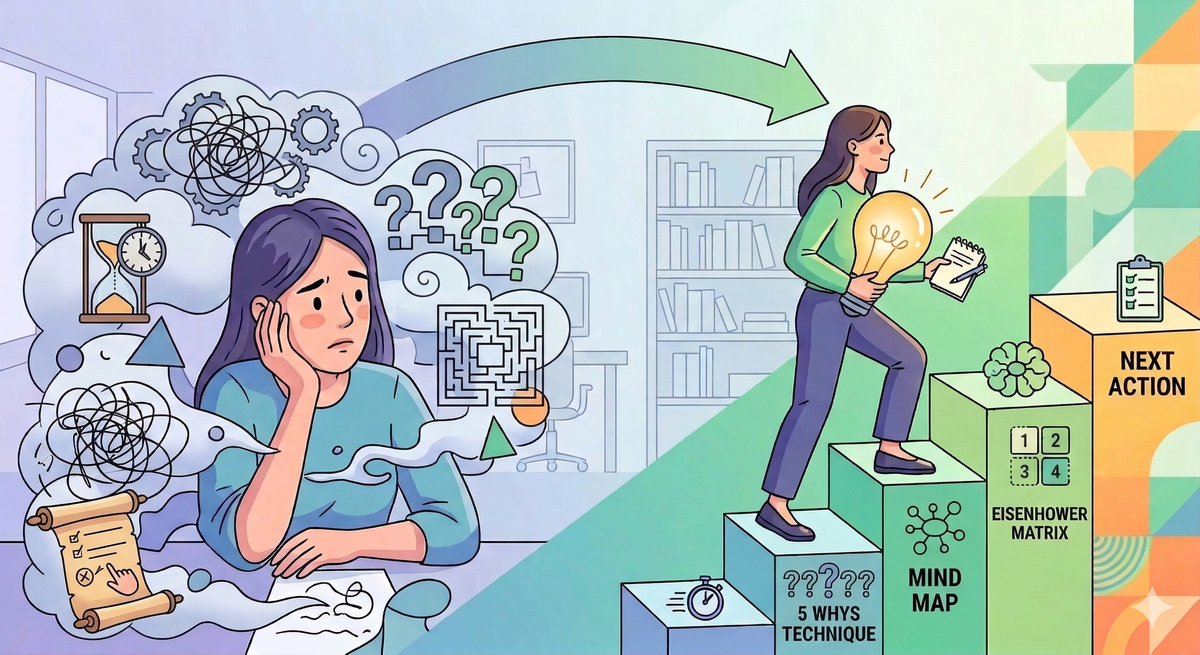
Feeling stuck? Whether it’s a roadblock in your Career or a question about your personal path and Meaning, complex problems can feel paralyzing. We overthink, we procrastinate, and we get lost in a fog of uncertainty. But what if you could turn any issue, no matter how daunting, into a series of clear, manageable next actions? This guide will provide you with a practical framework to develop your problem-solving skills, helping you move from analysis paralysis to decisive execution. Because problem solving isn’t just a professional tool—it’s a core life skill for building a meaningful and proactive life.
Why Problem-Solving is a Core Life Skill for a Meaningful Career
Effective problem-solving is more than a line item on a resume; it is the engine of personal and professional growth. The ability to systematically dissect a challenge and chart a path forward is what separates passive observers from active creators in their own lives. This skill is foundational for not just advancing your career, but also for finding deeper meaning in the work you do.
Connecting Problems to Purpose and Growth
Every problem is an opportunity for growth. When you successfully navigate a challenge, you don’t just find a solution—you build resilience, gain new knowledge, and sharpen your critical thinking. By reframing problems as puzzles, you can connect your daily efforts to a larger sense of purpose. Solving issues that matter to you and your organization creates tangible value, reinforcing the meaning behind your professional life and contributing to your self-development in the Growth sphere [1].
 Viktoria Samokhval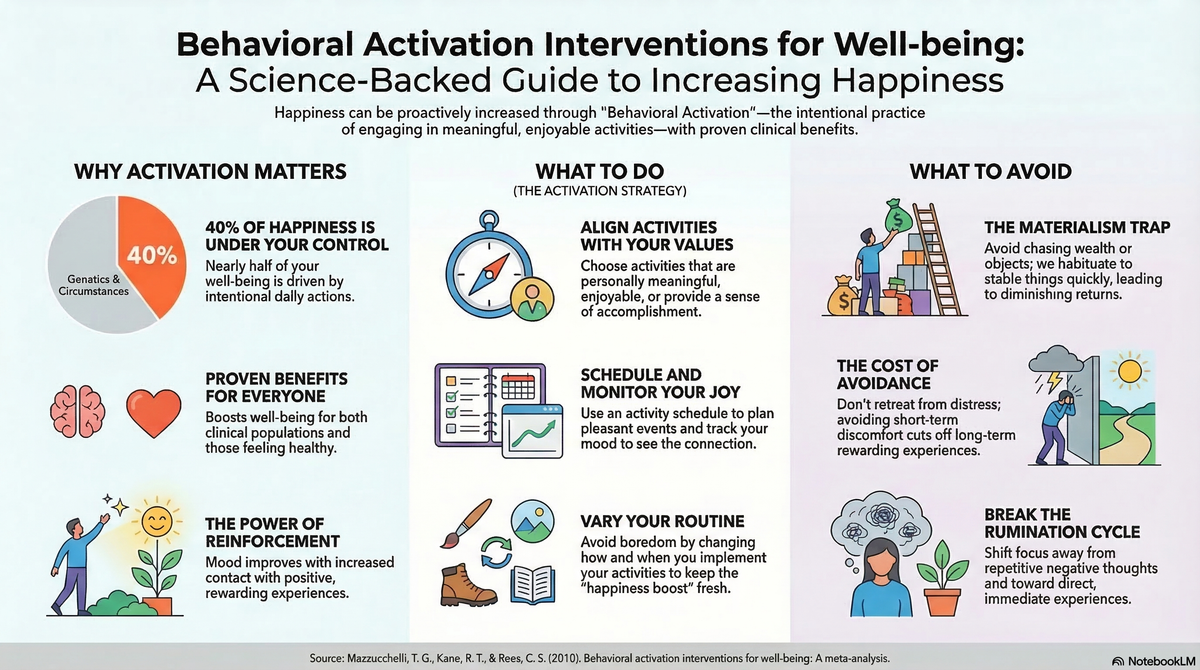
[1]
The Cost of Inaction and Overthinking
The opposite of effective problem-solving is analysis paralysis—the state of overthinking to the point where you do nothing. This inaction doesn’t just stall projects; it erodes confidence and feeds a cycle of procrastination. The longer you wait, the bigger the problem seems, and the more disconnected you feel from your goals. Learning to break this cycle is the first step toward reclaiming your agency and momentum.
Proven Methods for Breaking Down Any Problem
The secret to solving big problems is to make them smaller. Complex challenges are rarely monolithic; they are a web of interconnected issues. Using systematic methods to break them down transforms an overwhelming obstacle into a series of manageable tasks.
The 5 Whys - Finding the Root Cause
To truly solve a problem, you must address its source, not just its symptoms. The 5 Whys technique is a simple but powerful tool for root cause analysis. Start with the problem and ask "Why?" five times, each answer forming the basis for the next question. This process drills down past surface-level issues to reveal the underlying cause, ensuring the solution you develop is permanent, not temporary.
Mind Mapping - Visualizing the Problem Space
Our brains often process visual information more effectively than text. Mind mapping is a creative problem-solving strategy that allows you to visually explore a problem. Start with the central issue in the middle and branch out with related ideas, sub-problems, and potential solutions. This non-linear approach helps you see connections you might have missed and encourages lateral thinking.
The Eisenhower Matrix for Problems - Prioritizing What to Solve
Not all problems are created equal. The Eisenhower Matrix helps you sort tasks by urgency and importance, and it can be adapted for prioritizing problems. Categorize your issues into four quadrants: 1) Urgent and Important (solve now), 2) Important but Not Urgent (schedule to solve), 3) Urgent but Not Important (delegate or automate), and 4) Not Urgent and Not Important (eliminate). This helps you focus your energy where it matters most, aligning your actions with your Career and Meaning goals.
How to Define the Single Next Action
Once you’ve broken down your problem, the next critical step is to identify the single, physical action that will move you forward. This is the cornerstone of the Getting Things Done (GTD) methodology and the ultimate antidote to feeling overwhelmed.
The Power of "What's the Next Physical Action?"
Forget about the entire project for a moment. Ask yourself: "What is the very next physical action I need to take?" This question forces you to move from abstract ideas ("plan the project") to concrete behaviors ("open a new document and title it ‘Project Plan’"). This single step, known as the next action, is the gateway to productivity. It must be a visible, tangible task that you can perform immediately.
Making Your Next Action Small and Specific (The 2-Minute Rule)
To defeat procrastination, make the next action so small that it’s easier to do it than to avoid it. This is the essence of the 2-Minute Rule: if a task takes less than two minutes, do it now. For larger tasks, the starting-point action should be a two-minute version. This builds momentum and tricks your brain into starting [2].
 Viktoria Samokhval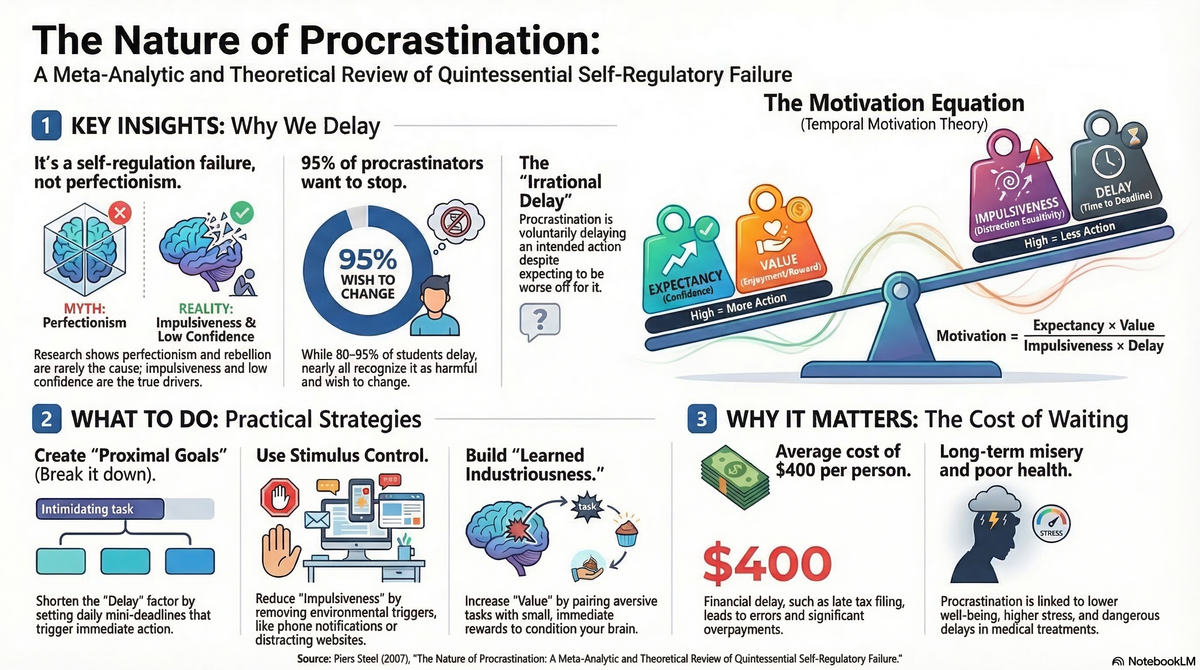
[2]
- Problem: You need to have a difficult conversation with a colleague. Next Action: Open your email and write "Hi [Name]," in the draft.
- Problem: Your finances are disorganized. Next Action: Download one bank statement and save it to a folder named "Finances."
- Problem: You feel disconnected from your purpose. Next Action: Take out a journal and write the question, "What felt meaningful this week?"
Practical Techniques to Overcome Procrastination and Execute
Bridging the gap between a plan and its execution requires a proactive mindset and structured habits. These techniques help you stop overthinking and start doing.
Timeboxing Your Problem-Solving Sessions
Timeboxing involves dedicating a fixed, focused period of time to a single task—in this case, problem-solving. Set a timer for 25 or 50 minutes and commit to working only on defining the problem and its next actions. This creates a sense of urgency, prevents the task from expanding to fill all available time, and makes the work feel less daunting.
Creating an "Action-First" Mindset
Shift your focus from achieving perfection to initiating action. An "action-first" mindset prioritizes progress over flawless planning. Adopt the mantra: "Clarity comes from engagement, not from thought." Often, the best way to understand a problem is to start interacting with it. The small wins you generate build the confidence and clarity needed to see the project through.
Review and Iterate: The Feedback Loop
Problem-solving is not a linear process; it’s a cycle. After you take an action, you get feedback—new information, a different outcome, or a changed perspective. Use this feedback to adjust your approach. Regularly review your progress (e.g., at the end of each week) to ensure your actions are still aligned with your goals. This iterative loop of action, feedback, and adjustment is the heart of agile and effective troubleshooting.
Conclusion
Problems are an inevitable part of a meaningful life and a growing career. But they do not have to be a source of stress or inaction. By learning to see problems as opportunities, breaking them down with proven methods, and identifying the single next action, you can transform any challenge into a clear path forward. The key is to shift from overthinking to execution. So, what is one challenge you are facing right now? What is the two-minute action you can take to address it in this moment?
References
-
Steel, P. The nature of procrastination: A meta‑analytic and theoretical review of quintessential self‑regulatory failure.
Psychological Bulletin, 2007. 133(1), 65–94. DOI: 10.1037/0033‑2909.133.1.65 -
Mazzucchelli, T., Kane, R., & Rees, C. S.
Behavioral activation interventions for well‑being: A meta‑analysis.
Journal of Positive Psychology, 2010. 5(2), 105–121. DOI: 10.1080/17439760903414396 -
Kahneman, D. (2011). Thinking, fast and slow. Farrar, Straus and Giroux.
-
Allen, D. (2001). Getting Things Done: The Art of Stress‑Free Productivity. Penguin Books.