Adaptability: The Career Skill That Predicts Success More Than IQ
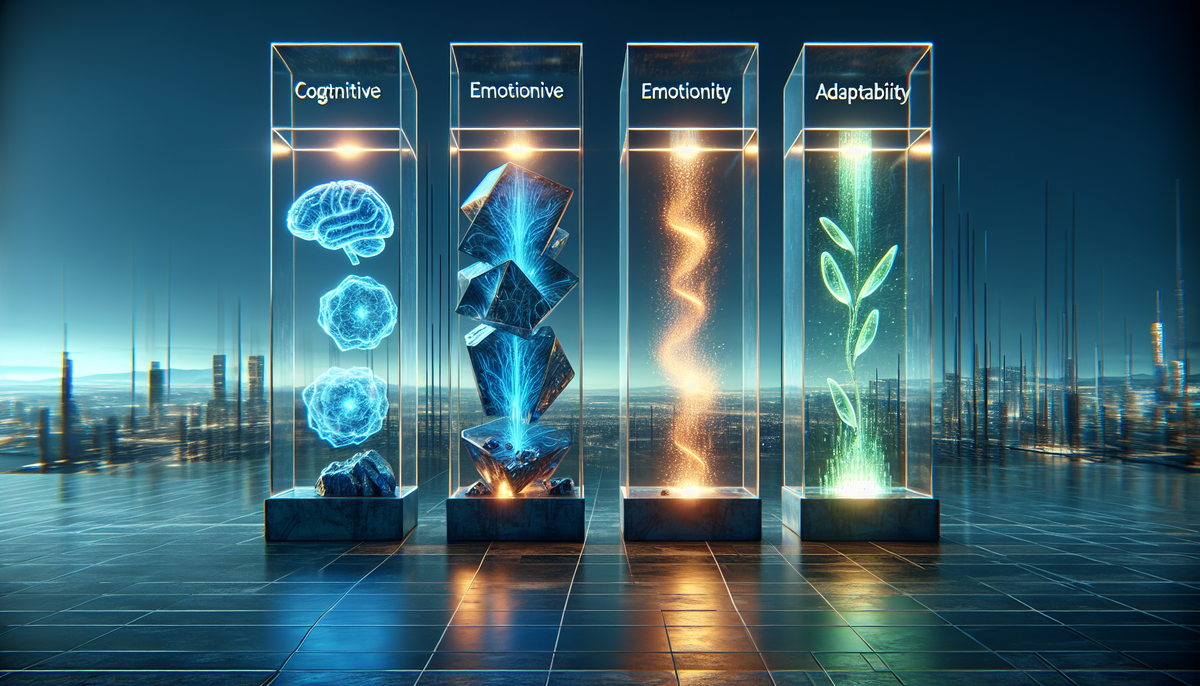
For most of the twentieth century, career success was largely predicted by cognitive intelligence — your IQ. Then emotional intelligence (EQ) moved to center stage, and we learned that the ability to understand and manage emotions was equally critical to professional achievement. Now researchers, business leaders, and workforce strategists are pointing to a third predictor that may be the most important of all: the Adaptability Quotient (AQ). In a world reshaped by artificial intelligence, automation, and relentless market disruption, the ability to adapt is rapidly becoming the defining career skill of the twenty-first century.
What Is the Adaptability Quotient (AQ)?
Defining AQ Beyond Simple Flexibility
Adaptability Quotient is not simply the ability to go with the flow. AQ is a multi-dimensional measure of how well a person can adjust their thinking, behaviors, and strategies in response to new situations, challenges, and changing environments. According to the AQai framework — one of the leading research-based models of adaptability — AQ encompasses 17 distinct dimensions organized across three categories: ability, character, and environment. These include grit (persistence in the face of setbacks), mental flexibility (openness to new ideas and approaches), unlearning (the ability to let go of outdated knowledge and habits), motivation style, thinking style, and emotional range.
The distinction from IQ and EQ is important. IQ measures raw cognitive processing power. EQ measures the ability to recognize and manage emotions. AQ measures something different: the capacity to navigate the unknown, to find new pathways when familiar ones are closed, and to remain effective in the face of uncertainty and change. In a stable world, IQ and EQ may be sufficient for career success. In a rapidly changing one, AQ may be the deciding factor.
The Science and Data Behind AQ
The World Economic Forum has ranked adaptability and resilience among the top skills required for the future of work, placing them above even problem-solving and creativity in some analyses. A Deloitte study found that organizations with adaptable workforces are twice as likely to recover quickly from disruptions and achieve financial outperformance. The WEF has also projected that more than 50% of employees will need significant reskilling by 2025 as automation and AI transform job requirements across every sector. These figures point to a fundamental shift: the content of work is changing so rapidly that the capacity to learn and adapt is becoming more valuable than any specific skill set.
Why AQ Outperforms IQ and EQ in Modern Careers
The Changing Nature of Work
The half-life of specific professional skills has been shrinking for decades. Technical expertise that was cutting-edge five years ago may be outdated today. AI and automation are reshaping not just manual and routine jobs but increasingly sophisticated cognitive roles as well. In this environment, the professional who excels is not necessarily the most intelligent or the most emotionally aware — it is the one who can learn fastest, adapt most effectively, and unlearn most willingly when circumstances change.
What High-AQ Professionals Do Differently
High-AQ individuals stand out from their peers through specific, observable behaviors that distinguish them in any organization. These include:
- Recovering faster from setbacks — they process failure as information, not identity
- Embracing learning over defending expertise — they are more committed to growing than to being seen as already knowing
- Asking better questions — particularly “What is the real problem we are trying to solve?” rather than defaulting to familiar solutions
- Seeking discomfort deliberately — taking on projects outside their comfort zone rather than staying in safe, familiar territory
- Treating uncertainty as a navigational challenge rather than a threat to be avoided
- Practicing active unlearning — regularly auditing their own assumptions and releasing outdated frameworks
The Career Outcomes Connection
The career implications of high AQ are tangible. Employers are placing agility increasingly higher on the list of required human skills when evaluating candidates and high-performers. Leadership selection is increasingly tied to adaptability signals: who steps up in ambiguous situations, who navigates organizational change gracefully, who demonstrates a track record of successful pivots. A high AQ professional does not just survive disruption — they become more valuable during it.
Signs You Need to Strengthen Your Adaptability
Honest Self-Assessment Cues
Most people believe they are reasonably adaptable — until they are tested. The following are reliable signs that your adaptability skills need deliberate development:
- You feel disproportionately stressed when plans change unexpectedly
- You strongly prefer doing things the way you have always done them
- You find it difficult to engage with perspectives that contradict your own
- You resist taking on projects or roles where you might not immediately excel
- You find yourself defending past decisions long after evidence has shifted
- You feel anxious or threatened by new technology or tools in your field
- You rarely ask for feedback because it feels threatening rather than useful
The Unlearning Problem
One of the most underappreciated components of high AQ is unlearning — the deliberate letting go of assumptions, habits, and expertise that are no longer serving you. Research suggests that unlearning is often harder than learning new things, because the old knowledge feels like identity. Experts who have built their careers on a specific domain of knowledge are often the most resistant to the changes that require them to question that knowledge. Developing AQ means becoming willing to hold your expertise lightly and update it constantly.
5 Practical Ways to Train Your Adaptability at Work
1. Adopt the 5-Hour Learning Rule
Research consistently shows that the most adaptable and successful professionals devote approximately five hours per week solely to deliberate learning — reading, studying, experimenting, and reflecting. This is not casual news consumption; it is structured, intentional engagement with new ideas, including ones that challenge your existing frameworks. Block five hours each week on your calendar for learning. Treat it as a non-negotiable appointment.
2. Practice Deliberate Perspective-Taking
Mental flexibility — one of the core AQ dimensions — is developed by regularly exposing yourself to perspectives and approaches that differ from your own. Seek out colleagues with different backgrounds, functional expertise, and problem-solving styles. When making decisions, explicitly articulate the strongest version of the opposing view before committing to a course of action. Over time, this practice rewires your cognitive default from defensive certainty to curious inquiry.
3. Seek Stretch Assignments and Uncomfortable Projects
Adaptability is a skill built through experience, not just reflection. Actively seek out stretch assignments — projects that place you in unfamiliar territory, require new skills, or involve navigating organizational complexity you have not encountered before. The discomfort of these assignments is not a side effect; it is the mechanism of growth. People who consistently take on challenging, unfamiliar work build higher AQ than those who stay in optimized, familiar roles.
4. Build a Failure-Reflection Habit
High-AQ professionals treat failure as feedback. After any significant setback or unexpected outcome, create a brief written reflection: What happened? What did I assume that turned out to be wrong? What would I do differently? What did I learn? This simple habit — sometimes called an after-action review — transforms failures from painful experiences to be avoided into valuable data points that accelerate growth and build cognitive resilience.
5. Practice Cognitive Flexibility Through Varied Experiences
Cognitive flexibility — the ability to shift mental frameworks in response to changing information — is strengthened by deliberately varying your experiences. Read outside your field. Travel to unfamiliar places. Take on a hobby that requires a completely different type of thinking than your professional work. Engage with people whose life experiences differ significantly from yours. Each of these practices builds the neural pathways that support adaptive thinking under pressure.
How to Demonstrate Adaptability in Interviews and Performance Reviews
Using the STAR Method to Frame Adaptability Stories
When demonstrating adaptability to employers or managers, the most effective approach is to use specific, concrete stories structured around Situation, Task, Action, and Result (STAR). The most compelling adaptability stories feature a moment where the plan changed significantly, where you were required to operate in uncertainty, or where you had to abandon a previous approach and find a new one. Prepare two to three such stories before any significant interview or performance conversation.
Language That Signals High AQ
The way you talk about change, uncertainty, and learning communicates your AQ to perceptive employers and managers. Language and framing that signals high adaptability includes:
- “When the situation changed, I shifted my approach by...”
- “I realized my initial assumption was wrong, so I...”
- “I deliberately took on that project because it was outside my comfort zone...”
- “I asked myself what the real problem was, rather than just fixing the symptom...”
- “I made a mistake, and here is what I learned from it...”
Making Adaptability Visible in Performance Reviews
In your performance reviews, actively document and articulate examples of adaptability: times you pivoted, skills you acquired, assumptions you revised, and changes you navigated successfully. Quantify the impact where possible. Adaptability is invisible if you do not make it visible — and making it visible is itself an adaptive skill.
AQ Is a Skill, Not a Fixed Trait
Perhaps the most important finding from AQ research is that adaptability is not a fixed personality trait you either have or lack. It is a trainable skill that responds to deliberate practice, environmental support, and a growth-oriented mindset. Every deliberate act of learning, every stretch assignment, every failure-reflection, and every moment of productive discomfort is building your AQ. In a world where the half-life of any specific expertise is shrinking, the ability to adapt, unlearn, and relearn is the one capability that will never become obsolete. Start building it today.