You Don't Have to Be Just One Person: How Embracing Multiple Identities Boosts Creativity and Resilience

For most of our lives, we've been handed a cultural script: find yourself. Discover your true passion, your authentic self, your one calling. But what if this pursuit of a singular identity is exactly what's holding you back? Modern psychology research is building a compelling case that the people who thrive — creatively, emotionally, and socially — are not the ones who've narrowed themselves down to one identity. They're the ones who've embraced many.
The Myth of "Finding Your True Self"
The idea that each person has one fixed, authentic self runs deep in Western culture, rooted in Romantic philosophy, existentialist thought, and self-help traditions stretching back decades. But developmental psychology has moved on. Researchers now understand the self as a dynamic, pluralistic structure — not a fixed essence waiting to be discovered, but a living configuration of roles, relationships, memories, and values that shifts across contexts and across time.
The cost of clinging to a single identity is real. Identity foreclosure — the psychological term for prematurely locking in one self-definition — is associated with rigidity, reduced openness to experience, and greater difficulty adapting to change. Signs of identity rigidity include:
- Difficulty discussing parts of yourself outside your primary role
- Feeling uncomfortable when people see you in a different context
- Anxiety when life circumstances force a role shift
- Defining your worth entirely through one domain's performance
What Self-Complexity Actually Means (and Why It Matters)
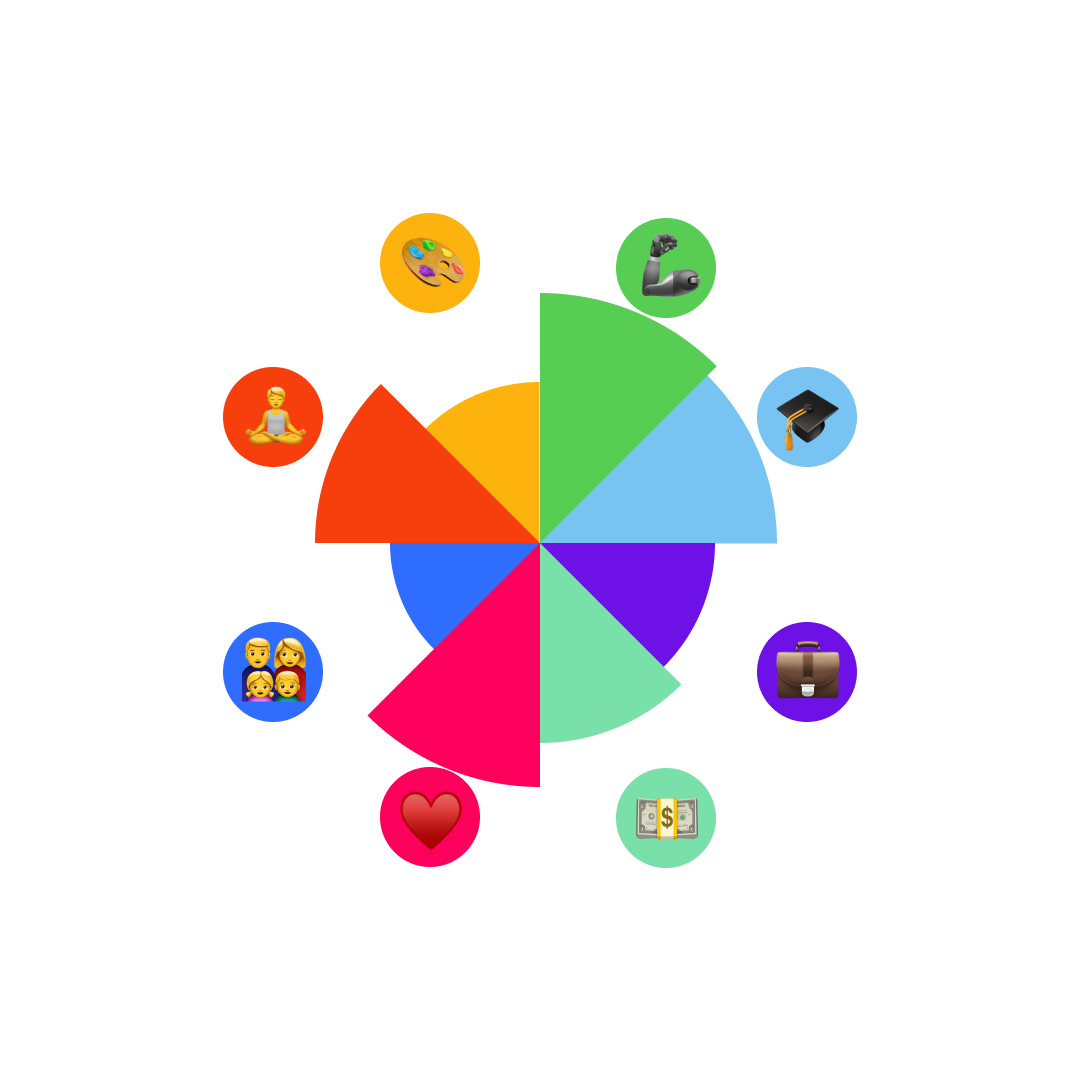
In the 1980s, psychologist Patricia Linville introduced the concept of self-complexity: the degree to which a person's self-concept is organized into many distinct, non-overlapping aspects. A person high in self-complexity might see themselves simultaneously as a parent, a runner, a software engineer, a history enthusiast, and a mentor.
Linville's research showed that self-complexity acts as a cognitive buffer against stress. When a high self-complexity person experiences a failure at work, the blow is emotionally contained — it doesn't automatically contaminate their sense of being a good parent or capable friend. Think of it as a firewall between rooms: smoke in one room doesn't fill the whole house.
Conversely, when identity is concentrated in a single self-aspect, any threat to that aspect threatens everything. Linville found that lower self-complexity predicted greater mood variability, stronger reactions to both positive and negative events, and higher susceptibility to depression and illness following stress.
Identity Integration — The Missing Piece
Having multiple identities is valuable — but it's not quite enough on its own. The second ingredient is integration: the felt sense that your different roles and aspects of self belong to the same coherent person.
Research published in the British Journal of Social Psychology by Manzi and colleagues (2024) found that the group with the highest well-being scores was not those with the most identities, nor the fewest — it was those who reported both high identification with multiple groups and a strong sense that these identities fit together harmoniously.
Fragmented identity often feels like keeping different parts of your life deliberately separate, feeling inauthentic in at least one role, or a sense that different people know entirely different versions of you — in a way that feels stressful rather than natural. Integrated identity brings a felt continuity: the recognition that the parent, the professional, the friend, and the dreamer are all expressions of the same person.
How Multiple Identities Make You More Creative
Steffens and colleagues (2016), publishing in the Personality and Social Psychology Bulletin, found that the expression and enactment of multiple identities that feel important to the self is associated with enhanced creative thinking. The cognitive mechanism is intuitive: creativity depends on making novel connections between distant concepts, and regularly navigating between roles trains exactly this kind of cognitive flexibility.
Researchers studying bicultural individuals have consistently found elevated creativity scores and more flexible problem-solving compared to monocultural peers. The benefits of identity multiplicity for creative thinking include:
- Greater tolerance for ambiguity — you're already comfortable existing in multiple frames
- Faster reframing of problems — you draw on conceptual tools from different domains
- Reduced functional fixedness — less likely to see resources as having only one use
- Enhanced analogical reasoning — linking insights from one field to another
- Greater openness to feedback — self-worth isn't entirely tied to any single output
Resilience Under Pressure — Why Multifaceted People Bounce Back Faster
Imagine two people lose their jobs on the same day. The first person's identity is almost entirely built around their professional role. Losing the job is, for them, something close to losing themselves. The second person is equally invested in being a parent, a competitive cyclist, a community volunteer, and a curious learner. When they lose their job, it's a genuine blow — but it doesn't hollow them out, because the job was one room in a large house.
Linville's research confirmed this: individuals with higher self-complexity reported significantly less depression and lower physical illness following high-stress periods. The resilience mechanisms are:
- Containment of negative affect — distress from one domain is less likely to contaminate other self-aspects
- Maintained positive identity — at least some identities continue to provide positive feedback even during crisis
- Diversified sources of meaning — purpose isn't confined to a single source
- Broader social support — different identities bring different social networks
- Cognitive resources — practiced flexible thinking aids reframing and problem-solving under pressure
3 Practical Exercises to Embrace and Integrate Your Multiple Identities
Exercise 1 — The Identity Map
Take a blank page and write your name in the center. Draw branches for every significant role or self-aspect you currently inhabit: professional, parent, partner, friend, creative person, learner, athlete, community member. For each, write two to three words describing what that aspect values or does. Then look for thematic threads connecting them — those threads are the seeds of integration.
Journaling prompts: What would I lose if one of these branches were removed? Which branches feel most alive? Which feel most neglected?
Exercise 2 — The Weekly Identity Reflection
At the end of each week, take five minutes to answer three questions:
- Which of my roles did I show up most fully in this week?
- Which role felt most under-expressed or neglected?
- What is one small thing I can do next week to give more space to an underrepresented part of myself?
This practice builds identity awareness and prevents the slow erosion that happens when daily pressures cause us to default to one identity while the others wither.
Exercise 3 — The Cross-Role Story
Choose two roles that feel most distinct or even contradictory — say, "corporate professional" and "amateur painter." Write a short paragraph about how the values or skills from one role secretly inform the other. What has the painter taught the professional? This narrative technique, drawn from positive psychology, actively constructs the connective tissue between identities, making them feel less like separate costumes and more like facets of a coherent self.
Conclusion
The search for a single, fixed "true self" was always a cultural story, not a scientific one. The evidence points elsewhere: we are all, at our most resilient and creative, multiple. The goal isn't to consolidate yourself into one clean narrative — it's to tend to all the parts, find the threads that connect them, and let their interaction make you more capable, more creative, and more robust in the face of whatever life brings. You are not scattered. You are complex — and that complexity, properly embraced, is one of your greatest strengths.