
You Don’t Have to Be a Manager — Seriously

There's a moment in nearly every successful professional's career when a well-meaning mentor, colleague, or supervisor asks the question that feels more like an inevitability than an inquiry: "So, when are you going to move into management?" The question carries an unspoken assumption that has shaped corporate culture for generations.
It suggests that real success, real growth, and real value come from leading teams. It implies that staying in your current role—no matter how skilled you become—represents stagnation. And perhaps most damagingly, it conflates management with leadership, as if the only way to make a meaningful impact is to oversee other people's work.
Here's the truth that too few people talk about openly: You don't have to become a manager to have a thriving, lucrative, and deeply fulfilling career. The individual contributor path—often called the IC path—represents a legitimate, well-compensated, and increasingly valued alternative to the traditional management trajectory.
This isn't about settling for less or accepting a career ceiling. It's about making a strategic, intentional choice that aligns your professional life with your actual strengths, passions, and life goals. This decision sits at the intersection of career planning and personal finance in profound ways.
Choosing the right path affects not just your daily job satisfaction but your long-term earning potential, your stress levels, your work-life balance, and your overall sense of purpose. The wrong choice—taking a management role because you felt obligated rather than called—can derail both your professional growth and your personal wellbeing.
In this article, we'll dismantle the management myths that have convinced generations of workers that climbing the managerial ladder is the only path to success. We'll examine what management actually entails, explore the robust opportunities available on the IC path, and address the financial realities that make the individual contributor career a genuinely competitive option. By the end, you'll have the clarity to make a decision based on what's right for you, not what society expects.
1. The Myth of the Managerial Ladder: Deconstructing the "Up or Out" Mindset
Before you can make an informed decision about your career path, you need to understand the cultural forces that have shaped how we think about professional success. The pressure to pursue management isn't random—it's the product of decades of corporate structure, social conditioning, and fundamental misunderstandings about what constitutes valuable work.
The Traditional Definition of Career Success
For most of the twentieth century, organizations operated on a simple premise: success meant moving up. The corporate ladder had clear rungs, and climbing them meant taking on more responsibility for people, not just projects. This hierarchical structure made sense in an era when most work was industrial, standardized, and required direct supervision.
The "up or out" mentality became especially entrenched in certain industries like consulting, law, and investment banking, where the path to partnership required demonstrating leadership capabilities through management positions. If you weren't advancing toward a leadership role, the implicit message was that you weren't valuable enough to keep around. This mindset seeped into the broader professional culture.
Career advice columns, performance review systems, and compensation structures all reinforced the same message: ambitious people become managers. Everyone else is just... stuck. The problem with this traditional definition is that it treats all professionals as interchangeable parts on a single assembly line toward management. It ignores the reality that people have vastly different skill sets, motivations, and sources of fulfillment.
A brilliant software architect who creates systems that serve millions of users isn't somehow less successful than a middle manager who oversees ten people. They're doing fundamentally different jobs that create value in different ways. The career levels available in modern organizations have expanded dramatically, yet our cultural assumptions about success haven't kept pace. Many people still feel a vague sense of failure if they hit their late thirties or forties without having "made it" into management—even if their actual work is more impactful and better compensated than their managerial peers.
Why We Confuse Management with Leadership
Perhaps the most damaging myth driving people toward unwanted management positions is the conflation of management and leadership [1]. These words are often used interchangeably in corporate settings, but they represent very different concepts. Management is fundamentally about coordination, administration, and oversight.
 Viktoria Samokhval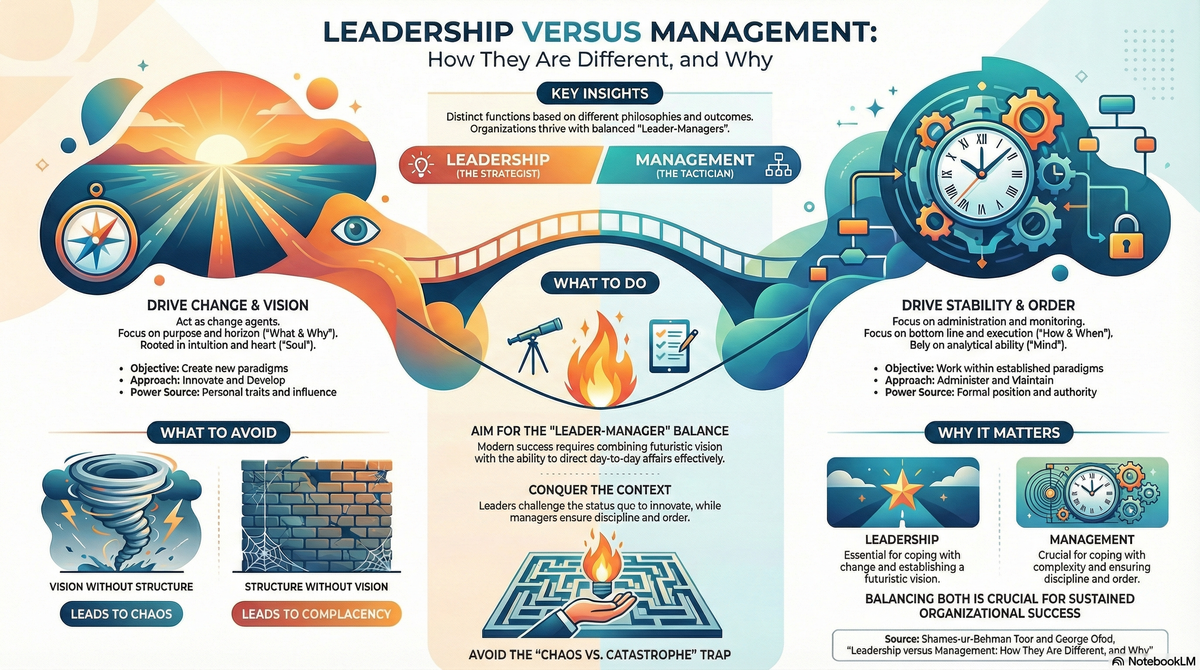
[1]
Managers ensure that work gets done, resources get allocated, conflicts get resolved, and teams function effectively. These are crucial organizational functions, but they're operational in nature. Leadership, by contrast, is about vision, influence, and inspiration. Leaders shape the direction of projects, teams, and organizations. They see possibilities others miss, advocate for important changes, and motivate people to do their best work. Critically, leadership without management is not only possible—it's common and valuable. The distinction between management and leadership is frequently highlighted in Forbes articles and other professional publications discussing career growth, though these are not formal scientific studies. Senior individual contributors demonstrate leadership every day when they mentor junior colleagues, champion new technical approaches, push back on poor decisions, or serve as the voice of expertise in strategic discussions. When organizations treat management as the only path to leadership, they lose talented people in one of two ways. Either those people leave for companies with better-defined IC paths, or they accept management positions that don't suit them and become mediocre managers who are miserable in their roles. Neither outcome serves anyone well. The dual career ladder concept exists precisely because enlightened organizations recognized this problem. By creating parallel tracks for advancement—one for those who want to lead through people management and one for those who want to lead through expertise and individual contribution—companies can retain and develop talent regardless of which type of work energizes them.
2. What It Really Means to Be a Manager: A People-First Job
If you're considering management—or being pressured toward it—you deserve an honest picture of what the job actually involves. Henry Mintzberg’s research, published in Harvard Business Review, shows that most people’s mental image of management differs significantly from the realities of the role. [2]. Understanding this gap can save you from making a career choice you'll regret.
 Viktoria Samokhval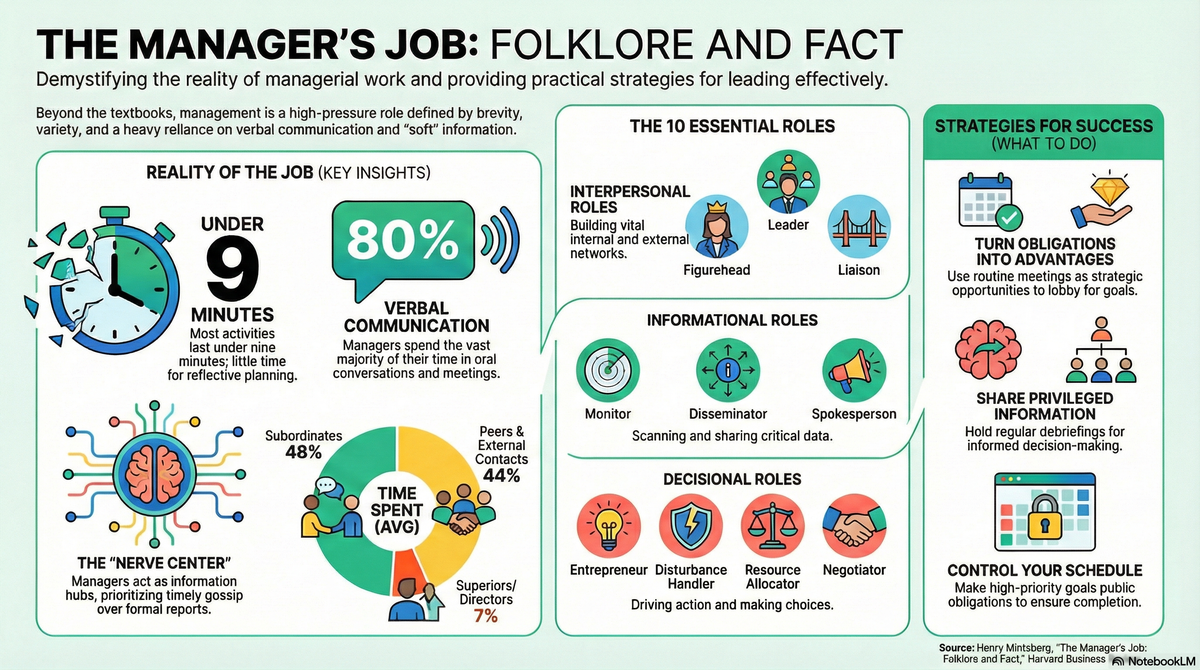
[2]
From "Doing the Work" to "Amplifying a Team"
The single most important thing to understand about becoming a manager is this: it is not a promotion. It is a career change. When you move from individual contributor to manager, you don't just add "supervise people" to your existing responsibilities. You fundamentally change what you do all day, what skills you need to succeed, and how your performance gets measured. As an IC, your value comes from your direct contributions. You write the code, close the deals, create the designs, or solve the technical problems. Your expertise and execution are what matter. When you do excellent work, you can point to tangible outputs that demonstrate your impact. As a manager, your value comes from amplifying the output of others. You succeed when your team succeeds, and you fail when your team fails—even if you personally did nothing wrong. Your job is to create conditions where other people can do their best work. That means hiring the right people, removing obstacles, providing direction, giving feedback, and making countless small decisions that affect others' daily experiences. This shift is jarring for many high-performing ICs. The skills that made you excellent at your previous job—deep focus, technical expertise, individual productivity—matter much less in management. Instead, you need skills like emotional intelligence, conflict resolution, delegation, and the ability to motivate people with very different personalities and working styles. The research is clear: being great at doing the work does not predict being great at managing people who do the work. These are simply different jobs requiring different aptitudes.
The Hidden Demands: Emotional Labor and Constant Interruptions
As previously mentioned, Henry Mintzberg’s research, published in Harvard Business Review, shows that managerial work is often fragmented and reactive—a fact that surprises many people who have never held managerial positions. Managers don't spend their days in thoughtful strategic planning sessions. They spend their days in back-to-back meetings, responding to urgent messages, handling interpersonal conflicts, and context-switching between dozens of different issues. The average manager works in episodes of just a few minutes before something or someone demands their attention. This isn't a sign of poor time management—it's the fundamental nature of the job. When you're responsible for people, you become the hub through which information, decisions, and problems flow. Your calendar fills with one-on-ones, team meetings, cross-functional collaborations, and conversations that can't wait until your next "focus time" block. Beyond the time fragmentation, management involves substantial emotional labor that rarely gets discussed in job descriptions. You will navigate difficult conversations about underperformance. You will mediate disputes between team members who don't get along. You will deliver bad news about reorganizations, budget cuts, or project cancellations. You will support employees through personal crises that affect their work. You will make decisions that benefit the team overall but disappoint specific individuals. For people who thrive on this type of people-focused work, management can be deeply rewarding. Watching someone you've coached achieve something they couldn't have done alone, building a high-functioning team from scratch, or creating a culture where people genuinely enjoy coming to work—these are genuine satisfactions available to good managers. But for people who find this kind of work draining rather than energizing, management is a recipe for burnout. There's no shame in recognizing that you'd rather solve complex problems directly than spend your days in meetings about how to help others solve complex problems. These are simply different preferences, and both have value.
Key Responsibilities That Define a Manager
To make an informed decision about whether management is right for you, consider this practical breakdown of what managers actually do:
- Hiring and building teams: Managers spend significant time recruiting, interviewing, and selecting new team members. This involves writing job descriptions, reviewing resumes, conducting interviews, selling candidates on the opportunity, and making final hiring decisions. Bad hires create enormous problems, so this responsibility carries real weight.
- One-on-one meetings: Most managers hold weekly or biweekly one-on-ones with each direct report. These meetings require preparation, active listening, and follow-through. With a team of six to ten people, this alone can consume several hours each week.
- Performance management: Managers must continuously assess their team members' performance, provide regular feedback, document issues, and conduct formal performance reviews. This includes the uncomfortable work of delivering critical feedback and, when necessary, managing people out of the organization.
- Career development: Beyond evaluating performance, managers are responsible for helping team members grow. This means understanding each person's career aspirations, identifying development opportunities, advocating for promotions, and having difficult conversations when someone's ambitions don't match their current capabilities.
- Unblocking the team: When team members hit obstacles—whether technical problems, organizational roadblocks, resource constraints, or interpersonal conflicts—managers must step in to clear the path. This often involves navigating complex organizational dynamics and advocating upward.
- Representing the team: Managers serve as the interface between their team and the rest of the organization. They communicate team priorities and needs upward, translate organizational strategy downward, and coordinate with peer managers across functions.
- Administrative responsibilities: Finally, managers handle a steady stream of administrative tasks: approving time off, managing budgets, handling expense reports, ensuring compliance with organizational policies, and responding to HR requirements.
Reading this list, notice how little of it involves doing the actual craft work that likely attracted you to your field in the first place. If these responsibilities sound energizing, management might be a great fit. If they sound like they would pull you away from what you love, that's important information.
3. The Alternative: Thriving on the Individual Contributor (IC) Path
The good news for anyone who read the previous section and felt their stomach tighten is that management isn't your only option. The individual contributor path has evolved dramatically over the past two decades, and it now offers a genuine alternative for ambitious professionals who want to grow without managing people.
What is an Individual Contributor? (Beyond the Junior Levels)
When many people hear "individual contributor," they imagine entry-level positions—junior developers, associate analysts, or early-career specialists. This reflects the outdated assumption that IC roles exist only as way stations on the path to management. In reality, the IC path extends far beyond junior levels in most modern organizations. Senior individual contributors hold positions with titles like Staff Engineer, Principal Architect, Distinguished Fellow, Technical Lead, or Domain Expert. These roles command significant authority, influence, and compensation while maintaining focus on hands-on expertise rather than people management. What distinguishes senior ICs from their junior counterparts isn't just more years of experience—it's a fundamentally different type of contribution. While junior ICs are learning to execute defined tasks, senior ICs are identifying what tasks need to be done in the first place. They're setting technical direction, solving problems that cross team boundaries, establishing best practices that scale across organizations, and serving as the authoritative voice on complex decisions. Consider what a Staff Engineer does at a technology company. They might spend their time architecting systems that will serve millions of users, mentoring multiple teams on technical approaches, writing documentation that shapes how hundreds of engineers work, representing the engineering perspective in executive-level discussions, or diving deep into the most critical and complex problems that no one else can solve. This is not junior-level work that someone has simply done for more years. It's a distinct type of contribution that creates massive value while allowing the person to remain close to the craft they love. The technical career path has become particularly well-defined in software engineering, but similar patterns exist across fields. Healthcare organizations have developed IC tracks for clinicians who want to advance without moving into administration. Law firms have created counsel positions that offer advancement without the partnership track's management responsibilities. Financial firms have established principal-level roles for analysts and researchers who contribute more through expertise than team leadership.
The Dual Career Ladder: Two Paths to the Top
The concept of the dual career ladder has transformed how progressive organizations think about professional growth. Instead of a single ladder where every rung above a certain point involves management, companies now offer two parallel ladders: one for managers and one for individual contributors. On the management ladder, advancement means taking on responsibility for larger teams, multiple teams, or entire departments. Directors become VPs who become SVPs who become C-suite executives. Each step involves less direct work and more organizational leadership. On the IC ladder, advancement means taking on more complex problems, broader scope, and greater influence. Senior engineers become staff engineers who become principal engineers who become distinguished engineers or fellows. Each step involves deeper expertise and wider impact while maintaining hands-on involvement with the actual work. The Atlassian research on career paths presents these as genuinely equivalent tracks, not as "management" and "not management." The same company that has a VP of Engineering also has a Principal Architect, and these individuals may have equivalent levels of seniority, compensation, and organizational influence. This dual structure solves a problem that plagued traditional organizations: the loss of top technical talent to management positions they didn't want. When the only way to get a raise or a better title was to manage people, excellent ICs faced a terrible choice. They could stay in roles that felt like dead ends, or they could become mediocre managers doing work they didn't enjoy. The dual career ladder means you can keep advancing, keep earning more, and keep growing professionally without abandoning the work you're actually good at and passionate about.
The Value of Deep Work and Mastery
Beyond career structure, the IC path offers something that management often doesn't: the opportunity for deep work. Cal Newport's concept of deep work—concentrated, uninterrupted focus on cognitively demanding tasks—describes exactly what many senior ICs spend their time doing. They're architecting systems, solving complex problems, creating something from nothing, and pushing the boundaries of what's possible in their field. This type of work produces a particular kind of satisfaction. There's deep fulfillment in mastering a craft, in being the person others turn to for expertise, in solving a problem that's been plaguing a team for months, or in creating something elegant that will outlast your tenure at any particular company. Management rarely offers this type of deep work. The job is inherently interrupt-driven. You can't tell your team member having a crisis that you'll get back to them after your four-hour focus block. The value you create as a manager is real, but it's distributed across many small interactions rather than concentrated in deep problem-solving sessions. For some people, that's perfectly fine—they find satisfaction in the variety and human connection of management work. But for people who are energized by mastery, by depth, by sustained focus on hard problems, the IC path offers something management cannot. Professional growth on the IC path looks different from management growth, but it's equally real. You grow by taking on harder problems, by expanding your expertise into adjacent domains, by developing the ability to operate at larger scales, and by building influence through demonstrated excellence rather than positional authority.
4. The Financial and Personal Benefits of a Senior IC Career
For many people considering their career path, practical concerns loom large. Can you really earn top compensation without becoming a manager? Will you have better work-life balance, or is that just something IC advocates claim without evidence? Let's address these questions directly.
Dispelling the Salary Myth: How Senior ICs Earn Top Pay
One of the most persistent management myths is that managers earn more than individual contributors. This belief persists because it was historically true in many organizations and because managers are often more visible in compensation discussions.
The reality in 2024 is far more nuanced. Industry compensation overviews, including insights from the Holloway Guide (a professional resource on career paths and pay structures), indicate that senior individual contributors (ICs) often command total compensation comparable to, or higher than, that of their managerial peers. In the technology sector, this is now well-established. A Principal Engineer at a major tech company often earns total compensation equivalent to a Director of Engineering. A Distinguished Engineer or Fellow can earn more than many VPs. These aren't outliers—they're intentional reflections of the value these individuals create. The logic is straightforward: if an individual contributor's work directly generates millions of dollars in value, or prevents millions in costs, or enables entire product lines to exist, why would they be paid less than someone who manages a team? Smart organizations recognize that compensation should reflect value creation, not just headcount. This pattern has spread beyond tech. Investment banks have senior roles for traders and analysts that rival managing director compensation. Healthcare systems pay top specialists more than many administrators. Law firms compensate rainmaker partners regardless of how many people they directly manage. The key insight is that compensation follows impact, not job title. A senior IC who shapes the direction of a critical initiative, solves problems no one else can solve, or possesses expertise that would be costly to replace commands premium compensation. The leverage comes from expertise rather than organizational position, but the financial results can be equivalent. This doesn't mean every IC automatically earns as much as every manager. The IC path requires continuous skill development, strategic positioning, and the ability to demonstrate value. But the ceiling is much higher than many people assume, and the floor is often quite comfortable.
Step-by-Step Guide: How to Grow Your Career (and Income) as an IC
If you've decided the IC path is right for you, here's a practical roadmap for advancing your career and compensation:
- Develop deep expertise in a high-value domain. Not all expertise is equally compensated. Focus your learning on areas where your skills address significant business problems. This might mean specializing in a technology that's hard to hire for, developing expertise in a regulated area with high barriers to entry, or building capabilities that directly connect to revenue generation.
- Document and communicate your impact. Unlike managers, who often have clear metrics around team size and delivery, ICs must be proactive about making their contributions visible. Keep a running log of projects completed, problems solved, and value created. Translate technical accomplishments into business terms that non-technical stakeholders understand.
- Build influence beyond your immediate team. Senior IC roles require the ability to affect outcomes across organizational boundaries. Start building this influence early by contributing to cross-team initiatives, sharing knowledge broadly, participating in architecture decisions, and establishing yourself as a go-to resource for specific types of problems.
- Develop mentorship capabilities. Even though you're not managing people, senior IC roles typically involve mentoring others. Practice giving feedback, explaining complex concepts, and helping others grow. This amplifies your impact without requiring you to take on formal management responsibilities.
- Seek out high-leverage problems. Advancement on the IC path comes from solving increasingly important problems, not just doing more of the same work. Actively seek out challenges that, if solved, would have outsized impact on the organization. Volunteer for the hard problems that others shy away from.
- Navigate compensation conversations strategically. When discussing compensation, benchmark against peer ICs at comparable levels at other companies, not just against your current organization's salary bands. Be prepared to articulate the specific value you create and why your expertise commands market rates.
- Build external visibility. Senior ICs often benefit from reputation beyond their current employer. This might involve speaking at conferences, writing technical content, contributing to open-source projects, or building a presence in professional communities. External recognition strengthens your negotiating position and opens doors to future opportunities.
- Know when to change companies. Sometimes the best path to advancement involves changing organizations. Companies vary widely in how well they support IC growth. If you've hit a ceiling at your current employer—whether in terms of compensation, scope, or career levels available—a strategic move can unlock the next stage of your career.
A Path to Better Work-Life Balance and Deeper Fulfillment
Beyond compensation, the IC path often offers advantages in work-life balance that shouldn't be overlooked. This isn't true in all cases—some senior IC roles are extremely demanding—but there are structural reasons why ICs frequently report better balance than their management peers. Managers are often responsible for their teams regardless of time zone or hour. When an employee has a crisis, when a project emergency occurs, or when an organizational change requires immediate communication, managers must respond. The job's fundamentally reactive nature makes it difficult to truly disconnect. Individual contributors typically have more control over their schedules. Yes, there are deadlines and urgent situations, but the work itself is often more plannable. A senior IC can structure their week around when they do their best thinking, protect time for deep work, and more easily separate professional and personal time. This control also extends to fulfillment. Many people find deep satisfaction in mastering a craft, solving hard problems, and creating tangible outputs. There's something genuinely rewarding about being the expert, the person who can see what others miss and build what others can't. Management offers its own satisfactions—watching team members grow, building high-functioning teams, and shaping organizational culture. But these satisfactions are different in kind from the satisfaction of direct creation. Neither is better, but one may be much better for you. The IC path also offers a certain intellectual freshness. While managers often find themselves progressively removed from the cutting edge of their field, senior ICs remain connected to actual practice. They continue learning, continue building new capabilities, and continue operating at the frontier of what's possible. For people who love their craft—who became engineers because they love building things, or became designers because they love creating beautiful experiences, or became analysts because they love finding patterns in data—the IC path offers a way to keep doing what they love while still advancing professionally and financially.
Conclusion
The pressure to become a manager is real, but it's based on outdated assumptions about what professional success looks like. The management myths that have shaped career expectations for generations—that managers earn more, that management equals leadership, that refusing management means accepting a career ceiling—simply don't hold up against modern organizational reality. Today, the dual career ladder offers genuine alternatives. The individual contributor path provides a legitimate, well-compensated, and increasingly well-defined route to professional success. Senior ICs at major organizations earn salaries equivalent to their management peers, wield significant influence, and create massive value—all while doing work they actually enjoy. The key is making an intentional choice rather than a default one. Ask yourself honestly: Are you energized by helping others succeed, or by succeeding directly through your own expertise? Do you want your days filled with meetings and coordination, or with deep work and problem-solving? Does influence through organizational position appeal to you, or do you prefer influence through demonstrated excellence? There's no wrong answer to these questions, only more or less honest ones. Some people are genuinely called to management and will thrive in that role. Their skills in emotional intelligence, coordination, and people development create real value for their organizations and genuine satisfaction for themselves. But if management doesn't excite you—if it sounds like a sacrifice you'd make for career advancement rather than a role you'd embrace with enthusiasm—you don't have to make that sacrifice. The IC path is real, it's financially viable, and it leads somewhere meaningful. Your career path should reflect your actual strengths, passions, and life goals, not societal expectations that may have nothing to do with who you are. The best professionals aren't the ones who climbed the highest on a ladder someone else built. They're the ones who found work that challenges them, compensates them fairly, and leaves room for a life outside of work. You don't have to be a manager. Seriously. What you have to be is honest with yourself about what kind of work makes you come alive—and then pursue that path with everything you have.
References
-
Leadership versus Management: How They Are Different, and Why Shamas-ur-Rehman Toor and George Ofori
April 2008 Leadership and Management in Engineering 8(2) DOI:10.1061/(ASCE)1532-6748(2008)8:2(61) -
“The Manager’s Job: Folklore and Fact” Henry Mintzberg
(Harvard Business Review, March–April 1990)