Why Chasing Trophies Leaves Us Empty: Everyday Lessons from "The “What” and “Why” of Goal Pursuits: Human Needs and the Self-Determination of Behavior"
We have all experienced the exhaustion of setting a major goal—like a strict diet, a demanding career milestone, or a rigid workout plan—only to find ourselves miserable in the process and mysteriously empty when we finally achieve it. Why does some motivation feel like a natural, energizing flow, while other motivation feels like a heavy burden? We are often told that success just requires more willpower and bigger rewards. However, a landmark review of human motivation completely rewrites this narrative.
By exploring the fundamental psychological architecture of the human mind, researchers have discovered that it is not how much motivation you have, but what kind of motivation drives you that determines your happiness and success,. Here is what the science of Self-Determination Theory says about setting goals that actually nourish your life.
The Three Hidden Nutrients of the Mind
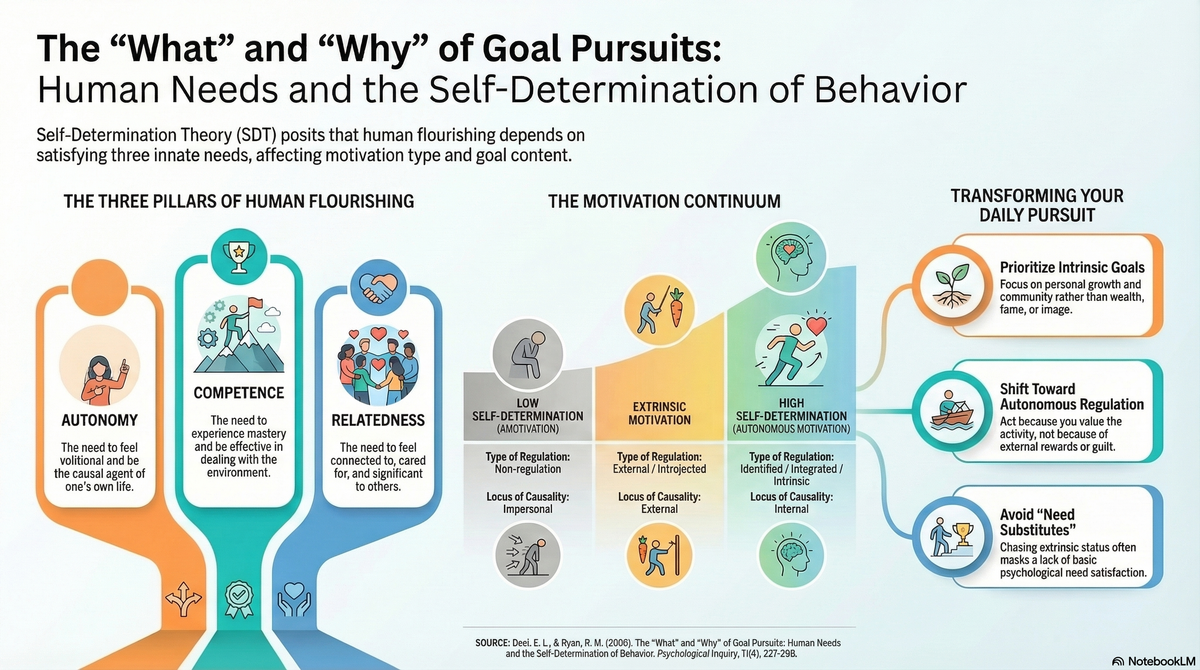
Just as a plant requires water, sunlight, and soil to survive, the human mind requires specific psychological nutrients to thrive. The research identifies three non-negotiable, innate psychological needs:
Competence (the feeling of mastering challenges and being effective), Relatedness (the feeling of being securely connected to and cared for by others), Autonomy (the feeling of volition, choice, and being the author of your own actions).
When these three needs are met, we naturally experience vitality, growth, and deep well-being. When our environment deprives us of these needs—such as a micromanaging boss or a highly critical relationship—our mental health violently deteriorates, and we often develop defensive, self-defeating behaviors.
Practical Guidance:
- What to do: Treat your daily schedule like a psychological diet; ensure you are engaging in activities that allow you to master a skill, connect deeply with a friend, and make your own independent choices.
- What not to do: Don't stay in environments, jobs, or relationships that consistently make you feel incompetent, isolated, or overly controlled, as this actively damages your psychological health.
- Habit to change: Shift how you evaluate a "good day." Instead of asking how much you accomplished, ask yourself if you felt capable, connected, and free.
The "Why": Stop Using Guilt as Fuel
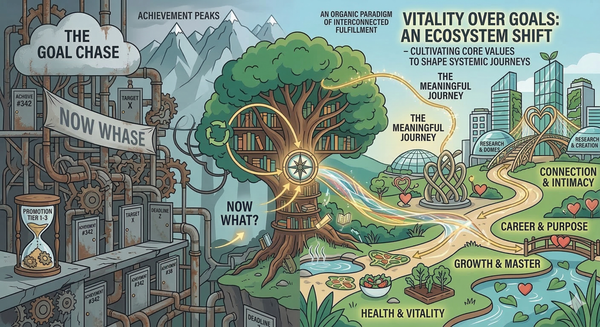
When we try to force ourselves (or others) to do something, we usually rely on "controlled" motivation: using external rewards, punishments, or heavy internal guilt to get the job done,. The science shows that this is a terrible long-term strategy. People whose goals are driven by pressure or guilt suffer from higher anxiety, poorer performance, and a higher likelihood of quitting. On the other hand, "autonomous" motivation—doing something because you genuinely find it interesting, or because you deeply value the outcome—leads to massive increases in persistence, creativity, and mental health. You cannot simply bribe or guilt yourself into lasting success.
Practical Guidance:
- What to do: When faced with an uninteresting chore or requirement, actively find a personal, meaningful reason why doing it aligns with your core values (a process called "integration").
- What not to do: Don't rely on toxic self-talk, shame, or the fear of disappointing others to power your daily habits.
- Decision to change: Stop trying to motivate your children or employees solely with money or threats. Instead, provide a meaningful rationale, acknowledge their feelings, and give them a sense of choice in how they complete the task.
The "What": The Illusion of Wealth and Fame
Not all goals are created equal. The research draws a hard line between "intrinsic" goals (like personal growth, building intimate relationships, and contributing to your community) and "extrinsic" goals (like accumulating wealth, achieving fame, or perfecting your image). People who prioritize intrinsic goals report significantly higher levels of vitality, self-actualization, and social functioning,. Shockingly, individuals who place a high importance on extrinsic goals like financial success or fame suffer from more depression, anxiety, and physical symptoms,. Even worse, successfully achieving these extrinsic goals does not improve your well-being; it leaves you just as unfulfilled as before you started.
Practical Guidance:
- What to do: Dedicate the vast majority of your time and energy to goals that directly build your relationships, improve your community, or expand your personal horizons.
- What not to do: Don't sacrifice your family, friendships, or personal integrity to chase a specific salary, a luxury car, or social media followers.
- Habit to change: Recognize that an obsession with wealth or image is often a "compensatory motive"—a substitute we chase when our deeper needs for love and autonomy are starving,. If you catch yourself obsessing over status, immediately pivot your attention to nurturing a real-life relationship.
Summary for Life
The deep truth of human motivation boils down to a single, concrete life rule: To build a life of genuine vitality and persistence, you must stop chasing society's empty trophies through guilt and pressure, and instead pursue goals that naturally feed your innate need to feel capable, connected, and free.
Reflective Question: Look at the biggest, most exhausting goal you are currently pursuing: are you doing it because it genuinely helps you grow and connect with others, or are you just desperately trying to buy your worth in the eyes of the world?
References
Deci, E. L., & Ryan, R. M. The “what” and “why” of goal pursuits: Human needs and the self-determination of behavior. Psychological Inquiry, 2000 11(4), 227–268.