The Science of Friendship: How Your Friends Literally Shape Your Health and Identity

The Science of Friendship: How Your Friends Literally Shape Your Health and Identity
Most people think of friendship as an emotional luxury — something that enriches life when circumstances allow, but not quite a health necessity in the same category as sleep, nutrition, or exercise. That framing, comfortable as it is, turns out to be scientifically wrong. Research accumulated over the past three decades — and significantly expanded in the last few years — tells a different story: your friendships are one of the most powerful biological forces acting on your body. They regulate your hormones, influence your immune function, slow your cellular aging, and quietly but consistently reshape who you are. Most of us are radically underinvesting in the one health asset that doesn't come in a bottle or a gym membership.
THE BIOLOGY OF BELONGING: HOW FRIENDSHIP REWIRES YOUR BODY
The claim that friendship is good for health is familiar. The magnitude of the effect is not.
A landmark meta-analysis published in PLOS Medicine examined data from 148 studies covering 308,849 participants and found that people with stronger social relationships had a 50% higher likelihood of survival compared to those with weaker or absent relationships [1]. This is not a marginal health effect. A 50% survival advantage is the kind of number associated with major medical interventions. For context, the researchers noted that the effect of social connection health benefits on mortality is comparable in magnitude to quitting light smoking — and exceeds the mortality risk posed by obesity and by hypertension.
 Viktoria Samokhval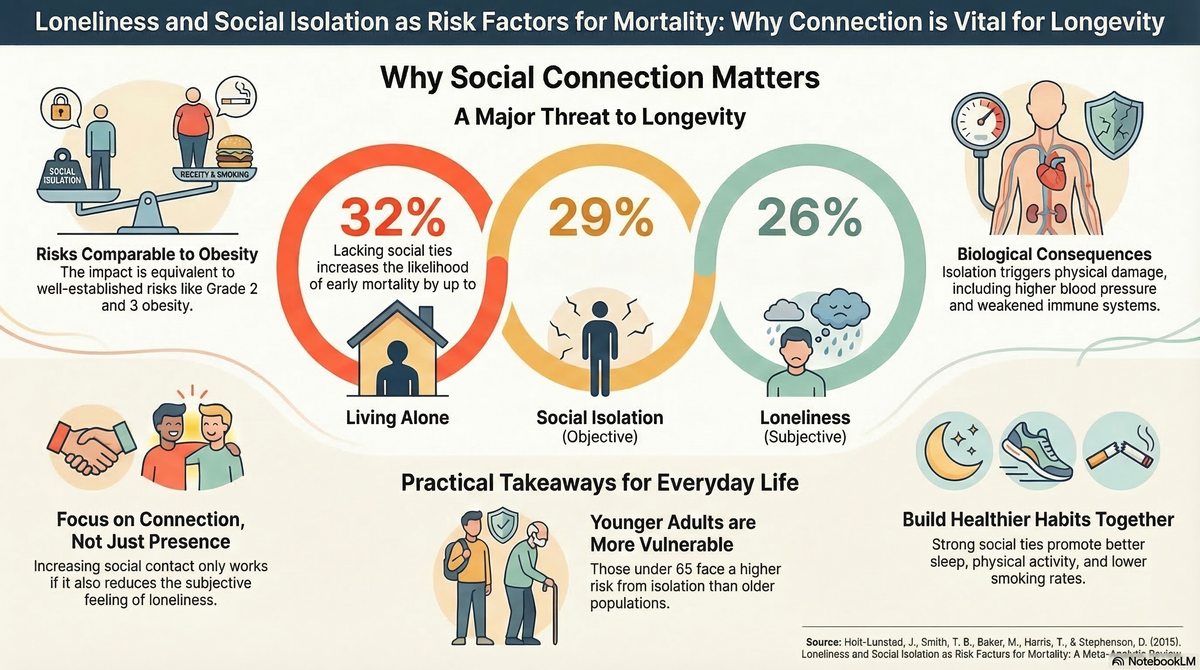
[1]
The biological mechanisms behind this are increasingly well understood. One key pathway is inflammation. Chronic low-grade inflammation is now recognized as a central driver of accelerated aging and most major age-related diseases, including cardiovascular disease, type 2 diabetes, and cognitive decline. Social isolation consistently produces measurable increases in inflammatory markers. Close, supportive friendships consistently reduce them.
The Cornell University MIDUS study, whose 2025 findings drew on data from more than 2,100 adults, found that people with greater cumulative social advantage — a measure that captures the quality and consistency of social and emotional support across a lifetime — showed both slower biological aging and reduced chronic inflammation compared to those with lower social advantage [2]. Crucially, this effect was cumulative and lifelong: it was not just current friendships that mattered, but the accumulated quality of social connection across years and decades, stretching back to parental warmth in childhood.
 Viktoria Samokhval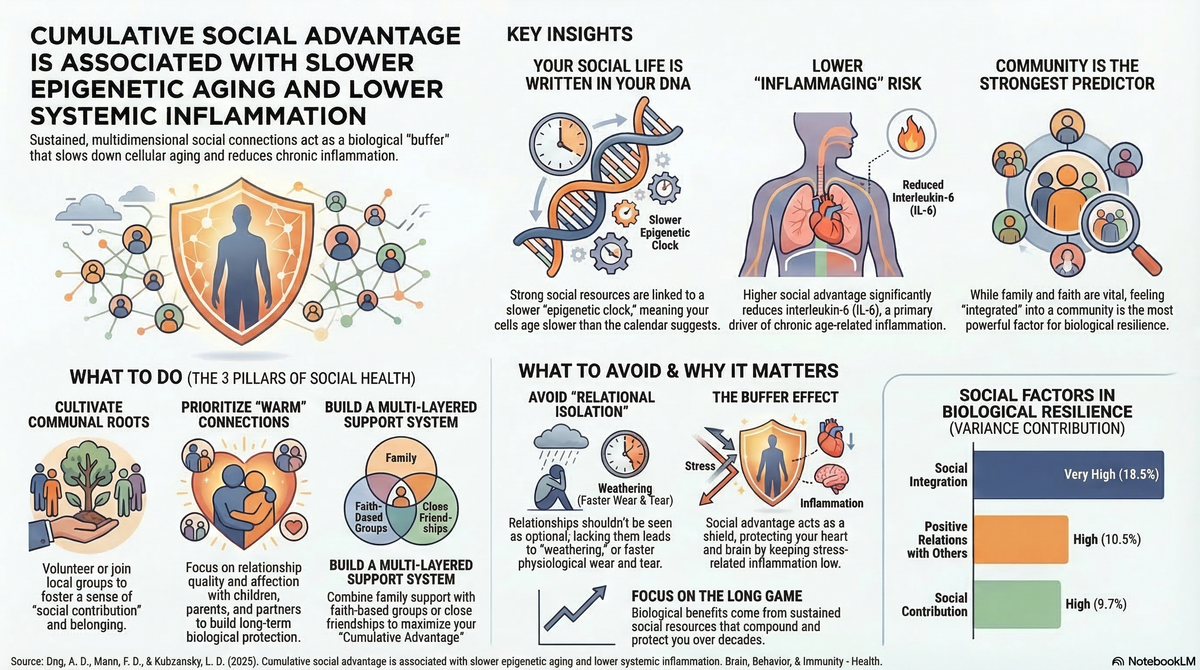
[2]
ScienceDaily's reporting on companion research found that close relationships produce measurably younger biological profiles on multiple aging biomarkers. The science here is still developing, but the direction of evidence is clear: your social relationships are literally inside your cells, influencing how quickly they age.
YOUR FRIEND AS A BIOLOGICAL SHIELD: THE SCIENCE OF SOCIAL BUFFERING
Beyond the long-term effects on aging and inflammation, friendships produce a real-time physiological effect that researchers call the social buffering effect — the measurable suppression of the body's stress response in the presence of a close friend or supportive social contact [3].
 Viktoria Samokhval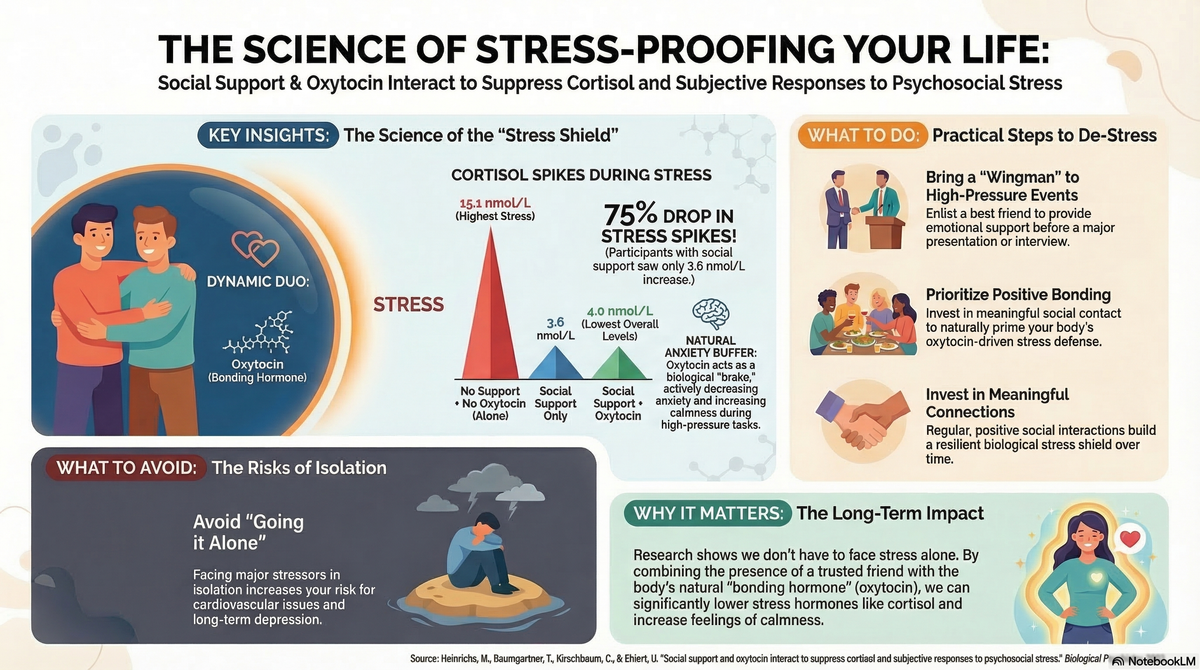
[3]
When you encounter a stressor — a difficult conversation, a threatening situation, an unexpected challenge — your body activates the HPA axis (the hypothalamic-pituitary-adrenal axis), triggering a cascade of stress hormones including cortisol. In the short term, this response is adaptive and protective. In the long term, chronically elevated cortisol damages cardiovascular health, suppresses immune function, impairs memory, and accelerates cellular aging. Managing your cortisol exposure over a lifetime is one of the most important things you can do for your health — and your social connections are one of the most powerful regulatory levers available.
Research using the Trier Social Stress Test — a well-validated laboratory protocol for inducing measurable stress responses — has found that the presence of a close social contact significantly suppresses cortisol increases in response to stress. This is not a subjective or psychological effect. It is a measurable change in hormone levels produced by the physical or even symbolic presence of someone you are close to.
The underlying biological mechanism is oxytocin, often described as the bonding hormone. When you are in contact with close friends — or even when you think about them — your brain releases oxytocin, particularly in the paraventricular nucleus of the hypothalamus. Oxytocin directly modulates the HPA axis, reducing its stress-response activation [4]. Controlled studies have found that the combination of social support and elevated oxytocin produces a more potent cortisol suppression than either factor alone.
 Viktoria Samokhval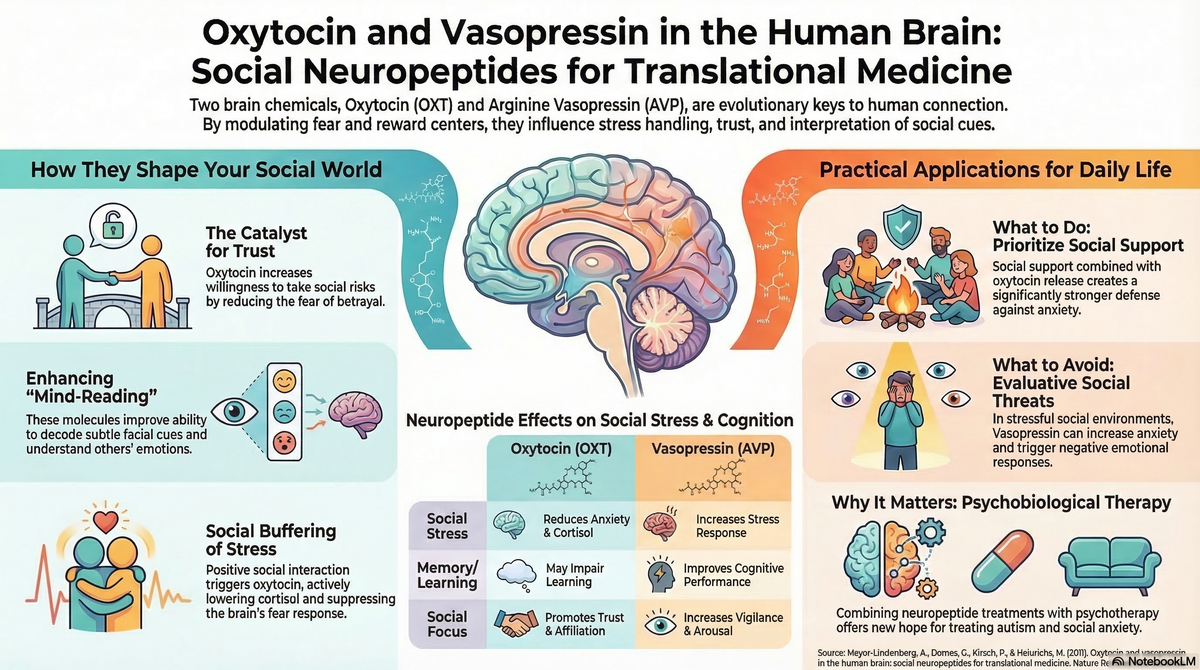
[4]
What this means practically: having a close friend does not just feel better when life gets hard. It changes the biology of how hard life gets. People with strong social support experience the same objective stressors as those without it, but the physiological damage those stressors produce is measurably lower. Over decades, this biological buffer accumulates into meaningfully different health outcomes.
THE IDENTITY EFFECT: HOW YOUR FRIENDS QUIETLY RESHAPE YOUR MIND
The health effects of friendship are striking, but they are only half the story. Friendship's second major domain of influence is identity — who you are, what you believe, how you habitually behave, and what you think of yourself.
Social identity theory, developed by Henri Tajfel and John Turner, proposes that a significant part of each person's sense of self is derived from their membership in social groups. We know what to think, in part, by knowing who we are — and who we are is partly defined by the people we spend time with. This is not simply peer pressure in the colloquial sense. It is a fundamental feature of how identity is constructed.
Research at the Santa Fe Institute found that friends actually shape our thinking at a cognitive level: the ideas, values, and interpretive frames that our close friends use become more available and accessible to us over time. We do not consciously adopt our friends' views. We gradually come to see the world through frames that resemble theirs because those frames are activated repeatedly in our shared conversations.
This process operates across multiple dimensions. Habits and routines are influenced through both direct modeling and social norm effects — if your friends exercise regularly, the social norm you experience makes exercise feel more natural and less effortful. Beliefs and attitudes are shaped by repeated exposure to the perspectives and values that your friends express and embody. Self-esteem is continuously calibrated against the reflected appraisals of those around you — the way your friends see you and speak about you becomes part of how you see yourself.
Close friendships play a particularly important role in identity exploration. Research on adolescent development, and increasingly on adult development, shows that close friendship provides a sheltered context in which people can try out different values, roles, and self-presentations that they might not be willing to explore in more public or evaluatively threatening settings. The safety of an unconditionally accepting friendship is what allows genuine self-development, not just self-expression [5].
 Viktoria Samokhval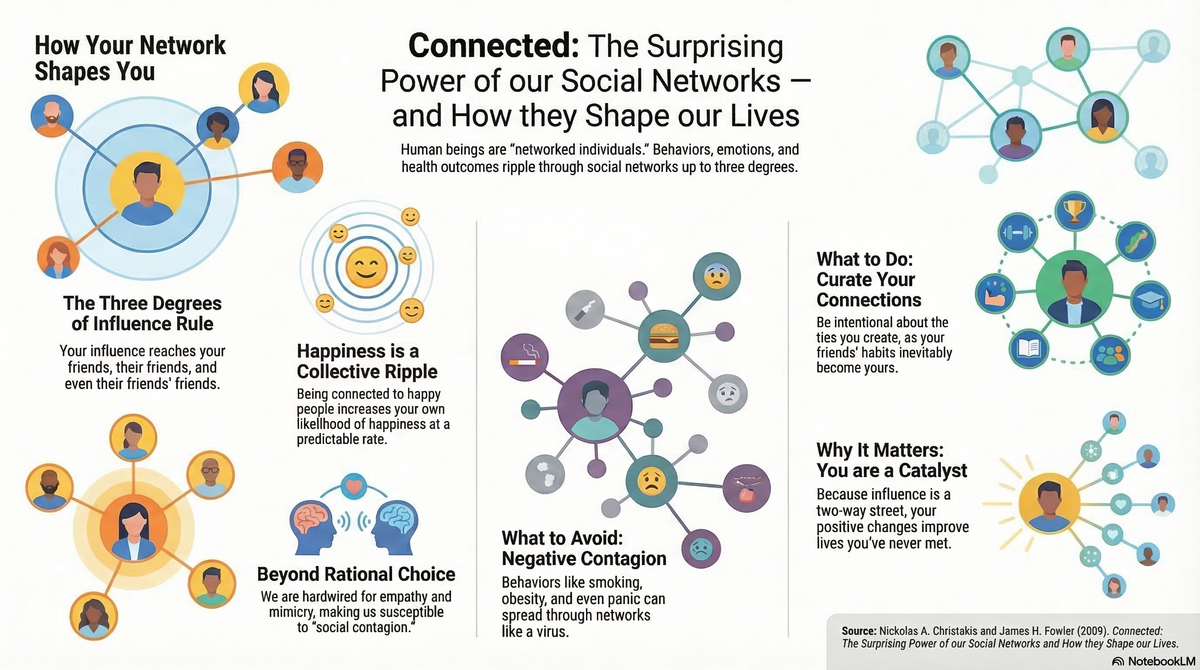
[5]
Five ways your social circle is actively shaping your identity right now:
- Your standards for what counts as success are largely set by comparison with your closest peers
- Your beliefs about what is normal, appropriate, or desirable in daily life reflect your social group's norms
- Your confidence in your own competence is continuously updated by how your friends respond to you
- Your habits — from diet and exercise to how you spend your evenings — drift toward the patterns of those you spend most time with
- Your narrative about who you are and where you are going is co-authored, in part, by the people who know you best
The upside of this is transformative: investing in friendships with people who are growing, curious, and intentional about their lives is one of the highest-leverage personal development strategies available. The risk is equally real: social circles that normalize limitation, negativity, or stagnation exert the same quiet pressure in the opposite direction.
IT'S NOT HOW MANY FRIENDS YOU HAVE — IT'S HOW DEEP
One of the most consistent findings in friendship research is that the quality of relationships matters far more than the quantity. This is important because modern social life creates many opportunities to accumulate weak social ties — acquaintances, professional contacts, social media connections — while doing little to deepen the few close relationships that actually generate biological and psychological benefit.
Research examining quality vs quantity of social relationships finds that loneliness is more closely tied to perceived relationship quality than to the raw number of social contacts [6]. Someone surrounded by people they feel superficially connected to can experience the same loneliness — and the same health risks — as someone who is objectively more isolated but feels genuinely understood and valued by one or two people.
 Viktoria Samokhval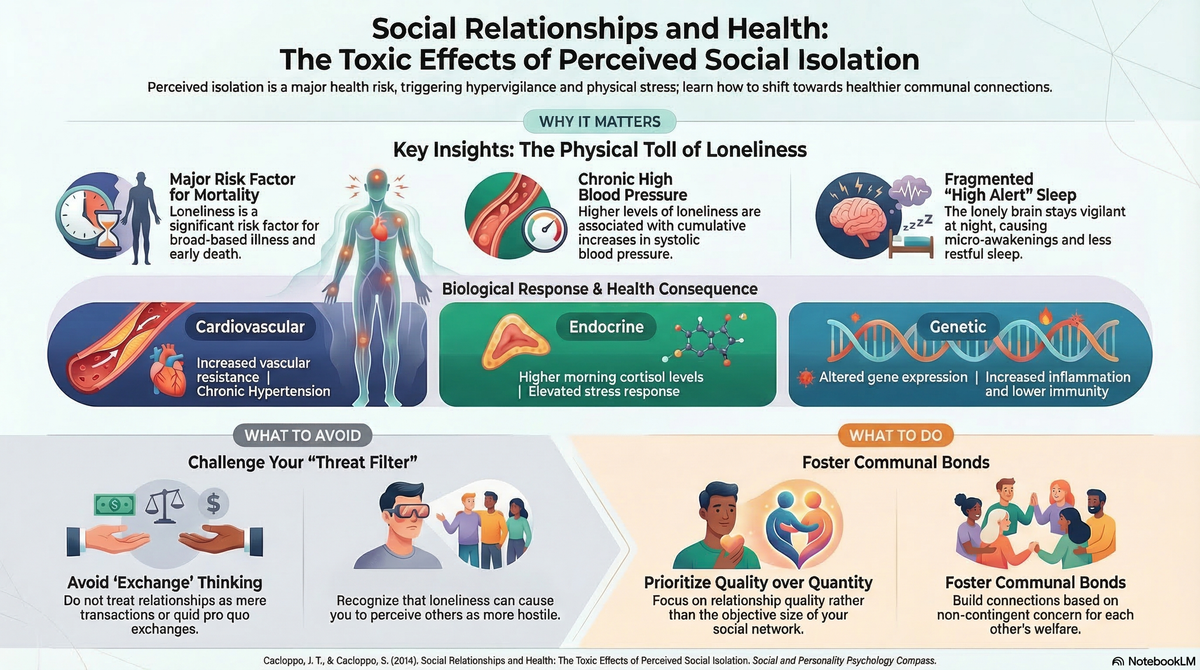
[6]
The health literature distinguishes between two related but distinct phenomena: social isolation, which is an objective reduction in social contact (quantity), and loneliness, which is a subjective experience of inadequate social connection (quality). While both increase mortality risk, they operate through somewhat different pathways. Social isolation is a stronger predictor of cardiovascular mortality; loneliness is a stronger predictor of psychological decline and cognitive deterioration. Both are serious. And both are increasingly common.
The question of how many close friendships we actually need points to the idea of the support clique — the small group of typically three to five people who provide genuine emotional support, practical assistance in times of need, and a stable sense of belonging. Research suggests that most people function well with two to four such relationships, and that additional social ties produce diminishing biological returns beyond that core group. What matters is not expanding the circle but deepening the center.
WHY ADULT FRIENDSHIPS ARE HARD — AND WHY THAT MAKES THEM MORE IMPORTANT
If friendships are this important, why do most adults allow them to erode? The answer lies in the structural conditions of adult life, which work systematically against the kinds of sustained, repeated contact that close friendship requires.
In childhood and adolescence, proximity and repeated exposure are provided automatically by institutions — schools, neighborhoods, shared activities. Adults must create these conditions deliberately, and most do not, because the competing demands of career, family, and household management leave little unstructured time for the slow work of deepening a friendship.
The 200-hour rule, documented in research reviewed by Psychology Today, puts a useful number to the challenge: it takes approximately 40 to 60 hours of interaction to move from acquaintance to casual friend, around 80 to 100 hours to become a regular friend, and more than 200 hours to form a close friendship [7]. Most adults, after the transition out of college or early career, simply do not accumulate this kind of contact with any new person. They maintain existing friendships through inertia for as long as geography allows, and then allow those friendships to decay when life circumstances change.
 Viktoria Samokhval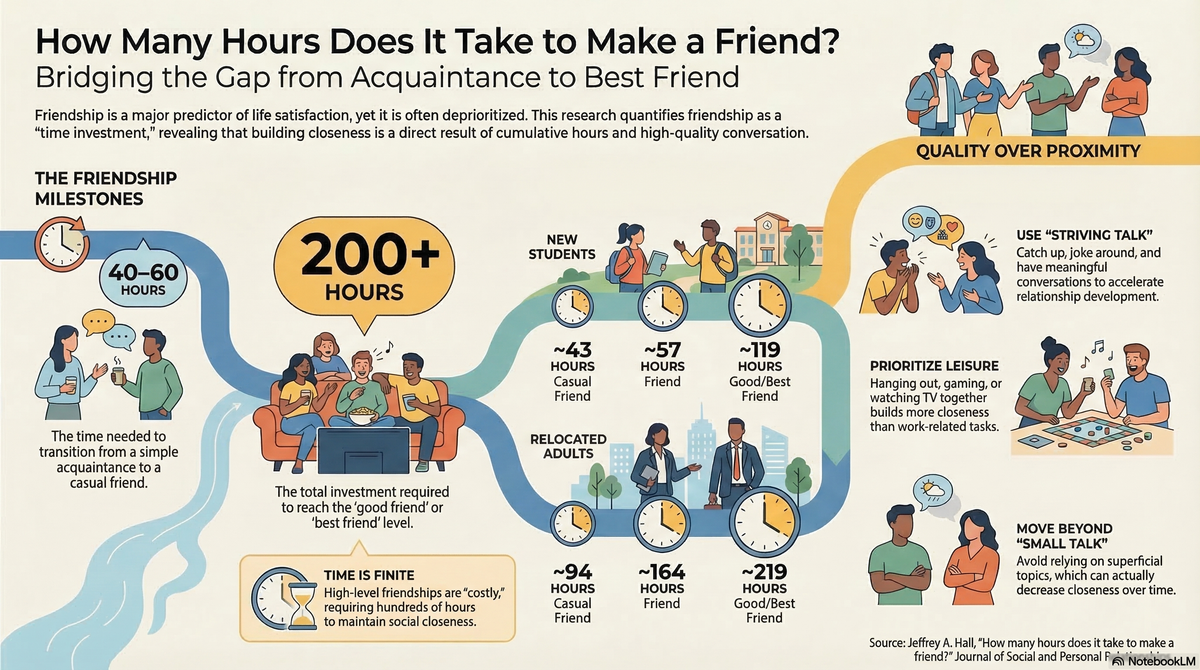
[7]
The common response to this challenge — the assumption that meaningful friendship will emerge spontaneously when the time and energy are right — is one of the most reliably failed friendship strategies in adulthood. Research consistently shows that spontaneity is insufficient for adults. The structure that schools and shared living provided in early life must be consciously reconstructed.
THE SCIENCE-BACKED FRIENDSHIP INVESTMENT PLAN
The research on adult friendship maintenance points toward a set of concrete, evidence-supported practices. These are not complicated, but they require treating friendship as a genuine priority rather than an afterthought.
Strategy 1: Schedule Your Friendships
The single most consistently supported recommendation in the adult friendship literature is to replace spontaneity with structure. Schedule recurring contact with your close friends — a monthly dinner, a weekly walk, a quarterly trip — and treat these commitments with the same seriousness as work meetings or health appointments. Scheduled friendship contact accumulates the hours needed to maintain and deepen close relationships in a way that waiting for the right moment never will.
A 2023 systematic review in Frontiers in Psychology found that the intensity and frequency of social contact were among the most consistent predictors of friendship quality and subjective wellbeing over time. Regular, predictable contact is the mechanism; scheduling is the strategy.
Strategy 2: Go Deeper, Not Wider
Resist the temptation to distribute social energy across a large number of weak ties. The research on science of friendship is concentrated in close, high-quality relationships. Prioritize investing more deeply in a smaller number of existing friendships over the accumulation of new superficial contacts.
Deepening a friendship means moving conversations beyond the surface level of activity updates and into the domain of values, aspirations, vulnerabilities, and genuine emotional experience. Research by psychologist Arthur Aron on relational closeness found that the experience of mutual self-disclosure — sharing things that feel genuinely revealing and risky — produces measurable increases in felt closeness within a single conversation.
Strategy 3: Practice Active Celebratory Support
Most people understand that being there for a friend during difficulties is important. Research by Shelly Gable at the University of California has found that how friends respond to each other's good news is equally or more predictive of relationship quality. She identifies active constructive responding — responding to a friend's positive news with genuine enthusiasm, asking detailed questions, and expressing authentic interest — as the pattern most associated with relationship satisfaction and depth.
Practically: when a friend shares a success, a milestone, or a piece of good news, do not respond minimally. Ask them to tell you more. Express what specifically about it strikes you. Let their win land with you. This seemingly small behavior is one of the most powerful friendship-deepening tools available, and most people significantly underuse it.
Strategy 4: Use Vulnerability as a Tool for Closeness
Close friendship requires mutual vulnerability — the willingness to reveal imperfections, fears, doubts, and genuine feelings rather than presenting only a curated self. Most adults, particularly those trained in professional contexts to project confidence and competence, find this difficult. The instinct to maintain a polished social presentation is powerful.
Research is unambiguous: friendships that remain at the level of competent, pleasant interaction do not deepen into the close relationships that generate biological and psychological benefit. The willingness to admit genuine uncertainty, to share what is actually hard, to reveal something true rather than something impressive — this is what transforms acquaintances into close friends.
Strategy 5: Audit Your Social Circle Honestly
Not all friendships contribute equally to your growth and health. Some relationships are energizing — you leave them feeling more capable, more alive, more curious about the world. Others are draining — they leave you feeling diminished, anxious, or stuck. The research on social identity and behavioral influence suggests that the social circle you inhabit shapes you continuously and largely unconsciously. Knowing who is in that circle, and what direction their influence tends to run, is a form of self-awareness that most people neglect.
This audit is not about coldly evaluating people's worth. It is about honest recognition that your most limited resource — the hours you spend in close social contact — should be allocated with some intentionality, in ways that support who you are trying to become.
Ten micro-actions to strengthen a friendship this week:
- Send a message right now telling a friend one specific thing you appreciate about them
- Schedule a recurring time to connect — put it in both your calendars today
- Ask a friend a question you have genuinely been curious about but never asked
- When a friend shares good news, respond with enthusiastic follow-up questions
- Share something you are genuinely uncertain or struggling with, rather than only your successes
- Suggest a shared activity that will create new shared experience rather than just catching up
- Remember and follow up on something your friend mentioned last time you spoke
- Write a short note or card rather than a text — the extra effort communicates real care
- Introduce two friends who do not know each other but would genuinely benefit from meeting
- Tell a friend about a way they have influenced or helped you that they may not be aware of
YOUR FRIENDS ARE A HEALTH STRATEGY — START TREATING THEM LIKE ONE
The evidence is extensive, consistent, and now extends down to the cellular level: the people you choose to be close to, and the quality of those relationships, are one of the most significant determinants of your health, longevity, resilience, and identity development. This is not a metaphor or a motivational claim. It is the output of decades of careful research across epidemiology, immunology, neuroscience, and developmental psychology.
The science of friendship makes a specific and practical demand: that we stop treating close relationships as the first thing to deprioritize when life gets busy, and start treating them as the infrastructure of a healthy life — as deserving of deliberate investment as diet, sleep, and physical activity.
This week, choose one friendship that matters to you and invest in it with intention. Schedule something. Go deeper in a conversation. Show up for a win your friend is experiencing. The science suggests the return on that investment — in your health, your resilience, and your sense of who you are — is higher than almost anything else you could do with that hour.
References
-
Julianne Holt-Lunstad, Timothy B. Smith, Mark Baker, Tyler Harris, and David Stephenson. "Loneliness and Social Isolation as Risk Factors for Mortality: A Meta-Analytic Review."
Perspect Psychol Sci 2015 Mar; 10(2): 227-37 -
Anthony D. Ong, Frank D. Mann, Laura D. Kubzansky. "Cumulative social advantage is associated with slower epigenetic aging and lower systemic inflammation."
Brain Behav Immun Health 2025 Sep 3:48:101096 -
Heinrichs, M., Baumgartner, T., Kirschbaum, C., & Ehlert, U. (2003). Social support and oxytocin interact to suppress cortisol and subjective responses to psychosocial stress.
Biological Psychiatry, 54(12), 1389–1398. -
Meyer-Lindenberg, A., Domes, G., Kirsch, P., & Heinrichs, M. (2011). Oxytocin and vasopressin in the human brain: Social neuropeptides for translational medicine.
Nature Reviews Neuroscience, 12(9), 524–538 -
Christakis, N. A., & Fowler, J. H.
Connected: The surprising power of our social networks and how they shape our lives.
New York, NY: Little, Brown and Company 2009 -
HCacioppo, J. T., & Cacioppo, S. Social relationships and health: The toxic effects of perceived social isolation.
Social and Personality Psychology Compass,2014 8(2), 58–72. -
Hall, J. A. How many hours does it take to make a friend?
Journal of Social and Personal Relationships, 2019 36(4), 1278–1296