
The Longevity Blueprint: What "Adherence to a Mediterranean Diet and Survival in a Greek Population" Teaches Us About Eating for a Longer Life
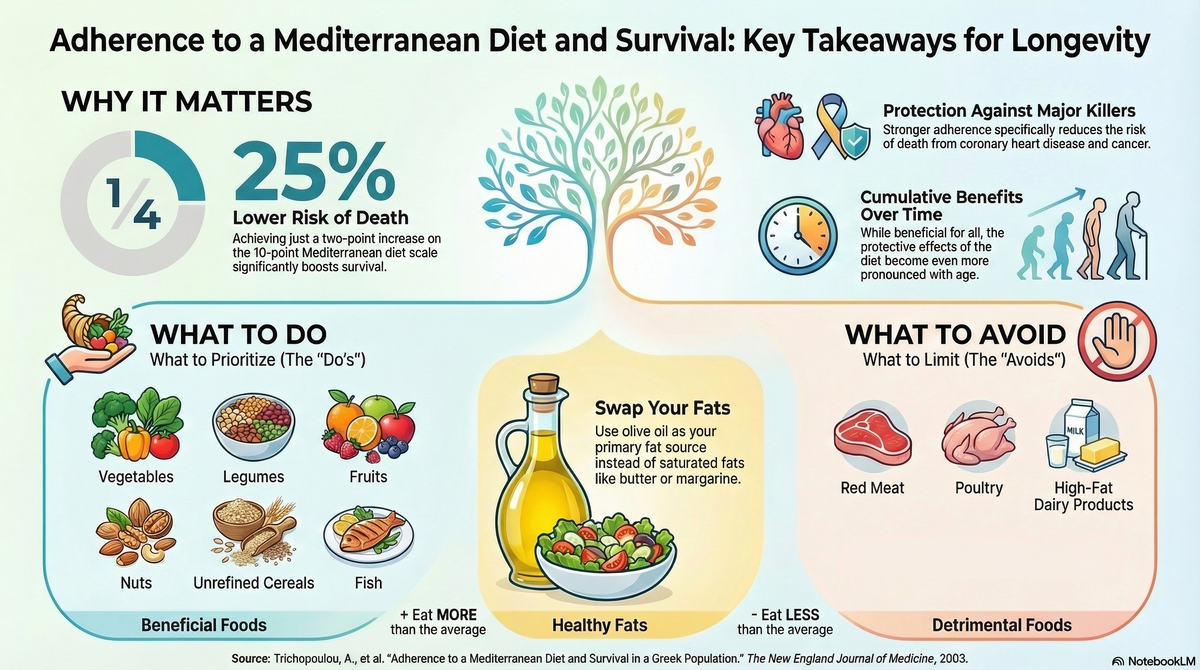
We are constantly bombarded with the latest "superfoods" and trendy diet hacks promising to help us live forever. One week it is a specific berry, and the next it is a magical powder. But what if the true secret to a long, healthy life isn't found in an expensive supplement, but in a time-tested, delicious way of eating?
A massive study looking at the dietary habits of thousands of adults in Greece reveals that the key to longevity is surprisingly simple and deeply rooted in tradition. By examining how closely people followed the traditional Mediterranean diet, researchers unlocked powerful insights into how our daily food choices can protect us from disease and extend our lives. Here is what the science says about eating for longevity.
The Whole is Greater Than the Parts
In the modern wellness world, we love to isolate specific nutrients, hoping that eating a handful of almonds or drinking a glass of wine will magically cure us. However, the research shows that individual foods actually have very little impact on your survival when viewed in isolation. The true life-saving power of the Mediterranean diet comes from the synergy of the overall pattern. When you combine high amounts of vegetables, legumes, fruits, nuts, and olive oil with moderate amounts of fish and very little meat, these foods interact biologically to protect your body. It is the integrated, complete diet that builds a powerful defense system.
Practical Guidance:
- What to do: Focus on the overall balance of your plate by combining plant-based foods, healthy fats, and lean proteins in every meal.
- What not to do: Don't obsess over eating massive amounts of one single "healthy" ingredient while ignoring the rest of your diet.
- Habit to change: Shift your mindset from searching for a nutritional "magic bullet" to building a consistent, well-rounded eating pattern.
A Natural Shield Against Heart Disease and Cancer
The most striking finding of this research is just how effectively this dietary pattern shields the body from the most dangerous chronic diseases. People who closely follow the Mediterranean diet experience a significant reduction in their overall risk of death. More specifically, this way of eating acts as a powerful barrier against both coronary heart disease and cancer. By replacing saturated animal fats with monounsaturated fats (like those found in olive oil) and eating a diet rich in unrefined plant foods, you are actively lowering your risk of dying from these major health threats.
Practical Guidance:
- What to do: Make extra-virgin olive oil your primary source of fat, and ensure that vegetables, legumes, and cereals form the foundation of your meals.
- What not to do: Avoid eating large amounts of red meat, poultry, and high-fat dairy products, which are traditionally consumed very sparingly in this lifestyle.
- Decision to change: Swap butter for olive oil when cooking, and replace one or two meat-heavy dinners a week with a dish centered around beans or fish.
The Power of Cumulative ExposureIf you are wondering if it is too late to change your diet, the research offers a compelling perspective. The study observed that the life-extending benefits of the Mediterranean diet become particularly evident in older adults. This suggests that the health advantages of good nutrition accumulate over time; the longer you expose your body to a healthy diet, the stronger your protection becomes. It is not about a quick, two-week crash diet; it is about building a sustainable, long-term relationship with nourishing foods.
Practical Guidance:
- What to do: View healthy eating as a lifelong journey, focusing on delicious, sustainable foods that you can happily eat for decades.
- What not to do: Don't assume that because you are older, changing your eating habits won't make a difference—the protective effects are highly visible in older populations.
- Habit to change: Stop participating in restrictive, short-term diets that you inevitably quit. Instead, gradually adopt the flavorful, sustainable habits of the Mediterranean lifestyle.
Summary for Life
The deep truth of this research boils down to a single, concrete life rule: To protect yourself against heart disease and cancer, stop looking for isolated superfoods and instead commit to a lifelong, flavorful diet built on a foundation of plants, fish, and olive oil.
Reflective Question: If the secret to a longer life is found in the complete harmony of the foods on your plate, does your current diet look like a well-balanced symphony, or a chaotic mix of processed shortcuts?
References
Trichopoulou A., Costacou T., Bamia C., Trichopoulos D.
Adherence to a Mediterranean Diet and Survival in a Greek Population.
The New England Journal of Medicine, 2003; 348:2599–2608. DOI: https://doi.org/10.1056/NEJMoa025039