The Hidden Cost of Convenience: Breaking Down "Ultra-processed foods and risk of all-cause mortality: an updated systematic review and dose-response meta-analysis of prospective cohort studies"
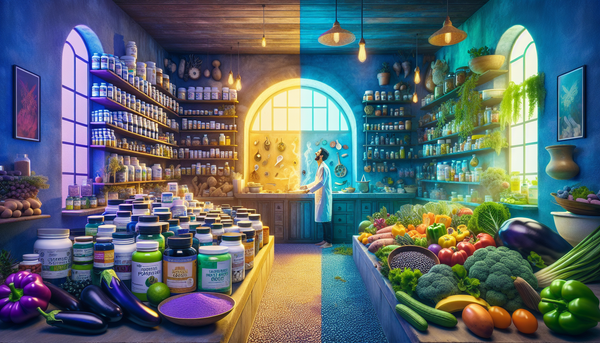
We all have those days. You are rushing between work, errands, and family commitments, and suddenly it is dinner time. You grab a frozen meal, a bag of flavored chips, or a brightly packaged snack bar. It is cheap, fast, and incredibly satisfying. But what is the true cost of this hyper-convenience? A massive 2025 review encompassing over a million people has delivered a stark warning about our reliance on Ultra-Processed Foods (UPFs). The verdict is clear: these factory-made foods aren't just expanding our waistlines; they are actively shortening our lives. Let's explore what the latest science reveals about the food on our plates and how we can reclaim our health from the convenience trap.
Every Bite Counts: The 10% Rule
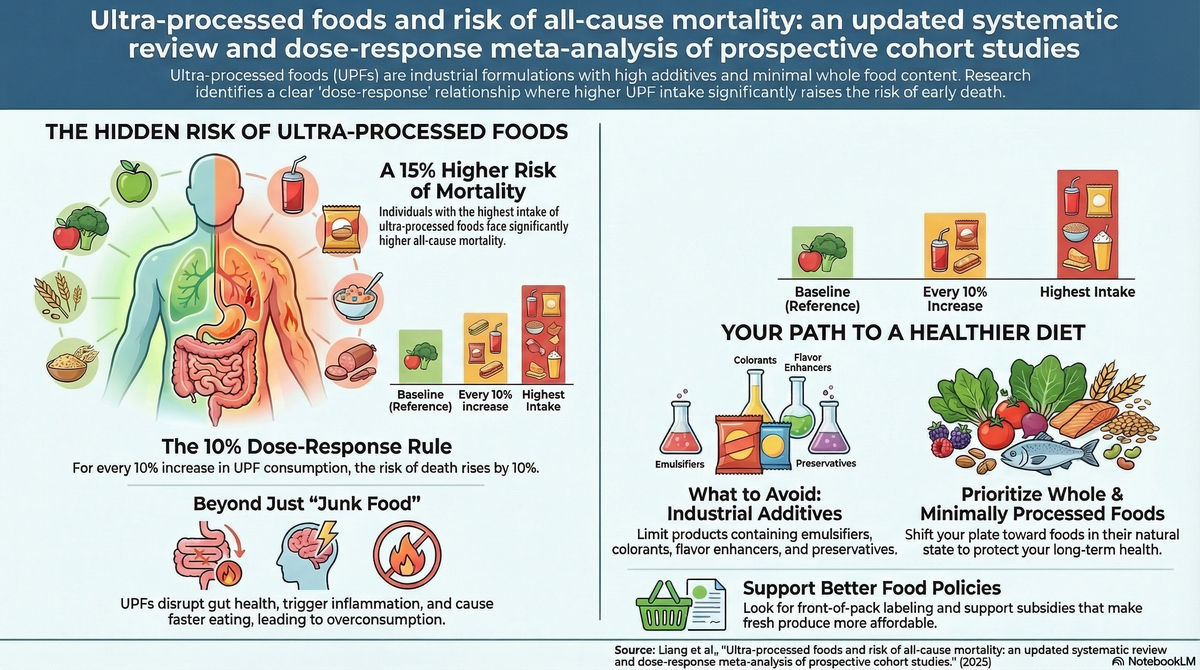
When it comes to ultra-processed foods, it is easy to assume that unless you eat fast food for every meal, you are generally safe. However, the research shows a much more alarming mathematical reality: the danger is cumulative. The study found a direct "dose-response" relationship between the amount of processed food you eat and your lifespan. For every 10% increase in the proportion of ultra-processed foods in your daily diet, your overall risk of premature death jumps by 10%. This means that even modest amounts of these heavily manufactured foods, which now make up over 50% of the dietary energy in places like the USA and the UK, are steadily chipping away at your health with every serving.
Practical Guidance:
- What to do: Start small by auditing your daily meals and aiming to replace just 10% of your ultra-processed snacks with whole foods, like fresh fruit or raw nuts.
- What not to do: Don't assume that a food is healthy just because it is marketed as "low calorie" or "diet." If it is highly processed, it carries inherent risks regardless of the calorie count.
- Habit to change: Shift your grocery shopping strategy to stick to the outer perimeter of the store, where the fresh produce, meats, and whole foods live, rather than browsing the central aisles filled with packaged goods.
Hijacking Your Gut and Your Brain
Why exactly are these foods so harmful? It goes far beyond just containing too much sugar, salt, or fat. Ultra-processed foods are industrial creations loaded with cosmetic additives—like artificial colorants, flavor enhancers, emulsifiers, and sweeteners—that you would never find in a home kitchen. When these chemicals enter your body, they trigger inflammation and oxidative stress. More shockingly, they disrupt your microbiome, actively wiping out beneficial gut bacteria while promoting harmful strains. Furthermore, because these foods are engineered to be "hyper-palatable," they literally trick your brain by increasing your eating speed and delaying the natural signals that tell you when you are full, almost guaranteeing that you will overeat.
Practical Guidance:
- What to do: Read the ingredient labels on your favorite snacks. If the list reads like a chemistry experiment filled with words you can't pronounce, put it back on the shelf.
- What not to do: Don't eat straight out of heavily processed snack bags while distracted by a screen; the engineered flavors will bypass your brain's fullness cues.
- Habit to change: Begin cooking more of your meals from scratch using unprocessed or minimally processed ingredients, ensuring you maintain complete control over what goes into your body.
The Ripple Effect of a Processed Life
The impact of a highly processed diet rarely stops at the kitchen table. The research highlights that a heavy reliance on ultra-processed foods is deeply intertwined with other health-draining habits. People who consume the highest amounts of UPFs are also far more likely to engage in heavy smoking, excessive alcohol consumption, and physical inactivity. Interestingly, the data showed that men experience a particularly high risk of mortality related to UPF consumption, likely due to a combination of these compounding lifestyle factors and dietary choices. Relying heavily on factory-made food is often a loud warning sign of a broader lifestyle where convenience has completely overridden self-care.
Practical Guidance:
- What to do: Treat meal preparation as an act of self-care and a foundation for a healthier overall lifestyle, rather than a chore to be avoided.
- What not to do: Avoid using the excuse of being "too busy" to justify a diet entirely composed of ready-to-heat factory meals.
- Decision to change: Look at your schedule and actively block out time on the weekends for simple meal prepping. Having whole, real foods chopped and ready in the fridge removes the friction of cooking on busy weeknights.
Summary for Life
The research boils down to a profound and concrete life rule: To protect your lifespan and your body’s internal ecosystems, you must actively prioritize foods made by nature over foods engineered in a factory, recognizing that every 10% shift toward real food buys you more time.
Reflective Question: If the brightly colored package in your pantry was intentionally engineered to make you eat faster, bypass your fullness signals, and harm your gut bacteria, is the temporary convenience really worth the long-term cost to your life?
References
Zhang, Y., et al. (2025). Ultra-processed foods and risk of all-cause mortality: an updated systematic review and dose-response meta-analysis of prospective cohort studies.
Systematic Reviews, 14, Article 28.
DOI: 10.1186/s13643-025-02800-8