Stop Waiting for Happiness: What "Behavioral activation interventions for well-being: A meta-analysis" Teaches Us About Creating Joy
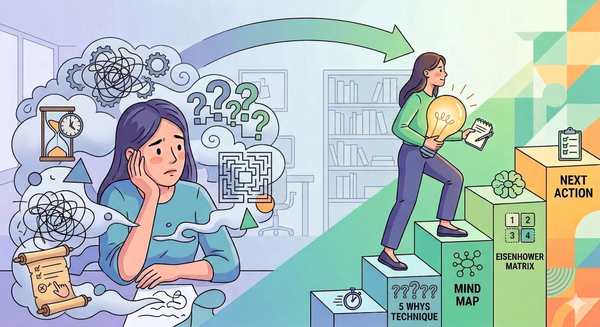
Have you ever caught yourself waiting for happiness to strike? We often fall into the trap of believing that well-being is a passive state that will magically arrive once we get a promotion, buy a new house, or finally go on that dream vacation. When life feels a bit gray, we tend to withdraw, assuming we just need to wait until we "feel" like doing things again.
However, a comprehensive review of psychological studies flips this entirely backward. The research reveals that happiness isn't something that happens to you—it is something you actively do. By looking at an approach called "Behavioral Activation," scientists have discovered that the most reliable way to boost your mood is to engineer your environment and your daily schedule so that joy is inevitable. Here is what the science says about taking control of your well-being.
The "40 Percent" Rule of Happiness
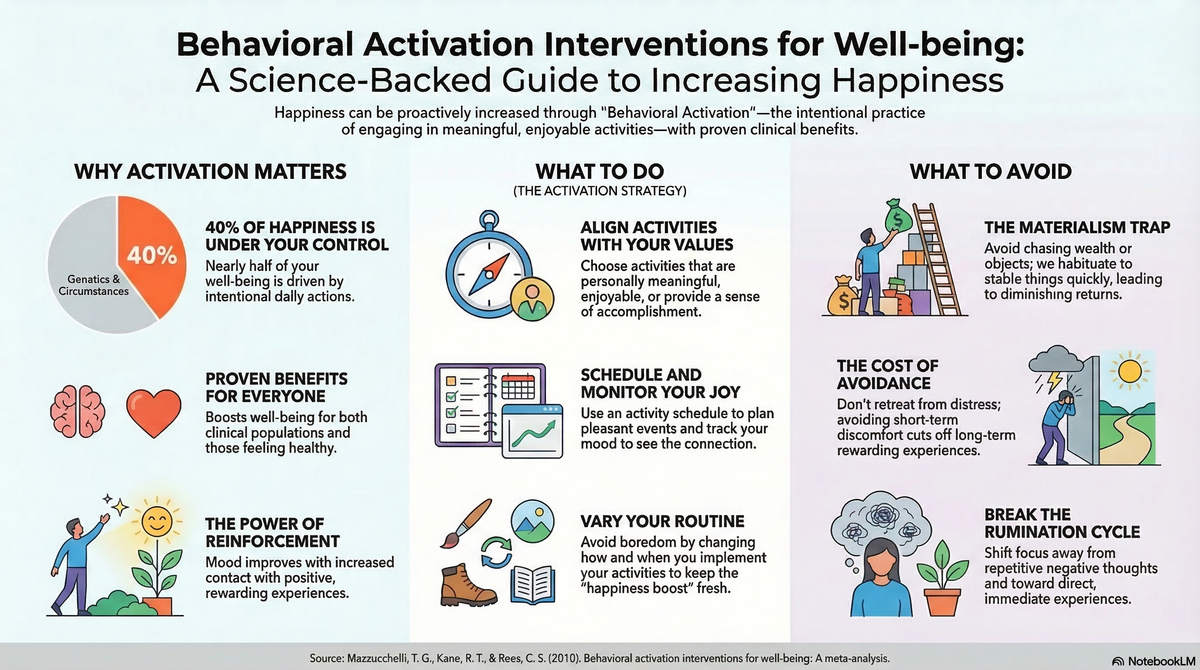
We often blame our genetics or our current life circumstances for our bad moods. While it is true that your genetics dictate about 50 percent of your baseline happiness, and your life circumstances (like your income or zip code) account for roughly 10 percent, that leaves a massive 40 percent of your well-being entirely in your control. This 40 percent is governed by "intentional activity"—the deliberate, effortful choices you make every day. The research highlights that trying to fill this 40 percent by accumulating wealth or buying new objects ultimately fails because we quickly habituate to new possessions. True, sustainable happiness is generated by engaging in meaningful, varied activities that align with your personal values.
Practical Guidance:
- What to do: Choose new, intentional activities that genuinely fit your unique interests and values, rather than what society says should make you happy.
- What not to do: Don't rely on retail therapy or chasing a higher salary to permanently boost your mood, as the thrill of these stable circumstances will quickly fade.
- Habit to change: To prevent habituation (getting bored of a good thing), build a habit of initiating activity, but constantly vary how and when you do it to keep your brain engaged.
Action Precedes Emotion
Behavioral Activation was originally developed as a powerful treatment for clinical depression, based on a very simple premise: when people feel down, they stop doing the things they love, which strips their life of positive reinforcement and makes them feel even worse. The solution? You have to schedule and participate in pleasant, meaningful activities before the motivation or good mood arrives. The researchers found that this exact same intervention works wonders for the general public, too. You don't need to be clinically depressed to benefit from Behavioral Activation; actively scheduling and tracking pleasant events creates a surge of positive reinforcement that boosts well-being for anyone.
Practical Guidance:
- What to do: Create a personalized "activity schedule" filled with small, daily events that you have found enjoyable, meaningful, or interesting in the past.
- What not to do: Do not wait until you "feel like it" to go for a walk, call a friend, or start a hobby. The action must come first to trigger the emotion.
- Decision to change: Start tracking your daily activities alongside your mood. Once you clearly see the connection between what you do and how you feel, you will be much more motivated to prioritize your scheduled moments of joy.
Breaking the Avoidance Trap
When we are stressed, overwhelmed, or feeling down, our natural instinct is to hide. We avoid difficult interpersonal conversations, skip the gym, and cancel social plans. In the short term, this avoidance feels like a relief. However, the research shows that this coping strategy comes at a massive long-term cost: it robs you of the opportunity to experience positive, mood-enhancing rewards. Behavioral Activation works by helping you recognize your avoidance patterns and forcing you to reengage with your life. When you stop avoiding your life and start acting in accordance with your long-term goals, you build a deep sense of meaning, engagement, and positive emotion.
Practical Guidance:
- What to do: Pay attention to the situations, chores, or social events you routinely avoid, and intentionally schedule a small, manageable way to engage with them this week.
- What not to do: Don't let the short-term comfort of staying on the couch trick you into sacrificing the long-term emotional rewards of going out and connecting with the world.
- Habit to change: Whenever you catch yourself ruminating (overthinking a problem), immediately shift your attention away from your internal thoughts and focus completely on the direct, immediate physical experience of whatever you are doing in the present moment.
Summary for Life
The deep truth of human well-being boils down to a single, concrete life rule: Happiness is not a mood you wait for; it is a schedule you build by intentionally packing your days with meaningful, rewarding activities, even when you don't feel like doing them.
Reflective Question: If you treated your daily joy with the exact same strict scheduling and importance as your work meetings or doctor's appointments, how would your life change by next week?
References
Mazzucchelli, T., Kane, R., & Rees, C. S. Behavioral activation interventions for well‑being: A meta‑analysis.
Journal of Positive Psychology, 2010. 5(2), 105–121.
doi.org 10.1080/17439760903414396