Stop Scrolling: How the Endless Feed Is Stealing Your Life
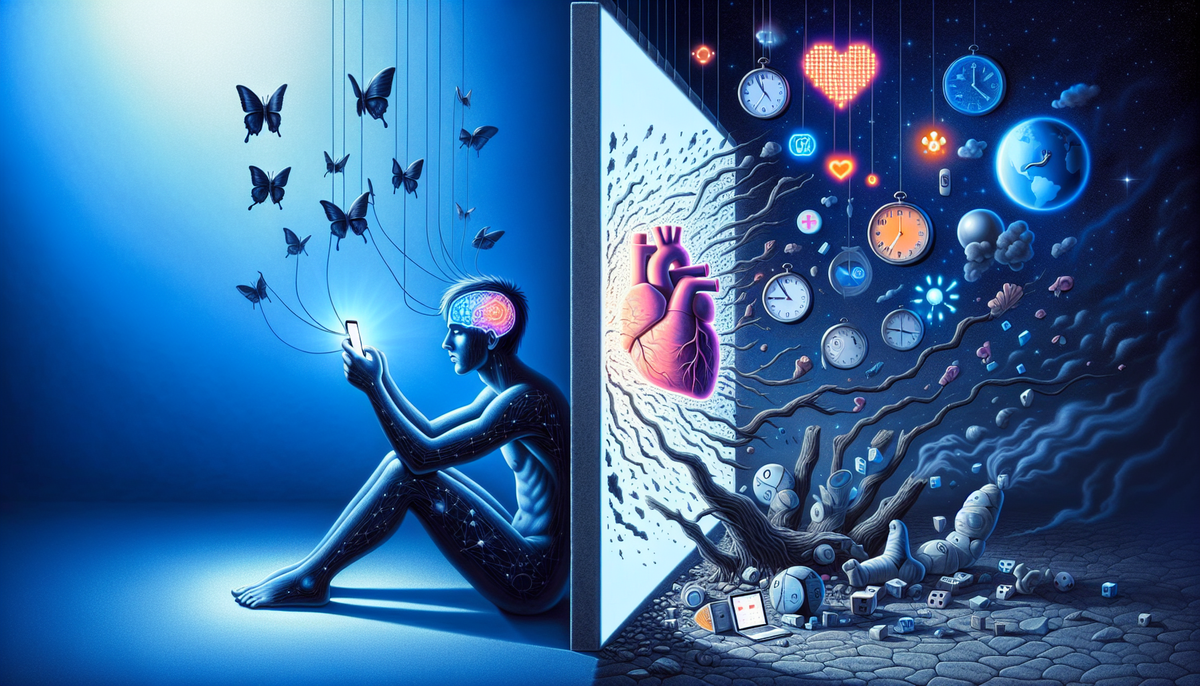
You pick up your phone to check one notification. Just a quick glance, you tell yourself. Thirty minutes later, you resurface from the depths of your social media feed, disoriented and wondering where the time went. Sound familiar? You are not alone. The average person now spends over four hours daily staring at their smartphone, much of that time lost to the hypnotic pull of endless scrolling.
This is not a harmless habit. The endless feed is a silent thief, systematically robbing you of the three pillars that make life worth living: your Health, your Relationships, and your sense of Meaning. Every mindless swipe extracts a small toll, and over weeks, months, and years, these micro-losses compound into something far more serious. Your sleep suffers. Your connections with loved ones erode. That nagging emptiness you feel at the end of the day grows harder to ignore.
But here is the truth that tech companies do not want you to understand: this is not your fault, and it is not inevitable. The endless scroll was engineered to capture your attention and keep it hostage. Understanding how this trap works is the first step toward breaking free. In this article, we will expose the science behind phone addiction, reveal the devastating costs across every sphere of your life, and provide you with a practical roadmap for digital minimalism that actually works.
It is time to stop scrolling and start living.
The Dopamine Trap: How Scrolling Rewires Your Brain
The first thing you need to understand is that you are not weak-willed. You are not lazy. You are fighting against some of the most sophisticated psychological manipulation ever deployed against the human mind. The endless feed was not designed to inform or entertain you. It was designed to addict you.
The Science of 'Fast Dopamine'
At the heart of your scrolling habit lies a powerful neurochemical called dopamine. Contrary to popular belief, dopamine is not primarily about pleasure. It is about anticipation. It is the chemical of wanting, of seeking, of craving what comes next. And the infinite scroll exploits this system with ruthless efficiency.
When you open a social media app, you never know exactly what you will find. Will the next post make you laugh? Will it outrage you? Will someone have liked your photo? This uncertainty is the key. Researchers call it variable ratio reinforcement, and it is the same psychological mechanism that makes slot machines so devastatingly addictive.
Each swipe of your thumb is like pulling a lever. Sometimes you get a reward, a funny video, an interesting article, validation from your peers. Sometimes you get nothing of value. But the unpredictability keeps you pulling that lever again and again, because your brain has learned that the next swipe might deliver the hit of fast dopamine you are seeking.
This fast dopamine is fundamentally different from the slow dopamine you earn through meaningful achievements, deep conversations, or mastering a new skill. Fast dopamine arrives instantly and fades just as quickly, leaving you craving more. Slow dopamine requires effort but produces lasting satisfaction. The endless feed has hijacked your reward system, training your brain to prefer the quick fix over the fulfilling pursuit.
The neurological consequences are profound. Studies using brain imaging technology have shown that heavy social media users display reduced gray matter in regions associated with impulse control and decision-making. Your brain is literally being reshaped by your scrolling habit, making it progressively harder to resist the urge to check your phone.
Why Research Classifies Scrolling as an Addiction
For years, the idea of phone addiction was dismissed as hyperbole. How could something as ubiquitous as checking your phone possibly compare to substance abuse? But the scientific community has increasingly recognized that behavioral addictions can be just as real and destructive as chemical ones.
The Diagnostic and Statistical Manual of Mental Disorders now acknowledges that compulsive behaviors can meet the clinical criteria for addiction. And when researchers examine excessive smartphone use through this lens, the parallels are striking.
Consider the hallmarks of addiction: tolerance, withdrawal, loss of control, and continued use despite negative consequences. Heavy scrollers exhibit all of these characteristics. They need more screen time to achieve the same level of satisfaction they once got from brief sessions. They experience anxiety, irritability, and restlessness when separated from their devices. They routinely scroll longer than intended, often losing track of time entirely. And they continue scrolling even as they recognize the damage it causes to their sleep, their work, and their relationships.
Behavioral scientists have developed scales specifically to measure problematic smartphone use, and the results are alarming. A significant percentage of the population scores in ranges that indicate addiction-like patterns. These individuals report that their phone use is automatic and uncontrolled, that they feel anxious without their device, and that scrolling interferes with important responsibilities.
The tech industry has not stumbled upon this addictive formula by accident. Former employees of major social media companies have come forward to describe how these platforms are engineered for maximum engagement. Infinite scroll was a deliberate design choice that removed natural stopping points. Autoplay videos keep you watching without active consent. Push notifications are carefully timed to pull you back when your attention wanders.
You are not using these apps. They are using you.
Eroding 'Meaning': From Instant Highs to a Long-Term Void
Perhaps the most insidious cost of endless scrolling is its effect on your sense of Meaning, that deep feeling that your life has purpose and direction. This sphere of well-being might seem abstract, but its erosion has concrete, devastating consequences.
Meaning emerges from engagement with things that matter. It comes from pursuing goals that align with your values, contributing to something larger than yourself, and investing in activities that challenge and develop you. But these meaningful pursuits require exactly what endless scrolling destroys: sustained attention, delayed gratification, and tolerance for discomfort.
When you spend hours consuming content passively, you are not just wasting time. You are training your brain to expect constant stimulation without effort. You are conditioning yourself to seek escape from boredom rather than lean into the productive discomfort that precedes growth. You are substituting the illusion of connection for genuine intimacy and replacing real accomplishment with the hollow satisfaction of watching others accomplish things.
The result is a creeping sense of emptiness that many heavy scrollers describe but struggle to articulate. Life begins to feel flat. Days blur together. You sense that something important is missing, but the precise nature of that absence remains elusive.
Research on life satisfaction consistently shows that meaning is one of the strongest predictors of psychological well-being. People who report a strong sense of purpose experience lower rates of depression and anxiety, recover more quickly from setbacks, and even enjoy better physical health. Endless scrolling undermines meaning on multiple fronts, displacing time you could spend on meaningful activities, fragmenting the attention necessary for deep engagement, and conditioning you to value passive consumption over active creation.
The tragedy is that while scrolling promises to fill the void, it actually deepens it. Each session leaves you slightly more disconnected from what truly matters, slightly more dependent on digital stimulation to mask the growing emptiness.
The High Cost of the Endless Feed
Understanding the psychological mechanisms behind scrolling is important. But to truly appreciate the urgency of breaking this habit, you need to see the full scope of the damage. The costs of phone addiction ripple outward, touching every domain of your life. Let us examine three of the most critical areas.
 Maksym Zosym
'Health': The Sleep Thief and Energy Drain
Your body operates on a finely tuned internal clock called the circadian rhythm. This system regulates your sleep-wake cycle, your hormone production, your digestion, and countless other physiological processes. And nothing disrupts it quite like the glowing screen you stare at for hours each day.
The problem begins with light. Specifically, the blue wavelengths emitted by your smartphone and other digital devices. This type of light is interpreted by your brain as daylight, signaling that it is time to be awake and alert. When you scroll in the evening, you are essentially telling your body that the sun is still up, even as the actual sun set hours ago.
This matters because your brain responds to darkness by producing melatonin, the hormone that prepares you for sleep. Blue light exposure suppresses melatonin production, making it harder to fall asleep and reducing the quality of the sleep you do get. Studies have found that using screens in the two hours before bed can delay sleep onset by an hour or more and significantly reduce time spent in the restorative deep sleep stages.
The consequences extend far beyond feeling groggy in the morning. Sleep deprivation is linked to impaired cognitive function, weakened immune response, increased inflammation, weight gain, elevated blood pressure, and heightened risk of serious conditions including diabetes, heart disease, and certain cancers. Over time, chronically poor sleep accelerates aging and shortens lifespan.
But sleep disruption is only part of the health equation. Consider what you are doing while you scroll: sitting or lying motionless, often in postures that strain your neck, shoulders, and lower back. Hours of daily scrolling contribute to a sedentary lifestyle that increases your risk of obesity, cardiovascular disease, and metabolic dysfunction.
There is also the psychological toll. The constant consumption of information, much of it negative or anxiety-provoking, keeps your stress response chronically activated. Doomscrolling through news feeds filled with conflict, disaster, and outrage floods your system with cortisol, the stress hormone that is beneficial in short bursts but destructive when chronically elevated. High cortisol levels contribute to weight gain, suppress immune function, impair memory, and increase risk of depression.
Your mental health suffers in additional ways. Studies consistently find correlations between heavy social media use and elevated rates of anxiety, depression, and poor self-esteem. The comparison trap is particularly pernicious: when you spend hours viewing carefully curated highlights from other people's lives, it is almost impossible not to feel that your own life falls short.
The health costs of endless scrolling are not theoretical or distant. They are accumulating in your body right now, every time you choose the phone over sleep, movement, or genuine rest.
'Relationships': Digital Distance and the Rise of 'Phubbing'
Humans are fundamentally social creatures. Our well-being depends on close, nurturing relationships with partners, family members, and friends. These connections require something that has become increasingly scarce in the smartphone era: undivided attention.
Enter phubbing, a term coined by combining phone and snubbing. Phubbing occurs whenever you prioritize your device over a person who is physically present. You know the scenario: you are having dinner with your partner, and they pull out their phone to check a notification. Or you are telling a friend about something important, and their eyes keep drifting to the screen in their hand. Or you are playing with your children, but half your attention is devoted to scrolling through your feed.
Phubbing might seem like a minor social irritant, but research reveals it as a serious relationship poison. Studies of romantic couples have found that phubbing correlates strongly with decreased relationship satisfaction. When your partner phubs you, you feel devalued and unimportant. Over time, these micro-rejections erode emotional intimacy and create distance.
The damage extends beyond romance. Parents who frequently use phones in their children's presence report more behavioral problems in their kids. Friendships suffer when phone use signals that the person in front of you is less interesting than whatever is happening online. Even brief phone use during conversations reduces the sense of connection and empathy between conversation partners.
The cruelest irony is that social media platforms promise to bring us closer together while actually driving us apart. You might have hundreds of online connections, but if you are phubbing the people in your physical presence to maintain those digital relationships, you are trading depth for breadth, real intimacy for the illusion of connection.
Digital distraction also prevents the formation of new meaningful relationships. When you spend every idle moment scrolling, you eliminate the opportunities for spontaneous interaction that once led to friendships and community connections. The person sitting next to you on the bus, the neighbor you pass in the hallway, the potential friend at the coffee shop: they all become invisible when your attention is captured by your screen.
Loneliness has become an epidemic in developed nations, with serious consequences for both mental and physical health. Social isolation is as dangerous as smoking fifteen cigarettes a day, yet we voluntarily isolate ourselves through our devices, mistaking the weak ties of online interaction for the strong bonds of genuine human connection.
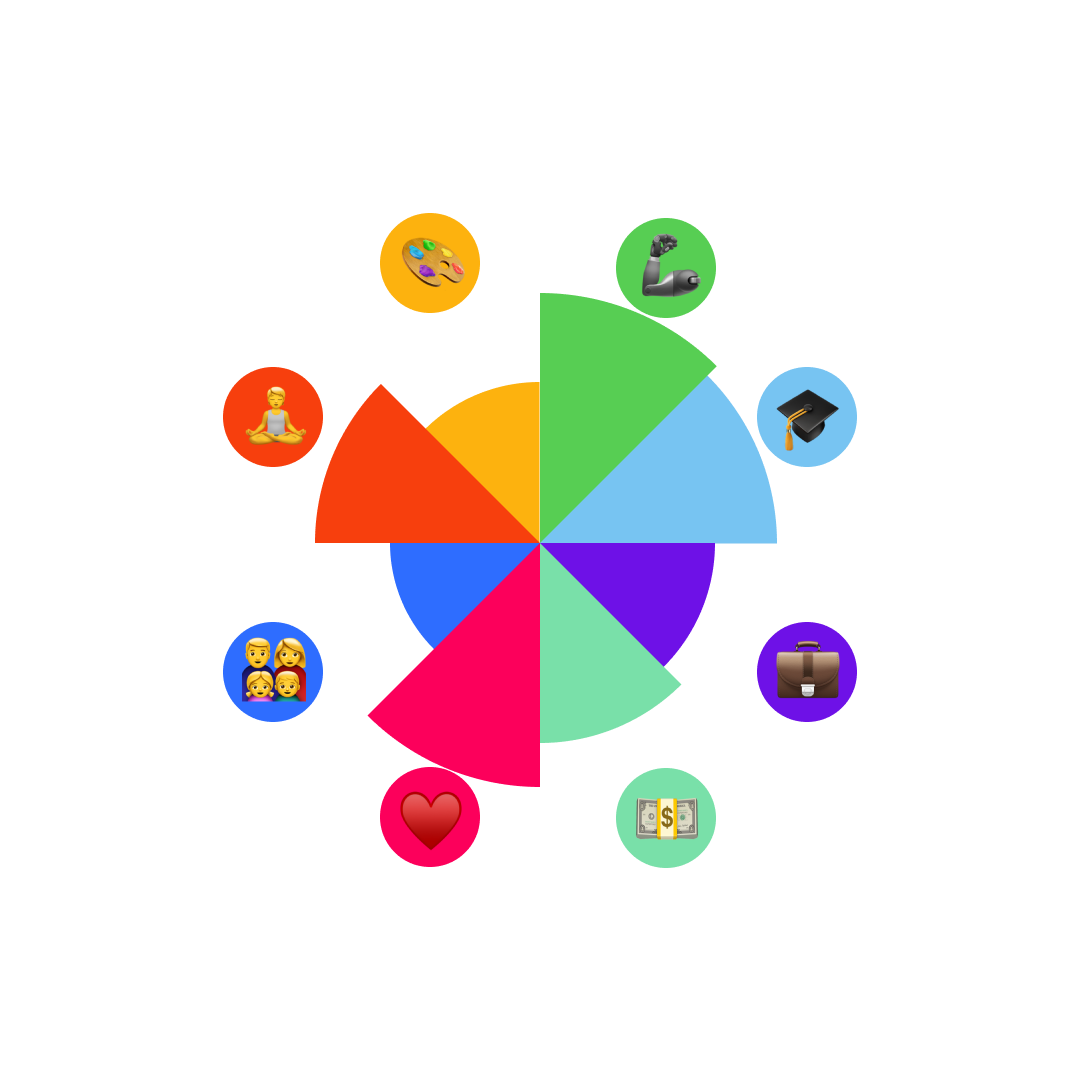
Damaging All Life Spheres
Health and Relationships are perhaps the most obvious casualties of endless scrolling, but the damage does not stop there. The consequences ripple outward, negatively affecting every sphere of human flourishing.
Consider your Career. Success in any profession requires the ability to focus deeply, to learn complex skills, to think creatively, and to collaborate effectively with colleagues. Endless scrolling degrades all of these capacities. Your attention span shrinks. Your ability to tolerate the boredom that precedes breakthroughs diminishes. Your working memory suffers from the constant task-switching between your phone and your responsibilities. The research is clear: people who check their phones frequently perform worse on cognitive tasks, even when the phone is not present.
Your Finances suffer as well. The companies engineering your scrolling behavior are not doing so out of benevolence. They are doing so because your attention is worth money. Every minute you spend on these platforms exposes you to targeted advertising designed by experts in persuasion. Impulse purchases, subscription services you do not need, lifestyle inflation driven by comparison with influencers: the endless feed is designed to make you spend.
Your Growth stalls when your free time disappears into the void of passive consumption. The books you meant to read, the skills you intended to develop, the projects you dreamed of pursuing: there is never time because there is always more content to consume. Scrolling feels like rest, but it does not restore you. It leaves you depleted, with nothing to show for the hours invested.
Your Rest itself is compromised. True rest requires disengagement from stimulation, allowing your mind to wander and your nervous system to downregulate. Scrolling masquerades as relaxation while keeping your brain in a state of constant, low-level arousal. You end your scrolling sessions more tired than when you began.
Your Community connections wither when you no longer look up from your phone long enough to notice the people around you. You miss opportunities to volunteer, to participate in local organizations, to contribute to causes larger than yourself.
Even your Fun is diminished. The hobbies that once engaged you feel boring compared to the concentrated novelty of the endless feed. You lose the capacity for sustained enjoyment, for finding pleasure in activities that unfold slowly and require patience.
The through line across all these spheres is attention. Attention is the fundamental resource that makes human flourishing possible. Where you direct your attention determines what you experience, what you learn, who you become. And every hour spent scrolling is an hour of attention stolen from everything that actually matters.
Reclaiming Your Life: Practical Ways to Stop Scrolling
Understanding the problem is essential, but understanding alone will not free you. The pull of the endless feed is too strong, the design too sophisticated, for awareness to overcome on its own. You need a plan, concrete strategies that interrupt the automatic behavior and replace it with something better.
This is where digital minimalism enters the picture. Digital minimalism is not about rejecting technology entirely. It is about being intentional with your technology use, deploying it in service of your values rather than letting it hijack your attention. The following steps will help you break the scrolling habit and reclaim the time, attention, and energy that rightfully belong to you.
A Step-by-Step Digital Detox Plan
Breaking free from phone addiction requires systematic effort. The following plan provides a structured approach to reducing screen time and building healthier habits. Do not try to implement everything at once. Instead, add one or two strategies per week until you have built a sustainable new relationship with your devices.
- Conduct an honest audit of your current usage.Before you can change your behavior, you need to see it clearly. Most smartphones have built-in screen time tracking features. Spend one week simply observing your patterns without trying to change them. Note how many hours you spend on your phone, which apps consume the most time, and when you tend to scroll most heavily. This baseline data will help you target your interventions and measure progress.
- Identify your triggers.Scrolling rarely happens randomly. It is triggered by specific cues. Common triggers include boredom, anxiety, loneliness, procrastination, and even physical sensations like the feeling of your phone in your pocket. Keep a simple log for a few days, noting what was happening immediately before each scrolling session. Understanding your triggers allows you to interrupt the automatic cycle.
- Remove visual and physical cues.Your brain has been conditioned to reach for your phone whenever it enters your visual field. Make this harder by keeping your phone out of sight. Put it in a drawer, a bag, or another room. Charge it somewhere other than your bedroom. The extra friction created by physical distance can be surprisingly effective at reducing mindless checking.
- Turn off all non-essential notifications.Every notification is an interruption designed to pull you back to your phone. Go through each app and disable notifications unless they are truly necessary. For most people, this means turning off social media alerts entirely and keeping only calls and texts from close contacts. You can always check apps on your own schedule rather than responding to their demands.
- Set app time limits.Use your phone's built-in screen time controls to set daily limits on your most problematic apps. Start with a limit that represents a meaningful reduction from your baseline but is still achievable. Gradually tighten these limits over time. The brief pause when you reach your limit can be enough to break the automatic scrolling loop.
- Create phone-free zones and times.Designate certain spaces and periods as completely off-limits for phone use. The bedroom is a crucial starting point since removing your phone from the bedroom addresses both sleep disruption and the habit of starting and ending each day with scrolling. Mealtimes are another important boundary, protecting your meals from the interruption of phones. Consider adding other zones based on your priorities, perhaps your workspace during deep work blocks, or your living room during family time.
- Implement a morning and evening phone routine.The first and last hours of your day are psychologically sensitive periods that set the tone for everything that follows. Commit to not touching your phone for the first hour after waking and the last hour before bed. Fill this time with activities that support your well-being: exercise, journaling, reading, connecting with family members, or simply sitting quietly.
- Schedule intentional check-in times.Rather than checking your phone whenever you feel the urge, designate specific times for catching up on social media, news, and messages. Three times per day is a reasonable starting point: morning, midday, and evening. Outside these windows, your phone stays put away. This structure transforms phone use from a constant background presence to a discrete, bounded activity.
- Replace the scrolling app icons with friction.Move social media and other high-temptation apps off your home screen. Bury them in folders or, better yet, delete them entirely and access them only through a mobile browser. The extra steps required to reach these apps interrupt automatic behavior and give you a moment to reconsider whether you really want to scroll.
- Use technology to fight technology.A variety of apps and tools can help you reduce phone use. Apps like Forest gamify phone-free time, growing virtual trees as a reward for staying off your device. Website blockers can prevent access to problematic sites during specified hours. Grayscale mode removes the colorful visual appeal of your phone, making scrolling less stimulating. Experiment to find the tools that work for you.
- Practice the ten-minute rule.When you feel the urge to scroll, commit to waiting ten minutes before giving in. Set a timer and do something else during that period. Often, the urge will pass. If it does not, you can choose to scroll after the waiting period. This simple technique builds the muscle of impulse control and breaks the immediacy of the craving-behavior cycle.
- Enlist social support.Tell the people in your life about your commitment to reduce phone use. Their awareness creates accountability and reduces the awkwardness of leaving your phone untouched during social situations. Even better, find a friend or family member who wants to make similar changes, and support each other through the process.
Healthier Alternatives to Fill the Void
Reducing scrolling is only half the equation. If you create empty time without filling it with something meaningful, you will inevitably drift back to your phone. The following list offers fulfilling alternatives organized by life sphere. Choose activities that resonate with your values and interests.
- Health
- Take a walk outside, ideally in a natural setting
- Complete a short bodyweight workout
- Practice yoga or stretching
- Prepare a healthy meal from scratch
- Try a guided meditation using an audio file rather than an app
- Rest
- Listen to music without doing anything else
- Take a short nap
- Sit quietly and watch the clouds or rain
- Practice progressive muscle relaxation
- Lie down with a warm compress on your eyes
- Relationships
- Call a friend or family member just to chat
- Write a handwritten letter or card
- Plan an in-person activity with someone you care about
- Practice active listening in your next conversation
- Tell someone why you appreciate them
- Meaning
- Journal about your values and goals
- Reflect on what you are grateful for
- Identify one small action aligned with your purpose and complete it
- Spend time in nature contemplating your place in the larger world
- Create something, anything, with your hands
- Growth
- Read a physical book for at least twenty minutes
- Take an online course in something you have always wanted to learn
- Practice a skill you are developing
- Listen to an educational podcast
- Write down three things you learned today
- Career
- Spend thirty minutes in focused, deep work on your most important task
- Read an article or book related to your profession
- Reach out to a mentor or colleague for advice
- Update a professional document or portfolio
- Brainstorm solutions to a current work challenge
- Finance
- Review your recent spending and categorize it
- Read one article about personal finance or investing
- Cancel a subscription service you no longer need
- Set up or increase automatic transfers to savings
- Create a simple budget for the upcoming month
- Community
- Volunteer for a local organization
- Attend a community event or meeting
- Learn about an issue affecting your neighborhood
- Support a local business
- Introduce yourself to a neighbor you do not know well
- Fun
- Play a board game or card game with others
- Work on a puzzle
- Garden or care for houseplants
- Take up a craft like knitting, woodworking, or drawing
- Play a musical instrument, even if you are a beginner
The key is to have these alternatives ready before the urge to scroll strikes. Make a personal list of activities that appeal to you and keep it visible. When you feel the pull of your phone, consult the list and choose something else instead. Over time, these healthier behaviors will become automatic, displacing the scrolling habit.
Conclusion
The endless feed is not a neutral technology. It is a carefully designed attention trap that extracts value from your life and delivers it to corporations that profit from your engagement. Every hour you spend scrolling is an hour stolen from your Health, your Relationships, and your sense of Meaning. The costs compound silently until you find yourself exhausted, disconnected, and wondering where your life went.
But awareness creates choice. Now that you understand how the dopamine trap works, you can step outside it. Now that you see the true costs of phone addiction across every life sphere, you can decide that the price is too high. Now that you have practical tools for change, you can begin building a different relationship with technology, one where you are in control.
This will not be easy. The forces arrayed against your attention are powerful and well-resourced. There will be setbacks. There will be days when you fall back into old patterns. This does not mean you have failed. It means you are human, fighting against systems designed to exploit human psychology.
Start small. Pick one strategy from this article and implement it today. Notice how it feels to be more present, more engaged, more alive. Build from there. Over time, the cumulative effect of these small changes will transform your experience of daily life.
Your time is finite and irreplaceable. Your attention is the currency of your existence, determining what you experience and who you become. The endless feed offers nothing but an endless void. Beyond it waits everything that actually matters: vibrant health, deep connection, genuine meaning, and a life fully lived.
Put down your phone. Look up. The real world is waiting for you.