Stop Choosing: Research Shows Embracing Multiple Versions of Yourself Boosts Creativity and Resilience

From a young age, we are encouraged to figure out who we are — as if the self is a singular, fixed entity waiting to be discovered. “Find your passion,” “be authentic,” “stay true to yourself.” The cultural emphasis on a single, coherent identity is pervasive. But psychology tells a different story, and it is one with significant implications for your wellbeing, creativity, and resilience: people who embrace multiple versions of themselves — who hold a rich, multifaceted self-concept — are actually more psychologically robust, more creatively capable, and better protected from the inevitable failures and setbacks of life.
The Myth of the One True Self
Western culture has a complicated relationship with identity. On one hand, it celebrates reinvention and personal growth. On the other, it pressures people to be consistent, to “know who they are,” and to avoid the apparent contradiction of being one thing in one context and something different in another. The cultural narrative around authenticity often implies a single core self that should be expressed uniformly across all situations. Psychology, and in particular the research on self-complexity, challenges this narrative directly.
The cost of identity rigidity is real. When a person has built their entire self-concept around a single role — their career, their relationship, their athletic identity — they are extraordinarily vulnerable to failure in that domain. The executive who is “nothing but” her career loses herself when she is laid off. The athlete whose entire identity is sport loses his sense of self when injury ends his playing days. A more complex, multi-dimensional self-concept is not a sign of confusion or inconsistency. It is a sign of psychological resilience.
The Science of Self-Complexity
Linville's Pioneering Research
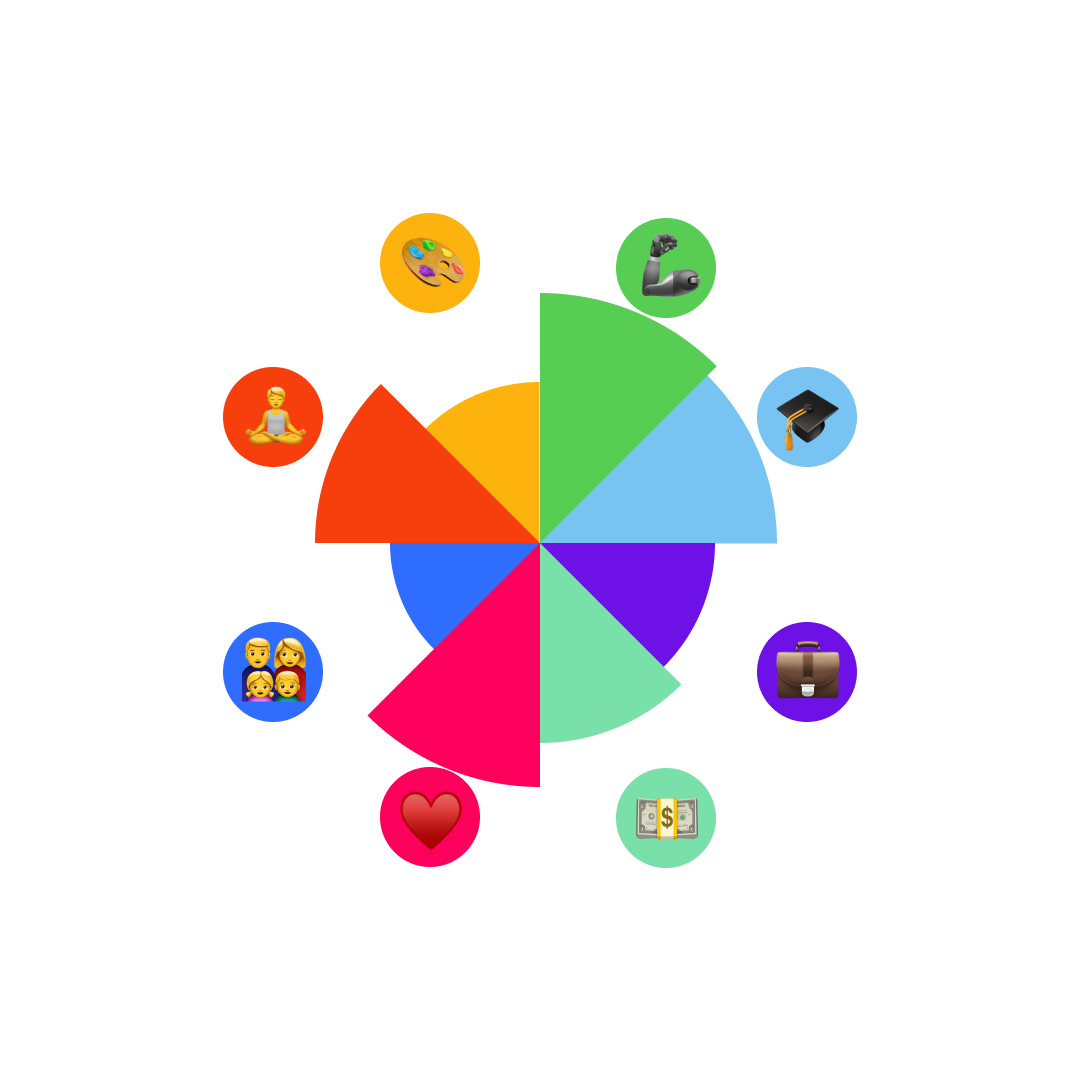
The formal study of self-complexity was pioneered by psychologist Patricia Linville in landmark papers published in 1985 and 1987. Linville proposed that individuals differ in the complexity of their self-concept — specifically, in the number of distinct self-aspects they hold (roles, relationships, activities, traits, values) and how much those aspects overlap with each other. A person with high self-complexity might simultaneously identify as a professional, a parent, a creative person, a friend, an athlete, and a spiritual practitioner — with each self-aspect relatively distinct from the others.
Linville's core hypothesis was the cognitive buffering effect: when a stressful event or failure affects one self-aspect, high self-complexity individuals can draw on their many other unaffected self-aspects as a cognitive and emotional buffer. Consider two people going through a painful divorce. Person A defines herself primarily through her marriage and her professional role, and these two self-aspects overlap heavily. Person B defines herself through her marriage, her career, her creative work, her friendships, her role as a mother, and her athletic pursuits. When the marriage ends, both people suffer — but Person B has many other intact self-aspects that preserve her sense of identity, competence, and worth. The failure in one domain does not cascade into a global collapse of self-esteem.
What the Broader Research Shows
The buffering hypothesis has received mixed support in replication studies over the decades, which is important to acknowledge honestly. What the research more consistently supports is the role of self-aspect distinctness and integration — the quality of the self-aspects matters as much as the quantity. Having five roles that all feel like versions of the same thing provides less protection than having five roles that are genuinely distinct and each intrinsically meaningful. The more differentiated and valued your various self-aspects are, the greater the psychological benefit.
How Embracing Multiple Selves Fuels Creativity
The Multiple Identities-Creativity Connection
Some of the most compelling recent evidence for the value of multiple self-aspects comes from creativity research. A study published in a leading social psychology journal and supported by research at Columbia Business School found a robust relationship between the number of distinct social identities a person holds and their performance on creativity tasks. Specifically, individuals who reported more distinct identities generated significantly more ideas (greater idea fluency) and more original ideas when completing creative challenges like naming a new product or solving unusual design problems. The relationship was found to hold regardless of racial or cultural background, suggesting it reflects a general feature of human cognition rather than a culturally specific phenomenon.
The Cognitive Flexibility Mechanism
The bridge between multiple identities and creativity appears to be cognitive flexibility — the brain's ability to shift between different mental frameworks, approaches, and categories. When you hold multiple distinct self-aspects, you have practiced mentally shifting between different roles, contexts, and ways of thinking throughout your daily life. You know how to think like a parent and how to think like a scientist, like a musician and like a strategist. Each of these modes of thinking is a cognitive tool, and a person with more tools has more raw material for novel combinations. Research even extends to children: reminding young people of their multiple identities before creative tasks measurably improves their idea generation, problem-solving, and cognitive flexibility.
Signs You May Be Suppressing Part of Yourself
Most people have some degree of identity suppression — aspects of themselves they have shelved to fit a particular narrative, professional role, or social expectation. Signs that you may be limiting the complexity of your self-concept include:
- You feel uncomfortable being described in terms that seem contradictory (e.g., both analytical and creative, both ambitious and laid-back)
- You have hobbies, interests, or capacities you rarely mention because they do not fit your primary identity
- You find it difficult to fully switch modes between work, relationships, and personal pursuits
- You feel a sense of inauthenticity or performance in contexts outside your dominant role
- You have not developed a new area of genuine interest or competence in several years
- You feel disproportionately shaken by failures in your primary identity domain
Practical Exercises to Integrate Your Multiple Selves
The Identity Mapping Exercise
Begin by taking a blank page and writing your name in the center. Around it, write every significant role, relationship, activity, value, and capacity that is meaningfully part of who you are — not just how you introduce yourself professionally, but the full breadth of your identity. Aim for at least 10 to 15 distinct self-aspects. Then look at what is missing: what have you set aside? What roles feel dormant? What aspects of yourself have you deprioritized in favor of a simpler, more consistent narrative? Identity mapping is not just a reflective exercise; it is a map of your psychological resources.
The Weekly Self-Aspect Activation Practice
Identify two or three self-aspects that you have been underexpressing and make a deliberate weekly commitment to activate them. If you are primarily living in your professional identity, schedule time this week for your creative self, your athletic self, or your social self. Research suggests that the psychological benefit of self-complexity depends on having self-aspects that are not just conceptually present but actively lived. Dormant self-aspects do not provide the same buffering protection as actively engaged ones.
Journaling Prompts for Self-Complexity
Use these prompts to explore and expand your self-concept:
- Which version of yourself do you most enjoy being? When does this self most come alive?
- Which self-aspect have you most neglected in the past year? What would it take to reactivate it?
- If you could add one completely new self-aspect this year, what would it be and why?
- In what situations do you feel most like “the full version” of yourself? What conditions make that possible?
- What would change in your daily life if you gave equal value to all your self-aspects rather than prioritizing just one?
Reframing Apparent Contradictions
One of the main barriers to embracing multiple self-aspects is the discomfort with apparent contradiction. If you are a serious professional and a playful person, a rational thinker and an intuitive feeler, it can feel cognitively dissonant to hold both at once. The reframe that research supports: apparent contradictions are often complementary capacities. The analytical mind that can also access intuition is more powerful than one without that range. The parent who can also be fully present as a creative person or an athlete is not less committed — they are more whole. Holding complexity is not inconsistency. It is psychological sophistication.
A Wider Self Is a More Resilient Self
The goal of developing greater self-complexity is not to become a different person or to abandon the core values and commitments that define you. It is to expand the territory of who you allow yourself to be. A self-concept with more distinct, valued, and actively lived self-aspects is more resilient to failure, more generative of creative ideas, more tolerant of ambiguity, and more fully alive to the range of human experience. The research from Linville forward converges on a simple and liberating conclusion: you do not have to choose. The most psychologically healthy version of you is the one that contains multitudes.