Stop Chasing the Wrong Goals: What "Goal Striving, Need Satisfaction, and Longitudinal Well-Being: The Self-Concordance Model" Teaches Us About True Happiness
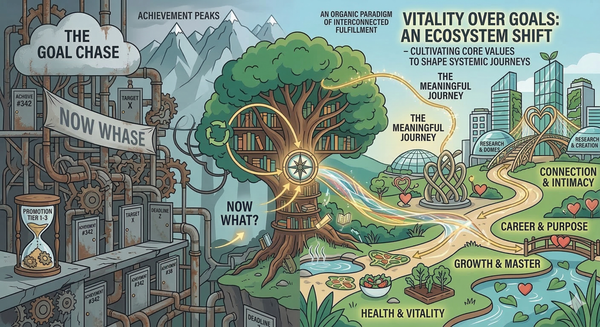
We have all been there: you set a massive goal, work grueling hours to achieve it, and finally cross the finish line—only to feel surprisingly empty. Why does success sometimes feel so hollow? We are conditioned to believe that if we simply set goals and achieve them, happiness will automatically follow. But science tells a completely different story.
A fascinating psychological study explored the complex relationship between the targets we set for ourselves and our long-term happiness. The researchers discovered that the secret to lasting joy isn't just about grit or crossing items off a to-do list. It is about the hidden motivations driving your actions. Here is what the science says about setting goals that actually improve your life, and how to avoid the trap of empty success.
The "Self-Concordance" Secret: Why We Quit
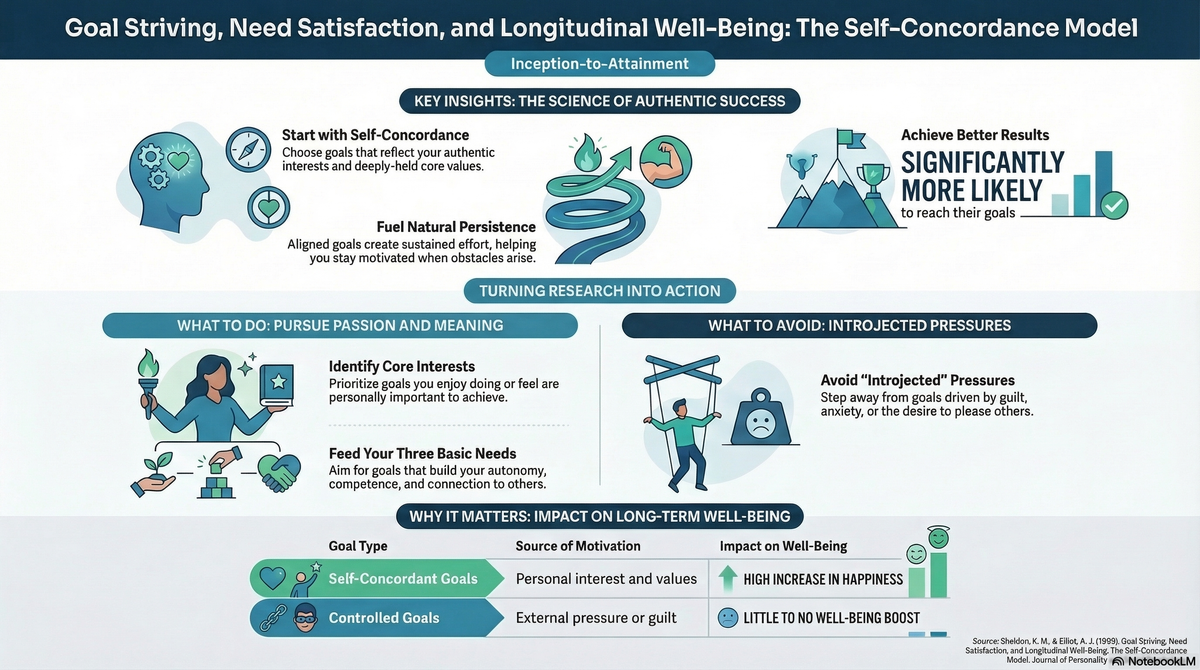
We often blame a lack of willpower when we abandon our goals. However, the research reveals that our ability to sustain effort depends entirely on whether a goal is "self-concordant"—meaning it deeply aligns with our authentic interests and core values. When we pursue goals because of external pressures, a desire to please others, or internal feelings of guilt and anxiety, our motivation is fragile. These "nonintegrated" goals lack genuine volitional strength, meaning our drive to achieve them will inevitably fade as soon as we face an obstacle. Conversely, when a goal naturally interests you or reflects your deepest convictions, you effortlessly supply the sustained energy required to reach it.
Practical Guidance:
- What to do: Set goals that genuinely excite you or deeply align with your core personal values.
- What not to do: Don't set a goal just because society, your parents, or your inner critic say you "should" do it.
- Habit to change: Audit your current New Year's resolutions or daily habits. If your primary reason for pursuing a specific goal is "to avoid feeling guilty," drop it or drastically reframe it.
The Empty Victory of the Wrong Goal
Perhaps the most shocking finding from this research is the idea that "not all progress is beneficial". We assume that any achievement makes us happier, but the data proves otherwise. When people successfully achieve goals that they pursued out of guilt, pressure, or external rewards, their overall well-being does not improve at all. Achieving a goal only boosts your mood and life satisfaction if that goal is self-concordant. If you are climbing a ladder that is leaning against the wrong wall, reaching the top won't give you the joy you are looking for.
Practical Guidance:
- What to do: Focus your time and energy on milestones that hold deep personal meaning, rather than chasing societal status symbols.
- What not to do: Don't assume that finally getting that specific job title, salary, or physical appearance will magically cure your dissatisfaction if you never truly wanted it in the first place.
- Decision to change: Stop chasing "trophy" goals designed to impress other people. Give yourself permission to pivot toward goals that offer personal growth, even if they look less impressive to the outside world.
The Three Hidden Needs of Happiness
If achieving the right goals makes us happy, why does it work? The researchers discovered that pursuing and attaining self-concordant goals provides a steady stream of daily experiences that satisfy three innate psychological needs: autonomy, competence, and relatedness. Autonomy is the feeling of being in control and making your own choices; competence is the feeling of being effective and capable; and relatedness is the feeling of being deeply connected to others. When your daily actions satisfy these three specific needs, your overall, long-term well-being naturally increases. The joy is quite literally found in a journey that makes you feel capable, free, and connected.
Practical Guidance:
- What to do: Break your large goals down into daily activities that actively make you feel competent, in control, or connected to your community.
- What not to do: Don't endure a miserable, isolating, and highly controlled daily grind just to reach a future goal, as this starves you of the psychological nutrients you need to thrive today.
- Habit to change: Change how you measure a "good day." Instead of tracking your mood based entirely on how many tasks you crossed off, start evaluating your days based on how autonomous, effective, and connected you felt.
Summary for Life
This research points to a profound and concrete life rule: True happiness does not come from merely achieving things; it is generated by pursuing goals that are deeply aligned with your authentic self, providing you with daily feelings of competence, freedom, and human connection.
Reflective Question: Look at your biggest, most time-consuming goal right now—are you chasing it because it reflects who you truly are, or are you just desperately trying to satisfy an expectation that isn't yours?
References
Sheldon, K. M., & Elliot, A. J. Goal striving, need satisfaction, and longitudinal well-being: The self-concordance model. 1999 Journal of Personality and Social Psychology, 76(3), 482–497.