SMART Goals Explained: Practical Examples for 8 Spheres of Life
Have you ever felt like you are drifting through life without a clear sense of direction? Perhaps you have dreams and aspirations tucked away in the back of your mind, but they remain frustratingly out of reach. You are not alone. Millions of people struggle with the gap between where they are and where they want to be, often because they lack a structured approach to turning their desires into reality.
SMART goals offer a powerful solution to this common challenge. This goal setting framework has transformed the way individuals and organizations approach personal development, providing a clear roadmap for achievement. Rather than leaving your future to chance or hoping that things will somehow work out, SMART goals give you the tools to take control of your life with intention and purpose.
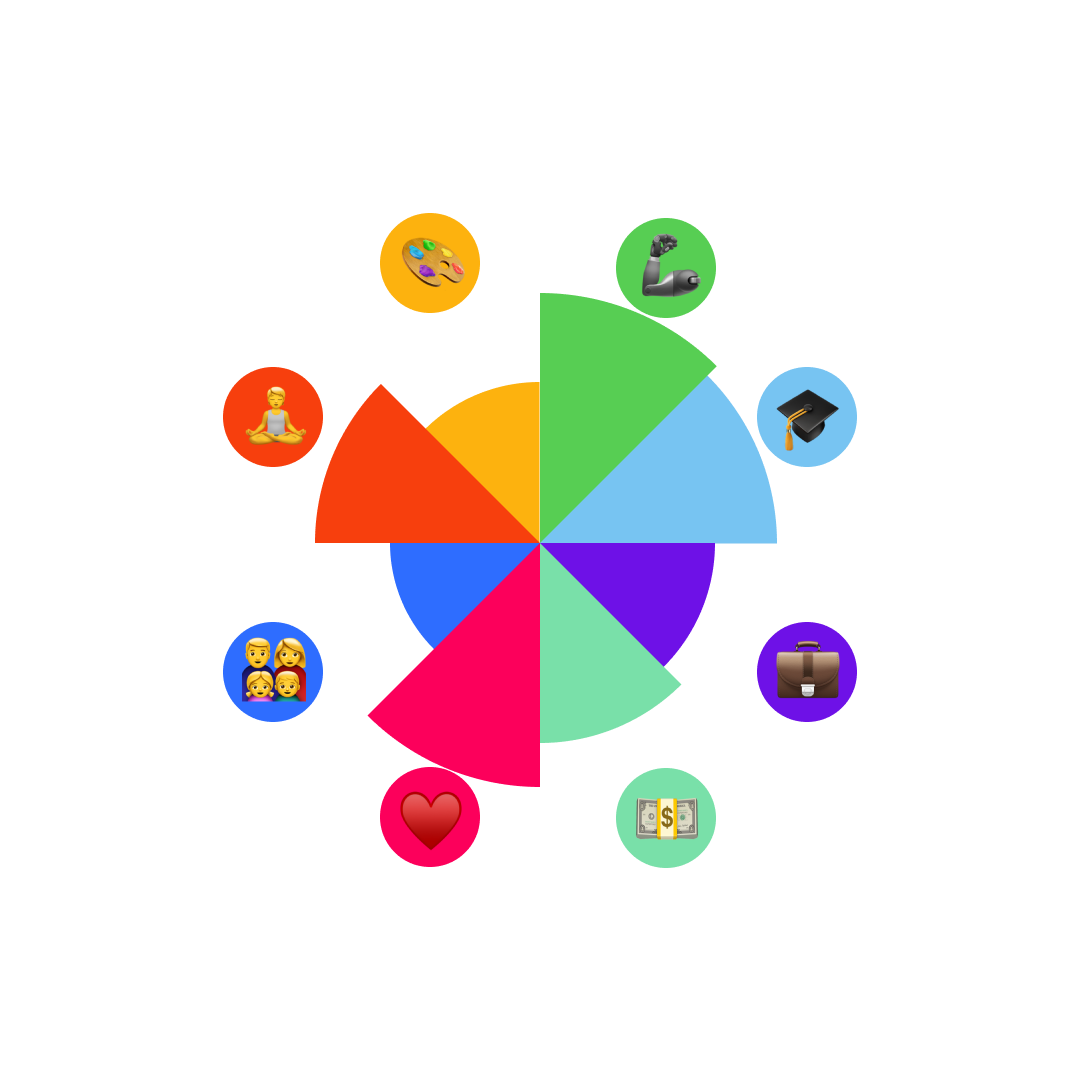
What makes this approach particularly valuable is its versatility. Life is not one-dimensional, and neither should your goals be. By applying the SMART framework across eight essential spheres of life, you can create a balanced, holistic approach to personal growth. These spheres include meaning, growth, health, career, finance, relationships, community, and rest. Each area represents a crucial component of a fulfilling life, and neglecting any one of them can leave you feeling incomplete despite success in others.
Throughout this comprehensive guide, we will explore the SMART framework in detail, examine why goal setting is essential for a life of meaning, and provide practical examples for each sphere of life. By the end, you will have everything you need to start your journey toward a more purposeful and satisfying existence.
Understanding the SMART Framework
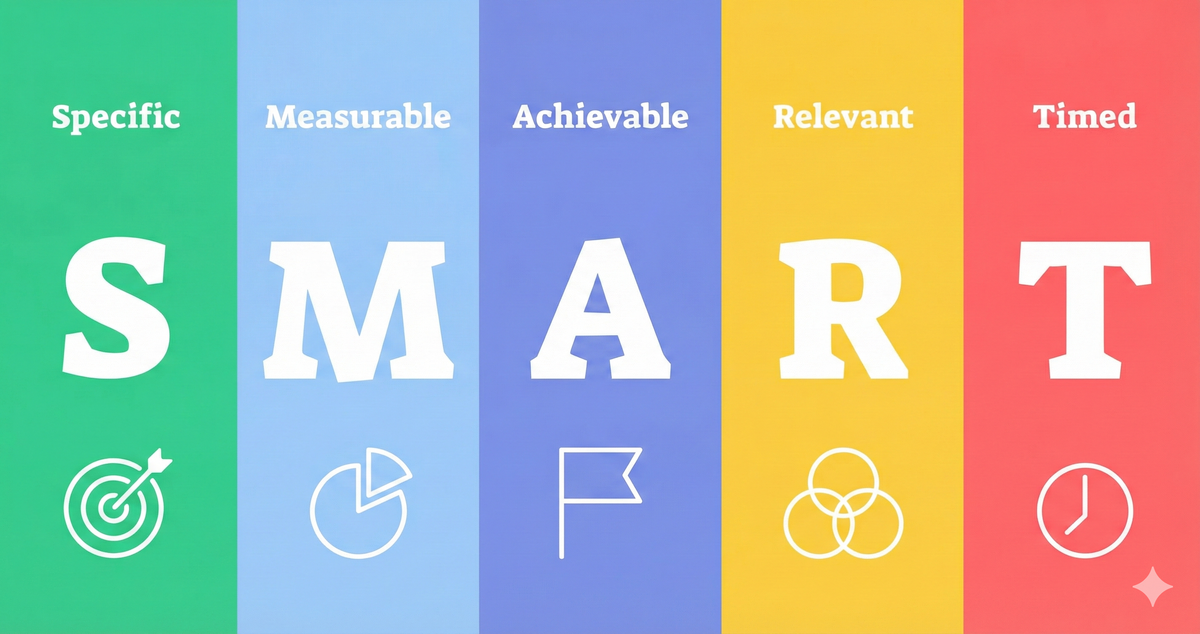
Before diving into practical applications, it is essential to understand what SMART goals actually are and why they work so effectively. The acronym SMART stands for Specific, Measurable, Achievable, Relevant, and Time-bound. Each component addresses a critical aspect of effective goal setting, and together they create a comprehensive system for turning vague wishes into concrete action plans.
The beauty of this framework lies in its simplicity and practicality. It does not require expensive tools, special training, or extraordinary circumstances to implement. Anyone can use the SMART criteria to improve their chances of success, regardless of their starting point or the nature of their goals.
S - Specific: The Importance of Clarity
The first element of a SMART goal is specificity. A specific goal clearly defines what you want to accomplish, eliminating ambiguity and providing a clear target to aim for. Vague goals like "I want to be happier" or "I want to be successful" sound nice but offer no clear direction for action.
When creating specific goals, ask yourself the following questions:
- What exactly do I want to achieve?
- Why is this goal important to me?
- Who is involved in this goal?
- Where will this goal be accomplished?
- Which resources or constraints are involved?
For example, instead of saying "I want to get healthier," a specific goal would be "I want to improve my cardiovascular health by running three times per week at the local park." Notice how the second version provides much clearer direction. You know exactly what activity you will do, how often, and where.
Specificity serves several important psychological functions. It focuses your attention on a particular outcome, making it easier to identify relevant opportunities and resources. It also helps you recognize when you are making progress, which boosts motivation and reinforces positive behaviors.
M - Measurable: How to Track Progress
The second component of SMART goals is measurability. A measurable goal includes concrete criteria for tracking your progress and determining when you have achieved success. Without measurement, you have no way of knowing whether you are moving forward, standing still, or falling behind.
Measurable goals answer questions like:
- How much or how many?
- How will I know when the goal is accomplished?
- What indicators will I use to track progress?
Consider the difference between "I want to save money" and "I want to save 500 dollars per month for the next twelve months." The second goal gives you clear metrics to evaluate your progress. At any point, you can look at your savings and know exactly how you are doing relative to your target.
Measurement also provides accountability. When you have specific numbers to hit, it becomes harder to make excuses or rationalize underperformance. You either saved the 500 dollars this month or you did not. This clarity can be uncomfortable at times, but it is essential for genuine growth.
Additionally, tracking progress creates opportunities for celebration. Small wins along the way build momentum and keep you engaged with your goals over the long term. The psychology of goals suggests that regular positive feedback is crucial for maintaining motivation, especially when pursuing challenging objectives.
A - Achievable: Setting Realistic Yet Challenging Goals
The third element focuses on achievability. An achievable goal strikes the right balance between being challenging enough to inspire effort and realistic enough to be accomplished. Goals that are too easy fail to motivate, while goals that are impossible lead to frustration and abandonment.
To determine whether a goal is achievable, consider:
- Do I have the necessary skills and resources?
- Is this goal possible given my current circumstances?
- What obstacles might I face, and can they be overcome?
- Have others achieved similar goals in similar situations?
The key is to stretch yourself without breaking. An achievable goal should make you uncomfortable but not overwhelmed. It should require growth and effort while remaining within the realm of possibility.
This does not mean you should avoid ambitious goals. On the contrary, research in personal development suggests that moderately difficult goals produce the highest levels of performance and satisfaction. The trick is to set a main goal that excites you, then break it down into smaller, achievable milestones that build toward the larger vision.
For instance, if your ultimate goal is to run a marathon, that might seem overwhelming if you currently cannot run a mile. However, setting an achievable goal of running a 5K within three months provides a realistic starting point. From there, you can progressively increase your targets until the marathon becomes achievable.
R - Relevant: Aligning Goals with Your Values and the Meaning Sphere
Relevance is perhaps the most overlooked component of SMART goals, yet it may be the most important for long-term fulfillment. A relevant goal aligns with your personal values, broader life objectives, and sense of purpose. It connects to the meaning sphere of your life, ensuring that your efforts contribute to something that truly matters to you.
When evaluating relevance, ask yourself:
- Does this goal align with my core values?
- Does it fit with my other life goals and priorities?
- Is this the right time to pursue this goal?
- Does this goal feel meaningful and worthwhile?
- Will achieving this goal contribute to my overall life satisfaction?
Goals that lack relevance often lead to hollow victories. You might achieve them technically, but find yourself feeling empty or unsatisfied afterward. This happens when goals are driven by external pressures, societal expectations, or superficial desires rather than genuine personal values.
The meaning sphere of life is fundamentally about purpose and connection to something larger than yourself. When your goals are relevant to your deeper values, pursuing them becomes intrinsically motivating. You are not just checking boxes or chasing achievements; you are building a life that reflects who you truly are and what you genuinely care about.
This connection between goals and values is supported by research in positive psychology. Studies consistently show that intrinsic goals, those aligned with personal growth, relationships, and contribution, lead to greater well-being than extrinsic goals focused primarily on wealth, fame, or appearance. Relevance ensures that your goals fall into the former category.
T - Time-bound: The Power of Deadlines
The final element of SMART goals is the time-bound component. A time-bound goal has a specific deadline or timeframe for completion. Without a deadline, goals tend to drift indefinitely, always remaining somewhere in the future where they never require immediate action.
Time-bound goals answer questions like:
- When will I start working on this goal?
- When do I expect to achieve this goal?
- What can I accomplish in the next day, week, month, or year?
- What milestones should I reach along the way?
Deadlines create urgency, which is a powerful motivator. When you know you have until a certain date to accomplish something, you naturally prioritize activities that move you toward that goal. Without deadlines, it becomes too easy to procrastinate or prioritize less important but more immediately pressing tasks.
Timeframes also help with planning. Once you know when you need to achieve your goal, you can work backward to determine what needs to happen each month, week, and day. This reverse engineering transforms a distant goal into a concrete action plan with clear steps.
However, deadlines should be realistic. Setting an impossibly tight deadline sets you up for failure and discouragement. Consider your available time, other commitments, and the complexity of the goal when establishing your timeframe. It is better to set a realistic deadline and meet it than to set an aggressive deadline and miss it.
Connecting Goals to Your Inner World
Understanding the SMART framework is only the first step. To truly harness the power of goal setting for personal transformation, you need to connect your goals to your inner world, to the values, beliefs, and aspirations that define who you are at your core. This is where the meaning sphere becomes central.
The meaning sphere encompasses your sense of purpose, your connection to something larger than yourself, and your relationship with your deepest values. It asks fundamental questions: What makes life worth living? What do I believe in? What legacy do I want to leave? How do I want to show up in the world?
Unstructured desires differ significantly from structured goals. A desire might be "I wish I felt more fulfilled" or "I want my life to matter." These are valid starting points, but they remain nebulous and actionable until transformed into structured goals. The SMART framework provides the structure needed to translate these desires into achievable outcomes.
When you set goals within the meaning sphere, you are not just pursuing achievements; you are actively constructing a purposeful life. The very act of identifying what matters to you, committing to specific outcomes, and taking consistent action creates a sense of agency and direction that is essential for life satisfaction.
Research in the psychology of goals supports this connection. Studies show that people who set and pursue meaningful goals report higher levels of happiness, greater resilience in the face of setbacks, and a stronger sense of identity. Goals give structure to our days and meaning to our efforts.
The benefits of connecting goal setting to your inner world include:
- Provides clear direction amid life's complexity and competing demands
- Increases self-awareness by forcing you to clarify what you truly value
- Builds self-confidence as you achieve milestones and see tangible progress
- Connects your daily actions to your larger values and life vision
- Creates a framework for making decisions aligned with your authentic self
- Generates energy and enthusiasm by engaging intrinsic motivation
- Reduces anxiety by replacing uncertainty with clear action steps
- Enhances resilience by providing a sense of purpose during difficult times
A fulfilling life does not happen by accident. It requires intentional choices about how to spend your limited time and energy. By setting goals that reflect your values and contribute to your sense of meaning, you take an active role in designing a life that feels genuinely worth living.
Applying the SMART Framework to Your Life
Now that you understand the theoretical foundation, it is time to see the SMART framework in action. The following section provides practical examples of SMART goals for each of the eight spheres of life. These examples are designed to illustrate how the framework applies across diverse areas, inspiring you to create your own goals tailored to your unique circumstances.
Remember that life balance requires attention to all eight spheres. Focusing exclusively on career while neglecting relationships, or prioritizing health while ignoring personal growth, leads to an incomplete and ultimately unsatisfying existence. The goal is holistic development, ensuring that all important areas of your life receive the attention they deserve.
1. Meaning (Primary Focus)
The meaning sphere is foundational to all others. It encompasses your sense of purpose, your core values, and your connection to something larger than yourself. Goals in this sphere help you clarify what matters most and align your life with your deepest convictions.
Example SMART Goal: I will complete a structured personal values assessment exercise and journal about my findings for thirty minutes each week for the next eight weeks, resulting in a written statement of my top five core values by March 31st.
2. Growth
The growth sphere focuses on continuous learning, skill development, and intellectual expansion. Goals in this area help you become a more capable, knowledgeable, and well-rounded person.
Example SMART Goal: I will complete an online data analysis course, spending at least five hours per week on lessons and practice exercises, and earn my certification by June 30th.
3. Health
The health sphere encompasses physical fitness, nutrition, sleep, and overall body care. Goals in this area support the energy and vitality needed to pursue all your other objectives.
Example SMART Goal: I will attend yoga classes at my local studio twice per week and practice a ten-minute home stretching routine on three additional days, maintaining this schedule for twelve weeks to improve my flexibility and reduce back pain by May 1st.
4. Career
The career sphere involves your professional life, including job performance, advancement, and overall work satisfaction. Goals in this area help you build a career that is both successful and fulfilling.
Example SMART Goal: I will secure a promotion to senior analyst by December 31st by completing two professional development courses, leading at least one major project, and scheduling quarterly feedback meetings with my manager.
5. Finance
The finance sphere covers money management, savings, investments, and overall financial health. Goals in this area provide the resources needed to support your life across all other spheres.
Example SMART Goal: I will build an emergency fund of 6,000 dollars by December 31st by automatically transferring 500 dollars from each paycheck to a dedicated high-yield savings account, starting January 15th.
6. Relationships
The relationships sphere focuses on romantic partnerships and intimate connections. Goals in this area help you build and maintain loving, supportive relationships.
Example SMART Goal: My partner and I will strengthen our relationship by having a dedicated date night every Friday evening for the next three months, where we try one new activity together each time and discuss our experience openly afterward.
7. Community
The community sphere encompasses your connections with family, friends, and broader social networks. Goals in this area help you nurture the relationships that provide support, belonging, and joy.
Example SMART Goal: I will strengthen my friendships by organizing a monthly gathering for my five closest friends, hosting the first event by February 15th and continuing on the second Saturday of each month through December.
8. Rest
The rest sphere covers leisure, relaxation, hobbies, and travel. Goals in this area ensure you recharge and enjoy life, preventing burnout and maintaining enthusiasm.
Example SMART Goal: I will plan and take a seven-day vacation to a national park by August 31st, saving 200 dollars per month toward trip expenses starting in January and booking all accommodations by June 1st.
Your First Steps to Meaningful Goal Setting
Having explored the SMART framework and seen examples across all eight spheres of life, you are now ready to begin your own goal setting journey. The following action plan provides a structured approach to getting started. These steps are designed to be practical and immediately actionable, allowing you to make progress today.
- Reflect on Your "Meaning" Sphere
Before setting goals in any area, take time to reflect on your meaning sphere. What truly matters to you? What values do you want to express through your life? What kind of person do you want to become? Set aside at least thirty minutes for quiet reflection. Write down your thoughts about purpose, values, and what makes life feel meaningful. This foundation will ensure that the goals you set are relevant and aligned with your authentic self. - Brainstorm a Long-Term Goal
Based on your reflection, brainstorm a long-term goal that excites and inspires you. This goal should connect to your values and contribute to your sense of meaning. Do not worry about making it SMART yet; just capture the essence of what you want to achieve. Write down several possibilities across different spheres of life. Let yourself dream without immediate judgment about feasibility. - Break It Down Using the SMART Criteria
Take your most compelling long-term goal and apply the SMART criteria systematically. Work through each element: Make it Specific, Measurable, Achievable, Relevant, and Time-bound. Write out your SMART goal in a single clear statement that incorporates all five elements. Read it aloud to ensure it makes sense and feels motivating. - Schedule Time for Action
A goal without scheduled action is just a wish. Look at your calendar and block specific times for working on your goal. Treat these appointments as non-negotiable commitments to yourself. Consider what activities need to happen regularly to make progress. If your goal requires daily practice, schedule daily time slots. - Review and Adjust Regularly
Goal setting is not a one-time event but an ongoing process. Schedule regular reviews to assess your progress and make adjustments as needed. Weekly check-ins keep you engaged with your goals, while monthly reviews allow for more substantial course corrections. Be willing to adjust your goals as circumstances change and you learn more about yourself. Flexibility is not failure; it is wisdom.
Conclusion
SMART goals represent one of the most practical and effective tools available for personal transformation. By making your goals Specific, Measurable, Achievable, Relevant, and Time-bound, you dramatically increase your chances of success while creating a clear roadmap for action.
The power of this framework extends beyond simple achievement. When applied thoughtfully, particularly within the meaning sphere, SMART goals become a vehicle for building a purposeful and fulfilling life. They translate abstract desires into concrete achievements, turning dreams into reality one step at a time.
Remember that life balance requires attention to all eight spheres. The examples provided for meaning, growth, health, career, finance, relationships, community, and rest offer starting points for creating your own personalized goals. By addressing each area, you ensure holistic development and avoid the emptiness that comes from success in one domain at the expense of others.
The psychology of goals is clear: people who set meaningful goals and pursue them systematically report higher levels of life satisfaction, greater resilience, and a stronger sense of purpose. You have within you the capacity to design a life that reflects your deepest values and aspirations.
Now it is time to take action. Pick one sphere of life that feels most urgent or compelling right now. Using the SMART framework, craft a goal that excites you and aligns with your values. Write it down, schedule time for action, and take your first step today.