Screen Time and Teen Mental Health: The Research-Backed Warning Signs Parents Need to Know This Summer
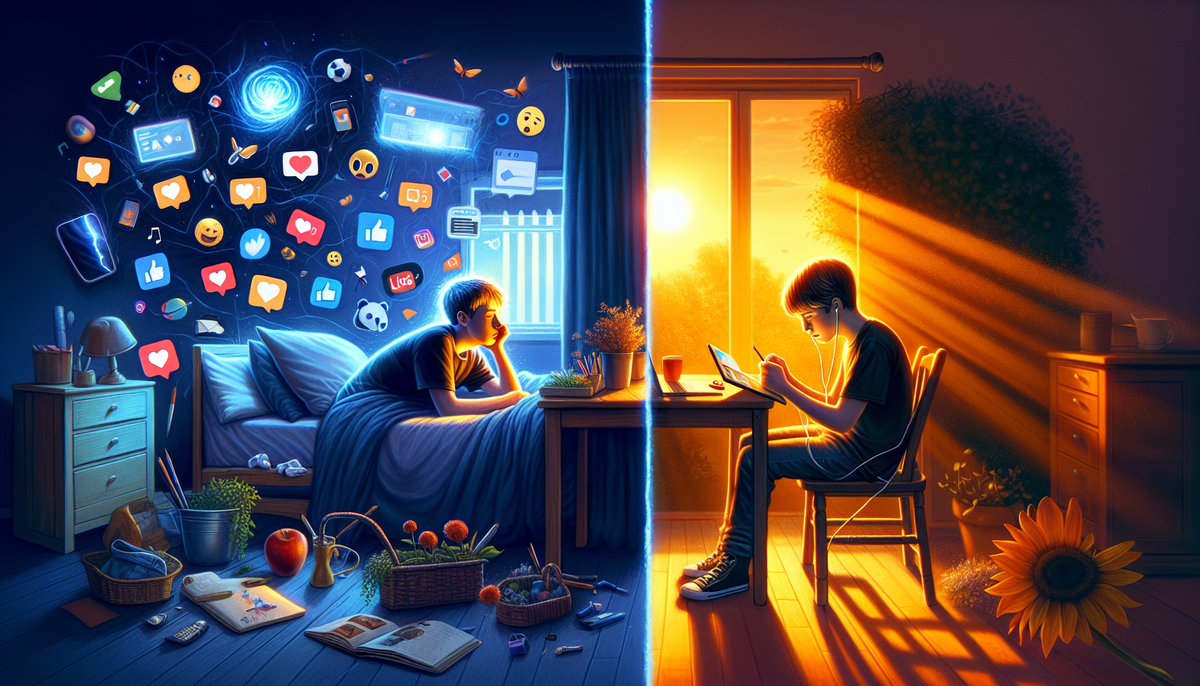
Summer is here — and for many teenagers, so is a sharp increase in screen time. Fewer routines, less school accountability, and long unstructured days create the perfect conditions for hours of social media use to quietly compound. Research increasingly confirms that this is not a neutral shift: unstructured summer time combined with unrestricted social media access is a documented mental health risk factor for adolescents. This article gives parents the science-backed framework to recognize when screen time has become a problem — and what actually works to address it.
Why Summer Is a High-Risk Window for Teen Screen Time
During the school year, daily schedules enforce a natural rhythm: wake-up times, classes, extracurriculars, homework. Summer removes most of those structures. For adolescents who are already at risk for anxiety or depression, research shows that unstructured time — particularly when it is filled with passive digital consumption — can meaningfully worsen mental health symptoms.
The scale of teen social media use makes this consequential. According to Pew Research Center data, 95% of teenagers use social media, with one-third reporting they use it “almost constantly.” During the school year, those hours are partially bounded by the demands of daily life. In summer, those boundaries largely disappear.
How summer changes the screen time equation for most teenagers:
- No fixed morning routine means later wake times and longer morning scrolling sessions
- Less peer interaction in person means social needs migrate entirely to digital platforms
- Fewer competing demands mean teens can spend entire afternoons on a single app
- Parental supervision is often reduced during daytime hours
- Boredom — a key driver of compulsive checking — increases significantly
What the Research Actually Shows About Social Media and Teen Mental Health
The Numbers Are Clear
The scientific evidence connecting heavy social media use to adolescent mental health problems has grown substantially in recent years. A 2024 WHO Europe report found that problematic social media use among adolescents rose from 7% in 2018 to 11% in 2022, with girls at meaningfully higher risk (13% vs. 9% for boys).
CDC data from 2025 is particularly stark: teens with high daily screen time had a 25.9% rate of depression symptoms in the preceding two weeks, compared to just 9.5% for their low-screen-time peers. The anxiety symptom gap was similar: 27.1% versus 12.3%. Teenagers who spend more than three hours per day on social media face approximately double the risk of experiencing depression and anxiety compared to those who spend less.
Longitudinal research from UCSF adds a long-term dimension: screen time during the preteen years — ages 9 to 12 — predicts higher rates of depression and anxiety years later, even after controlling for other variables. The effects of today’s screen habits are not just immediate.
Why the Impact Depends on How, Not Just How Much
One of the most important insights from current research is that content and context matter as much as duration. Ninety minutes of a teen connecting with supportive friends, sharing creative projects, or exploring genuine interests is fundamentally different from ninety minutes of appearance-based comparison, engagement-maximizing algorithms, and passive scrolling through curated highlight reels.
Research on social comparison consistently shows that appearance-focused platforms — and the passive consumption mode many teens default into — are disproportionately damaging, particularly for adolescent girls. Active use (creating content, messaging, engaging) tends to have smaller negative effects than passive use (scrolling, watching, comparing). The hours are not the only variable.
How to Know When Social Media Is Affecting Your Teen’s Mental Health
The Right Question to Ask
The most important reframe for parents is this: the question is not how many hours your teenager is spending online. The question is what is happening to their daily functioning because of it. Four areas provide the most reliable signal: sleep quality, mood stability, school or work performance (even in summer), and the quality of their in-person social relationships.
A teen who spends three hours a day online but sleeps well, maintains friendships, has good energy, and engages with family is in a different situation than one who spends the same time but is chronically irritable, isolated, exhausted, and disengaged from offline life.
The Psychological Warning Signs
Research on screen addiction — defined by compulsive use and emotional distress when offline — identifies a specific cluster of warning signs that predict more serious mental health consequences:
- Increased irritability or agitation when asked to put down the phone
- Withdrawal from in-person friendships and family interaction
- Persistent sleep disruption: using the phone in bed, difficulty falling asleep, sleeping significantly later
- Emotional reactions that track directly to what happened on social media — mood shifts after scrolling
- Loss of interest in offline activities that previously brought enjoyment
- Compulsive checking behavior: inability to go 30 minutes without checking for notifications
- Deceptive behavior around device use: hiding usage, using devices during agreed offline times
Studies show that teenagers exhibiting signs of screen addiction report significantly higher rates of suicidal thinking, depression, anxiety, aggression, and rule-breaking behavior than their peers. These warning signs are worth taking seriously early.
Prevention Works Best Through Structure, Not Surveillance
Why Surveillance Backfires
Research on adolescent development makes a consistent point: covert monitoring — secret tracking apps, reading private messages without disclosure — damages the trust relationship between parent and teen, and often drives problematic use underground rather than eliminating it. The goal is not to create a teen who hides their phone use; it is to build a teenager with healthy digital habits they can sustain independently.
The most effective approach treats screen limits not as punishment but as environmental design: structuring the environment so that healthy defaults are easier than unhealthy ones.
Practical Structures That Work
Six evidence-based structural approaches for summer:
- Create device-free zones — bedrooms, mealtimes, and the first and last 30 minutes of the day. These boundaries reduce compulsive use without requiring ongoing negotiation.
- Co-create the rules — research on adolescent autonomy consistently shows that teens are more likely to follow limits they have helped design. Involve your teenager in setting summer screen time agreements.
- Focus on content conversations, not just time limits — ask your teen what they are watching and how it makes them feel. Approach it with genuine curiosity rather than judgment.
- Replace screen time with compelling offline alternatives — bans without replacements create a vacuum that gets refilled. Identify what your teen finds genuinely engaging offline: sports, art, cooking, social activities.
- Model the behavior — your own phone use during family time sets a more powerful norm than any rule you state. Put your own phone away during meals and conversations.
- Build in sleep protection — require phones to be charged outside the bedroom at a consistent time. Sleep disruption is one of the most reliable pathways between social media use and mental health deterioration.
Why Primary Care Providers Should Be Part of the Conversation
Most parents do not think to bring up screen time at their teenager’s annual well-child visit — but increasingly, pediatricians and family doctors are trained to screen for digital wellness as part of routine care. The American Academy of Pediatrics has published guidelines on media use that providers can use as a framework for these conversations.
If you have noticed warning signs in your teenager, bringing them up at a medical visit opens the door to professional assessment, normalization, and if needed, referral to a mental health provider. Primary care providers can also serve as a neutral third party when a teen is resistant to conversations about screen time with parents.
Signs that warrant a professional conversation beyond your family doctor include: persistent mood changes lasting more than two weeks, significant changes in sleep or appetite, withdrawal from all social relationships (not just a preference for online ones), or any expression of self-harm thoughts.
A Note for Mental Health Awareness Month
May is Mental Health Awareness Month, and summer is six weeks away. Now is exactly the right time to have proactive conversations rather than reactive ones. The message to your teenager does not need to be: I’m monitoring you. It can be: I’m paying attention to you — and I want to make sure summer is actually good for you, not just busy.
Reassurance to parents: you do not need to get this perfect. The research on protective factors in adolescent mental health is clear that the single most powerful buffer is a parent who is genuinely present and paying attention. Not surveilling. Not controlling. Simply engaged enough to notice, curious enough to ask, and steady enough to respond without alarm.
Conclusion
Summer is a real mental health risk window for many teenagers — not because screens are inherently toxic, but because the combination of unstructured time, unrestricted access, and reduced human connection creates conditions where problematic use can take root quickly. The warning signs are specific and recognizable. The interventions that work focus on structure, not surveillance; on relationships, not restrictions. This week, before summer begins, consider having one genuine conversation with your teenager about how social media makes them feel. Not a lecture. A conversation. That single act may be the most protective thing you can do.
Sources
Psychology Today — When Summer Screen Time Poses a Mental Health Risk for Teens