
How 20 Minutes of Exercise Boosts Your Memory, According to New Brain Science
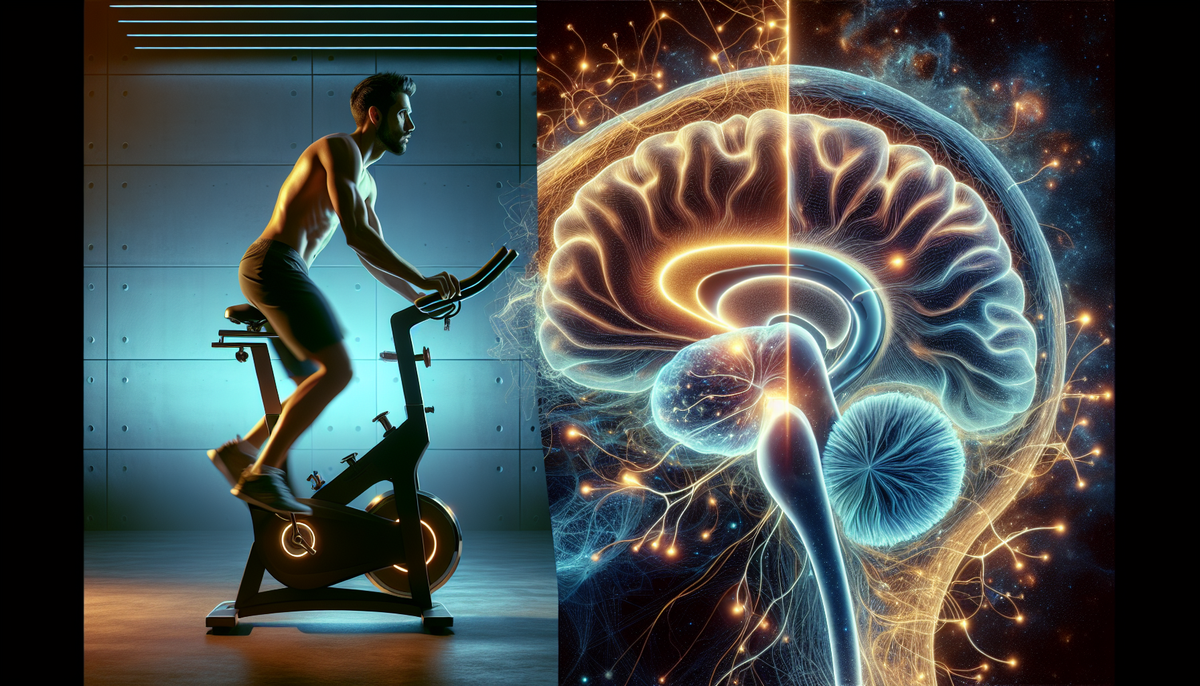
Exercise has long been known to benefit the brain in general ways. But a remarkable 2026 study has provided the most direct evidence yet of exactly how a brief bout of physical activity reshapes your brain's memory networks in real time. Using electrodes implanted in the brains of human participants, researchers recorded what happens in the hippocampus — the brain's primary memory center — immediately after just 20 minutes of moderate cycling. The results were striking: exercise triggered a significant increase in brain ripples, the electrical bursts that the brain uses to consolidate and store memories. And the harder the participant cycled, the stronger the effect.
What Are Brain Ripples and Why Do They Matter?
Brain ripples are brief bursts of highly synchronized electrical activity that originate in the hippocampus — the seahorse-shaped brain structure that sits at the heart of memory formation and spatial navigation. These ripples are not random electrical noise. They represent moments when the brain rapidly “reviews” and processes recent experiences, helping to convert short-term information into long-term memory. Think of them as the brain's internal filing system, periodically active to sort, tag, and store the day's experiences.
In animal studies, hippocampal ripples have been shown to play a direct, causal role in memory consolidation: disrupting them impairs memory formation; enhancing them improves it. Until recently, however, it was difficult to study ripples in living humans with any precision. Functional MRI (fMRI) — the standard tool of human neuroscience — measures blood flow rather than electrical activity, and lacks the temporal resolution to capture the rapid, millisecond-scale dynamics of ripples. This limitation meant that the link between exercise and hippocampal ripples in humans remained theoretical.
The Study — How Scientists Directly Recorded the Brain During Exercise
A Breakthrough Methodology
The new study, published in the journal Brain Communications in 2026 and conducted by researchers at the University of Iowa and collaborating institutions, used a methodology that bypassed the limitations of fMRI. The participants were individuals who already had intracranial EEG electrodes implanted in their brains as part of clinical monitoring for epilepsy treatment. This meant researchers could, with participants' consent, directly record the electrical activity of individual neurons in the hippocampus — a level of precision that has never before been applied to the study of exercise and memory in humans.
The exercise protocol was intentionally accessible: participants used a stationary mini-bike placed at their bedside for 20 minutes, maintaining a light-to-moderate pace of approximately 24 kilometers per hour — enough to reach 50 to 60% of their maximum heart rate. This is a moderate effort level that most healthy adults can sustain without difficulty. Hippocampal neural activity was recorded before and after the exercise bout using the implanted electrodes.
What They Observed
The results provided the first direct human evidence of exercise-induced memory network changes at the neuronal level. After the 20-minute cycling session, the research team observed a significant increase in high-frequency hippocampal ripple activity. These ripples did not stay confined to the hippocampus — they spread outward toward other brain regions involved in processing and recalling information, consistent with the ripple's known role in coordinating memory consolidation across interconnected brain networks. The findings confirmed in humans what animal research had long suggested: a single bout of exercise can directly activate the brain's memory-consolidation machinery.
Key Findings — Even One Workout Can Reshape Memory Networks
One of the most practically significant findings of the study is that the effect does not require a long history of regular exercise. A single 20-minute workout was sufficient to produce measurable changes in hippocampal ripple activity. This means that even a person who has not exercised in weeks can immediately access the memory-enhancing effects of a brief cardio session. The changes were observed in the period following exercise, consistent with the known timing of post-exercise neurobiological changes — an elevated window during which the brain appears particularly primed for memory consolidation.
The implication for learning and memory is direct: exercising before or after a significant learning experience — a study session, an important meeting, a complex presentation — may maximize the consolidation of that information into long-term memory. The brain ripples triggered by exercise appear to serve as an accelerant for the memory processes that would otherwise occur more slowly and less completely at rest.
The Dose-Response Effect — Why Intensity Matters
The study also revealed an important dose-response relationship: the higher the participant's heart rate during exercise, the stronger the post-exercise ripple activity. This finding has practical implications for how to calibrate exercise intensity for cognitive benefit. The sweet spot appears to be a moderate-to-vigorous aerobic effort — roughly 50 to 70% of maximum heart rate — sufficient to significantly elevate heart rate and respiration without requiring extreme exertion. This corresponds to a pace at which you could carry on a conversation with effort but not with full ease.
Below this threshold — a leisurely stroll, for instance — the neural effects appear to be diminished. Above a very high threshold, other physiological stressors (extreme fatigue, elevated cortisol) may offset some of the benefits. The research suggests that brisk, sustained, moderate-intensity cardio is the optimal format for memory-enhancing exercise — accessible, time-efficient, and repeatable.
Practical Guide — How to Add Short Cardio Sessions for Brain Health
When to Exercise for Maximum Memory Benefit
The timing of exercise relative to learning matters. Research suggests that exercising before a learning session may prime the hippocampus for enhanced encoding, while exercising immediately after may accelerate the consolidation of what was just learned. Both approaches appear to be beneficial; the optimal choice depends on your schedule and the type of learning involved. If you are preparing for an exam, interview, or skill acquisition session, a 20-minute moderate cardio session in the hour before may be particularly effective. If you have just had an important learning experience, a brief post-session walk or cycle may help lock in what you absorbed.
What Types of Cardio Work Best
The study used cycling, but the mechanism — elevated heart rate leading to hippocampal activation and ripple generation — is likely common to all forms of moderate aerobic exercise. Brisk walking, light jogging, cycling, rowing, swimming, and dancing all qualify. The key criterion is sustained moderate elevation of heart rate for at least 15 to 20 minutes. High-intensity interval training (HIIT) may also trigger ripple activity, though the combination of extreme exertion with the cognitive demands of safety monitoring makes it a less reliably consistent protocol.
Building the Habit of Brain-Boosting Cardio
The practical barrier to this intervention is low. Twenty minutes of moderate cardio requires no gym membership, minimal equipment, and fits easily into most schedules. Here are five ways to build the habit into your daily routine:
- Take a 20-minute brisk walk immediately after your main daily learning or work block
- Cycle on a stationary bike or go for a walk before your most cognitively demanding task of the day
- Replace one scrolling or passive entertainment session per day with a 20-minute walk
- Use a moderate-intensity cardio session as a deliberate transition ritual between work and personal time
- If pressed for time, even 15 minutes at a slightly higher intensity can produce meaningful benefits based on the dose-response evidence
The Bottom Line
The 2026 brain ripple study adds a new and highly specific dimension to our understanding of how exercise benefits the brain. It is no longer sufficient to say that exercise “is good for cognitive health” as a vague generality. We now have direct neuronal-level evidence that a single 20-minute moderate cardio session triggers the hippocampal ripple activity that the brain uses to consolidate and store memories. The barrier to this intervention is extraordinarily low: a short bike ride, a brisk walk, or any sustained moderate cardiovascular effort is enough to activate the brain's own memory machinery. Schedule that session before your next important learning experience. The science is as clear as it has ever been.