Get Things Done: Simple Habits to Stay Focused and Productive Every Day
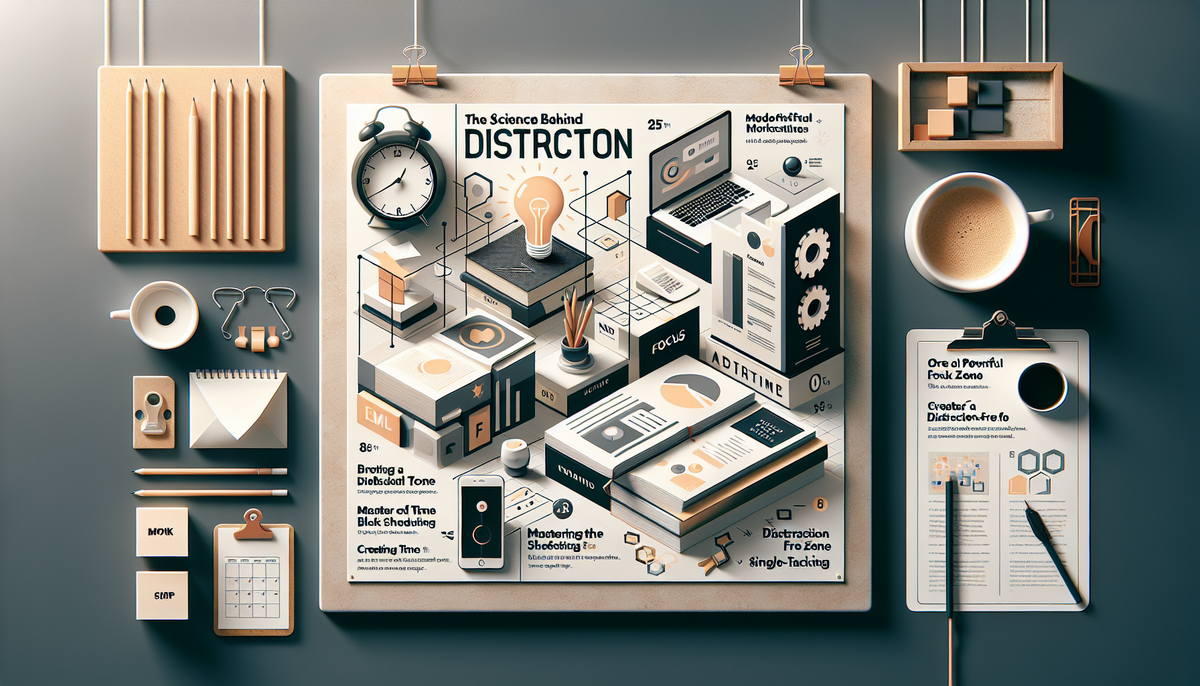
Why Is It So Hard to Focus? Understanding Modern Distractions
You’re not imagining it: the pinging emails, buzzing phones, and endless meetings make it harder than ever to focus at work. The good news is that productivity isn’t about grinding harder; it’s about shaping your day with small, repeatable habits that protect your attention. Master these, and you’ll not only get more done—you’ll accelerate your career growth while building a sustainable self-growth foundation.
The Brain’s Battle for Attention
Your brain craves novelty. Notifications deliver tiny dopamine hits that feel rewarding, even when they derail you. Context switching is costly. Every jump between tasks leaves residue from the previous task, reducing accuracy and speed. Stress shrinks focus. High stress and poor sleep impair the prefrontal cortex—the part of your brain responsible for planning and sustained attention. Multichannel overload. Visual clutter, noise, and digital alerts all compete for the same limited cognitive resources.
Identifying Your Personal Productivity Killers
Before you fix focus, diagnose what breaks it: Triggers: Which times of day do you drift? What apps or people interrupt you most? Environment: Noise, clutter, poor lighting, uncomfortable seating—each chip away at attention. Habits: Doom-scrolling, starting the day in email, toggling between tabs. Work design: Too many meetings, unclear priorities, lack of deep work time. Try this quick audit for one week: Track interruptions. Note what pulled you away and how long it took to refocus. Map energy. When are you sharpest? When do you hit a slump? Count touchpoints. How many times do you check email, Slack, or your phone? With clarity on your patterns, you can target the habits that will move the needle fastest.
Habit 1: The Art of a Powerful Morning Routine
Your mornings set the tone for your workday. A simple, consistent routine helps you start with intention, protect your best energy, and create immediate momentum—critical for sustained focus at work.
Building Your Pre-Work Ritual
Aim for a 20–40 minute pre-work ritual that signals “it’s time to focus.” Keep it simple: Move your body. A brisk walk or light mobility wakes up your brain better than checking your phone. Hydrate and fuel. Water plus a protein-rich breakfast stabilizes energy and attention. No-phone buffer. Give yourself 30 minutes phone-free to avoid reactive mode. Clarity check. Write down your top 1–3 Most Important Tasks (MITs) for the day—specific, finishable outcomes. Environment reset. Clear your desk, open only the apps you need, and set your status to “focus.” Pro tip: Create a “work playlist” or scent (like peppermint) used only during deep work. The consistent cue builds a strong focus association over time.
Prioritizing Your Day with the Eisenhower Matrix
Not all tasks are equal. The Eisenhower Matrix helps you decide what deserves your best attention:
- Quadrant 1: Urgent and Important (do it now). Critical deadlines and fires.
- Quadrant 2: Important but Not Urgent (schedule it). Strategic work, learning, relationship-building—this is where careers advance.
- Quadrant 3: Urgent but Not Important (delegate). Many pings, admin, interruptions.
- Quadrant 4: Not Urgent and Not Important (eliminate). Time-wasters and distractions.
How to use it daily: List all tasks. Sort them into the four quadrants. Choose 1–3 MITs from Quadrant 2 first. Protect them with time blocks. Move Quadrant 3 to others with clear instructions. Let people know when you’re available. Ruthlessly trim Quadrant 4. This method shifts your day from reactive to intentional, ensuring your focus supports long-term career and self-growth goals.
 Maksym Zosym
Habit 2: Mastering Your Time with Block Scheduling
If your calendar fills with other people’s priorities, block scheduling takes control back. You assign time to your most important work and create clear boundaries—protecting the mental space required for deep focus.
The Pomodoro Technique: Sprints of Focus
Pomodoro is perfect for breaking inertia and tackling tasks that feel heavy. Set a 25-minute timer. Choose one task only. Work without interruption. No tabs, no email, no phone. Take a 5-minute break. Move, stretch, breathe. Repeat 3–4 times, then take a longer 15–30 minute break. Adjust the intervals to your rhythm (e.g., 50/10 for deeper work). Keep a “distraction capture” pad beside you—when an unrelated thought pops up, write it down and return to your sprint. Pomodoro builds the focus muscle like strength training: short, intense reps, consistently performed.
Time Blocking for Deep Work
For complex, high-impact work, you need larger, protected blocks. Schedule 60–120 minute blocks for deep work. Ideally during your peak energy hours. Name the block with a clear verb and outcome. “Draft client proposal: outline + intro” beats “Work on proposal.” Add buffer time. Insert 10-minute buffers after deep work to cool down and transition. Batch shallow tasks. Consolidate email, approvals, and quick replies into two or three 20–30 minute blocks. Theme your days. For example: Monday strategy, Tuesday creation, Wednesday meetings, Thursday client work, Friday review and learning. Signal to your team. Set “Focus hours” in your calendar and tools; use Do Not Disturb and status messages to reduce interruptions. Consistency matters more than perfection. Two deep-work blocks per day beat a haphazard eight-hour grind.
Habit 3: Creating a Distraction-Free Zone
You can’t white-knuckle your way through constant distraction. Design your environment so attention becomes the default.
Designing Your Physical Workspace for Focus
Declutter your desk. Keep visible only what supports the current task. Optimize ergonomics. Eye-level screen, supportive chair, external keyboard if needed. Comfort preserves cognitive energy. Light matters. Natural light and warm task lighting reduce fatigue. Control noise. Noise-canceling headphones, brown/white noise, or instrumental music can mask disruptions. Use visual cues. A desk light, closed door, or simple “Focus in progress until 11:00” sign sets boundaries. Separate zones. If possible, create a distinct space for breaks so your desk signals “work mode.”
Taming Your Digital Environment
Your devices can be your biggest allies—or your biggest enemies. Silence nonessential notifications. Turn off banners, badges, and sounds for social and low-priority apps. Use Do Not Disturb and Focus modes. Create profiles for “Deep Work” and “Meetings.” Single-tab rule. Keep one browser tab per focus task. Use a read-it-later app to prevent rabbit holes. App blockers. Tools like Freedom, Focus, or built-in Screen Time can block distracting sites during focus windows. Batch communications. Check email and Slack at set times. Communicate your response windows in your status or signature. Tidy your digital workspace. Clean desktop, clear folder structure, and descriptive filenames reduce friction. Park your phone. Keep it in a drawer or another room during deep work blocks. Out of sight really is out of mind.
Habit 4: The Power of Single-Tasking
Multitasking feels productive because you’re busy. But your brain isn’t built to do meaningful tasks in parallel; it rapidly toggles, which creates errors and slows you down. Single-tasking reclaims quality and speed.
Multitasking vs. Single-Tasking: The Brain’s Perspective
The myth: You can handle multiple demanding tasks simultaneously. The reality: Your brain switches rapidly, paying a “switch cost” each time. Performance drops and stress rises. Hidden tax: Residual attention lingers on the last task, reducing clarity on the next. Where multitasking can work: Pair a low-cognitive task (walking, light chores) with an audio input (podcast). For real work, stick to one thing at a time.
Practical Steps to Embrace Single-Tasking
Define “done.” Write a clear finish line for the task you’re about to start. Full-screen focus. Use full-screen apps or focus modes to hide everything else. Use a “parking lot.” Keep a notepad for ideas, to-dos, or distractions that pop up. Capture, then return to the task. The one-touch rule for email. If you open it, act: reply, delegate, schedule, or archive. Commit to time or outcome. Either “I’m writing for 50 minutes” or “I’ll complete sections 1–2.” Agree on team norms. Establish shared focus hours and communication windows to cut interruptions. Measure and reflect. Track a single metric like “deep work hours per day” or “MITs completed.” Review weekly.
Conclusion: Your Path to Lasting Focus and Productivity
Attention is your most valuable career asset. When you understand your distractions and build simple, consistent habits—purposeful mornings, time blocking, distraction-free environments, and single-tasking—you create a workday where progress is predictable and satisfying. Start small: Tomorrow, protect one 60-minute deep work block for a single MIT. Silence two categories of notifications. End the day by planning your top three for the next morning. Repeat these tiny wins, and your ability to focus at work will compound into better output, less stress, and steady career growth. What’s one habit that’s helped you stay focused and productive every day? Share your best tip—I’d love to learn from you.