
What's Actually in Your Sunscreen? Only 20% Pass Safety Standards — Here's How to Choose
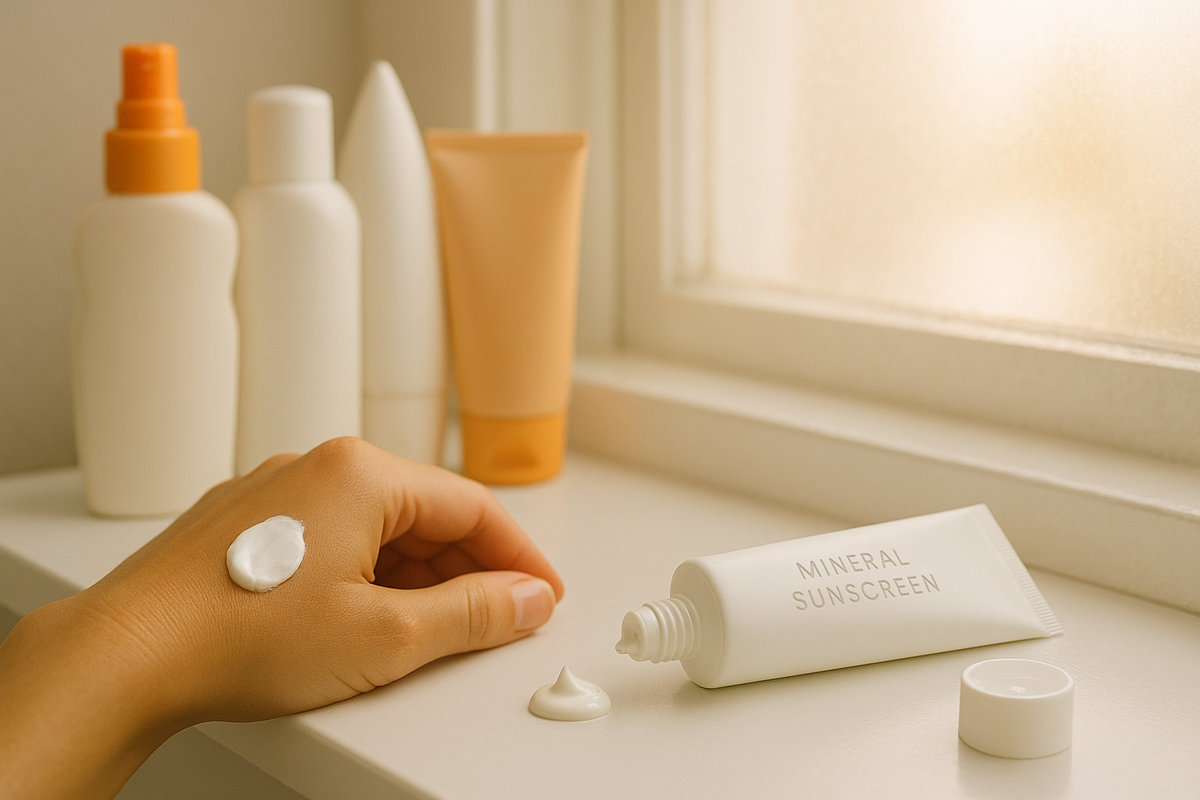
Every summer, millions of people reach for sunscreen believing they are fully protected. But a landmark 2026 report from the Environmental Working Group (EWG) delivers a sobering reality check: nearly 80% of the sunscreens currently on US shelves fail to meet basic safety and efficacy standards. That means most of the products in your bathroom cabinet — even ones with familiar brand names and high SPF numbers — may be doing less good than you think, or worse, containing ingredients linked to hormone disruption. Here is what the science actually says, and how to make a smarter choice this summer.
What Is the EWG Sunscreen Report and Why Should You Care?
The Environmental Working Group is a nonprofit research and advocacy organization that has published an annual Guide to Sunscreens every year since 2007. Their 2026 edition — the 20th annual report — is their most comprehensive yet, analyzing nearly 2,800 SPF products including sunscreens, moisturizers with SPF, and lip products.
The EWG evaluates each product across two core dimensions: ingredient safety (whether the formula contains chemicals with health concerns) and UV protection balance (whether the product adequately blocks both UVA and UVB radiation). A product must pass both tests to earn a recommendation.
Of the 2,784 products evaluated, only approximately 550 — roughly 20% — met both standards. In other words, for every five sunscreens on the shelf, four have at least one significant problem.
What EWG looks for in a passing sunscreen:
- Active ingredients confirmed as safe and effective by the FDA
- Broad-spectrum UVA and UVB coverage with balanced protection
- No undisclosed fragrance blends
- No ingredients absorbed into the bloodstream at levels above FDA safety thresholds
- Accurate SPF labeling with no significant inflation
The Ingredients Hiding in Your Sunscreen That Raise Red Flags
Oxybenzone — The Most Studied Concern
For years, oxybenzone was the most common active ingredient in American sunscreens, appearing in roughly 70% of products. Today that number has fallen dramatically to about 5%, driven largely by increasing consumer awareness and mounting scientific concern. This trend is one of the rare good-news stories in the sunscreen industry — but it took nearly two decades.
The problem with oxybenzone is not just that it absorbs UV light. The deeper concern is that it absorbs into your skin and enters your bloodstream. FDA research has confirmed that oxybenzone can be detected in blood, urine, and breast milk at concentrations well above the FDA's threshold of concern (0.5 nanograms per milliliter). A 2023 review of over 250 studies found evidence that oxybenzone acts as an endocrine disruptor, meaning it can interfere with the body's hormonal systems — with potential reproductive consequences, particularly for developing fetuses and young children.
Other Chemical Filters to Know
Oxybenzone is not the only chemical sunscreen ingredient under scrutiny. The FDA has identified a list of UV filters it cannot currently confirm as "generally recognized as safe and effective" (GRASE). These include:
- Homosalate — absorbs into bloodstream; animal studies suggest potential hormone disruption at higher concentrations
- Octisalate — absorbed systemically; limited safety data available
- Octocrylene — absorbed into bloodstream; some evidence of estrogenic activity; can degrade into benzophenone, a potential carcinogen
- Avobenzone — unstable in sunlight; often combined with other chemicals to stabilize it; bloodstream absorption confirmed
- Octinoxate — absorbed at high levels; early data suggests possible thyroid and reproductive effects
The Hidden Fragrance Problem
One of the less-discussed findings in the 2026 EWG report is the prevalence of undisclosed fragrance. Roughly 36% of sunscreens still list "fragrance" or "parfum" on their ingredient panel — a catch-all term that can legally represent a blend of dozens or hundreds of undisclosed chemicals. Within those blends, manufacturers may include compounds that are allergens, sensitizers, hormone disruptors, or even carcinogens, without being required to name them individually.
The UVA Protection Gap — The Risk Most People Don't Know About
Here is something most sunscreen labels obscure: the SPF number only measures protection against UVB rays — the wavelengths responsible for sunburn. It tells you almost nothing about UVA protection.
- UVB rays: shorter wavelength; cause sunburn; primary driver of squamous and basal cell skin cancers; blocked more readily by filters
- UVA rays: longer wavelength; penetrate deeper into the skin; responsible for skin aging (wrinkles, loss of elasticity); linked to melanoma; harder to block effectively
According to EWG's analysis, most US sunscreens deliver inadequate UVA protection relative to their UVB protection. This imbalance is dangerous because a user applying a high-SPF sunscreen may feel fully covered while remaining significantly exposed to the UVA radiation most linked to melanoma — the deadliest form of skin cancer.
Mineral Sunscreens — Why Experts Say They're the Safer Choice
How Mineral Filters Work
Mineral sunscreens use physical UV filters — zinc oxide and titanium dioxide — that work by sitting on top of the skin and physically reflecting and scattering UV radiation. Unlike chemical sunscreens, which absorb UV and convert it to heat, mineral filters form a literal shield on the skin's surface. They begin working immediately upon application, and because they sit on top of the skin rather than being absorbed, they do not enter the bloodstream at measurable levels. The FDA has formally designated both zinc oxide and titanium dioxide as GRASE — the only two sunscreen active ingredients to receive this designation.
Zinc Oxide vs Titanium Dioxide — What's the Difference?
Both are mineral filters, but they have different strengths:
- Zinc oxide: provides coverage across the full UV spectrum — both UVA and UVB, including the longer UVA wavelengths most associated with melanoma. It is the only single mineral ingredient that can provide complete broad-spectrum protection on its own. Slightly thicker texture.
- Titanium dioxide: excellent UVB protection; pushes SPF numbers up effectively. Good short-wavelength UVA protection, but less effective against longer UVA rays. Lighter texture; spreads more easily; less white cast.
Combining both zinc oxide and titanium dioxide leverages the strengths of each, providing robust full-spectrum coverage with improved cosmetic elegance.
What About the White Cast?
Modern formulations have significantly improved the white-cast problem. Products using non-nano zinc oxide particles now apply much more transparently. Tinted mineral sunscreens — which contain iron oxides — not only reduce the white cast but also provide added protection against visible light, which can contribute to hyperpigmentation.
How to Read a Sunscreen Label Like an Expert
Here is a practical checklist for choosing a safe sunscreen:
- SPF 30 or higher (SPF 30 blocks ~97% of UVB; SPF 50 blocks ~98%)
- The words "Broad Spectrum" on the front label
- Active ingredients: zinc oxide and/or titanium dioxide listed as the only actives
- No oxybenzone, homosalate, octocrylene, avobenzone, or octinoxate
- No "fragrance" or "parfum" in the ingredient list
- The EWG Verified seal as a quick shortcut to a vetted product
What "water resistant" actually means: FDA allows sunscreens to claim water resistance for either 40 minutes or 80 minutes maximum. Reapplication is always required after swimming or significant sweating, regardless of the claim on the label.
How to Apply Sunscreen Correctly — Most People Use Too Little
Research consistently shows that most people apply only 25% to 50% of the recommended amount of sunscreen, which can reduce effective SPF protection by more than half. The right amount matters as much as the right product.
- Apply to all exposed skin 15–30 minutes before going outside (for chemical sunscreens) or immediately before (for mineral)
- Use a nickel-sized amount on the face and about 1 oz (30 ml) for the body
- Don't forget the ears, back of the neck, backs of the hands, scalp, and lips
- Reapply every 2 hours during outdoor activity
- Reapply immediately after swimming, sweating heavily, or toweling off
- Use sunscreen year-round — UVA rays penetrate cloud cover and glass windows
The sunscreen market is crowded and confusing, but the science offers clear guidance. The safest and most effective choice is a mineral sunscreen with zinc oxide as a primary active ingredient, an SPF of 30 or higher, a "broad spectrum" label, and no fragrance. Applied correctly and reapplied regularly, this combination gives you robust protection against sunburn and the deeper skin damage that accumulates over years. The EWG's searchable database at ewg.org/sunscreen lets you look up any product in seconds.
Sources
Only 20% of Sunscreens Meet Safety Standards, Report Shows — Healthline