
Virgin Olive Oil vs. Regular Olive Oil: The Surprising Difference for Your Brain and Gut Health
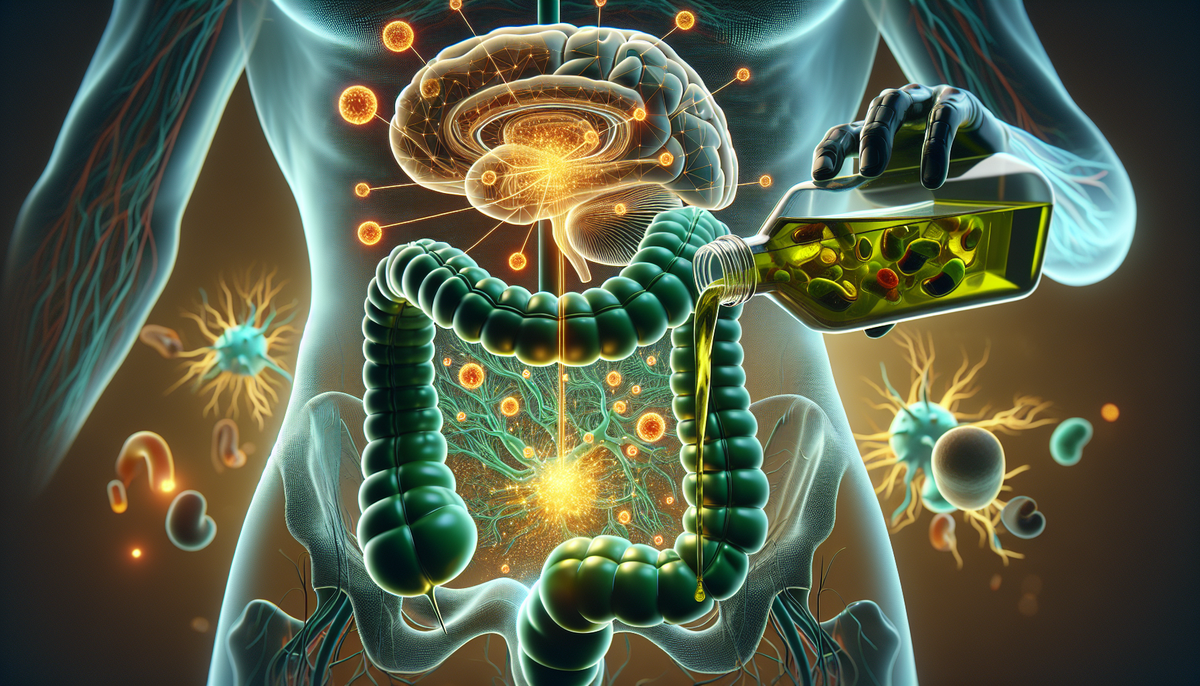
Most people assume all olive oil is roughly the same — a healthy fat, a Mediterranean staple, a reasonable choice. A landmark study published in January 2026 in the journal Microbiome suggests that assumption is costing people something real: the specific compounds that protect their brain. The type of olive oil you choose makes a measurable, documented difference to your gut microbiome and your cognitive health — through a mechanism that most people have never heard of.
What the New 2026 Study Found
Researchers at the Universitat Rovira i Virgili in Spain conducted what is now recognized as the first prospective human study to specifically examine how different types of olive oil consumption affect the interaction between gut microbiota and cognitive function over time.
Study Design
The study enrolled 656 overweight or obese adults aged 55 to 75, all with metabolic syndrome — a combination of conditions including high blood pressure, high blood sugar, and abnormal cholesterol levels. Participants were tracked for two years with regular cognitive assessments measuring memory, attention, language, and executive function, alongside microbiome analysis at baseline and follow-up. The results were published on January 24, 2026, in the journal Microbiome.
Key Results
The findings were striking. People who regularly consumed virgin olive oil showed improved scores on tests of memory, attention, and executive function over the two-year period. In contrast, people who consumed refined olive oil experienced a decrease in gut microbiome diversity over the same timeframe — a finding associated with worse long-term health outcomes including cognitive decline, inflammation, and metabolic dysfunction. Researchers specifically identified a bacterial genus called Adlercreutzia as a key mediator of the connection between virgin olive oil consumption and preserved cognitive function. This appears to be the first time this bacterium has been identified as a potential marker of olive oil’s neurological benefits.
The Critical Difference Between Virgin and Refined Olive Oil
Understanding why these two oils produce such different outcomes requires looking at what happens to olive oil during processing.
What Gets Removed During Refining
Standard “regular” olive oil — including oils labeled as “pure,” “light,” or simply “olive oil” — is produced through industrial refining that uses heat, solvents, and chemical processing to neutralize defects in lower-quality olives. This process is effective at producing a neutral-tasting, shelf-stable oil — but it strips away nearly all the polyphenols that give virgin olive oil its biological activity. The polyphenol content difference is dramatic: extra virgin olive oil contains approximately 500mg of polyphenols per kilogram, while refined olive oil contains around 10mg per kilogram — a 50-fold difference. Both oils provide oleic acid (the monounsaturated fat associated with heart health), but only extra virgin olive oil delivers the full biological package.
The Active Compounds in Virgin Olive Oil
The polyphenols in extra virgin olive oil are not a single compound but a complex mix of bioactive molecules. Oleocanthal is the most studied: a phenolic compound with anti-inflammatory properties comparable to a low dose of ibuprofen, which blocks the same cyclooxygenase enzymes as NSAIDs. Oleuropein and hydroxytyrosol are powerful antioxidants with neuroprotective effects, demonstrated to reduce oxidative stress in neuronal tissue. Tyrosol and a family of compounds called secoiridoids further contribute to gut microbiome modulation. These compounds work synergistically — and they are largely absent from refined olive oil.
The Gut-Brain Axis: How Olive Oil Gets Into Your Brain
The mechanism by which olive oil polyphenols affect brain function is not direct — it runs through the gut. This is what makes the 2026 study so scientifically significant: it provides human evidence for a pathway that researchers had previously described primarily in animal models.
How Polyphenols Reach the Colon
Here is the key biological fact: approximately 90 to 95% of ingested polyphenols are not absorbed in the small intestine. They pass through largely intact and arrive in the colon, where they encounter the trillions of bacteria that make up your gut microbiome. This is not a failure of absorption — it is exactly where these compounds need to go. Gut bacteria ferment polyphenols into smaller, highly bioactive secondary metabolites that can be absorbed, enter the bloodstream, and act throughout the body, including at the blood-brain barrier.
What Those Metabolites Do
The downstream effects of this fermentation process are wide-ranging and well-documented. Polyphenol metabolites feed beneficial bacteria including the newly identified Adlercreutzia genus, promoting microbiome diversity. They stimulate the production of short-chain fatty acids (SCFAs) — particularly butyrate — which support the integrity of the blood-brain barrier, reduce intestinal permeability, and regulate immune signaling. They trigger anti-inflammatory pathways that reduce neuroinflammation, one of the primary drivers of cognitive decline and neurodegenerative disease. And through neurotransmitter precursor pathways, they support synaptic function — the brain’s ability to form and strengthen neural connections. This entire cascade begins with the bacteria in your colon receiving the polyphenols that only unrefined olive oil delivers.
What Regular Olive Oil Does and Does Not Do
It is worth being precise about refined olive oil’s actual properties, because this is not about calling it harmful — it is about understanding what it lacks. Refined olive oil still provides oleic acid, which supports cardiovascular health by improving the ratio of LDL to HDL cholesterol and reducing arterial inflammation. It also has a higher smoke point than extra virgin olive oil, making it more appropriate for very high-heat cooking. What it does not provide is the polyphenol-mediated gut-brain benefit documented in the 2026 study. The absence of microbiome-modulating compounds is not neutral — the research suggests it may be actively associated with declining gut diversity over time.
- Extra virgin olive oil: ~500mg/kg polyphenols, anti-inflammatory, gut microbiome-supportive, cognitive protection documented
- Refined olive oil: ~10mg/kg polyphenols, provides oleic acid only, no documented microbiome or cognitive benefit
- Light/pure olive oil: equivalent to refined; the name does not indicate nutritional quality
- Pomace olive oil: produced from olive residue using solvents; lowest quality, minimal polyphenol content
How to Make the Switch and Get the Benefits
Getting the documented benefit is practically simple, though there are several details worth knowing to maximize value.
- Choose the right label. Look for “extra virgin” or “virgin” and ideally “cold-pressed” and “single-origin.” Some premium brands now list polyphenol content directly on the label (above 250mg/kg is considered high-polyphenol). Avoid “pure,” “light,” “refined,” or simply “olive oil” without the “extra virgin” qualifier.
- Use evidence-based amounts. The PREDIMED trial and related studies used approximately 2 to 4 tablespoons per day to observe cognitive and cardiovascular benefits. This can be distributed across meals — used as a salad dressing base, drizzled over roasted vegetables, blended into dips, or used in cooking.
- Store it correctly. Polyphenols degrade with exposure to heat, light, and oxygen. Store extra virgin olive oil in a dark glass bottle away from your stovetop and direct sunlight. Avoid large clear containers unless you use the oil quickly. Freshness matters: look for a harvest date (not just a best-by date) and aim to use it within 12 to 18 months of pressing.
- Use it raw or at moderate heat. Extra virgin olive oil’s smoke point is approximately 375°F (190°C), which is suitable for sautéing, roasting at moderate temperatures, and all cold applications. For very high-heat cooking (deep frying, searing), refined olive oil’s higher smoke point may be more practical — but use EVOO for everything else.
- Prioritize raw applications for maximum polyphenol delivery. Drizzling cold-pressed extra virgin olive oil over finished dishes — salads, soups, grilled fish, pasta — preserves the full polyphenol content and maximizes the gut microbiome benefit documented in research.
Conclusion
The olive oil sitting in your kitchen is either feeding the bacteria that protect your brain, or it isn’t. That distinction — between virgin and refined — is not a matter of taste preference or price point. It is a documented biological difference with measurable consequences for your gut microbiome diversity and your cognitive trajectory as you age. The 2026 study from Universitat Rovira i Virgili provides the first direct human evidence for what researchers have suspected for years: the polyphenols in extra virgin olive oil travel to your colon, feed specific beneficial bacteria, and through the gut-brain axis, help preserve the memory, attention, and executive function that matter most to your quality of life. One simple swap — done consistently — adds a meaningful layer of protection to your long-term brain health.