
The Truth About Fish Oil: A Deep Dive into "Omega-3 Fatty Acids - Health Professional Fact Sheet"
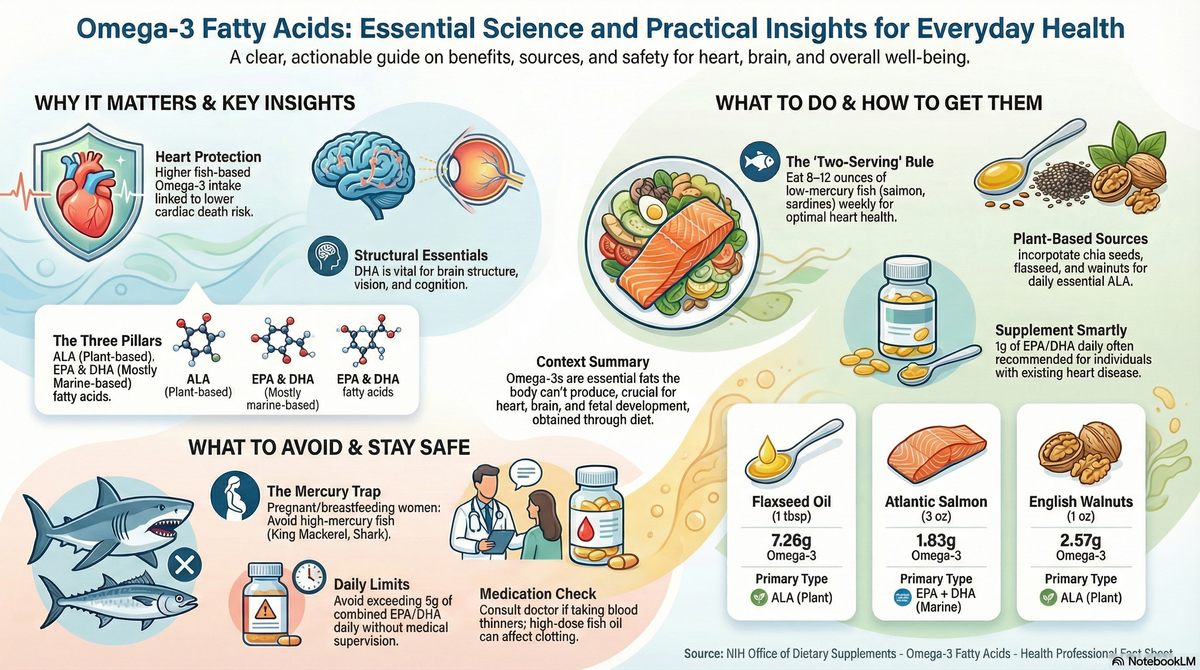
Have you ever stood in the supplement aisle, staring at a wall of fish oil bottles, wondering if they actually do anything? With so much conflicting advice about heart health, brain power, and "essential" fats, it is easy to feel overwhelmed. However, understanding the science behind these nutrients can help you make better decisions for your long-term wellness. Let’s break down the most recent research on Omega-3s and what it actually means for your daily life.
Not All Omega-3s Are Created Equal
There are three main types of Omega-3s you need to know: ALA, EPA, and DHA. ALA is found in plant oils like flaxseed, while EPA and DHA come primarily from cold-water fish and seafood. While your body can technically turn plant-based ALA into the more complex EPA and DHA, the conversion rate is very low—usually less than 15%. This means that relying solely on seeds and nuts might not be enough to raise your levels of the "long-chain" fats that your organs actually use for structure and signaling.
Practical Guidance:
• What to do: If you want the full benefits for your heart and brain, prioritize direct sources of EPA and DHA like fatty fish or algal oil.
• What not to do: Don't assume a flaxseed supplement provides the same "brain fuel" as fish oil; they contain different types of fats.
• Habit to change: Try to incorporate fatty fish (like salmon or sardines) into your meals twice a week rather than relying only on plant-based sources.
A Powerful Tool for Heart Health
The most well-established benefit of Omega-3s is their ability to support the cardiovascular system. Research shows that these fats are highly effective at lowering triglyceride levels—a type of fat in your blood that can increase heart disease risk. For people who have already experienced heart issues, Omega-3s may help reduce the risk of further cardiac events, though the evidence is stronger for people with existing heart disease than for healthy individuals.
Practical Guidance:
• What to do: Focus on the "total package" of nutrients found in seafood, which promotes heart health when it replaces less healthy foods like red meat.
• What not to do: Avoid taking extremely high doses (over 4 grams per day) without medical supervision, as this can increase the risk of heart rhythm issues like atrial fibrillation.
• Decision to change: Swap one meat-heavy meal per week for a serving of salmon, mackerel, or trout to lower your intake of less healthy fats.
Essential Support for a Healthy Pregnancy
For expecting mothers, Omega-3s (specifically DHA) are non-negotiable for the developing baby. DHA is a primary structural component of the brain and the retina, accumulating rapidly during the third trimester. Consuming enough Omega-3s during pregnancy has been shown to significantly reduce the risk of preterm birth and early preterm birth, as well as low birth weight.
Practical Guidance:
• What to do: Aim for 8 to 12 ounces of seafood per week during pregnancy, specifically choosing varieties low in mercury.
• What not to do: Avoid high-mercury fish like king mackerel or shark; stick to safer options like salmon, sardines, and trout.
• Habit to change: If you don't eat fish, talk to your doctor about a supplement containing DHA to ensure you meet the needs of your growing baby.
Soothing the Fire of Inflammation
If you struggle with joint pain, Omega-3s might offer some relief. Because these fats compete with inflammatory fats in the body, having more Omega-3s can tip the balance toward a less inflammatory state. In people with rheumatoid arthritis, fish oil supplements have been shown to reduce the need for anti-inflammatory medications (NSAIDs) and corticosteroids by decreasing joint tenderness and stiffness.
Practical Guidance:
• What to do: Use Omega-3s as an "add-on" treatment to help manage symptoms, potentially reducing your reliance on painkillers.
• What not to do: Don't expect immediate results; the anti-inflammatory effects usually require consistent intake over time.
• Habit to change: Check your supplement labels for the actual amount of EPA and DHA, as you may need specific doses to see benefits for joint pain.
Summary for Life
The research points to a clear life rule: Prioritize the "whole food" source of Omega-3s by eating fatty fish twice a week to protect your heart and brain. If you cannot meet these needs through food—especially if you are pregnant or managing heart risks—a targeted supplement is a scientifically backed tool to fill the gap.
Reflective Question: Are you getting your Omega-3s directly from the source, or is your body struggling to convert them from plants that might not be meeting your needs?
References
National Institutes of Health Office of Dietary Supplements. "Omega-3 Fatty Acids - Health Professional Fact Sheet." August 22, 2025