The Science of Friendship: 23 Proven Ways Your Friends Are Shaping Your Health and Life

The Science of Friendship: How Your Friends Are Shaping Your Health and Life
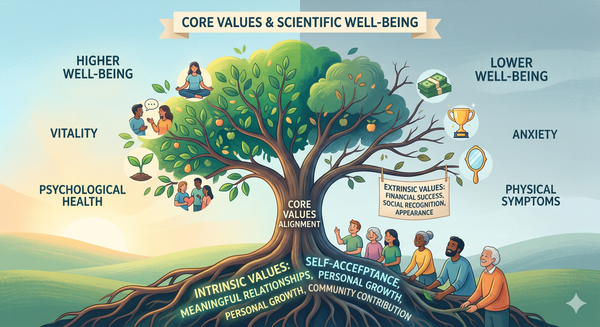
In 1938, Harvard researchers began following a group of 268 undergraduate men with the intention of tracking what made people thrive across a lifetime. The study, now called the Harvard Study of Adult Development, is the longest scientific investigation of adult life ever conducted. It has followed its subjects — and later their children and spouses — for more than 85 years, across careers and relationships, health crises and decades of ordinary living. Its most important finding is also the most actionable: the quality of your relationships is the single most powerful predictor of happiness and healthy aging, more important than wealth, achievement, intelligence, or genetics.
Robert Waldinger, the fourth director of the study, summarized the evidence in a TED talk that has been viewed more than 13 million times. “Loneliness kills,” he said. “It’s as powerful as smoking or alcoholism.” The statement is not rhetorical. It is a conclusion drawn from decades of longitudinal data tracking people from young adulthood into old age. The friends you invest in are not a pleasant addition to a well-lived life. They are, by the evidence, one of the primary determinants of whether you stay healthy, mentally sharp, and alive. Understanding why this is true — at the level of biology, immunology, and cellular aging — changes how you think about friendship.
The Harvard Study: 85 Years of Evidence
The study’s methodology was unusual in its comprehensiveness. Researchers tracked not just self-reported happiness but physical health markers, cognitive function, relationship quality, and longevity across multiple decades. They followed their subjects through World War II, the postwar economic boom, the upheavals of the 1960s, the long middle stretch of careers and families, and into retirement and old age. Along the way they expanded the study to include the subjects’ wives and children, creating a multigenerational dataset of extraordinary depth.
The finding that emerged consistently across every decade of data collection was the same: the people who maintained warm, close relationships aged better. They experienced less cognitive decline as they aged. They were protected against chronic disease to a degree that could not be explained by other lifestyle factors alone. They reported higher life satisfaction into very old age. The people who were lonely, by contrast — and this included people who were lonely even within marriages — showed accelerated health deterioration, more cognitive decline, and earlier death. The quality of relationships, not the number, was the variable that mattered. People with one or two genuinely close friendships showed better health outcomes than people with large social networks of shallow connections.
The Mortality Risk of Social Isolation
The mortality data on social isolation is among the most striking in public health research. Julianne Holt-Lunstad’s meta-analysis, which synthesized data from 148 studies covering more than 300,000 individuals, found that social isolation increases the risk of premature death by 26% [1]. To put this in context: the risk associated with social isolation is comparable to smoking 15 cigarettes per day, and it exceeds the mortality risk associated with obesity. These are not subtle statistical associations at the margins of significance. They are large-magnitude effects replicated across an enormous dataset spanning different countries, demographics, and health conditions.
 Viktoria Samokhval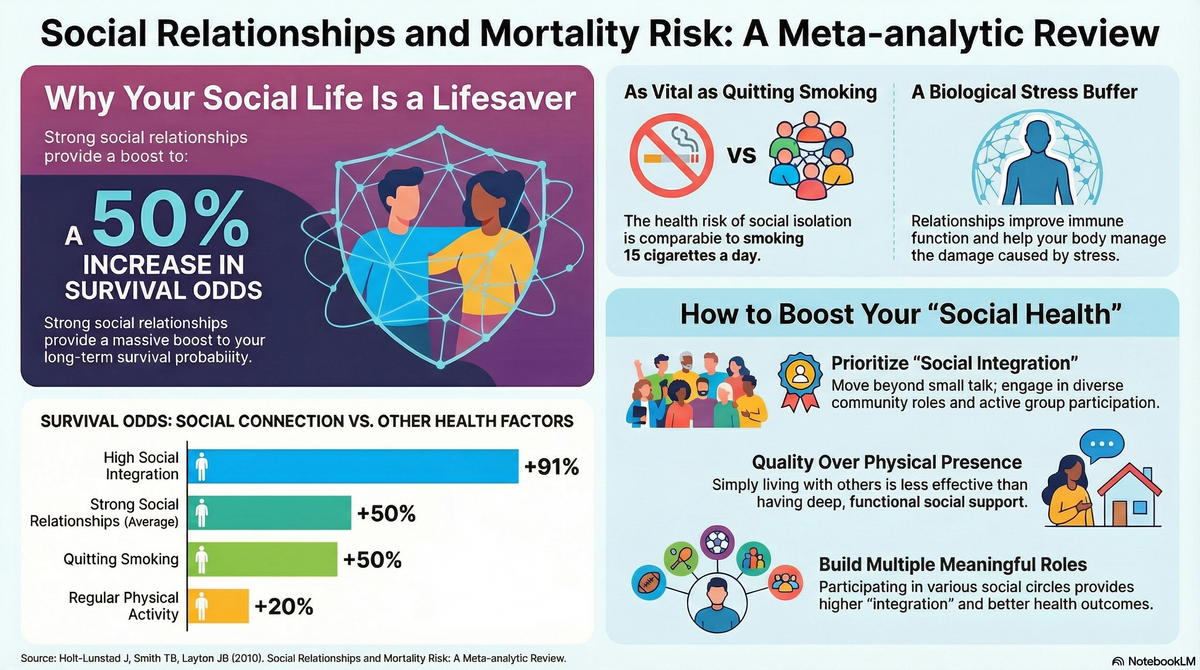
[1]
The implications were serious enough that the U.S. Surgeon General issued a formal advisory on the loneliness epidemic in 2023, calling social isolation a public health crisis of significant proportions. The advisory noted that Americans reported fewer close friendships in 2023 than in any prior measurement period, that the average time Americans spent with friends had declined substantially over the previous twenty years, and that the health consequences of this trend were already measurable in population-level data. Social isolation is not a personal problem affecting individuals at the margins. It is a structural health challenge affecting a substantial portion of the population.
What Friendship Does to Your Immune System
The biological mechanism most directly linking friendship to health is stress buffering. Cortisol — the primary stress hormone — is immunosuppressive when chronically elevated [2]. It impairs the production of immune cells, reduces the effectiveness of the inflammatory response that fights infection, and accelerates cellular aging. Social support interrupts this process at its source. Conversations with supportive friends reduce perceived stress, which causes measurable reductions in cortisol output. As cortisol reactivity declines, the immunosuppressive effects diminish.
 Viktoria Samokhval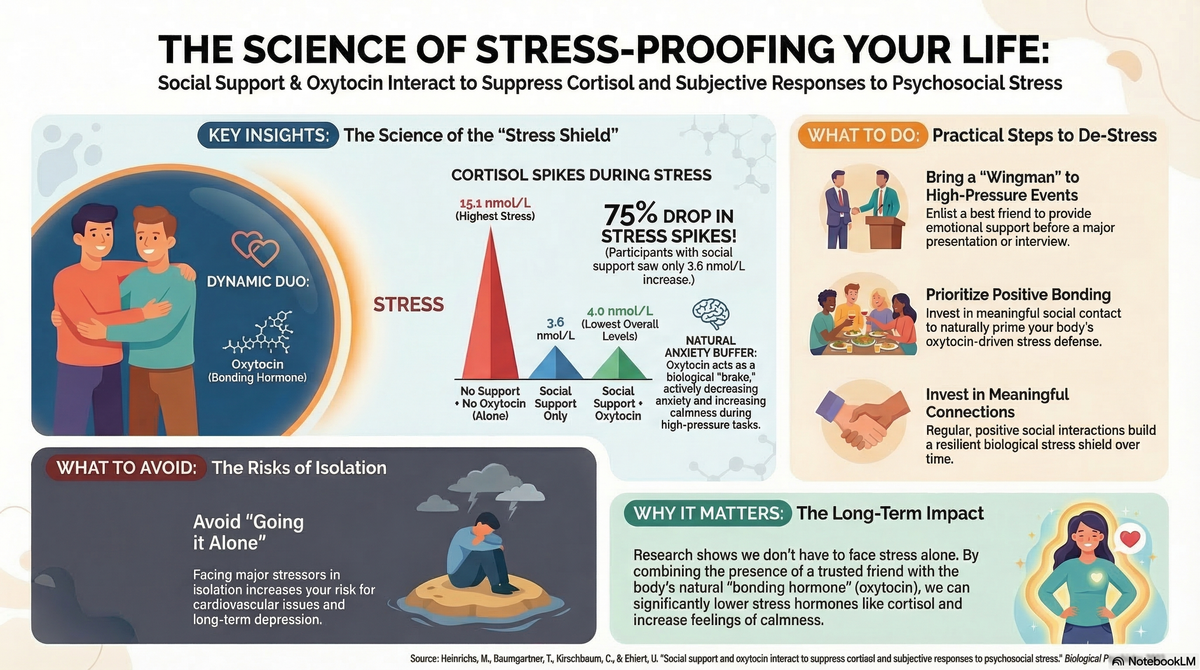
[2]
Research in psychoneuroimmunology has documented specific inflammatory markers that track with social connection quality. Higher social advantage — measured as the cumulative quality of social relationships across the lifespan — is associated with lower levels of interleukin-6, a pro-inflammatory cytokine implicated in heart disease, type 2 diabetes, and neurodegenerative conditions including Alzheimer’s disease. Conversely, social stress — whether from isolation or from high-conflict relationships — increases inflammation and impairs cognitive function. The immune system is not separate from your social life. It is regulated, in part, by the quality of your relationships.
Friendship and Biological Aging: The Telomere Evidence
Telomeres are the protective caps at the ends of chromosomes that shorten each time a cell divides. Telomere length is one of the most reliable biological markers of aging: shorter telomeres predict earlier onset of age-related disease and shorter lifespan. The research on social connection and telomere length is converging on a consistent finding: people with richer, more sustained social connections maintain longer telomeres and show slower biological aging than their more isolated peers.
A 2025 study from Cornell University documented that cumulative social advantage across the lifespan — from parental warmth in childhood through friendship quality and community engagement in adulthood — is associated with measurably slower biological aging as assessed by epigenetic clocks. These are molecular measures of biological age that are independent of chronological age. Socially connected people show biological profiles that are younger than their chronological age would predict. The mechanism appears to operate through inflammation and oxidative stress: social bonds reduce chronic inflammatory activation, which in turn slows the cellular processes that shorten telomeres. The biology of a lifetime of social investment accumulates in ways that show up at the molecular level.
The Oxytocin System: Why Loneliness Becomes Self-Reinforcing
Oxytocin is a nonapeptide produced in the hypothalamus and released during social interactions, physical touch, and moments of trust [3]. It has been called the bonding hormone, but its functions extend beyond bonding. Oxytocin has pro-social, anti-inflammatory, and stress-buffering properties. It reduces amygdala reactivity, promotes trust and approach behavior, and activates the parasympathetic nervous system, producing physiological calm. Every positive social interaction is, at the neurochemical level, an oxytocin activation event.
 Viktoria Samokhval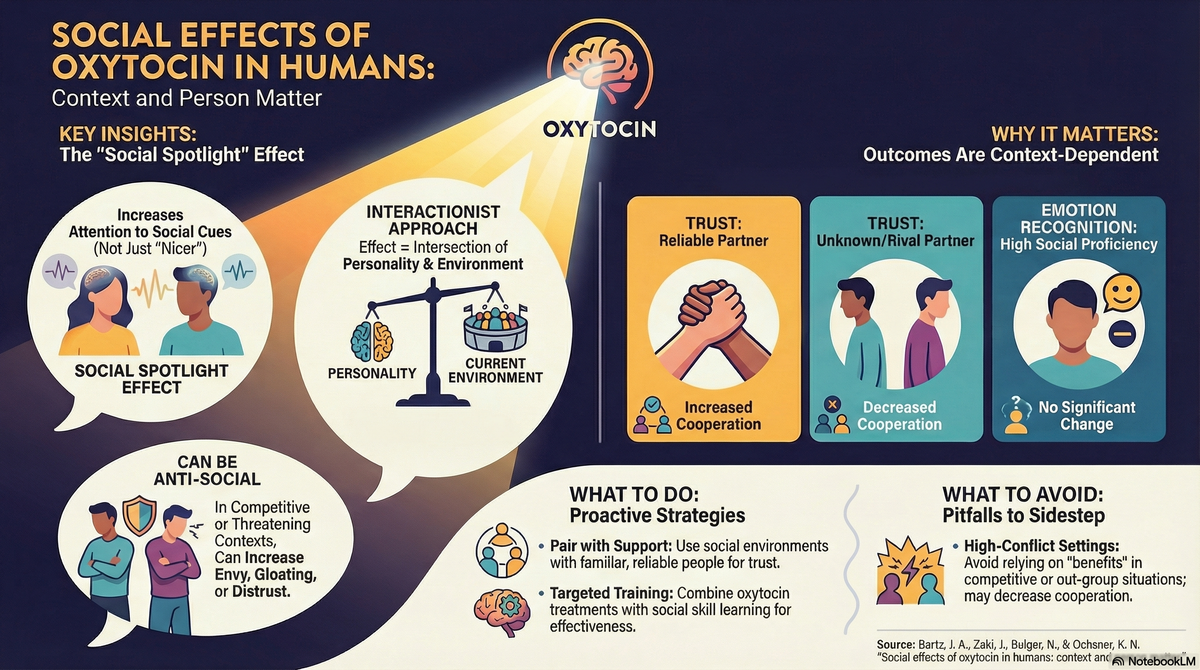
[3]
What research has uncovered about chronic loneliness adds a troubling dimension to this picture. Sustained social isolation does not just deprive people of oxytocin activation. It weakens the oxytocin system’s reactivity over time, diminishing the motivational drive to seek connection. People who have been isolated for extended periods find social interaction increasingly effortful and increasingly unrewarding, not because they do not need it but because the neurobiological system that drives social motivation has been attenuated by disuse. This creates a self-reinforcing loop: isolation reduces oxytocin system sensitivity, which reduces social motivation, which produces more isolation. Breaking this loop requires deliberate effort against a neurochemical current — which explains why chronic loneliness is so difficult to resolve without external support.
Quality Over Quantity
One of the most practically important findings in the friendship and health research is that quantity of social connections is a much weaker predictor of health outcomes than quality. Having a large number of acquaintances provides some protection against the worst effects of isolation, but the biological benefits of friendship are concentrated in close, high-quality relationships characterized by mutual trust, emotional availability, and genuine reciprocity. A 2025 study published in a SAGE journal found that higher strain in friendships — characterized by criticism, demands, and conflict — was associated with shorter lifespan, not just lower satisfaction. High-strain relationships are not neutral. They are actively harmful.
Social media contact does not appear to produce the same biological effects as in-person social interaction. The oxytocin activation, the stress-buffering cortisol reduction, and the physiological regulation effects of social connection are mediated by physical presence, voice tone, facial expression, and touch in ways that screen-mediated interaction does not fully replicate. This does not mean digital connection is worthless. It means that it should not be mistaken for a substitute for the kind of embodied, present connection that produces the health outcomes the research documents. Friends also shape health through social contagion: exercise habits, dietary patterns, smoking behavior, and sleep norms spread through friendship networks in measurable ways. The friends you spend the most time with influence your health not just through support but through the shared behavioral norms that develop in close relationships.
What This Means in Practice
Adult friendships require deliberate maintenance in a way that childhood friendships did not. The structural supports that sustained childhood friendship — daily proximity, shared institutions, long unstructured time — disappear in adulthood. Adult life creates centrifugal forces: geographic mobility, demanding careers, family obligations, and the general narrowing of social life that accelerates after age 25. Research consistently shows that without deliberate effort, the number and quality of friendships tends to decline through adulthood, which means that the health benefits the research documents tend to erode unless actively maintained.
What the research supports as effective includes prioritizing time with close friends as a genuine scheduling commitment rather than something that happens when circumstances allow, reaching out proactively rather than waiting for reciprocation, and investing in the kind of shared experiences and mutual disclosure that deepen bonds rather than merely maintaining contact. The activities that most reliably strengthen friendship bonds involve genuine shared experience, some degree of vulnerability or self-disclosure, and physical co-presence. One genuinely present, emotionally engaged conversation is worth more to your biology than ten casual digital check-ins. The science of friendship is not sentimental. It is biological, immunological, and longitudinal. Your friends are among the most important health investments you will ever make.
References
-
Holt-Lunstad, J., Smith, T. B., & Layton, J. B. Social Relationships and Mortality Risk: A Meta-analytic Review.
PLoS Medicine, 2010 7(7), e1000316. -
Heinrichs, M., Baumgartner, T., Kirschbaum, C., & Ehlert, U.
Social support and oxytocin interact to suppress cortisol and subjective responses to psychosocial stress.
Biological Psychiatry, 2003 54(12), 1389–1398. -
Bartz, J. A., Zaki, J., Bolger, N., & Ochsner, K. N. Social effects of oxytocin in humans: context and person matter.
Trends in Cognitive Sciences, 2011 15(7), 301–309.