The Hidden Poison of Modern Life: Understanding "Social Relationships and Health: The Toxic Effects of Perceived Social Isolation"
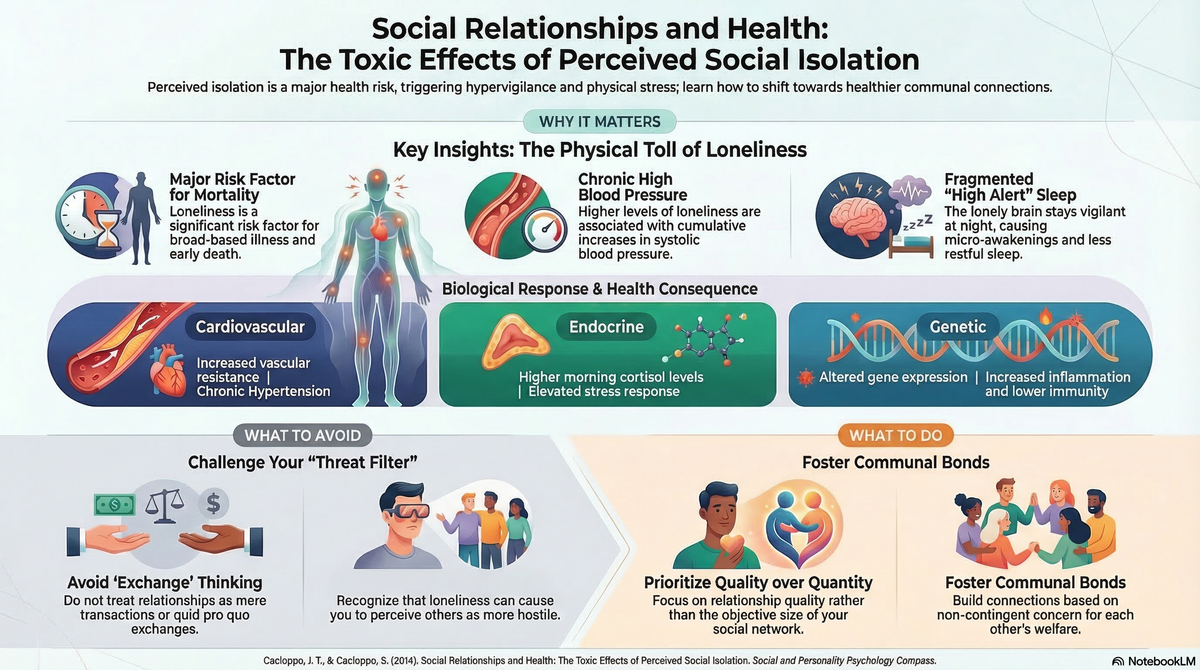
Have you ever been at a crowded party or surrounded by coworkers, yet felt entirely alone? It is a common experience, but we usually dismiss it as a passing mood or a personal quirk. However, a major review of human biology and psychology proves that this feeling is far more dangerous than we realize.
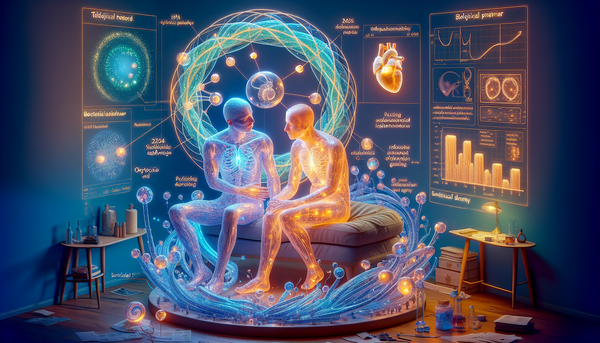
The research reveals that perceived social isolation—loneliness—is actually an ancient biological alarm system that, when ignored, triggers severe physical and mental deterioration. The feeling of being isolated alters your brain chemistry, changes your sleep, and physically damages your body. Here is what the science says about the toxic effects of feeling alone, and how we can protect our health by rewiring our social lives.
The Difference Between Being Alone and Feeling Lonely
We often assume that curing loneliness simply means joining a club, staying busy, or surrounding ourselves with more people. However, the researchers draw a hard line between "objective isolation" (actually being physically alone) and "perceived isolation" (the subjective feeling of loneliness). You can receive plenty of practical social support from colleagues or family members, but if those relationships feel obligatory, superficial, or lack genuine warmth, you will still feel deeply isolated. The biological damage comes from the perception that you lack meaningful, secure connections, not just your physical proximity to others.
Practical Guidance:
- What to do: Focus on cultivating a few deep, high-quality relationships where you feel truly understood, rather than just filling your calendar with superficial social events.
- What not to do: Don't assume that someone is emotionally healthy just because they have a large social network or a busy professional life; they may still be suffering from deep perceived isolation.
- Habit to change: Stop measuring your social worth by the sheer number of friends, acquaintances, or followers you have. Instead, evaluate your social life based on the depth and safety of your closest bonds.
Your Brain's False Alarm
From an evolutionary standpoint, early humans who wandered away from the safety of their tribe were in grave danger. Because of this, feeling lonely triggers an ancient self-preservation mode in your brain. This state makes you implicitly hypervigilant to social threats. When you are lonely, your brain acts like a faulty radar system scanning for rejection, causing you to misinterpret innocent comments as insults, remember things negatively, and act defensively. This creates a tragic, vicious cycle: your loneliness makes you defensive, which drives people away, ultimately making you even lonelier.
Practical Guidance:
- What to do: When you feel lonely and a friend says something ambiguous, consciously choose to give them the benefit of the doubt instead of automatically assuming they are being hostile or critical.
- What not to do: Don't isolate yourself further after a minor social friction. Recognize that your lonely brain is likely exaggerating the threat.
- Decision to change: Acknowledge your own defensive or cynical behavior as a biological symptom of feeling disconnected, rather than an accurate reflection of reality or how much people care about you.
How Lonely Days Invade the Night
The physical damage caused by loneliness goes far beyond feeling sad. The research shows that the chronic "high alert" state triggered by loneliness actively ruins your physical health. Loneliness increases vascular resistance (raising your blood pressure), spikes morning stress hormones (like cortisol), and weakens your immune system. Fascinatingly, lonely days literally invade your nights. Because the lonely brain fundamentally feels unsafe, it remains subconsciously vigilant even while you sleep, leading to "microawakenings" and severely fragmented, unrefreshing sleep.
Practical Guidance:
- What to do: Treat chronic sleep issues and high daytime fatigue as potential warning signs of social starvation, and prescribe yourself genuine human connection as part of your physical recovery.
- What not to do: Don't rely entirely on diet, exercise, or sleeping pills to fix your energy levels if you are simultaneously trapped in a cycle of severe emotional isolation.
- Habit to change: Shift from thinking of social time as a casual luxury to recognizing it as a fundamental biological requirement for a calm nervous system and restful sleep.
The Contagion of Loneliness
We typically view loneliness as a private struggle, but the data reveals it actually behaves like a contagious disease within a social network. As lonely people become more defensive and hypervigilant, they spread negative interactions to the people around them. Over time, this pushes lonely individuals further to the absolute edge of their social circles, while simultaneously infecting their closest remaining friends with similar feelings of isolation and negativity. You can literally "catch" loneliness from the people around you.
Practical Guidance:
- What to do: Be a proactive force for connection. Reach out to friends who have been withdrawing or acting unusually negative to pull them back from the periphery of your social circle.
- What not to do: Don't let your own negative moods and defensive behaviors fester unaddressed, as they will actively spread and damage the emotional well-being of the friends closest to you.
- Habit to change: Stop waiting for isolated friends to do all the work of reaching out. Interrupt the "contagion" by intentionally initiating warm, positive interactions to break the cycle of negativity.
Summary for Life
The deep truth of human biology boils down to a single, concrete life rule: To protect your physical health and mental well-being, you must treat your feelings of loneliness not as a character flaw, but as a vital biological alarm urging you to override your defensive instincts and actively pursue safe, meaningful connections.
Reflective Question: If your brain is secretly treating your current social life like a dangerous survival situation, what is one genuine conversation you can initiate today to finally tell your nervous system that it is safe?
References
Cacioppo, J. T., & Cacioppo, S. (2014). Social relationships and health: The toxic effects of perceived social isolation. Social and Personality Psychology Compass, 8(2), 58–72.