The Invisible Ripple: What "Connected: The Surprising Power of our Social Networks and How they Shape our Lives" Teaches Us About Who We Are
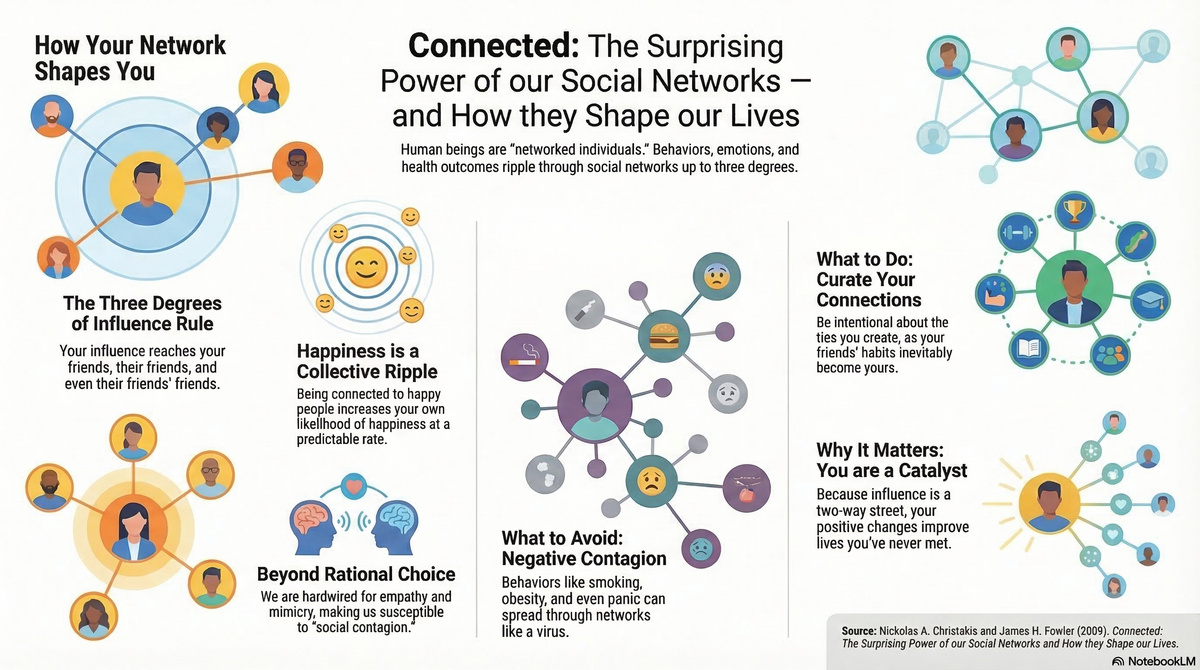
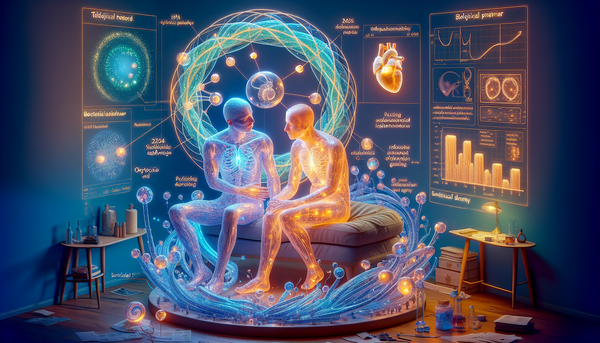
Have you ever noticed how you naturally start using the same slang as your closest friend, or suddenly feel motivated to hit the gym when your coworkers start a fitness challenge? We usually brush this off as simple coincidence. But what if your friend’s friend’s friend—someone you have never even met—is actively influencing your waistline, your happiness, and even who you choose to marry?
A groundbreaking exploration into human behavior reveals that we are far more intertwined than we could ever imagine. According to the research, our social networks dictate almost every aspect of our lives. Here is what the science says about the hidden web of human connection, and how you can take control of your place within it.
The "Three Degrees of Influence" Rule
It is easy to understand how your spouse or your best friend impacts your daily life. However, researchers discovered that your influence does not stop at your inner circle; it ripples outward. The "Three Degrees of Influence Rule" states that our actions, words, and habits naturally reach our friends, our friends' friends, and our friends' friends' friends. Beyond that third degree, the influence begins to naturally decay.
Why it matters: You aren't just impacting the people sitting in your living room. A single choice you make can cascade through a massive web, potentially touching the lives of hundreds of people.
Practical Guidance:
- What to do: Assume that your positive habits—like quitting smoking, eating healthier, or practicing kindness—will actively benefit people you don't even know.
- What not to do: Don't underestimate the reach of your bad moods or destructive habits; your negativity doesn't stay confined to just you.
- Habit to change: Be intensely mindful of the emotional energy you bring into a room, recognizing that you are the starting point for a chain reaction.
Emotions Are Contagious
We often think of diseases as being contagious, but the research shows that emotions and behaviors spread through social networks just like a virus. Because humans evolved with deep capacities for empathy and mimicry, we naturally catch the affective states of the people around us. The data clearly shows that simply being connected to someone who is happy significantly increases your own chances of being happy. Unfortunately, panic, smoking, obesity, and even suicidal thoughts can spread through the exact same channels.
Why it matters: Your emotional well-being is not just a personal matter; it is an epidemiological one. The company you keep literally dictates your emotional baseline.
Practical Guidance:
- What to do: Deliberately curate a social network that includes positive, emotionally healthy people who radiate the joy and stability you want in your own life.
- What not to do: Don't stay constantly exposed to highly cynical or chronically panicked individuals without setting strict boundaries, as their emotions will inevitably "infect" you.
- Decision to change: Perform a social audit. Limit your exposure to environments that breed chronic anxiety, and intentionally invest your time in friendships that lift you up.
The Rise of the "Networked Human"
For decades, economists and philosophers assumed we were fiercely independent, rational creatures making selfish choices in a vacuum. The science shatters this illusion, urging us to abandon the idea of the isolated individual for a new concept: Homo dictyous, or the networked human. Our brains actually evolved specifically to handle the demands of complex social networks, fostering our abilities for language, empathy, and cooperation. We are biologically wired to be social animals.
Why it matters: Recognizing that you are built for connection removes the shame of feeling reliant on others, and helps you use your natural social drive as a tool for success rather than a weakness.
Practical Guidance:
- What to do: Lean into your biological drive for cooperation and altruism to solve life’s problems, rather than trying to carry every burden alone.
- What not to do: Don't isolate yourself in the pursuit of total, rugged independence; living outside of a network goes against your evolutionary heritage.
- Habit to change: Shift your decision-making perspective from "What is best for me?" to "What is best for my network?", knowing that a thriving community supports you in return.
The Two-Way Street of Influence
Learning that our behaviors are heavily governed by the people around us might make you feel like a mindless robot trapped in a deterministic web. But the research offers a highly optimistic counterpoint: the flow of influence is a two-way street. Just as your network shapes you, you possess the incredible power to shape your network. You get to decide which ties to create, which relationships to break, and how deeply you connect with others.
Why it matters: You are not a helpless victim of your social environment; you are the active architect of it.
Practical Guidance:
- What to do: Take an active role in building your social web. Introduce good friends to one another to strengthen the healthy connections within your network.
- What not to do: Don't passively tolerate a toxic social environment while claiming you have no control over your life or your habits.
- Decision to change: Take full responsibility for your social ties. Actively distance yourself from relationships that drag you down, and aggressively pursue new connections that align with your highest values.
Summary for Life
The deep truth of human connection boils down to a single, concrete life rule: You are not an isolated drop in the ocean; you are the ripple. Because your actions and emotions effortlessly shape the lives of your friends, your friends' friends, and their friends, you must intentionally curate your social circle and take responsibility for the wave you choose to start today.
Reflective Question: If your current mood and daily habits were instantly multiplied and passed on to a hundred people around you, would you be making the world a better place, or a more anxious one?
References
Christakis, N. A., & Fowler, J. H. (2009).
Connected: The surprising power of our social networks and how they shape our lives. New York, NY: Little, Brown and Company