
The Hidden Side Effects of Ozempic and GLP-1 Drugs Most Patients Don't Expect
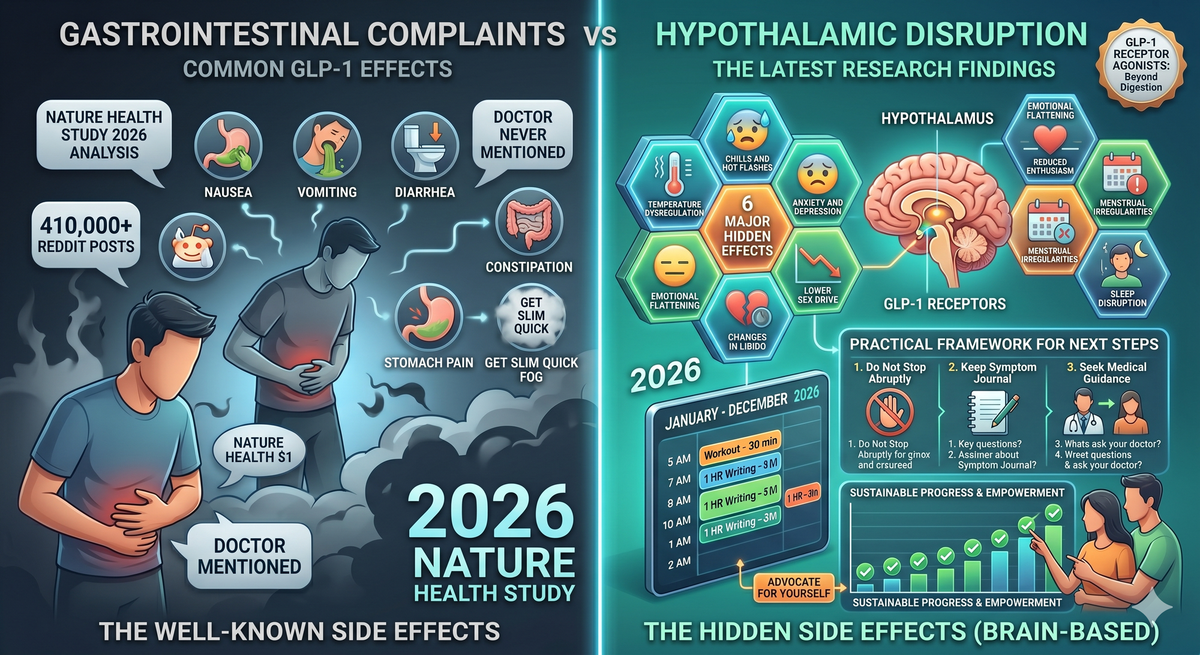
Millions of people around the world are now taking GLP-1 receptor agonist medications — drugs like Ozempic, Wegovy, Mounjaro, and Zepbound — for type 2 diabetes management or weight loss. But as use has expanded from clinical trial populations to the general public, many patients are discovering side effects their doctors never mentioned. A landmark 2026 study published in Nature Health analyzed over 410,000 Reddit posts and found that beyond familiar digestive complaints, significant numbers of users reported chills, hot flashes, mood changes, menstrual irregularities, and emotional flattening. This article unpacks what the latest science says about GLP-1 side effects most patients aren't prepared for — and what you can do if you experience them.
What Are GLP-1 Drugs and How Do They Work?
GLP-1 stands for glucagon-like peptide-1, a hormone naturally produced in the gut after eating. GLP-1 receptor agonists are synthetic versions that mimic its effects. The FDA has approved ten GLP-1 medications, with the most widely prescribed including:
- Semaglutide — sold as Ozempic (diabetes) and Wegovy (weight loss)
- Tirzepatide — sold as Mounjaro (diabetes) and Zepbound (weight loss)
- Liraglutide — sold as Victoza (diabetes) and Saxenda (weight loss)
- Dulaglutide — sold as Trulicity
These drugs work by slowing gastric emptying, reducing appetite signals in the brain, and stimulating insulin release. But the critical detail that explains many unexpected side effects is that GLP-1 receptors are also found in the brain — specifically in the hypothalamus, which regulates hunger, body temperature, hormones, sleep, and mood. When GLP-1 drugs activate hypothalamic receptors, the effects ripple far beyond digestion.
The Well-Known Side Effects Most People Know About
Before exploring the less-discussed effects, it is worth mapping what most patients already know. The most commonly reported GLP-1 side effects are gastrointestinal:
- Nausea — especially in the first weeks of treatment or after dose increases
- Vomiting — often triggered by eating too quickly or too much
- Diarrhea — usually temporary but can be persistent
- Constipation — particularly common with semaglutide
- Stomach pain and bloating
Another widely discussed phenomenon is Ozempic face — the sunken appearance some users develop from rapid facial fat loss. Harvard Health experts emphasize this is a misnomer: the same changes occur with any rapid weight loss. UCLA Health recommends increased protein intake, hydration, and collagen-boosting skincare to minimize cosmetic effects.
The Hidden Side Effects Most Patients Are Not Prepared For
This is where the picture becomes more complex. The 2026 Nature Health study analyzed 410,198 Reddit posts from 67,008 GLP-1 users and identified several unexpected semaglutide side effects rarely discussed in clinical settings.
Temperature Dysregulation: Chills and Hot Flashes
One of the most surprising findings was the frequency of temperature-related symptoms. Chills and hot flashes emerged as among the most underrecognized effects of GLP-1 therapy. The mechanism makes biological sense: the hypothalamus is the body's thermostat, and when GLP-1 drugs stimulate its receptors they can disrupt thermoregulatory signals, causing sudden chills or hot flashes that feel remarkably similar to menopausal symptoms. Many patients — especially women in their 40s and 50s — attribute these to perimenopause rather than their medication, so the connection goes unaddressed.
Menstrual Irregularities
The Nature Health study identified menstrual irregularities as the single most underreported side effect in the entire dataset. The causes are multi-factorial: hypothalamic disruption to hormonal signaling, plus the well-established effect of rapid weight loss on menstrual cycles through reduced estrogen production and suppressed ovulation. Changes may include delayed periods, lighter or heavier flows, or irregular cycles. Women of childbearing age should discuss these effects with their OB-GYN, particularly those relying on hormonal contraception.
Mood Changes and Psychiatric Symptoms
The mental health dimension of GLP-1 drugs is perhaps the most urgent area of emerging concern. In the Reddit study, nearly 13% of users reported psychiatric symptoms including anxiety, depression, and insomnia. This aligns with data from VigiBase — the WHO's global pharmacovigilance database — which found statistically significant signals linking semaglutide to anxiety, depressed mood disorders, and suicidality. These signals appear drug-related and not fully explained by pre-existing mental health conditions. Anyone with a personal or family history of depression or anxiety should have this conversation with their doctor before starting GLP-1 therapy.
The Ozempic Personality — Emotional Flattening
A concept gaining significant attention is what has been called Ozempic personality — a dulling of emotional intensity, reduced enthusiasm for previously enjoyable activities, and a blunted flatness to daily experience. The most likely explanation involves the dopamine reward system: GLP-1 receptors are present in brain reward circuits, and these drugs reduce food cravings partly by blunting dopamine responses to pleasurable foods. But this same mechanism may reduce the reward signal from other pleasures including social connection, hobbies, and intimacy. Some patients with food addiction histories feel liberated, while others find the emotional dampening extends to all areas of life.
Changes in Libido and Sexual Interest
Changes in sexual interest are more common than official prescribing information suggests. Several overlapping mechanisms are proposed: reward-system blunting, hormonal changes from rapid caloric restriction, and psychological factors. The effects are bidirectional — many patients report improved body confidence and increased libido as they lose weight, while others experience reduced interest alongside broader GLP-1 mood changes. Patients should feel empowered to raise this with their healthcare provider.
Why Are These Side Effects Underreported?
If these effects are this common, why do they rarely appear in official safety data? Several factors contribute to systematic underreporting:
- Clinical trial exclusion criteria — trials typically exclude people with significant psychiatric histories or complex hormonal conditions, missing the populations most likely to experience these effects.
- Patient attribution errors — patients rarely connect mood or temperature symptoms to a weight-loss medication. When someone feels sad or has a hot flash, the GLP-1 drug is not the first thing that comes to mind.
- Population diversity — real-world users are older, have more comorbidities, and take more concurrent medications than trial participants, all of which can amplify the side-effect profile.
- Short trial durations — long-term effects including mood and hormonal impacts that emerge over months of use are not captured in original safety data.
What You Should Do If You Experience These Side Effects
If you are taking a GLP-1 drug and experiencing any of the symptoms described above, here is a practical framework for next steps:
- Do not stop the medication abruptly — this can cause rapid weight regain and blood sugar instability. Any changes should be made under medical supervision.
- Keep a symptom journal — note the symptom, when it started relative to your dose, severity on a 1–10 scale, and how long it lasts. This information is invaluable for your doctor.
- Seek urgent attention if you experience severe abdominal pain, vision changes, signs of allergic reaction, or any thoughts of self-harm.
Key questions to ask your healthcare provider:
- Could this symptom be related to my GLP-1 medication?
- Is a dose reduction worth trying?
- Should I be evaluated for thyroid or hormonal changes?
- Do I need a mental health referral to monitor mood?
- Are there interactions with my other medications?
- Is a different GLP-1 drug a better fit for my side-effect profile?
The Bottom Line
GLP-1 drugs represent a genuine medical breakthrough for millions managing obesity and type 2 diabetes. But the science of their full side-effect profile is still being written. The 2026 Nature Health study opened a more honest conversation about what patients are actually experiencing: temperature dysregulation, menstrual irregularities, mood changes, emotional flattening, and libido shifts are all real phenomena that deserve attention and open discussion with care teams. If you are taking a GLP-1 drug and something feels off — you are not imagining it. Advocate for yourself, document what you notice, and keep the conversation going with your doctor.
Sources
Hidden Side Effects of GLP-1 Drugs: Ozempic Chills, Hot Flashes, and More — Healthline