The Heart Strings vs. The Purse Strings: Unpacking "A Meta-Analysis of the Dark Side of the American Dream: Evidence for the Universal Wellness Costs of Prioritizing Extrinsic over Intrinsic Goals"
We are often told that the path to happiness is paved with gold, fame, and the perfect Instagram-worthy look. We spend our lives climbing ladders, chasing promotions, and worrying about how we are perceived by others, assuming that once we "arrive" at a certain level of wealth or status, we will finally feel fulfilled. But have you ever noticed that the more you get, the more you seem to want? This common curiosity about why the "American Dream" often feels like a treadmill is at the heart of a massive new scientific review.
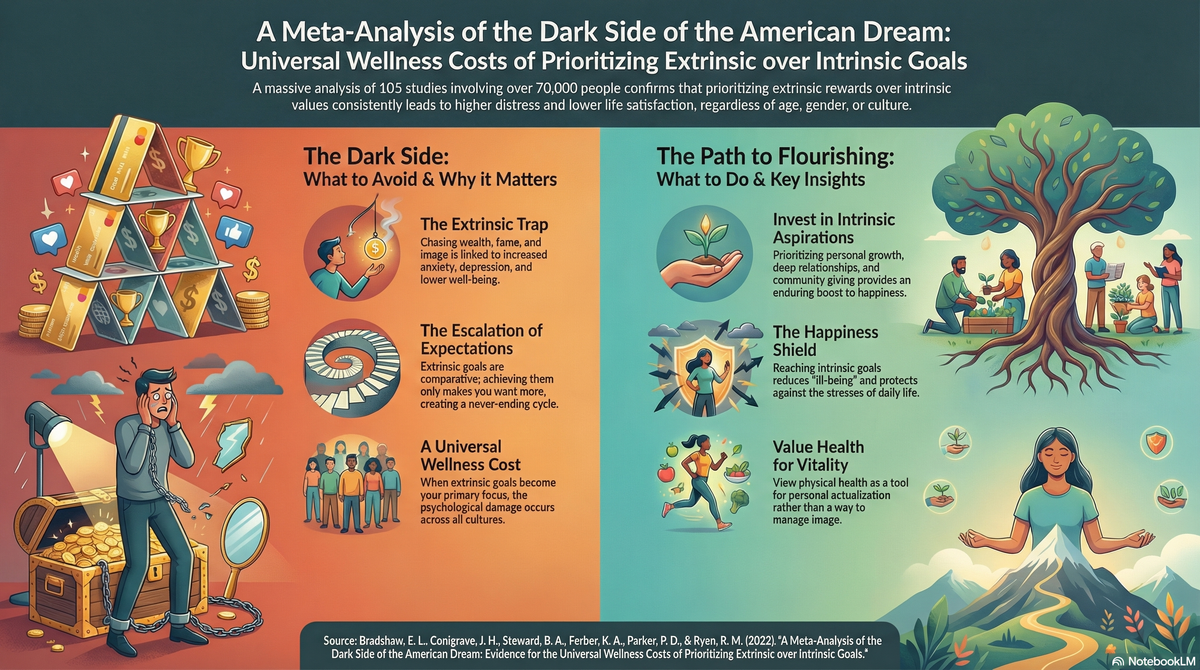
By analyzing data from over 70,000 people across the globe, researchers have confirmed that what you wish for dictates how you feel. Here is what the science says about the goals that actually nourish your life and the ones that might be quietly making you miserable.
Not All Goals Are Created Equal
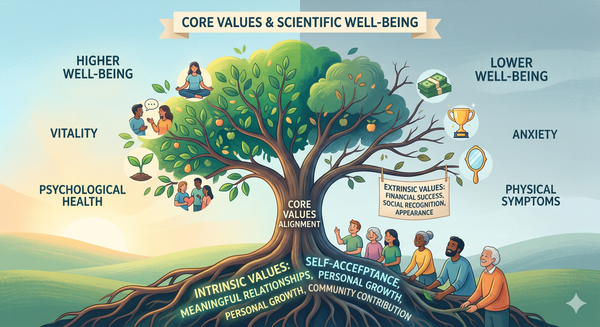
The research highlights a fundamental split in how we orient our lives: "intrinsic" versus "extrinsic" goals. Intrinsic goals are those that satisfy our basic human needs for connection, capability, and freedom. These include personal growth, building deep relationships, helping your community, and staying physically healthy. On the other hand, extrinsic goals are focused on external rewards or the approval of others, such as wealth, fame, and physical image.The study found that focusing on intrinsic goals is a powerful booster for well-being and a shield against mental distress. These pursuits are inherently satisfying because they align with our natural growth as humans.
Practical Guidance:
- What to do: Dedicate time each week to a hobby that challenges you to learn or a project that helps your neighborhood.
- What not to do: Don't assume that a goal is "good" just because it keeps you busy; ensure it actually connects you to other people or your own development.
- Habit to change: Shift your focus from "How can I look successful?" to "How can I grow today?".
The Trap of Fame, Wealth, and Image
One of the most striking findings is what researchers call the "dark side" of extrinsic goals. When wealth, fame, or beauty become the primary focus of your life, the effect is universally detrimental to your happiness. These goals are built on social comparison—there is always someone richer, more famous, or more "beautiful" to compare yourself to.
This creates an "escalation of expectations" where you quickly adapt to what you have and immediately begin craving more to get the same emotional "high". Even if you successfully achieve these goals, they don't provide a lasting boost to your well-being. Instead, they can "crowd out" the time and energy you need for the things that actually matter, like your family or your health.
Practical Guidance:
- What to do: Set "safety" goals for money—focus on stability and security rather than luxury and status.
- What not to do: Do not sacrifice your close relationships or personal integrity to chase a promotion or a "perfect" social media image.
- Decision to change: Stop using external validation as your primary metric for success. If you find yourself obsessing over likes or bank balances, intentionally pivot to a conversation with a close friend.
The Rule of "Relative Centrality"
The science suggests that having some extrinsic goals isn't necessarily a disaster. It is natural to want a comfortable life or to be liked by others. The real danger is when these external rewards become the center of your world. This is known as "relative centrality".If your desire for money and fame starts to overshadow your desire for growth and community, your mental health begins to suffer. When external rewards take the lead, you experience less flourishing and more "floundering," regardless of your age, your gender, or where you live in the world.
Practical Guidance:
- What to do: Regularly audit your priorities. If you find that "image" or "wealth" are taking up most of your mental space, actively schedule "intrinsic" activities to rebalance your life.
- What not to do: Don't think that "making it" will fix your unhappiness if your focus remains entirely on external trophies.
- Habit to change: Practice "mental budgeting" for your goals. If you spend an hour worrying about your appearance, spend an hour doing something that genuinely helps another person.
Summary for Life
The findings of this massive review boil down to a simple, concrete life rule: Happiness is found in the heart strings, not the purse strings. To build a resilient and joyful life, you must ensure that your drive to grow and connect always remains more important than your drive to be rich, famous, or beautiful.
Reflective Question: If you stripped away your job title, your bank balance, and your social media followers, what is left in your life that truly makes you feel capable, free, and connected to others?