
Protect Your Heart: Why the Type of Fish Oil Matters — A Look at the "Effect of omega-3 fatty acids on cardiovascular outcomes: A systematic review and meta-analysis"
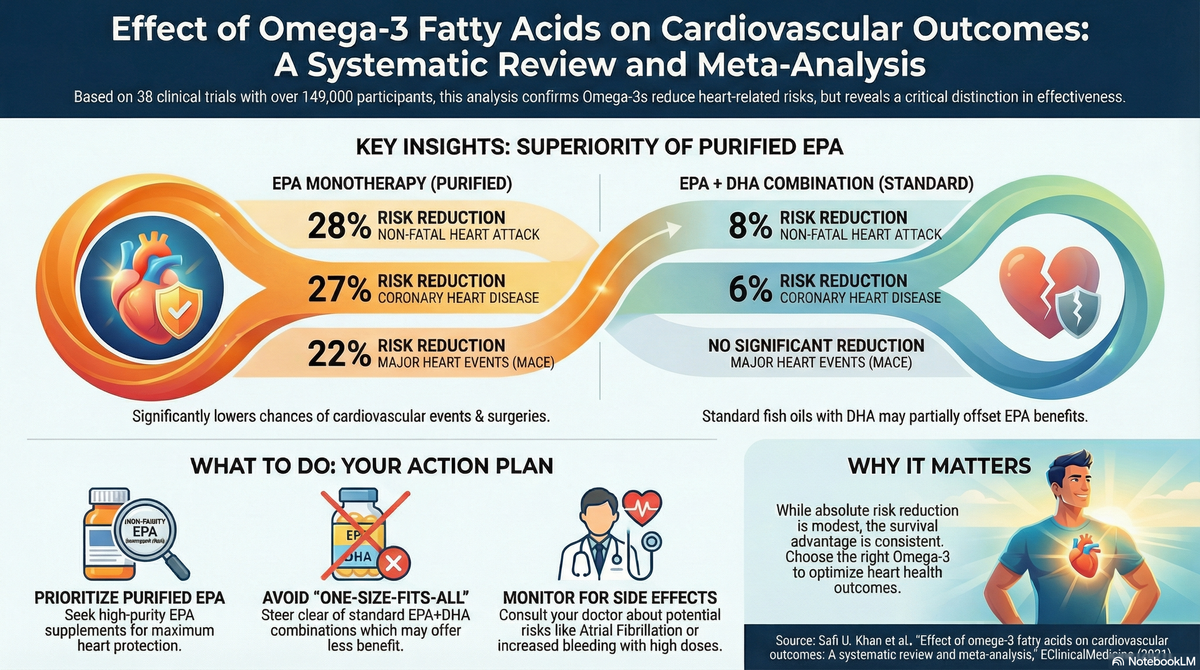
Have you ever found yourself standing in the supplement aisle, staring at a dozen different bottles of fish oil and wondering if they actually do anything? For years, we’ve been told that Omega-3s are the "holy grail" for heart health, but recently, headlines have been a bit more confusing. Some studies say they work wonders, while others suggest they might not be the miracle cure we once thought. It turns out, the secret isn’t just in taking "fish oil"—it’s in understanding exactly which type of Omega-3 you are putting into your body.
Not All Omega-3s Are Created Equal
When we talk about fish oil, we are usually talking about two main players: EPA and DHA. While most supplements give you a mix of both, new research suggests that EPA might be the real heavy lifter when it comes to your heart. EPA helps stabilize cell membranes and can even help shrink the plaque buildup in your arteries that causes heart attacks. Interestingly, when you mix it with DHA, those benefits might be slightly diluted because DHA can sometimes raise "bad" LDL cholesterol levels.
Practical Guidance:
• What to do: If you are specifically looking for heart protection, look for supplements that are highly purified EPA (often listed as "icosapent ethyl").
• What not to do: Don’t assume a generic "Omega-3" blend is the best choice for cardiovascular issues; the ratio of EPA to DHA matters.
• Habit to change: Start checking the back of your supplement labels. If you have a high risk of heart disease, talk to your doctor about switching from a standard fish oil to a purified EPA version.
A Major Shield Against Heart Attacks
The research is clear: taking Omega-3s is associated with a significantly lower risk of dying from heart-related causes. They act as a multi-layered defense system, lowering triglycerides, reducing inflammation, and preventing blood from becoming too "sticky". This isn't just a minor improvement; the evidence shows a noticeable reduction in non-fatal heart attacks and the need for procedures like stents or bypass surgeries.
Practical Guidance:
• What to do: Consistency is key. The benefits for your heart and arteries are built over time, so make your supplement part of your daily routine.
• What not to do: Don’t use supplements as an excuse for a poor diet. They work best as an "add-on" to a healthy lifestyle and existing medical treatments like statins.
• Decision to change: If you have a history of heart issues, prioritize these fats as a core part of your health strategy to reduce the risk of future events.
More Isn’t Always Better: The Risk of "AFib"
While Omega-3s are generally very safe, there is a catch. Higher doses of these fats—especially purified EPA—can increase the risk of developing a heart rhythm issue called atrial fibrillation, or "AFib". Additionally, high doses of EPA can slightly increase your risk of bleeding. It’s a classic case of balance: the same properties that prevent blood clots can also make you more prone to bruising or rhythm changes if the dose isn't right for you.
Practical Guidance:
• What to do: Pay attention to how your heart feels. If you notice a fluttering sensation or a rapid, irregular heartbeat, mention it to your healthcare provider.
• What not to do: Avoid "mega-dosing" on your own. More is not always better, and the sweet spot for dosage varies from person to person.
• Habit to change: Before starting a high-dose regimen, have a baseline conversation with your doctor about your history of heart rhythm issues or bleeding disorders.
Summary for Life
The research leads us to a powerful life rule: When it comes to your heart, purity matters—opt for high-quality EPA-focused Omega-3s to maximize protection, but always balance the dose to protect your heart’s natural rhythm.
Reflective Question: Is your current supplement choice based on the latest science, or are you just grabbing the first "fish oil" you see on the shelf?
References
Safi U. Khan, Ahmad N. Lone, Muhammad Shahzeb Khan, et al. "Effect of omega-3 fatty acids on cardiovascular outcomes: A systematic review and meta-analysis." EClinicalMedicine, vol. 38, 2021, 100997.