Nicotine: How Smoking and Vaping Disrupt Your Systems
Understanding the Powerful Chemical That Hijacks Your Body and Mind
Nicotine stands as one of the most deceptively powerful chemicals that millions of people voluntarily introduce into their bodies every single day. Found naturally in tobacco plants and now synthesized for use in electronic cigarettes, this alkaloid compound has shaped human behavior, economics, and public health for centuries. What makes nicotine particularly insidious is its ability to simultaneously feel beneficial while systematically dismantling the body's carefully calibrated systems.
Whether delivered through the burning ember of a traditional cigarette or the heated coils of a modern vaping device, nicotine launches an immediate assault on multiple physiological processes. Within seconds of inhalation, this chemical crosses the blood-brain barrier and begins altering brain chemistry in ways that create powerful dependencies. Meanwhile, the cardiovascular system strains under increased demands, blood vessels constrict, and stress hormones surge through the bloodstream.
This comprehensive exploration examines how nicotine from both smoking and vaping disrupts your body's intricate systems. We will journey from the neural pathways of addiction deep within your brain to the cardiovascular strain placed on your heart with every puff. By understanding exactly how nicotine affects the body, individuals trapped in this bad habit can better appreciate what they are putting themselves through and find motivation for the challenging but rewarding path toward recovery.
The Chemistry of a Craving: How Nicotine Rewires Your Brain
The human brain represents the most complex organ in the known universe, containing approximately 86 billion neurons connected through trillions of synapses. This remarkable biological computer regulates everything from breathing and heartbeat to emotions, memories, and decision-making. When nicotine enters this delicate system, it does not simply pass through harmlessly. Instead, it fundamentally alters the brain's architecture and chemical messaging systems in ways that can persist for years after the last cigarette or vaping session.
Understanding how nicotine hijacks your central nervous system provides crucial insight into why quitting proves so difficult and why so many people return to smoking or vaping despite knowing the health consequences. The brain chemistry changes that nicotine induces create a new baseline state where the drug becomes necessary just to feel normal.
The Dopamine Trap: Nicotine and the Addiction Pathway
At the heart of nicotine's addictive power lies its ability to manipulate dopamine, often called the brain's pleasure chemical. Dopamine serves as a neurotransmitter that plays essential roles in motivation, reward, pleasure, and reinforcement learning. Under normal circumstances, activities that benefit survival and reproduction, such as eating nutritious food, exercising, or forming social bonds, trigger dopamine release. This chemical reward encourages the brain to repeat beneficial behaviors.
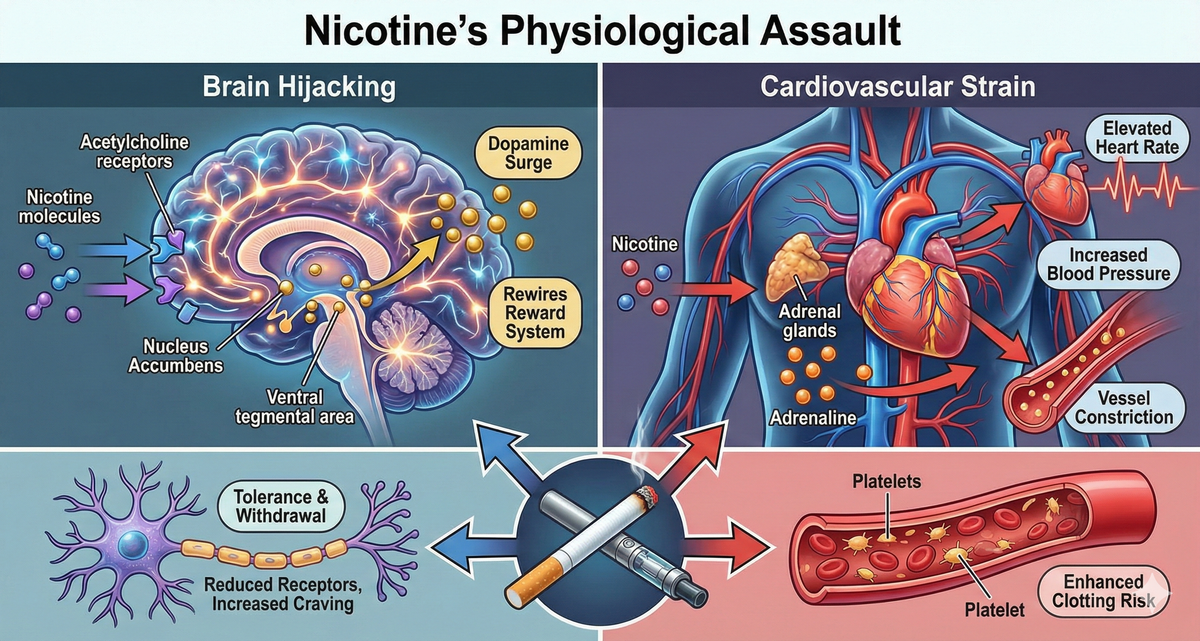
Nicotine essentially hacks this ancient reward system. When nicotine molecules reach the brain, they bind to acetylcholine receptors, particularly those located in the ventral tegmental area and nucleus accumbens, regions central to the brain's reward circuitry. This binding triggers an artificial surge of dopamine that far exceeds what natural activities produce. The resulting flood of pleasure-inducing chemicals creates powerful positive associations with the act of smoking or vaping.
The addiction pathway that develops follows a predictable but devastating pattern. Initially, nicotine produces significant pleasurable effects as dopamine levels spike. The brain interprets this surge as evidence of something tremendously beneficial, much as it would respond to survival-enhancing behaviors. However, the brain also possesses remarkable adaptive capabilities. When confronted with repeated dopamine floods from nicotine, it begins making compensatory changes.
These adaptations include reducing the number of dopamine receptors and decreasing natural dopamine production. The brain essentially recalibrates its baseline expectations, assuming that nicotine-induced dopamine levels represent the new normal. This neuroadaptation has profound consequences. Activities that once brought pleasure begin feeling hollow or unsatisfying because they cannot compete with nicotine-induced dopamine releases. Meanwhile, the absence of nicotine leaves dopamine levels far below the new baseline, creating intense cravings and emotional discomfort.
The timeline of this dependency development varies among individuals, but research indicates that addiction can establish itself remarkably quickly. Some studies suggest that young people may show signs of nicotine dependency after smoking only a handful of cigarettes. The developing adolescent brain appears particularly vulnerable to these changes, which helps explain why most lifelong smokers began their habit during teenage years.
Beyond dopamine, nicotine affects numerous other neurotransmitter systems. It influences norepinephrine, which affects alertness and arousal; serotonin, which regulates mood and emotional well-being; and glutamate, which plays roles in learning and memory. This widespread neurochemical impact helps explain why nicotine feels like it provides multiple benefits, enhancing concentration, managing mood, and creating relaxation, even as it systematically damages health.
The cognitive effects of nicotine addiction extend beyond simple pleasure-seeking. Many smokers and vapers report that nicotine helps them think more clearly, focus better, and work more efficiently. While nicotine does produce acute cognitive enhancement through its effects on acetylcholine receptors, these benefits prove temporary and ultimately counterproductive. Regular users quickly develop tolerance, meaning they need nicotine just to achieve normal cognitive function. Without it, concentration suffers, thinking becomes foggy, and mental performance declines until the next dose.
A False Calm: Nicotine’s Paradoxical Effect on Stress
One of nicotine's most deceptive qualities involves its relationship with stress. Many smokers and vapers describe their habit as a stress-relief mechanism, reaching for a cigarette or vaping device during tense moments to calm frayed nerves. This perception feels entirely real to the user, yet it masks a physiological reality that runs completely contrary to the experienced relaxation.
When nicotine enters the bloodstream, it triggers the release of adrenaline, also known as epinephrine, from the adrenal glands. Adrenaline is the quintessential stress hormone, responsible for the fight-or-flight response that prepares the body for immediate action in the face of threats. This hormone increases heart rate, raises blood pressure, constricts blood vessels, and redirects blood flow toward major muscle groups. In evolutionary terms, these responses prepared our ancestors to flee predators or fight enemies.
The paradox becomes clear when examining what happens physiologically during that supposedly relaxing cigarette break. While the smoker feels calmer, their body enters a heightened state of physiological stress. Heart rate accelerates, sometimes by 10 to 20 beats per minute. Blood pressure rises measurably. Stress hormones circulate at elevated levels. Every system in the body receives signals suggesting that danger lurks nearby and immediate action may be necessary.
How can users feel relaxed while their bodies experience stress responses? The answer lies in the previously discussed dopamine effects combined with the relief of withdrawal symptoms. Regular nicotine users exist in a state of perpetual mild withdrawal between doses. This withdrawal creates physical discomfort, irritability, anxiety, and difficulty concentrating. When nicotine enters the system, it temporarily alleviates these withdrawal symptoms, creating a profound sense of relief that the brain interprets as relaxation.
This cycle creates a cruel feedback loop. Nicotine causes stress through its physiological effects while simultaneously becoming the only thing that provides relief from the withdrawal-induced stress it creates. Users find themselves in a trap where they need nicotine to feel normal, despite nicotine being the ultimate source of their distress. Non-smokers facing the same stressful situations do not experience these withdrawal symptoms and therefore do not need nicotine to achieve the baseline calm that smokers only briefly touch between cigarettes.
Research has demonstrated that long-term nicotine users actually experience higher overall stress and anxiety levels compared to non-users. Studies following people who successfully quit smoking or vaping show that their stress and anxiety levels decrease significantly in the months following cessation. The drug that promised stress relief actually amplified stress, and its absence proves genuinely calming.
The stress regulation disruption extends to cortisol, another major stress hormone. Regular nicotine use has been shown to affect cortisol patterns, potentially disrupting the body's natural stress response systems and circadian rhythms. These hormonal disruptions can affect sleep quality, immune function, and overall well-being in ways that extend far beyond the immediate experience of smoking or vaping.
From Heart to Lungs: The Body Under Nicotine's Influence
While nicotine's effects on brain chemistry garner much attention due to their role in addiction, the drug's impact on physical body systems poses equally serious health concerns. The cardiovascular system bears perhaps the heaviest burden, but respiratory, digestive, reproductive, and immune systems all suffer under nicotine's influence. Understanding these physiological effects reveals why smoking and vaping represent such significant threats to long-term health.
The body under nicotine's influence operates in a chronically stressed state, with systems working harder than they should to compensate for the drug's disruptive presence. Over time, this strain manifests as measurable damage, increased disease risk, and accelerated aging of affected organs and tissues.
The Cardiovascular Strain: Heart Rate, Blood Pressure, and Beyond
The cardiovascular system comprises the heart, blood vessels, and blood that together deliver oxygen and nutrients to every cell in the body while removing waste products. This system operates continuously from before birth until death, making approximately 100,000 heartbeats per day in the average adult. Nicotine places this vital system under constant additional strain through multiple mechanisms.
The immediate effects of nicotine on heart rate are well documented. Within minutes of consumption, nicotine triggers adrenaline release that accelerates the heart. This increase might seem modest on a per-cigarette basis, perhaps 10 to 20 extra beats per minute. However, multiplied across the 15 to 20 cigarettes a pack-a-day smoker consumes, plus the sustained elevation between cigarettes due to nicotine's lingering presence, the cumulative workload increase becomes substantial. Over years and decades, this extra work contributes to heart muscle wear and increased risk of cardiac events.
Blood pressure elevation represents another significant cardiovascular concern. Nicotine causes blood vessels to constrict, which forces the heart to pump harder to push blood through narrowed passageways. This increased pressure damages the delicate inner lining of blood vessels, creating conditions favorable for atherosclerosis, the buildup of fatty plaques that narrow arteries further. The relationship between nicotine and hypertension is well established, with smokers and vapers at significantly higher risk of developing chronic high blood pressure.
Beyond these immediate effects, nicotine promotes blood clot formation by making platelets stickier and more likely to aggregate. Blood clots play essential roles in wound healing, but inappropriate clotting within blood vessels can prove catastrophic. Clots that form in coronary arteries cause heart attacks. Those that travel to the brain cause strokes. Clots in deep leg veins can break free and lodge in the lungs, causing potentially fatal pulmonary embolisms.
The combination of elevated heart rate, increased blood pressure, vessel constriction, and enhanced clotting creates a perfect storm for cardiovascular disease. Smoking remains the single largest preventable cause of heart disease and stroke in developed nations. While research on vaping's long-term cardiovascular effects continues, early evidence suggests that nicotine delivery through e-cigarettes produces similar acute cardiovascular stresses.
The American Heart Association has extensively documented the connection between nicotine, smoking, and severe cardiovascular events. Heart attacks occur when blood flow to heart muscle becomes blocked, usually by a combination of atherosclerotic plaques and blood clots. Strokes follow a similar pattern but affect brain tissue. Both conditions often prove fatal, and survivors frequently face permanent disability. The good news is that cardiovascular disease risk begins declining almost immediately after quitting nicotine, with significant improvements measurable within weeks to months.
Less discussed but equally concerning are nicotine's effects on smaller blood vessels throughout the body. The same constriction that affects major arteries impacts the tiny capillaries that supply blood to extremities, skin, and internal organs. This reduced circulation contributes to slower wound healing in smokers, increased risk of skin aging, and compromised organ function across multiple systems.
Smoking vs. Vaping: A Physiological Comparison
The advent of electronic cigarettes and vaping devices has complicated public health messaging around nicotine. Marketed as safer alternatives to traditional cigarettes, e-cigarettes have gained enormous popularity, particularly among young people. Understanding how vaping vs smoking compares in terms of physiological impact requires examining both the similarities and differences in how these delivery methods affect the body.
Traditional cigarettes deliver nicotine through combustion, the burning of tobacco leaves and paper. This process generates not only nicotine but also thousands of additional chemicals, including tar, carbon monoxide, formaldehyde, benzene, and numerous known carcinogens. When smoke enters the lungs, these substances coat airway tissues, enter the bloodstream, and distribute throughout the body. The health effects of this toxic mixture have been studied extensively over decades, establishing clear links to lung cancer, chronic obstructive pulmonary disease, cardiovascular disease, and numerous other conditions.
E-cigarettes and vaping devices work differently. Rather than burning tobacco, they heat a liquid solution typically containing nicotine, propylene glycol, vegetable glycerin, and flavoring chemicals. This heating produces an aerosol that users inhale, delivering nicotine without the combustion byproducts found in cigarette smoke. This distinction has led many to assume that vaping represents a safe or at least substantially safer alternative to smoking.
The reality proves more nuanced. While vaping eliminates exposure to many of the most harmful components of cigarette smoke, including tar and carbon monoxide, it introduces its own set of concerns. The aerosols produced by e-cigarettes contain ultrafine particles that penetrate deep into lung tissue. Heating the carrier liquids and flavoring chemicals can produce formaldehyde, acetaldehyde, and acrolein, known respiratory irritants and potential carcinogens. Some flavoring compounds, while considered safe for ingestion, may prove harmful when inhaled directly into the lungs.
The nicotine itself remains constant between delivery methods. Whether from a cigarette or a vaping device, nicotine produces the same effects on brain chemistry, addiction pathways, and cardiovascular function. Many modern e-cigarettes deliver nicotine more efficiently than traditional cigarettes, with some pod-based systems containing nicotine concentrations that exceed typical cigarette levels. This efficient delivery can accelerate addiction development, particularly concerning given vaping's popularity among adolescents.
Cardiovascular effects appear similar between smoking and vaping when controlling for nicotine delivery. Both increase heart rate and blood pressure. Both constrict blood vessels. Both enhance clotting tendency. While the absence of carbon monoxide in vaping theoretically reduces some cardiovascular burden, the acute nicotine effects remain comparable.
Respiratory impacts differ more substantially between the two methods, though neither can be considered safe. Traditional smoking's association with lung cancer, emphysema, and chronic bronchitis is firmly established. Vaping has not been available long enough for comparable long-term studies, but emerging evidence suggests concerning respiratory effects. The EVALI outbreak of 2019, which caused thousands of hospitalizations and dozens of deaths, demonstrated that vaping can produce acute lung injury. While this outbreak was largely linked to vitamin E acetate in illicit THC cartridges, it highlighted the respiratory system's vulnerability to inhaled aerosols.
For adults currently smoking traditional cigarettes, switching completely to vaping likely reduces harm, though not to zero. Public health organizations like the UK's National Health Service have cautiously endorsed vaping as a smoking cessation tool for existing smokers who cannot quit through other means. However, for non-smokers, particularly young people, taking up vaping represents an unnecessary health risk with no benefits. The safest option remains avoiding both smoking and vaping entirely.
Breaking the Cycle: Nicotine Withdrawal and Recovery
Understanding how nicotine disrupts bodily systems naturally leads to questions about reversibility. Can the brain rewire itself back to normal? Can the cardiovascular system heal? Can someone truly escape nicotine addiction and return to a state of genuine health? The answers are overwhelmingly positive, though the path requires navigating the challenging terrain of withdrawal and recovery.
Nicotine addiction ranks among the most difficult dependencies to overcome. Studies have shown that nicotine creates physical and psychological addiction comparable to heroin or cocaine. The majority of smokers express a desire to quit, yet most attempts end in relapse. Understanding what to expect during withdrawal and appreciating the remarkable recovery that follows can help individuals persist through difficult initial stages.
What to Expect When You Quit: The Withdrawal Timeline
Nicotine withdrawal produces a constellation of physical and psychological symptoms that typically begin within hours of the last cigarette or vaping session. These symptoms reflect the brain and body's adjustment to the absence of a chemical they have come to expect and depend upon. While unpleasant, withdrawal symptoms are temporary and represent the necessary process of healing.
Common withdrawal symptoms include:
- Intense cravings for nicotine that may feel overwhelming, particularly in the first days and weeks after quitting. These cravings typically peak around the third day of abstinence and gradually decrease in frequency and intensity over subsequent weeks and months.
- Irritability and mood swings that can strain relationships and make daily interactions more challenging. The brain's recalibration of dopamine systems creates emotional instability that typically peaks in the first week and improves substantially by week four.
- Anxiety and restlessness that may feel paradoxical given that nicotine supposedly reduced anxiety. In reality, this anxiety represents both the absence of withdrawal relief and the brain's adjustment to functioning without artificial stimulation.
- Difficulty concentrating and mental fog as cognitive systems that relied on nicotine for acetylcholine receptor stimulation readjust to natural neurotransmitter levels. This symptom typically improves within two to four weeks.
- Increased appetite and potential weight gain as metabolism adjusts and oral fixation seeks new outlets. Many quitters gain five to ten pounds, though this weight is often manageable through mindful eating and increased physical activity.
- Sleep disturbances including insomnia, vivid dreams, or increased drowsiness as circadian rhythms and neurochemistry normalize. Sleep patterns typically stabilize within a few weeks.
- Physical symptoms such as headaches, constipation, coughing as lungs begin clearing accumulated mucus, and tingling in hands and feet as circulation improves. These physical adjustments generally resolve within the first month.
The withdrawal timeline varies among individuals based on factors including duration and intensity of nicotine use, individual brain chemistry, and available support systems. Generally, the most intense symptoms occur within the first week, with significant improvement by the end of the first month. However, psychological cravings may persist for months or even years, gradually becoming less frequent and more manageable.
Reclaiming Your Health: The Body's Recovery Process
While withdrawal symptoms dominate the early quitting experience, the body simultaneously begins an remarkable recovery process. This healing starts within minutes of the last nicotine dose and continues for years, demonstrating the human body's impressive capacity for regeneration.
Within 20 minutes of quitting, heart rate and blood pressure begin dropping toward normal levels as the body recognizes the absence of nicotine's stimulating effects. The cardiovascular system starts its recovery almost immediately.
Within 8 to 12 hours, carbon monoxide levels in the blood of former smokers drop significantly, improving the blood's oxygen-carrying capacity. Cells throughout the body receive better oxygen delivery, though vapers without carbon monoxide exposure will not experience this particular improvement.
Within 24 to 48 hours, nerve endings begin regenerating, and the senses of taste and smell start improving. Many quitters notice food tasting more flavorful and previously unnoticed scents becoming apparent.
Within 2 to 3 weeks, lung function begins improving measurably. Circulation continues enhancing. Walking and physical activity become easier as the respiratory and cardiovascular systems operate more efficiently.
Within 1 to 3 months, cilia in the lungs regenerate and resume their important function of clearing mucus and debris. The risk of infections decreases as respiratory defenses strengthen.
Within 1 year, the excess risk of coronary heart disease drops to half that of a continuing smoker. The cardiovascular benefits of quitting continue accumulating with each passing year.
Within 5 to 15 years, stroke risk decreases to that of a non-smoker. Risk of various cancers, including mouth, throat, esophagus, and bladder, decreases substantially.
Within 10 to 15 years, lung cancer risk drops to about half that of a continuing smoker. The risk of coronary heart disease becomes nearly equivalent to that of someone who never smoked.
These improvements occur regardless of age at quitting, though earlier cessation provides greater lifetime benefits. Someone who quits at 30 can expect to gain nearly a decade of life expectancy compared to continuing smoking. Even quitting at 60 provides significant health benefits and increased life expectancy.
The brain also recovers, though this process takes longer. Dopamine receptors gradually regenerate and resensitize. Natural reward pathways resume normal function. The ability to experience pleasure from everyday activities returns. Most former smokers and vapers report that life feels richer and more satisfying once they have fully recovered from nicotine addiction.
Conclusion
Nicotine stands as a masterful deceiver among addictive substances, promising relaxation while inducing stress, offering pleasure while building dependency, and seeming beneficial while systematically damaging nearly every system in the body. Through its manipulation of dopamine pathways, nicotine creates powerful addictions that trap millions in cycles of craving and temporary relief. Through its stimulation of adrenaline and other stress hormones, it places the cardiovascular system under chronic strain while paradoxically being perceived as calming.
Whether delivered through the tar and carbon monoxide of traditional cigarettes or the aerosols and chemicals of modern e-cigarettes, nicotine disrupts brain chemistry, elevates heart rate and blood pressure, constricts blood vessels, and enhances dangerous clotting. The vaping vs smoking debate often obscures this fundamental truth: nicotine itself poses significant health risks regardless of its delivery method. While vaping may eliminate some of smoking's most dangerous components, it introduces new concerns while perpetuating the same addiction.
Understanding these effects provides crucial perspective for anyone caught in nicotine's grip. This bad habit does not represent a personal weakness or moral failing but rather reflects the brain's response to a chemical specifically designed by nature to be addictive. The same understanding offers hope: the brain and body can recover. Withdrawal symptoms, while challenging, are temporary. The healing that follows cessation is real, measurable, and life-extending.
For those ready to break free from nicotine addiction, numerous resources stand ready to help. Nicotine replacement therapies, prescription medications, counseling, support groups, and quitlines have helped millions of former smokers and vapers reclaim their health. The journey requires courage and persistence, but the destination, a life free from nicotine's grip with restored health and genuine well-being, makes every difficult moment worthwhile.
Your body possesses remarkable healing capabilities. Your brain can rewire itself back to normal function. The systems that nicotine has disrupted can recover. The path forward begins with understanding what nicotine does to you and deciding that your health deserves better than this chemical's false promises. Every cigarette not smoked, every vaping session skipped, represents a step toward the healthy life that awaits on the other side of addiction.