
New Colorectal Cancer Screening Guidelines: Blood Tests and At-Home Stool Tests Are Now Officially Recommended
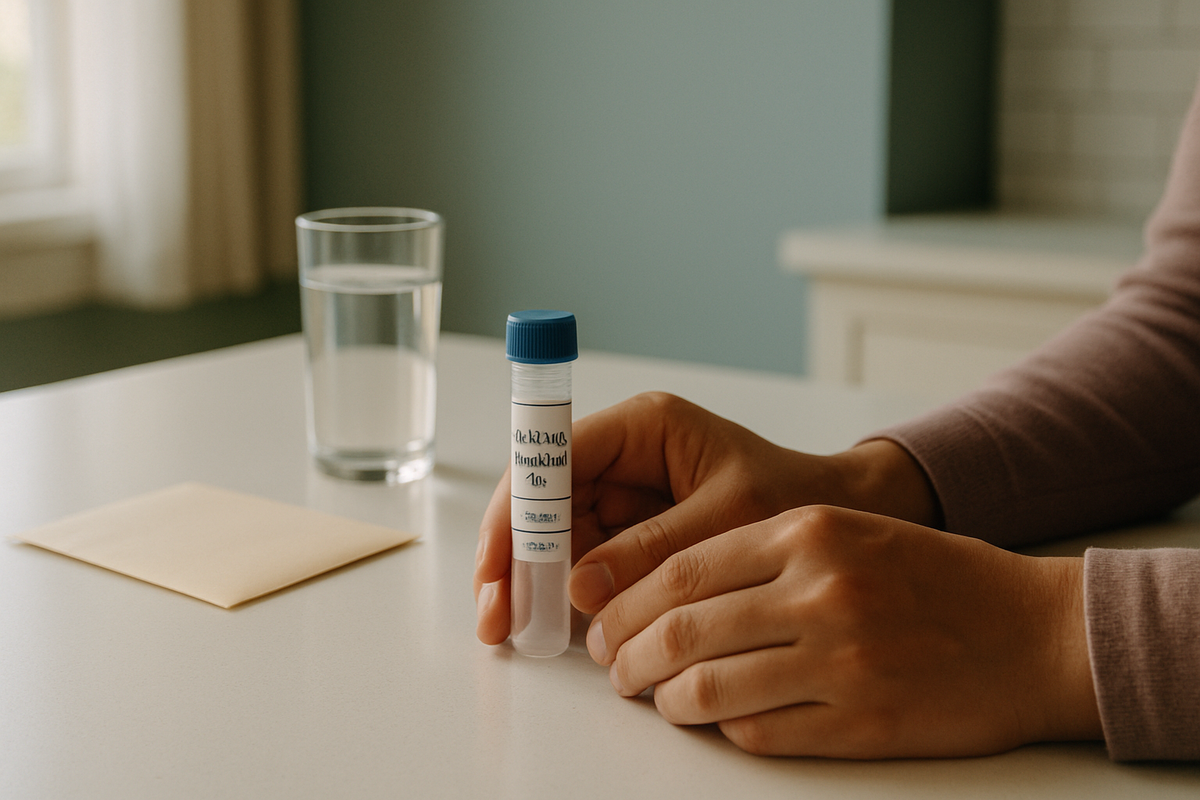
Colorectal cancer is now the leading cause of cancer-related death among Americans under 50 — and yet one in three eligible adults has never been screened. The American Cancer Society just made it significantly easier to change that. In 2026, the ACS updated its colorectal cancer screening guidelines to officially include two new at-home stool tests and a first-of-its-kind blood-based screening option. Here is everything you need to know about what changed, which test might be right for you, and why catching this cancer early could save your life.
Why the American Cancer Society Updated Its Colorectal Cancer Screening Guidelines
For years, a persistent and troubling gap has defined colorectal cancer prevention in the United States: more than 20 million eligible Americans remain completely unscreened, representing roughly one-third of all adults who should be getting tested. At the same time, early-onset colorectal cancer — cases diagnosed in people under age 50 — has been rising globally and is now the number one cause of cancer-related death in both males and females under 50. This is a crisis hiding in plain sight.
Part of the problem is awareness. According to the 2026 Colorectal Cancer Alliance State of Screening Study, only about half of Americans are aware that at-home colorectal cancer screening tests even exist. The other part of the problem is access and willingness — colonoscopies, while highly effective, require bowel preparation, sedation, time off work, and a ride home, all of which are barriers that prevent many people from ever scheduling one.
The ACS response to this challenge reflects a critical philosophical shift: the best screening test is the one a person is willing and able to complete. Rather than holding to a narrow list of acceptable options, the updated 2026 guidelines expand the menu significantly — giving patients and doctors more choices that match individual preferences, health conditions, and circumstances.
When Should You Start Colorectal Cancer Screening?
The recommended starting age for colorectal cancer screening has not changed with this update, but it is worth reviewing since it shifted downward in recent years and remains widely misunderstood.
Average-Risk Adults: Start at Age 45
If you have no personal or family history of colorectal cancer, no inflammatory bowel disease, and no known genetic syndromes associated with increased risk, you are considered average risk. The ACS recommends beginning screening at age 45 and continuing through age 75 for individuals with a life expectancy greater than 10 years. This lower starting age — previously 50 — reflects the rise in early-onset colorectal cancer.
Higher-Risk Individuals: Earlier and More Frequent
Some people need to begin screening before age 45 and may need to test more frequently. Risk factors that may qualify you for earlier or more intensive screening include:
- A personal history of colorectal cancer or certain types of polyps
- A family history of colorectal cancer or advanced polyps in a first-degree relative before age 60
- A diagnosed inflammatory bowel disease such as Crohn's disease or ulcerative colitis
- A known or suspected hereditary syndrome such as Lynch syndrome or familial adenomatous polyposis (FAP)
- Prior radiation therapy to the abdomen or pelvis
If any of these apply to you, speak with your doctor about a personalized screening schedule. Generic guidelines are a starting point, not a prescription.
Ages 76–85: A Conversation With Your Doctor
For adults between 76 and 85, the decision to continue screening should be individualized — based on your overall health, life expectancy, prior screening history, and personal preferences. Screening is generally not recommended past age 85.
What Are the New Screening Options in 2026?
Colorectal cancer screening tests fall into three broad categories: visual exams (which look directly at the colon), stool-based tests (which detect signs of cancer in a stool sample at home), and now — for the first time — a blood-based test (which detects tumor DNA in the bloodstream). The 2026 ACS update adds options in both the stool-based and blood-based categories.
Stool-Based Tests — The Expanded At-Home Options
At-home stool-based tests have existed for years, and many people find them far more acceptable than colonoscopy. The 2026 guidelines now include five stool-based options.
FIT and gFOBT — The Established Annual Tests
The fecal immunochemical test (FIT) and guaiac-based fecal occult blood test (gFOBT) are long-standing options that look for hidden (occult) blood in the stool — a potential sign of colorectal cancer or large polyps. Both are done at home and submitted annually. They are inexpensive, widely available, and covered by most insurance plans. Their limitation is that they do not detect DNA changes or distinguish between cancer and other causes of bleeding.
Cologuard (mt-sDNA) — DNA and Blood Detection Every 3 Years
Cologuard, the brand name for the multitarget stool DNA (mt-sDNA) test, is an FDA-approved at-home test that analyzes your stool for both abnormal DNA markers associated with colorectal cancer and hidden blood. It is done every three years rather than annually, which many people find more manageable. Cologuard has been available for several years and is now one of the preferred options in the updated guidelines.
ColoSense (mt-sRNA) — A New RNA-Based Option Every 3 Years
ColoSense is a newer FDA-approved at-home test that analyzes stool for RNA markers (rather than DNA) alongside hemoglobin detection. It represents a different molecular approach to identifying colorectal cancer signals and is also performed every three years. The inclusion of ColoSense in the 2026 guidelines marks its formal entry into recommended clinical practice.
What stool-based tests can and cannot detect:
- Can detect: signs of colorectal cancer and advanced polyps through blood or molecular markers
- Cannot detect: smaller or earlier polyps that do not yet bleed or shed detectable DNA/RNA
- Important: a positive result from any stool-based test must be followed by a colonoscopy within 6 months
The New Blood-Based Screening Test: Shield
One of the most headline-grabbing changes in the 2026 guidelines is the addition of a blood-based screening test — specifically the Shield test, which detects circulating tumor DNA in the bloodstream. This is not a home test; it requires a blood draw at a doctor's office or lab. It is FDA-approved and now officially recognized in ACS guidelines.
However, the ACS is clear: Shield is not a preferred option. It is recommended specifically for people who decline all stool-based and visual screening tests. The reasons for this distinction are important:
- Pros: No bowel preparation required, no dietary restrictions, a simple blood draw, and no need for sedation or a driver
- Cons: Less effective than stool-based tests at detecting precancerous lesions (polyps that have not yet become cancer); lower sensitivity for early-stage disease compared to colonoscopy or mt-sDNA tests
For someone who flatly refuses all other options, Shield is a meaningful step forward — it's far better than no screening at all. But for most people, stool-based or visual tests remain the stronger clinical choice.
Colonoscopy — Still the Gold Standard
Despite all the new options, colonoscopy remains the preferred visual exam and the overall gold standard for colorectal cancer screening. Performed every 10 years for average-risk individuals, colonoscopy allows a doctor to directly visualize the entire colon, identify polyps, and remove them during the same procedure — a capability no other screening method offers.
Other visual (structural) exams included in the guidelines:
- CT colonography (virtual colonoscopy): every 5 years; no sedation required, but polyp removal during the same visit is not possible
- Flexible sigmoidoscopy: every 5 years; examines only the lower portion of the colon
The 6-month follow-up rule applies across all non-colonoscopy tests: if any stool-based or blood-based test returns a positive result, a diagnostic colonoscopy must be scheduled within 6 months. Delaying follow-up significantly undermines the effectiveness of initial screening.
Which Colorectal Cancer Screening Test Is Right for You?
There is no single answer — which is the entire point of the 2026 guidelines update. Here is a practical comparison to help guide the conversation with your doctor:
- FIT / gFOBT: Annual, at-home, low-cost, detects blood only. Best for: people who want simple, frequent testing.
- Cologuard (mt-sDNA): Every 3 years, at-home, detects DNA and blood. Best for: people who want molecular precision without a clinic visit.
- ColoSense (mt-sRNA): Every 3 years, at-home, RNA-based. Best for: people seeking an alternative molecular approach.
- Shield (blood test): Frequency TBD, office blood draw, detects tumor DNA. Best for: people who decline all other options.
- CT colonography: Every 5 years, no sedation, clinic visit. Best for: people who cannot tolerate colonoscopy sedation.
- Colonoscopy: Every 10 years, gold standard, polyp removal possible. Best for: most people, especially those at higher risk.
The ACS philosophy is straightforward: adherence matters more than perfection. The test you will actually complete is better than the test that sits on the to-do list for years.
Access, Affordability, and the Screening Gap
Over 20 million Americans remain unscreened — and the reasons are not just behavioral. Access, cost, and geography play enormous roles. Some U.S. states, including Florida, trail the national colorectal cancer screening rate significantly. Rural populations, uninsured adults, and communities of color face disproportionately high barriers to accessing screening services.
The expansion of options in the 2026 guidelines is at least partly a response to this reality. At-home stool tests can be completed without clinic visits, without time off work, and without the logistical burden of colonoscopy preparation. For populations where access to specialty care is limited, these tests represent a genuine lifeline. Insurance coverage for the newly approved tests is expected to expand as they enter routine clinical practice — but patients should confirm coverage with their provider before ordering.
What to Do If Your Screening Test Is Positive
A positive result on a stool-based or blood-based screening test does not mean you have cancer. It means further investigation is necessary. The required next step is a diagnostic colonoscopy, ideally within 6 months of the positive result. Research consistently shows that delays in follow-up colonoscopy significantly worsen outcomes — not because the cancer grows faster, but because the window for intervention narrows.
It is important to understand the difference between a screening test and a diagnostic test. Screening tests cast a wide net; they are designed to detect signals that warrant closer inspection. False positives are possible, particularly with blood-based tests. A positive stool or blood test followed by a clear colonoscopy is still a good outcome — it means nothing was missed.
The Survival Advantage of Early Detection
The case for colorectal cancer screening is ultimately a statistical one, and the numbers are striking. When colorectal cancer is caught at its earliest, localized stage, the 5-year survival rate exceeds 90%. When it is detected after it has spread to distant organs, that figure drops to approximately 15%. The difference is screening.
Colorectal cancer is the third most common cancer worldwide and the second leading cause of cancer death globally. In the United States alone, it will kill an estimated 53,000 people this year. The majority of those deaths are preventable — not through medication or lifestyle change alone, but through the simple act of getting tested.
For younger adults who may feel exempt from the statistics: early-onset colorectal cancer is one of the fastest-rising cancer trends of the past two decades. If you are 45 or older, or have any of the risk factors listed above, your screening conversation starts now.
Conclusion
The 2026 ACS guideline update is not a revolution — it is an expansion of access. Colonoscopy still reigns as the gold standard. But for millions of people who have avoided screening due to inconvenience, anxiety, or lack of options, these new tests remove the excuses. A blood draw or a simple at-home kit sent through the mail is now a legitimate starting point for one of the most effective cancer prevention strategies available. Talk to your doctor about which option fits your age, risk level, and personal preference — and then follow through.
Sources
Medical News Today — New colorectal cancer screening guidelines add blood and at-home stool tests