
New Colorectal Cancer Screening Guidelines: Blood Tests and At-Home Options You Should Know About
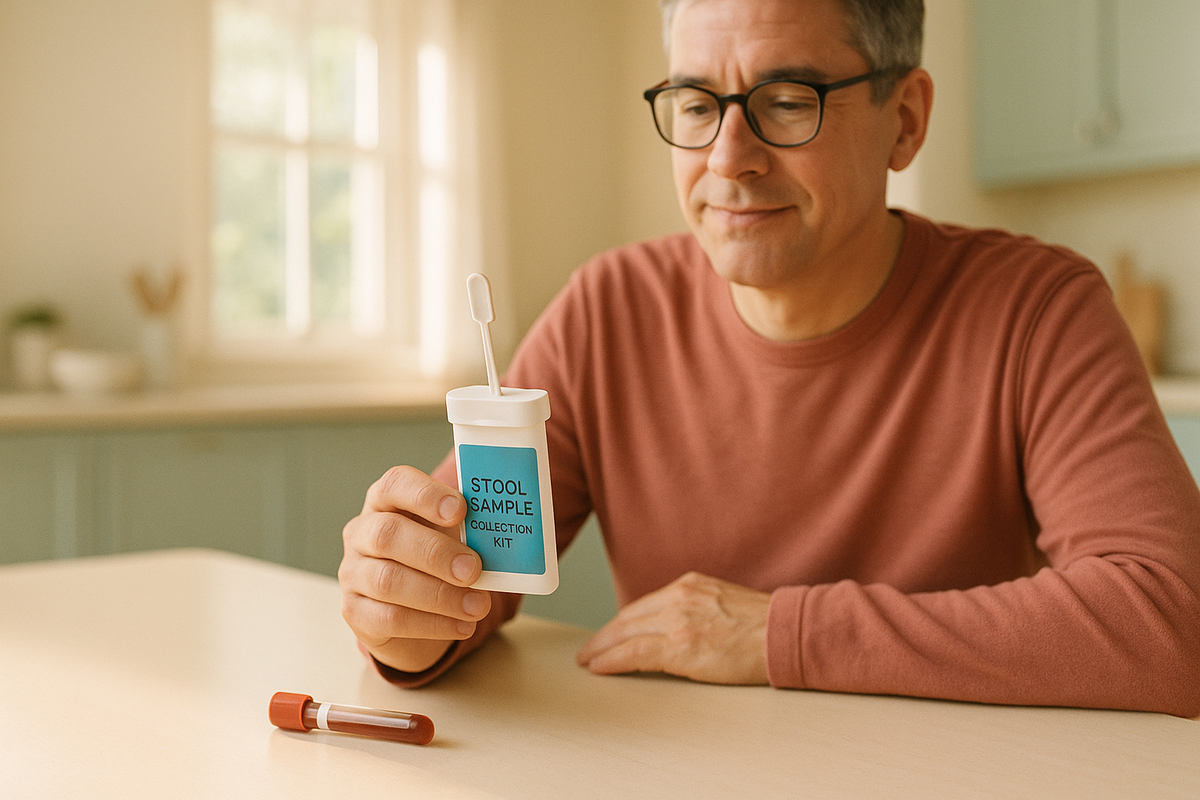
Colorectal cancer is the second-leading cause of cancer death in the United States — and yet it is one of the most preventable and treatable cancers when caught early. The problem is that screening rates remain alarmingly low, with roughly one in three eligible Americans not up to date on screening. On May 27, 2026, the American Cancer Society released updated guidelines that add new testing options — including a blood test and updated at-home stool DNA tests — making it easier than ever to get screened in a way that works for your life. Here is what changed and what you need to know.
Why Colorectal Cancer Screening Matters More Than Ever
Colorectal cancer (CRC) affects the colon and rectum and kills approximately 53,000 Americans every year. Despite decades of awareness campaigns, a significant portion of the population remains unscreened. What makes this particularly frustrating is that CRC is highly preventable: most cases develop from precancerous polyps that grow slowly over years, giving doctors ample time to find and remove them before they turn cancerous — if screening happens on schedule.
A notable shift in recent years is the rising rate of colorectal cancer in adults under 50. This trend is what prompted the ACS to lower the recommended screening age from 50 to 45 in 2021 — a change the 2026 guidelines reaffirm. If you are between 45 and 75 and of average risk, you should be screened now.
What Changed in the 2026 ACS Guidelines
The core framework of the guidelines remains intact: colonoscopy and stool-based tests are the preferred screening tools. What changed is the menu of options:
- New blood-based screening test added: The Shield test (Guardant Shield) is now a recommended — though not preferred — option, making it the first blood-based CRC screening test in ACS guidelines
- Updated stool DNA tests: The guidelines incorporate updated multitarget stool DNA tests, including a newer-generation Cologuard formulation with improved performance
- Screening age reaffirmed: Average-risk adults should start at age 45 and continue through age 75
- Annual options: Blood test (Shield) and some stool tests remain annual
- Every 3 years: Multitarget stool DNA test (Cologuard)
- Every 10 years: Colonoscopy for average-risk adults
The Three Tiers of Colorectal Cancer Screening
Visual Exams — The Gold Standard
Colonoscopy is the most comprehensive screening option available. During the procedure, a physician inserts a thin, flexible tube with a camera into the colon and directly examines the entire colon and rectum. Critically, if a polyp is found, it can be removed on the spot — making colonoscopy the only CRC screening method that can both detect and prevent cancer in a single visit. Recommended every 10 years for average-risk adults.
CT colonography (virtual colonoscopy) is a non-invasive imaging test that creates a 3D map of the colon. It is recommended every 5 years. Unlike traditional colonoscopy, it cannot remove polyps — a positive result requires a follow-up colonoscopy. It is a useful option for people who cannot tolerate the traditional procedure.
Stool-Based Tests — Non-Invasive and Convenient
Stool-based tests detect signs of cancer or precancerous changes in stool samples collected at home. They are significantly less invasive than colonoscopy and can be done in the comfort of your own bathroom.
- Multitarget stool DNA test (Cologuard): Analyzes stool for cancer DNA markers, certain proteins, and hidden blood. The newer-generation test detects approximately 94% of colorectal cancers (NEJM, 2024). Done every 3 years. A positive result requires follow-up colonoscopy.
- Fecal immunochemical test (FIT): Detects hidden blood in stool using antibodies specific to human hemoglobin. Annual. Simple, no dietary restrictions needed. One of the most cost-effective screening options available.
- Guaiac fecal occult blood test (gFOBT): Also detects hidden blood. Annual. Older method; dietary restrictions required before collection. Less specific than FIT.
Blood-Based Tests — New to the Guidelines
The Shield test (Guardant Shield) works by detecting fragments of tumor DNA circulating in the blood — a technology known as liquid biopsy. It requires just a standard blood draw at a doctor’s office, making it the most accessible option from a convenience standpoint.
However, its limitations are significant. Shield detects approximately 83% of colorectal cancers but only 13% of advanced precancerous polyps. Since removing polyps is the primary mechanism by which screening prevents cancer, a test that misses 87% of polyps has a meaningful gap in its protective coverage. The ACS classifies it as “recommended but not preferred” — meaning it is better than no screening, but stool-based and visual exams remain superior. Must be done annually.
How the Tests Compare
Understanding the trade-offs helps you make an informed decision with your doctor:
- Colonoscopy: Detects and removes polyps; every 10 years; requires bowel prep and sedation; most comprehensive protection
- Cologuard (stool DNA): 94% CRC sensitivity; 42% polyp detection; every 3 years; no prep; positive result needs colonoscopy
- FIT: ~79% CRC sensitivity; annual; no prep; most cost-effective
- Shield (blood test): 83% CRC sensitivity; 13% polyp detection; annual; simple blood draw; least effective for polyp prevention
A 2025 study in the journal Cancer found that the Cologuard stool test cost $6,300 per quality-adjusted life year (QALY) gained versus no screening — a highly favorable ratio. The Guardant Shield blood test cost $89,600 per QALY — over 14 times more for similar outcomes.
What Happens If Your Test Is Positive
A positive result on any non-invasive test is not a cancer diagnosis. It is a signal that requires further investigation. The ACS guidelines specify that a positive result must be followed by colonoscopy within 6 months. Many people who test positive will have a follow-up colonoscopy that finds no cancer — the original positive may have been triggered by a benign polyp or other non-cancerous cause. But the follow-up is essential and should not be skipped.
Which Screening Option Is Right for You?
The ACS puts it simply: the best colorectal cancer screening test is the one you will actually do. Choosing a test you are comfortable with and completing it on schedule provides far more benefit than selecting the ideal test and never following through.
- If you have no risk factors and can tolerate a colonoscopy, it offers the most comprehensive protection
- If you prefer to avoid procedures, Cologuard every 3 years is the most effective non-invasive alternative
- If annual screening is acceptable and you want simplicity, the FIT test is low-cost and effective
- If a blood draw is genuinely the only option you will accept, Shield is now a recognized option
- If you have a family history of CRC or a prior positive result, consult your doctor about a more intensive schedule
How to Talk to Your Doctor About Screening
Bring these questions to your next appointment:
- Am I considered average-risk or higher-risk for colorectal cancer?
- Which screening test do you recommend for my situation?
- Is the test covered by my insurance?
- If I test positive, what is the follow-up process?
Under the Affordable Care Act, colonoscopy and most other recommended CRC screening tests are covered without cost-sharing for average-risk adults ages 45 and older. More options mean fewer excuses. If you are 45 or older and have not been screened, this is the year to have that conversation with your doctor. Early detection changes outcomes dramatically — and screening doesn’t just find cancer early; in many cases it prevents it from developing at all.
Sources
New colorectal cancer screening guidelines add blood and at-home stool tests — Medical News Today