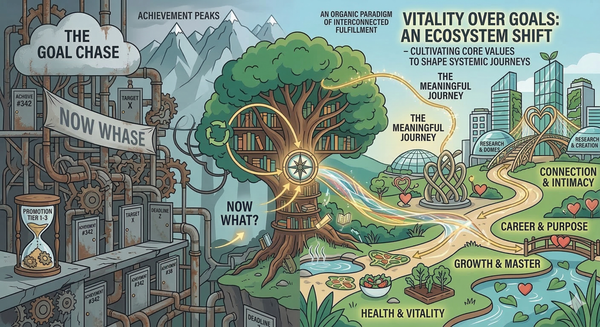
Life Planning 2025: From 10-Year Vision to Quarterly Goals You’ll Actually Hit
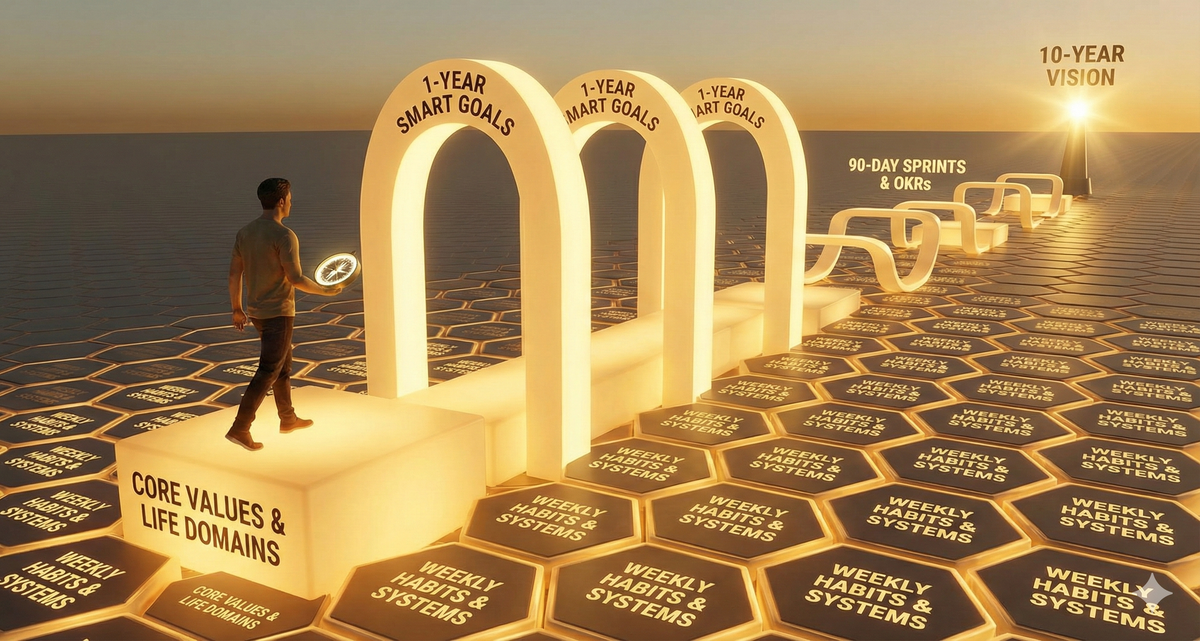
Every January, millions of people set lofty goals—only to abandon them by February. The problem isn’t a lack of motivation; it’s a lack of a system that connects what you want long-term with what you do today. This article offers a complete life planning system that links a clear 10-year vision with focused 1-year goals and high-velocity 90-day sprints.
You’ll learn how to set meaningful targets, translate them into action, track progress with OKRs, and build weekly habits that keep you moving forward. If you want 2025 to be your most intentional and goal-oriented year yet, this guide shows you how.
Why Traditional Goal Setting Fails (and What to Do Instead)
The Problem with New Year’s Resolutions
New Year’s resolutions fail because: They’re vague and outcome-only: “Get fit” or “Save more money” lacks clarity on how, when, and how much.
They’re not connected to identity: Without alignment to who you want to become, motivation fades quickly.
They ignore structure: There’s no plan for weekly execution, accountability, or feedback loops.
They overload willpower: Too many goals at once creates cognitive load, decision fatigue, and burnout. They skip measurement: Without leading indicators, you can’t course-correct before it’s too late.
The Power of a Holistic Life Planning System
A holistic system fixes these gaps by: Starting with meaning: Define a 10-year vision tied to your core values and life domains. Translating into clear targets: Set specific, measurable 1-year goals. Executing in cycles: Use 90-day sprints with OKRs (Objectives and Key Results). Reviewing weekly: Inspect progress, remove blockers, and adjust. Building supportive habits: Systems beat willpower. Habits make outcomes inevitable. This approach aligns strategy (long-term vision) with tactics (weekly actions), giving you clarity, momentum, and measurable results.
Step 1: Define Your 10-Year Vision for a Meaningful Life
Connecting with Your Core Values
Before you set goals, get clear on what matters. Values act as your compass when choices get hard. Common values: Freedom, mastery, family, health, integrity, creativity, growth, service, adventure, stability.
Values elicitation exercise:
- Write a peak life moment and list the values present.
- Write a low point and list the values violated.
- Circle 5 core values and rank them 1–5.
- Write one sentence per value describing what it looks like in action.
Example:
- Value: Health. In action: I move my body daily, prioritize sleep, and fuel with whole foods.
- Value: Family. In action: I am present at dinner, plan monthly outings, and call my parents weekly.
Envisioning Your Ideal Future Across Life Domains
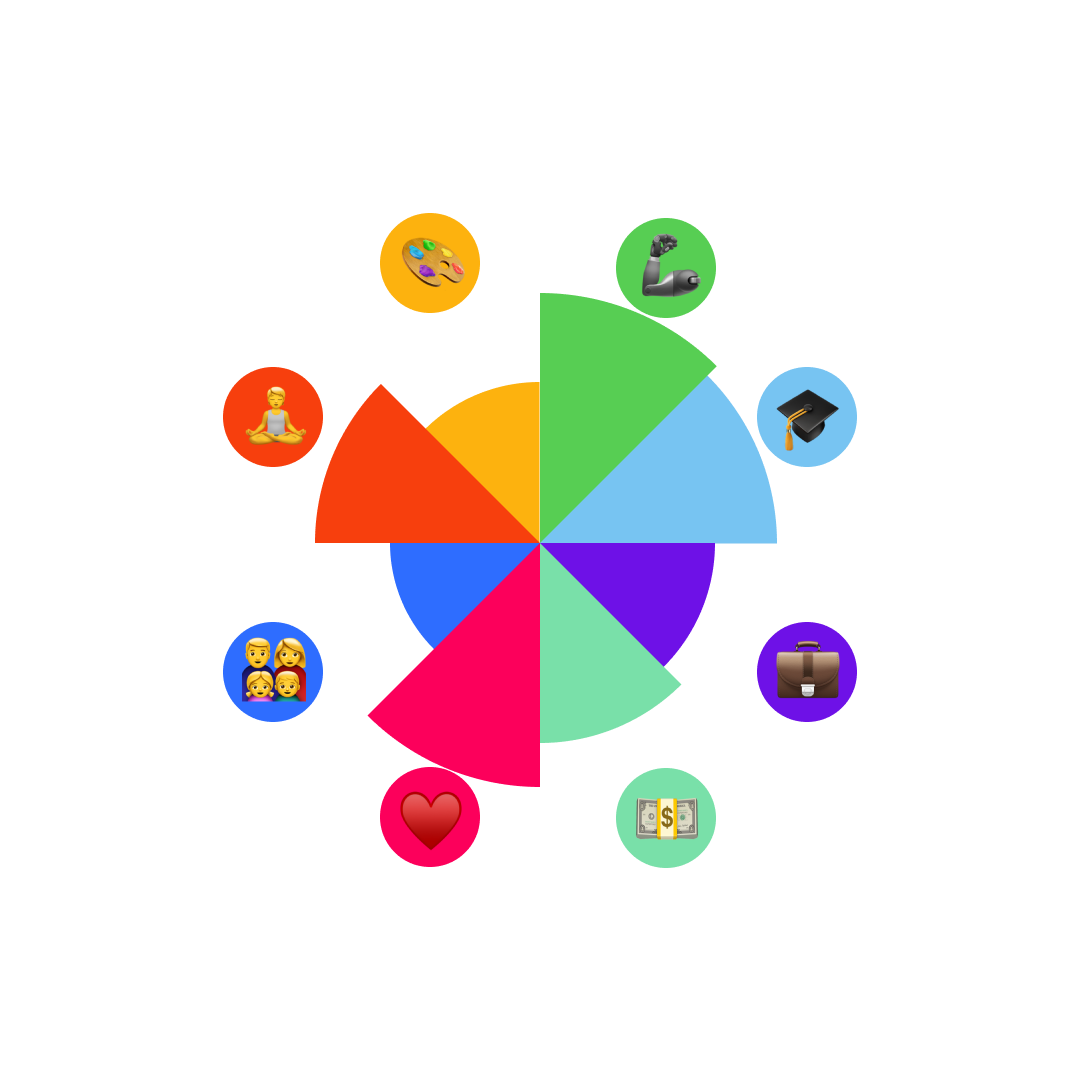
Use life domains to ensure a balanced vision: Health and fitness, Relationships and family, Career and business, Finances and wealth, Learning and personal growth, Creativity and hobbies, Contribution and community, Lifestyle and environment, Spirituality and inner life.
For each domain, answer:
- What would extraordinary look like in 10 years?
- What would “enough” look like?
- What’s non-negotiable?
Example prompts:
- Health: How do you feel waking up? What activities are you capable of?
- Career: What kind of work do you do? What impact do you have? Who do you serve?
- Finances: What’s your net worth? What freedom does it provide?
- Relationships: What rituals keep your connections strong?
Writing a Compelling Future Narrative
Turn your vision into a vivid story. Write in present tense as if it’s already 2035. Structure: Opening snapshot: A day in your ideal life. Domain highlights: One paragraph per domain.
Identity statement: Who you are and what you stand for. Keep it emotional and specific. Details drive motivation.
Future narrative snippet: “It’s June 2035. I wake naturally at 6:00 after a full night’s sleep. I run three miles along the water and feel strong. I lead a small, high-impact team in a mission-driven company. Our products improve mental health for millions. Dinner is with my family; we laugh, phones away. Our finances are stable, and we donate 10% to causes we believe in. I’m calm, curious, and present.” Tip: Revisit and refine your narrative quarterly. It’s a living document.
Step 2: Translate Your Vision into Actionable 1-Year Goals
The Art of Setting SMART Goals
Turn each domain’s vision into a small set of annual goals. Make them SMART:
- Specific: What exactly will you achieve?
- Measurable: How will you quantify success?
- Achievable: Is it realistic given constraints?
- Relevant: Does it align with your values and vision?
- Time-bound: What’s the deadline?
Examples:
- Health: Run a half marathon by October; complete a strength program with 3 workouts per week for 40 weeks.
- Career: Lead a successful product launch with $500,000 in revenue by Q4.
- Finances: Increase emergency fund to 6 months’ expenses by November.
- Learning: Complete a data analytics certification by August and build three portfolio projects.
- Relationships: Schedule and keep 12 monthly date nights and two weekend getaways.
Aim for 3–5 annual goals across your top domains. Fewer goals mean more focus and better odds of success.
Prioritizing Your Goals for Maximum Impact
Not all goals are equal. Prioritize using a simple scoring model:
- Impact: If achieved, how much would this change your life (1–10)?
- Confidence: How likely are you to achieve it this year (1–10)?
- Effort: How many hours/costs will it require (invert this score so lower effort has higher points)?
Compute Priority Score = Impact + Confidence + (10 – Effort). Pick the top 3–5.
Complement with:
- Dependency mapping: Which goals unlock others?
- Capacity planning: Estimate weekly time required per goal. Ensure your plan fits your real schedule.
Step 3: The Game-Changer: Implementing 90-Day Quarterly Sprints
Breaking Down Annual Goals into Quarterly Objectives
Think in 90-day cycles. Each quarter, choose 1–3 Objectives that meaningfully advance your annual goals.
Objective format: Qualitative, inspiring, time-bound.
Example: “Build a consistent fitness foundation.” Then define quarterly targets that, if achieved, put you on track for the year. Quarterly breakdown example (Health annual goal: run a half marathon by October):
Q1 Objective: Build aerobic base and routine. Targets: Run 3x/week; long run to 8 miles; strength twice/week.
Q2 Objective: Increase speed and durability. Targets: Tempo runs 1x/week; long run to 11 miles; address mobility.
Q3 Objective: Peak and taper for race day. Targets: Long run to 13 miles; dial nutrition and sleep; race rehearsal.
How to Set and Track Key Results (OKRs)
OKRs align your quarterly Objectives with measurable Key Results.
Objective: Qualitative, direction-setting.
Key Results: Quantitative, outcome-focused, with clear thresholds.
Examples:
- Objective: Launch a profitable pilot of the new product by end of Q2.
- KR1: Sign 10 paying pilot customers at $1,000 each.
- KR2: Achieve NPS of 40+ across pilot users.
- KR3: Ship 3 core features (A, B, C) by week 10 with <2 priority-1 bugs.
- Objective: Build a consistent health routine.
- KR1: Complete 36 workouts in Q1.
- KR2: Average 7.5 hours of sleep per night for 10 of 13 weeks.
- KR3: Prepare 4 home-cooked dinners per week.
Tracking tips: Use leading indicators (workouts completed) alongside lagging indicators (weight, time, revenue). Score KRs weekly as a percentage toward target. Treat OKRs as learning tools, not judgments. If a KR is off-track by week 4, adjust the plan.
The Importance of a Weekly Review
Weekly reviews are your feedback loop. They turn intentions into consistent execution. Schedule a non-negotiable 45–60 minutes at the same time each week. Checklist:
- Reflect: What went well? What didn’t? What did I learn?
- Review metrics: OKR progress, habit tracker, calendar, energy levels.
- Clear the decks: Inbox to zero, capture loose tasks, update your task manager.
- Plan the week: Choose 3 Most Important Tasks (MITs) aligned to your quarterly Objectives. Time-block them.
- Anticipate obstacles: Identify risks; create if-then plans (implementation intentions).
- Commit: Write a one-sentence weekly intention. Example: “This week I protect my mornings for deep work and complete the v1 pilot demo by Thursday.”
Step 4: Systems and Tools for Success
Choosing Your Goal-Setting Tools
Use tools that fit your style. Keep it lightweight and consistent.
Planning and notes: Notion or Obsidian: Central hub for vision, goals, OKRs, and notes. Google Docs/Sheets: Simple, shareable, great for OKR dashboards.
Tasks and projects: Todoist, Things, Asana, ClickUp, or Trello: Manage tasks, due dates, and priorities.
Calendar: Google Calendar or Outlook: Time-block MITs and routines.
Habits and tracking: Streaks, Loop Habit Tracker, Habitify, or Apple Health/Garmin: Track daily behaviors.
Journaling and reflection: Day One or a paper journal: Capture insights and reinforce identity.
Minimalist setup example: One document: 10-year vision and future narrative. One sheet: Annual goals, quarterly OKRs, and weekly scores. One task app: Daily tasks and MITs. One calendar: Time blocks for execution and your weekly review.
Building Habits That Support Your Goals
Goals set direction, habits create momentum. Make habits small, specific, and tied to cues. Habit design: Start tiny: 5 minutes of movement after coffee; one paragraph for your writing goal.
Use implementation intentions: “If it’s 7:00 a.m., then I put on running shoes and walk outside.” Stack habits: “After I brush my teeth, I’ll stretch for 2 minutes.”
Reduce friction: Lay out clothes, pre-portion meals, set app blockers for deep work.
Create accountability: Buddy, coach, or public commitment. Keystone habits that compound: Sleep 7–8 hours.
Morning planning: Define your daily MIT.
Move daily: Even 10–15 minutes boosts energy and consistency. Shutdown routine: Review completed tasks and set tomorrow’s top 1.
Identity-based reinforcement: Shift from “I want to run” to “I am a runner who trains consistently.” Track streaks to visualize identity consistency, not perfection.
Practical habit tracker fields: Habit name, Frequency (e.g., 5x/week), Trigger (cue), Minimum viable action, Stretch target, Streak and success rate.
Conclusion: Your Journey to a Goal-Oriented 2025
If you’ve struggled with traditional goal setting, the issue isn’t you—it’s the system. Trade vague resolutions for a clear hierarchy: A 10-year vision rooted in your values and life domains. 1-year SMART goals that translate vision into targets. 90-day sprints with OKRs that drive focused execution. Weekly reviews and habits that keep you on track.
Your next steps:
- Block one hour this week to draft your 10-year future narrative.
- Choose up to five SMART goals for 2025 aligned with your values.
- Design your Q1 Objectives and 3–5 Key Results each.
- Schedule a weekly review and protect it.
- Build one keystone habit to support your biggest goal.
Make 2025 the year you stopped relying on motivation and started relying on systems. With a clear vision, focused goals, and consistent routines, progress becomes predictable—and your most meaningful life becomes attainable.