
Is DEET Still Effective? New Research Shows Mosquitoes May Be Learning to Ignore It
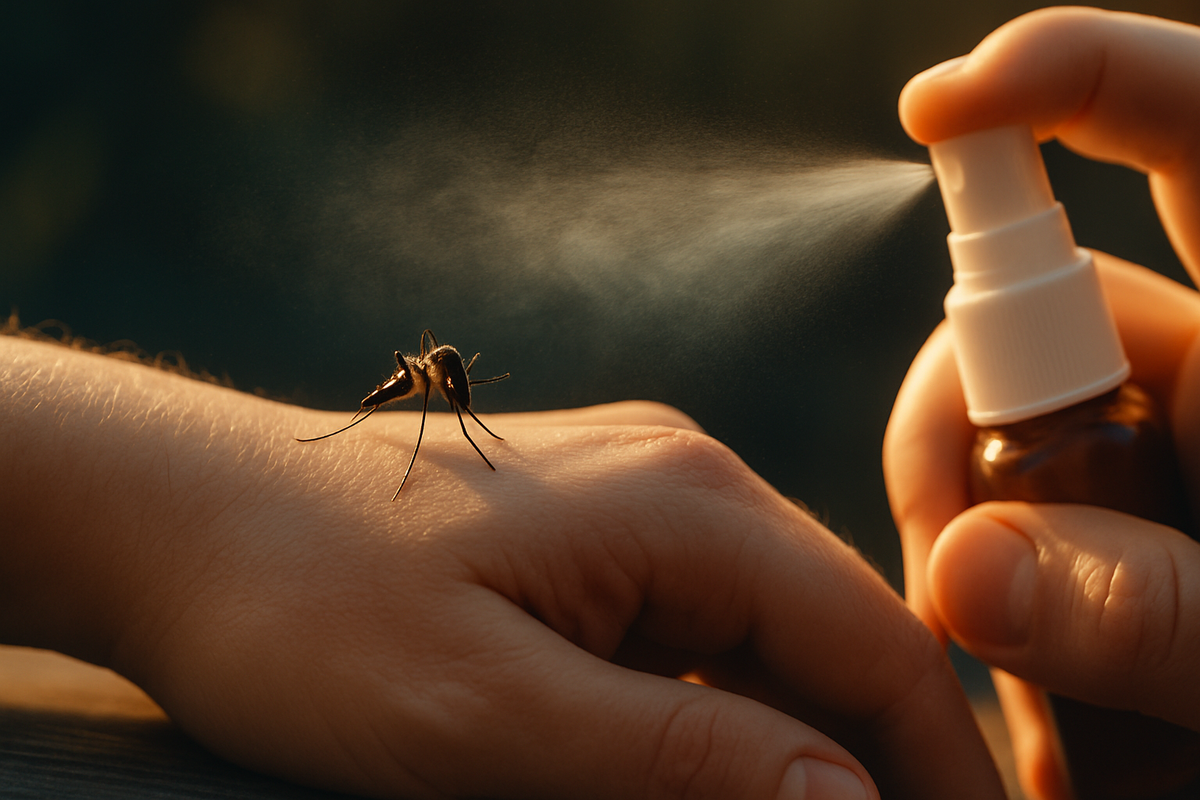
Mosquitoes have been biting humans for millions of years, and for decades, DEET has been our most reliable chemical weapon against them. But a landmark 2026 study from Virginia Tech has raised an unsettling possibility: mosquitoes may be capable of learning to ignore DEET — at least under certain conditions. Here is what the research found, what it means for your summer protection, and how to stay safe whether you stick with DEET or switch to an alternative.
The Virginia Tech Study: What Happened in the Lab
The study, published in the Journal of Experimental Biology in May 2026, was led by researcher Clément Vinauger at Virginia Tech. His team focused on Aedes aegypti, the mosquito species responsible for transmitting dengue fever, Zika virus, and yellow fever — among the most dangerous disease vectors on the planet.
The researchers used a classic behavioral conditioning technique: Pavlovian conditioning. Over four training trials, they repeatedly paired the scent of DEET with a reward — in this case, a blood meal. The idea was to mimic what might happen in real life when a mosquito encounters DEET but eventually gets through it to feed, reinforcing an association between the chemical smell and food.
The results were striking. After just four training sessions, more than 60% of the trained mosquitoes approached a DEET-treated hand. Untrained mosquitoes, exposed to DEET for the first time, avoided it as expected. The mosquitoes had not lost their ability to smell DEET — they had changed their behavioral response to it through learned association.
Why This Happens: The Science Behind Mosquito Learning
Mosquitoes are not mindless biting machines. They have relatively sophisticated sensory systems and — as this research confirms — primitive but real learning capabilities. The brain circuits that support associative learning in insects are well-documented; what is new here is that this learning applies specifically to DEET, one of the most widely used repellents in the world.
There are two plausible real-world scenarios where this conditioning could occur:
- Concentration fading: When DEET is applied and begins to wear off, a mosquito that approaches a partially protected person may encounter the smell of DEET alongside a feeding opportunity. Over repeated encounters, it could form a learned association between the DEET smell and the availability of blood.
- Breakthrough feeding: If someone applies too little DEET, applies it to only some skin areas, or sweats it off, mosquitoes that persist through the smell and successfully feed could reinforce the DEET-as-food-signal association.
The key takeaway from the researchers: this learned behavior is not permanent or universal. It depends on repeated exposure in specific conditions. At proper concentrations applied correctly, DEET remains highly effective.
DEET Is Still Effective — With an Important Caveat
Before drawing any alarming conclusions, it is essential to understand what this research does and does not say. The Virginia Tech study showed that mosquitoes can learn to tolerate DEET — it did not show that DEET has stopped working. The distinction matters enormously.
DEET works through two mechanisms: it confuses the mosquito’s CO2 and odor receptors, making it harder for the insect to locate a human host, and it produces an aversive stimulus that trained mosquitoes normally avoid. The critical variable is concentration and freshness.
- Products with 20–30% DEET provide reliable protection for 4–5 hours
- Lower concentrations (under 10%) wear off faster and may not maintain the intensity needed to deter conditioned mosquitoes
- Reapplication is essential after swimming, heavy sweating, or extended outdoor time beyond the labeled protection window
The EPA and CDC continue to recommend DEET as a first-line repellent. Used correctly, it remains one of the most well-studied and effective options available.
Alternatives to DEET: How Do They Compare?
If the Virginia Tech findings make you want to diversify your mosquito repellent strategy — or if you have long found DEET too greasy, irritating, or pungent — there are three EPA-registered alternatives that perform comparably in field studies.
Picaridin
Picaridin (also known as icaridin or KBR 3023) is the closest competitor to DEET in terms of effectiveness. At 20% concentration, it provides protection comparable to 20–30% DEET products — typically 8–10 hours for mosquitoes. Importantly, it has a different mechanism of action from DEET, which means the conditioning response observed in the Virginia Tech study does not directly apply to it. It is odorless, non-greasy, and does not damage plastics or synthetic fabrics the way DEET can. For many users, it is now the preferred option.
IR3535
IR3535 (ethyl butylacetylaminopropionate) is a synthetic amino acid derivative that has been in use in Europe since 1975. It is biodegradable, approved for use during pregnancy and on young children, and is considered one of the safest repellent options on the market. Protection duration is shorter than DEET or picaridin — typically 3–4 hours at 20% concentration — so more frequent reapplication is needed. It is available in many combination SPF + repellent products, though dermatologists note that layering SPF and repellent in separate applications gives better coverage of each.
Oil of Lemon Eucalyptus (OLE)
Oil of Lemon Eucalyptus is the only plant-derived repellent recommended by the CDC for protection against mosquitoes that transmit serious diseases. It contains the active compound PMD (para-menthane-3,8-diol) and provides approximately 2 hours of protection per application. It is not recommended for children under 3. It should not be confused with pure lemon eucalyptus essential oil, which is not the same formulation and has not been tested for efficacy. OLE is a solid option for shorter outdoor activities, but its shorter protection window means more frequent reapplication compared to DEET or picaridin.
Practical Protection: How to Use Repellents Correctly
Regardless of which repellent you choose, application technique significantly affects how well it works. These best practices apply across all EPA-registered options:
- Apply repellent to all exposed skin — not just arms and legs. Mosquitoes will find any uncovered patch.
- Do not apply under clothing, but do apply to clothing if fabric coverage is thin or if mosquitoes bite through it
- Apply to the face by spraying onto your hands first, then rubbing carefully onto the face — avoid the eyes and mouth
- Reapply according to the product’s labeled duration, or whenever you feel biting activity resuming
- If using sunscreen and repellent together, apply sunscreen first, let it absorb, then apply repellent on top
- Wash repellent off with soap and water when you return indoors
Should You Stop Using DEET?
The short answer: no. The Virginia Tech research identifies a real phenomenon — mosquitoes are more behaviorally adaptable than previously understood — but it does not provide evidence that DEET has become ineffective for human use. What it does underscore is the importance of proper application: using an adequate concentration, reapplying on schedule, and not relying on low-dose or heavily faded product as your sole protection.
If you are concerned, the most practical response is to rotate repellents or switch to picaridin, which has a different sensory mechanism and the same efficacy profile. For travel to high-transmission regions (dengue, Zika, malaria zones), DEET at 20–30% remains the gold standard recommendation from travel medicine specialists. For backyard use and casual outdoor activities, picaridin at 20% is an excellent low-irritation alternative.
The Bigger Picture: Insect Adaptability
The Virginia Tech study adds to a growing body of research on insect behavioral adaptation. Resistance to pesticides is well-documented in mosquitoes and other insects at the genetic level. This study suggests that behavioral learning may be an equally important — and potentially faster — adaptation mechanism. Unlike genetic resistance, which takes generations to develop, behavioral conditioning can occur within an individual mosquito’s lifetime.
This has implications for how public health officials think about repellent programs, and may eventually influence formulation strategies. But from a practical standpoint today, the message is the same as it has always been: use an EPA-registered repellent, use enough of it, and reapply it on schedule.
Sources
Study Shows Mosquitoes Can Learn to Ignore DEET: What Repellents Still Work — Medical News Today