How to Use Your Calendar as a Decision-Making Tool, Not Just a Schedule

Is your calendar a source of stress or a source of meaning? For most of us, it’s a chaotic mix of meetings, appointments, and reminders that dictates our time, leaving us feeling busy but unfulfilled. We treat it as a passive repository for obligations.
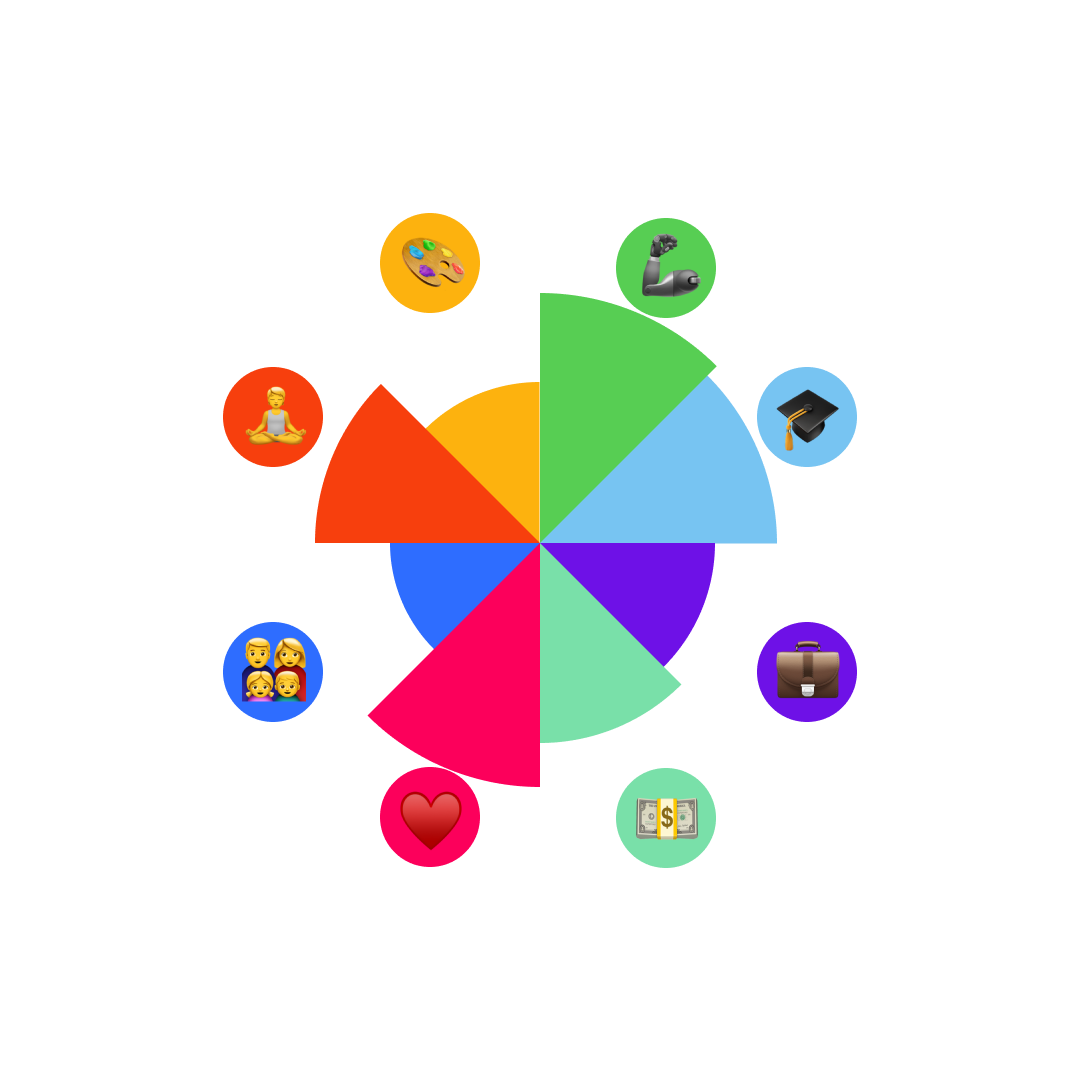
But what if we transformed it from a simple schedule into a powerful decision-making tool? By reframing your calendar’s purpose, you can move from a reactive life to one of intentional action, aligning your daily activities with what truly matters in the Meaning sphere of your life.
From Chaos to Clarity: Turning Intentions into Real Actions
This section explains how a structured calendar provides the framework to execute on goals that would otherwise remain abstract intentions.
How a calendar turns chaotic intentions into real actions
An intention without a plan is just a wish. We often have vague goals like “learn a new skill” (Growth) or “spend more time with family” (Community), but they remain in the realm of abstraction. By assigning a specific time slot for these activities in your calendar, you are turning a chaotic intention into a concrete action. It’s a psychological shift from a passive ‘to-do list’ to an active ‘to-live list.’ The simple act of scheduling makes your commitment real and non-negotiable, transforming your calendar into a roadmap for your desired life.
The time-blocking principle and how it reduces stress
Time-blocking is the practice of scheduling out every part of your day. Instead of working from an open-ended to-do list, you assign a specific job to every minute. This proactive approach to time management has profound benefits for reducing stress and increasing focus. It eliminates the constant mental calculus of figuring out what to do next, freeing up cognitive resources for the task at hand. The primary benefits include:
- Reduced Decision Fatigue: By making the decision of what to do ahead of time, you conserve mental energy for more important tasks.
- Increased Focus: A defined block for a single task encourages deep work and minimizes the temptation of multitasking.
- Realistic Workload Assessment: When you block out your time, you get an honest look at how much you can actually accomplish, preventing overcommitment.
The Calendar as a Decision-Making Compass
This section focuses on the core theme: using the calendar proactively to make better decisions, rather than reactively scheduling obligations.
Using your calendar as a decision-making tool, not just a planning tool
Every time you add an event to your calendar, you are making a decision. You are saying “yes” to this and, by extension, “no” to countless other possibilities. When used intentionally, this makes your calendar a powerful filter. Before accepting a meeting or committing to a task, consult your calendar not just for availability, but for alignment with your priorities. If your calendar is already blocked for ‘Deep Work’ (Career) or ‘Family Dinner’ (Community), it becomes much easier to decline requests that don’t serve your ultimate goals. It forces you to ask: "Is this activity a better use of my time than what I had planned?"
How to align your calendar with annual and monthly goals
Your calendar should be a direct reflection of your long-term ambitions. Start by defining your annual goals for each life sphere (e.g., 'Run a 10k' in Health, 'Complete a certification' in Growth). Then, break these down into monthly milestones and weekly actions. Finally, schedule these actions directly into your calendar. If your goal is to write a book, you should have recurring blocks for ‘Writing Time.’ This method connects your grand vision to the daily grind, ensuring that every hour you schedule is another step toward the life you want to build.
Why an empty calendar leads to poor decisions
It’s a common misconception that an empty calendar equates to freedom. In reality, a lack of structure often leads to reactive, impulsive choices. When your time is unspoken for, you’re more likely to spend it on low-value tasks, mindless scrolling, or responding to others’ urgent but unimportant requests. An unstructured day invites chaos and allows your time to be dictated by external forces. A purposefully structured calendar ensures that you, not your inbox, are in control of your time and your life.
Practical Strategies for Meaningful Scheduling
This section offers actionable techniques for managing the calendar in a way that supports a meaningful life.
Separating energy levels and task types: use color-coding
Not all hours are created equal. You might have high creative energy in the morning and prefer administrative tasks in the afternoon. Color-coding your calendar is a brilliant way to manage energy, not just time. Assign a different color to each life sphere or task type to see at a glance how you are allocating your life. This visual feedback helps you make better scheduling decisions and ensure a balanced life. For example:
- Red (Career): Deep work, focused tasks.
- Blue (Growth): Learning, reading, skill development.
- Green (Health): Workouts, meal prep, walks.
- Yellow (Rest): Hobbies, leisure, downtime.
- Purple (Meaning): Journaling, meditation, reflection.
How to schedule not only meetings but also priorities, recovery, and personal life
Your calendar should not be exclusively for work. It is a tool for designing your entire life. It's crucial to block out time for the other essential life spheres with the same seriousness as a client meeting. Schedule your workouts (Health), date nights (Relationships), and hobbies (Rest). Block out time for recovery and doing nothing at all. When you treat your personal priorities with the same respect as your professional ones, you create a sustainable and deeply fulfilling life rhythm.
Online vs offline planning: when each format works best
The debate between digital and analog calendars is personal, but a hybrid approach is often most effective. Digital calendars (like Google Calendar or Outlook) are unmatched for collaboration, sharing, and setting automated reminders.
Analog planners (like a paper journal) excel at promoting mindful, intentional planning. The physical act of writing can lead to better retention and a stronger sense of commitment. A good strategy is to use a digital calendar for appointments and a paper planner for daily intention-setting and reflection.
Maintaining a Clean and Purposeful Calendar
This final section covers the ongoing process of calendar management to prevent overload and ensure it remains a useful tool.
The 3-question test: should this task actually be on your calendar?
To prevent calendar clutter and burnout, you need a strong filtering system. Before accepting any new commitment, run it through this simple 3-question test:
- Is this aligned with my goals? Does this activity move me closer to my objectives in any of my core life spheres?
- Is this truly necessary? What would be the consequence if I didn’t do this?
- Am I the right person for this? Can this be delegated, automated, or declined?
This test creates a powerful pause, shifting you from an automatic “yes” to a thoughtful decision.
How to regularly clean your calendar to avoid overload
A calendar is like a garden; it requires regular maintenance. Set aside 30 minutes every Friday to conduct a calendar audit. Review the upcoming week and month. Re-evaluate your commitments.
Are there recurring meetings that are no longer useful? Did you over-schedule yourself? This regular practice of review and reflection ensures that your calendar remains a tool for purpose, not a source of overload. It allows you to correct course, re-prioritize, and enter each week with clarity and intention.
Conclusion
Your calendar is far more than a schedule of appointments; it is the physical manifestation of your life’s priorities. By shifting your approach from passive scheduling to active decision-making, you can transform it into your most powerful tool for building a life of meaning.
By time-blocking, aligning your schedule with your goals, and regularly auditing your commitments, you ensure that your most precious resource—your time—is spent on what truly matters. As your first step, block out 30 minutes on your calendar this week for your first calendar audit. It’s the first decision in taking back control of your time and your life.