Hooked on Health: Why "Fish Consumption, Fish Oil, Omega-3 Fatty Acids, and Cardiovascular Disease" is the Ultimate Guide for Your Heart
Have you ever looked at a menu and wondered if choosing the salmon over the steak actually makes a difference in how long you’ll live? We are constantly told that "omega-3s" are good for us, but with so much noise about mercury levels, fish oil pills, and plant-based seeds, it is hard to know what your heart actually needs to keep beating strong. It turns out that the answer lies in a powerful synergy between what we eat and how our bodies protect themselves from the inside out.
The Ultimate Heart Shield: Reducing Sudden Risk
The most striking discovery in this research is that eating fish isn't just a "healthy choice"—it is a life-saving habit. Consuming fish regularly is linked to a significantly lower risk of sudden cardiac death and heart attacks,. These fats act like a stabilizing force for your heart’s electrical system, helping to prevent the dangerous, irregular rhythms that can lead to sudden tragedy,. For those who already have heart concerns, these benefits are even more pronounced, offering a secondary layer of protection against future events,.
Practical Guidance:
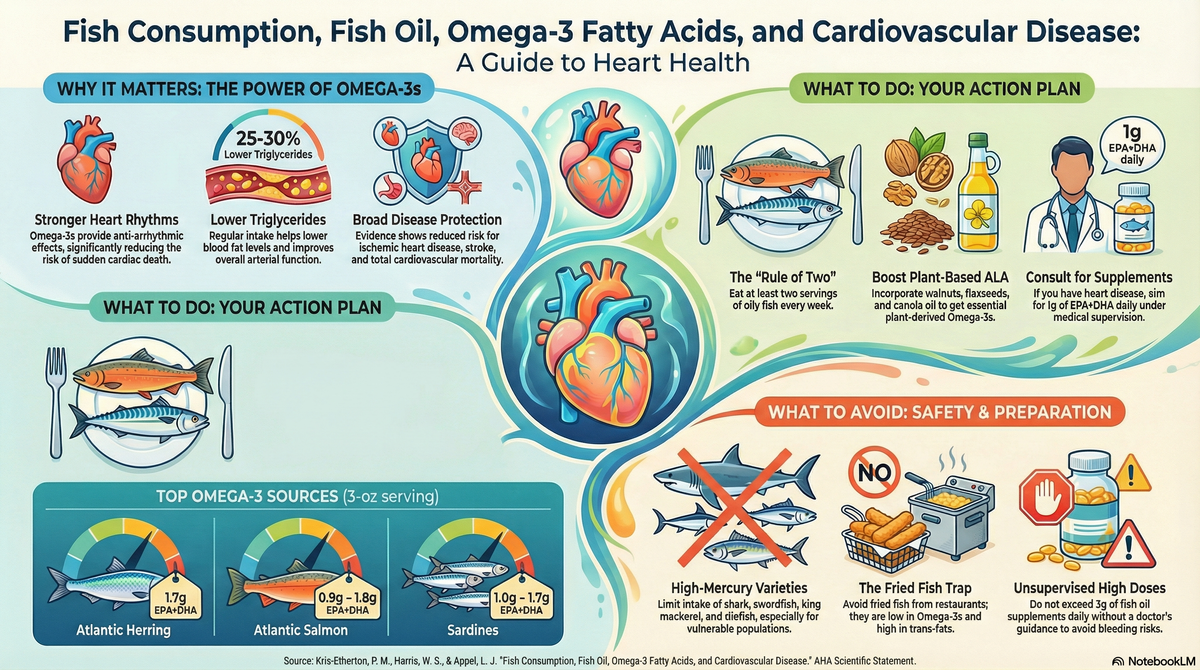
• What to do: Aim for at least two servings of fish per week, especially "fatty" varieties like salmon, mackerel, or herring, which are packed with protective oils,.
• What not to do: Don't wait for a heart diagnosis to start; the protective effects are powerful for healthy individuals as well.
• Habit to change: Replace one red meat dinner a week with a fish-based meal to immediately improve your "good fat" profile.
Beyond the Heart: Stroke Prevention and Blood Flow
Omega-3s don't just stop at the heart; they are essential for your entire vascular system. The research shows that regular fish intake can help reduce the risk of certain types of strokes, particularly in women. These marine fats work by making your blood a little less "sticky," preventing the tiny clots that can block blood flow to the brain,. They also help your arteries stay flexible and relaxed, which helps maintain a healthier blood pressure,.
Practical Guidance:
• What to do: Incorporate a variety of seafood to get a broad spectrum of nutrients that support blood vessel health.
• What not to do: Don't assume that all seafood is equal; fried fish from fast-food outlets is often low in omega-3s and high in less healthy fats.
• Decision to change: If you have high blood pressure, talk to your doctor about whether a higher dose of omega-3s could help as a natural "add-on" to your current health plan,.
The Plant Power of ALA: Seeds and Oils
If you aren't a fan of fish, there is still hope in the plant kingdom. Alpha-linolenic acid (ALA), found in flaxseeds, walnuts, and certain vegetable oils, also offers significant heart benefits,. While our bodies aren't as efficient at using plant-based omega-3s compared to fish oils, ALA still helps lower the risk of heart disease and supports overall cardiovascular health,. It's a vital tool for anyone looking to diversify their nutrient intake.
Practical Guidance:
• What to do: Use oils like canola, soybean, or flaxseed in your cooking and snack on walnuts to boost your ALA levels,.
• What not to do: Don't rely only on plants if you can eat fish, as the marine-based EPA and DHA are more readily used by your heart.
• Habit to change: Add a tablespoon of ground flaxseed to your morning oatmeal or yogurt to easily hit your daily plant-based omega-3 goals.
Navigating the Catch: Safety and Supplements
While fish is a superfood, we have to be smart about which fish we choose. Some large, predatory fish can contain higher levels of mercury, which can be harmful, especially for children and pregnant women. Additionally, while supplements are a great "insurance policy," very high doses (more than 3 grams a day) can sometimes lead to excessive bleeding or digestive upset,. It’s all about finding the "Goldilocks" zone of enough—but not too much.
Practical Guidance:
• What to do: Choose smaller fish like sardines, trout, or canned light tuna to keep mercury exposure low while keeping omega-3s high,.
• What not to do: Avoid shark, swordfish, and king mackerel if you are pregnant, nursing, or a young child, as these carry the highest mercury risks.
• Habit to change: If you take fish oil capsules, check the label for the actual amount of "EPA and DHA" to ensure you are getting about 1 gram per day if you have heart disease,.
Summary for Life
The research leads to a clear, life-saving rule: Eat two servings of fatty fish a week and use plant-based oils daily to build a "biological shield" that protects your heart from its most sudden and dangerous risks.
Reflective Question: If your heart's rhythm and your brain's health depend on the fats you eat today, is your current diet a safety net or a risk factor?
References
Penny M. Kris-Etherton, William S. Harris, Lawrence J. Appel, for the Nutrition Committee. "Fish Consumption, Fish Oil, Omega-3 Fatty Acids, and Cardiovascular Disease." Circulation, 2002;106:2747-2757.