Experience-First Financial Planning: Balance Today’s Joy with Tomorrow’s Security

Experience-First Financial Planning: Balance Today’s Joy with Tomorrow’s Security
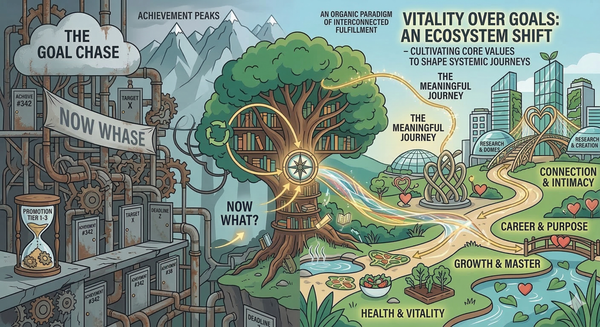
For decades, traditional financial planning has been preached with a singular, unyielding focus: save relentlessly for a distant future. This approach, while well-intentioned, often frames our present lives as a mere waiting room for a far-off "golden age." It encourages a mindset of scarcity, where every dollar spent on a concert ticket, a weekend getaway, or a nice dinner is a dollar stolen from your future self. But what if we reframed this narrative? What if financial planning could be a tool not just for future security, but for present-day joy and fulfillment? This is the core of experience-first financial planning, a philosophy designed to help you live a richer life today while still building a secure and prosperous tomorrow.
What is Experience-First Financial Planning?
Experience-first financial planning is a values-driven approach to managing your money. Instead of focusing solely on accumulation for a far-off retirement date, it prioritizes using your financial resources to enhance your life in the present moment. This doesn't mean abandoning long-term goals; rather, it's about creating a harmonious balance where your money serves both your current well-being and your future aspirations. It challenges the idea that you must sacrifice all of today's joy for tomorrow's security, proposing instead that a well-lived life is the ultimate return on investment.
Shifting from Scarcity to Abundance
Traditional budgeting often starts from a place of restriction. It tells you what you *can't* do. An experience-first approach flips the script. It begins by asking what you *want* to do and who you *want* to be. By aligning your spending with your core values, you shift from a mindset of scarcity to one of abundance and intentionality. Money is no longer a source of anxiety but a powerful tool to architect a life you love.
Core Principles: Values, Mindfulness, and Balance
This philosophy rests on three pillars. First, **Values**: you must identify what truly matters to you, beyond societal expectations. Second, **Mindfulness**: it requires a conscious and present approach to spending, ensuring it aligns with your values. Third, **Balance**: it is the dynamic equilibrium between enjoying your life now and responsibly planning for the future. True financial wellness is found at the intersection of these three principles.
Step 1: Define Your Values and Experiences
You cannot create a financial plan that prioritizes experiences if you don't know which experiences are most important to you. The first, and most crucial, step is a journey of self-discovery. It involves looking past material possessions and identifying the activities, connections, and moments that bring you genuine fulfillment. This isn't about chasing fleeting pleasures, but about investing in memories and personal growth.
Activity: The “Perfect Week” Visualization
Take a moment and imagine your perfect week, unconstrained by money or obligations. What would you do? Who would you spend your time with? What activities would fill your days? Write it down in detail. This exercise helps uncover your intrinsic motivations. Whether it's hiking in nature, learning a new skill, or enjoying long meals with loved ones, these are the experiences your financial plan should be built to support.
Translating Values into Financial Goals
Once you have a clearer picture of what you value, you can begin to translate those ideals into tangible financial goals. If travel is a priority, a "Travel Fund" becomes a non-negotiable part of your plan. If continuous learning is key, you might allocate funds for courses or workshops. These are not frivolous expenses; they are investments in your well-being and personal development, and they deserve a prominent place in your financial strategy.
Step 2: Create a Flexible Financial Framework
With your values defined, the next step is to build a practical framework that supports them. Forget rigid, line-item budgets that crumble at the first sign of spontaneity. The goal here is to create a resilient and adaptable financial system that automates your security while preserving your freedom. This structure should empower your spending decisions, not restrict them.
The "Joy Fund": Allocating Money for Spontaneity
A cornerstone of the experience-first model is the "Joy Fund" or "Spontaneity Fund." This is a dedicated pool of money set aside each month for guilt-free spending on whatever brings you joy. It could be for a last-minute trip, a fancy dinner, or a passion project. By explicitly planning for joyful spending, you eliminate the guilt and anxiety that often accompany discretionary purchases, turning them into a planned part of your financial life.
Automating Your Security: Paying Your Future Self First
Balancing today and tomorrow is made infinitely easier through automation. Before you even have a chance to spend your income, set up automatic transfers to your long-term investment and savings accounts. By "paying your future self first," you ensure your security is always being taken care of in the background. This removes the need for constant willpower and frees up the rest of your income for intentional, value-aligned spending.
Choosing the Right Tools and Accounts
Leverage modern financial tools to make this process seamless. Use high-yield savings accounts for short-term goals like travel funds. Employ low-cost index funds or ETFs for long-term retirement savings. Many banking apps now allow you to create "buckets" or "pots" for different savings goals, providing a clear visual of how you are allocating your resources toward the experiences you value most.
Step 3: Balancing Today’s Joy with Tomorrow’s Security
This is where the philosophy truly comes to life. The ultimate goal of experience-first financial planning is to find a sustainable equilibrium between living fully in the present and preparing prudently for the future. This is not a one-time decision but an ongoing practice of refinement and adjustment. It requires a commitment to mindful financial habits and a willingness to adapt as your life and priorities evolve.
Mindful Spending vs. Deprivation
It's crucial to distinguish between mindful spending and deprivation. Deprivation is about cutting back for the sake of cutting back, often leading to feelings of resentment and eventual burnout. Mindful spending, on the other hand, is about conscious choices. It’s about saying "no" to the things that don't matter to you, so you can say an enthusiastic "yes" to the things that do. It’s quality over quantity, fulfillment over fleeting gratification.
The 80/20 Rule of Financial Planning
Apply the Pareto Principle to your finances: focus on the 20% of financial decisions that will drive 80% of your results. For most people, this means automating investments, keeping housing and transportation costs reasonable, and avoiding high-interest debt. By getting these big items right, you create significant breathing room in your finances, allowing for more flexibility and less stress over smaller, day-to-day purchases.
Regularly Review and Adjust Your Plan
Your life is not static, and neither should your financial plan be. Set aside time quarterly or semi-annually to review your progress, reassess your values, and adjust your financial framework accordingly. Did a particular experience bring you as much joy as you anticipated? Are your long-term goals still aligned with your vision for the future? This regular check-in ensures your financial plan remains a living document that accurately reflects who you are and where you want to go.
Conclusion
Financial planning should be a source of empowerment, not a straitjacket of restrictions. By embracing an experience-first approach, you can transform your relationship with money from one of anxiety to one of possibility. It allows you to honor the truth that life is lived in the moments between start and finish, and that building wealth is not just about having a large number in an account, but about having a rich and fulfilling life story to tell. Start today by asking yourself a simple question: What is the one experience you want to plan for right now? Your journey to a more joyful and secure financial future begins with that answer.