
Eating for Longevity: Insights from "Promoting a healthy diet for the WHO Eastern Mediterranean Region: user-friendly guide"
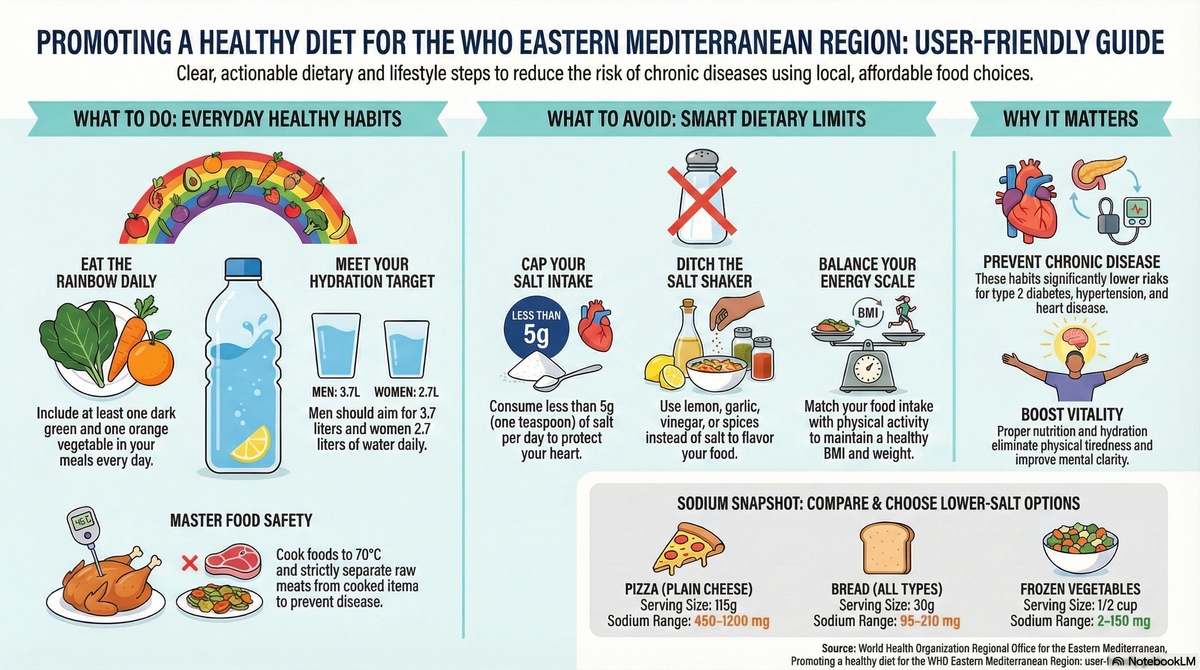
We often feel like healthy eating requires expensive superfoods or complicated meal plans. Yet, in many parts of the world, the problem isn't a lack of food, but a "nutrition transition"—a shift away from traditional, nutrient-rich diets toward processed foods loaded with sugar, salt, and unhealthy fats. This shift has led to alarming rates of obesity, heart disease, and diabetes. The good news? The solution often lies in getting back to basics. A comprehensive guide from the World Health Organization (WHO) offers a practical roadmap for reclaiming our health through simple, culturally relevant, and sustainable dietary habits.
Master Your Energy Balance
Weight management isn't just about vanity; it is a critical shield against chronic diseases like diabetes and cardiovascular issues. The research highlights a simple equation: you must balance the calories you eat with the energy you burn. In many regions, physical inactivity is becoming the norm, contributing significantly to premature death.
Practical Guidance:
• What to do: Adults should aim for at least 30 minutes of moderate activity, like brisk walking, on most days. Children need about 90 minutes of activity daily.
• What not to do: Don't assume you need a gym membership to be active. Incidental activity—like walking to work or household chores—counts toward your daily total.
• Habit to change: Reduce sedentary time spent watching television or playing computer games. If you are trying to lose weight, you may need to increase activity to 60–90 minutes a day.
Quality Over Quantity: Fats, Sugars, and Salt
Not all fats are created equal. The guide emphasizes replacing saturated animal fats (like butter and ghee) with unsaturated vegetable oils (like olive or canola oil). Similarly, the modern diet is often saturated with "hidden" sugars and salts found in processed foods and traditional sweets, which drive up blood pressure and empty calorie intake.
Practical Guidance:
• What to do: Use vegetable oils for cooking and consume fats that are rich in omega-3s, such as walnuts and flaxseed.
• What not to do: Avoid placing the salt shaker on the table. Most of the sodium we consume comes from added salt and processed foods.
• Decision to change: Treat sweets—whether western cakes or traditional desserts like baklava and knafeh—as occasional luxuries rather than daily staples.
The Power of Plants: Whole Grains and Legumes
Cereals should form the basis of most meals, but the type of cereal matters. Whole grains are superior because they are rich in fiber, which helps control weight and protect the colon. Furthermore, legumes (beans, lentils, chickpeas) are highlighted as unsung heroes; they are affordable, rich in iron and protein, and help lower cholesterol.
Practical Guidance:
• What to do: Choose whole wheat bread and brown rice over white varieties. Incorporate legume-based dishes like lentil stew or mujaddara into your weekly rotation.
• What not to do: Don't overcook vegetables, as this destroys their nutrients. Steaming or microwaving is better than boiling.
• Habit to change: Swap a meat-heavy meal for a legume-based dish at least a few times a week to boost fiber and reduce saturated fat intake.
Rethink Your Protein: Fish and Dairy
Protein is essential, but the source makes a difference. Fish is a powerhouse nutrient source, offering iodine and omega-3 fatty acids that are vital for brain development and heart health. However, many people consume far less than the recommended amount. When it comes to dairy, calcium is crucial for bone health, but full-fat versions can contribute to unnecessary weight gain.
Practical Guidance:
• What to do: Eat fish at least twice a week, preferably fatty types like salmon, tuna, or sardines.
• What not to do: Avoid frying fish, as this adds unhealthy fats. Bake or grill it instead.
• Habit to change: Switch to low-fat or skim milk and yogurt. You get the same calcium benefits without the extra saturated fat found in full-cream versions.
Hydration and Hygiene: The Invisible Essentials
We often forget that safe food and water are just as important as nutritious food. Foodborne illnesses can be severe, especially for vulnerable groups like the elderly and children. Additionally, proper hydration is essential for metabolism, yet many people replace water with sugary sodas.
Practical Guidance:
• What to do: Drink water as your primary beverage. It is necessary for digestion and temperature regulation.
• What not to do: Do not thaw frozen meat at room temperature; always thaw it in the refrigerator or microwave to prevent bacterial growth.
• Habit to change: Wash your hands thoroughly with soap before preparing food, and keep raw meats separate from ready-to-eat foods to avoid cross-contamination.
Summary for Life
The research distills healthy living down to a concrete rule: Build your meals around plants and whole grains, treat sugar and animal fats as rare luxuries, and move your body for 30 minutes every single day.
Reflective Question: Are you eating to fuel your body’s long-term health, or just to satisfy today's hunger with empty calories?
References
World Health Organization. Regional Office for the Eastern Mediterranean. "Promoting a healthy diet for the WHO Eastern Mediterranean Region: user-friendly guide." 2012.