
8 Common Food Additives Linked to High Blood Pressure: What a 112,000-Person Study Found
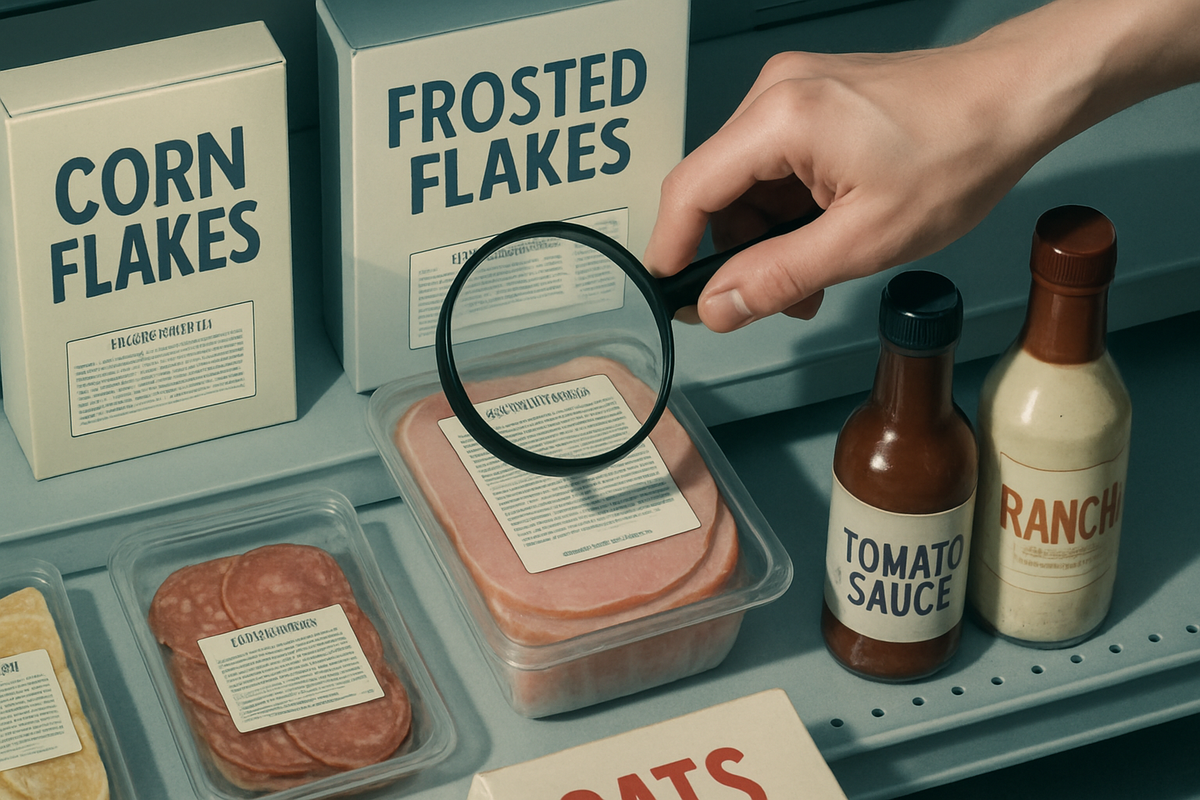
Pick up almost any packaged food at the grocery store and flip it over. Somewhere in that ingredient list, you will likely find names like potassium sorbate, sodium nitrite, or citric acid. For decades, regulators in the United States and Europe classified these preservatives as safe. Now, the largest nutritional study of its kind is raising pointed questions about that assumption — and what it means for your blood pressure and long-term heart health.
The Study That Is Changing the Conversation About Food Preservatives
Published in May 2026 in the European Heart Journal — one of the most respected peer-reviewed cardiology journals in the world — this research is notable not just for its conclusions but for its scale. Led by Dr. Mathilde Touvier, a research director at INSERM (the French National Institute for Health and Medical Research) and the Nutritional Epidemiology Research Team at Université Sorbonne Paris Nord, the study drew on the NutriNet-Santé cohort: a landmark long-term study of nutrition and health that has been tracking French adults since 2009.
The numbers are striking. 112,395 participants were included in the analysis, with an average follow-up of 7.9 years. Researchers identified 58 food preservatives used across participants' diets, then focused on the 17 that were consumed by at least 10% of the cohort — the most widespread and relevant to the everyday diet. The result: a significant and consistent association between higher consumption of multiple preservatives and increased rates of high blood pressure (hypertension).
This is not a small, preliminary study. At 112,000 participants followed for nearly a decade, it represents some of the strongest observational evidence yet on this topic.
Which Food Preservatives Are Most Linked to High Blood Pressure?
The researchers identified eight specific preservatives with statistically significant associations with higher hypertension incidence among the highest-consuming participants, compared to the lowest:
- Potassium sorbate — +39% higher hypertension risk (the strongest association in the study)
- Citric acid — +25% higher hypertension risk
- Total non-antioxidant preservatives (combined) — +29% higher hypertension risk
- Potassium metabisulfite — +16% higher hypertension risk
- Sodium nitrite — +16% higher hypertension risk
- Ascorbic acid (vitamin C / E300) — +14% higher hypertension risk
- Sodium erythorbate — +14% higher hypertension risk
- Sodium ascorbate / total sulphites — +11–13% higher hypertension risk
Looking at the broader picture: people who ate the highest amounts of total preservatives had a 24% higher incidence of hypertension compared to those who ate the least. Those consuming the most antioxidant preservatives specifically had a 22% higher risk, while the highest consumers of non-antioxidant preservatives faced a 29% higher risk.
The Link to Heart Disease — Beyond Just Blood Pressure
Hypertension is itself a major cardiovascular risk factor, but the study also examined cardiovascular disease directly — including heart attacks, strokes, and angina. Here, the associations were more selective but still notable.
Ascorbic acid (E300) was the standout finding: it was the only preservative to show a statistically independent association with cardiovascular disease incidence, linked to a 15% higher CVD risk in highest-consuming participants. Non-antioxidant preservatives as a group were associated with a 16% higher cardiovascular disease risk for the highest-intake group compared to the lowest.
These findings matter because cardiovascular disease remains the leading cause of death globally. Any modifiable dietary factor that contributes meaningfully to risk is worth understanding — even when the evidence is observational.
Why Are These Preservatives in Our Food in the First Place?
What Food Preservatives Actually Do
Food preservatives serve a legitimate function: they extend shelf life, prevent the growth of harmful bacteria, molds, and yeasts, and reduce food waste. Without them, many processed and packaged foods would spoil far faster — raising their cost and reducing availability. This is not a trivial consideration, particularly in food systems that depend on long supply chains and centralized manufacturing.
How Widespread They Are
The scale of preservative use in the modern food supply is significant. As of 2019, approximately one-third of products in the U.S. market contained at least one food preservative. More broadly, around 57% of the U.S. food supply is classified as ultra-processed — and ultra-processed foods are the primary delivery vehicle for food additives including preservatives. In other words, for most people eating a typical Western diet, regular exposure to these compounds is essentially unavoidable without deliberate effort.
The Regulatory Backstory
In the United States, many common food preservatives hold GRAS status — Generally Recognized as Safe — a classification established by the FDA. In Europe, preservatives are regulated by the European Food Safety Authority (EFSA) and identified by E-numbers (citric acid = E330, sodium nitrite = E250, etc.). These classifications were largely established based on safety data available at the time of original approval, some of which dates back decades.
The authors of the European Heart Journal study explicitly call for a re-evaluation of preservative safety classifications by both the FDA and EFSA, citing the study's findings as evidence that current regulatory frameworks may not fully account for long-term cardiovascular effects at real-world exposure levels.
Are 'Natural' Preservatives Any Better?
One of the most surprising aspects of this study is what it reveals about so-called 'natural' preservatives — compounds derived from natural sources rather than synthesized industrially. Ascorbic acid (vitamin C, found naturally in fruits) and sodium erythorbate (a derivative of vitamin C) are both common examples, widely used in cured meats, beverages, and processed foods. Both are included in the eight preservatives associated with higher hypertension risk.
This challenges a common consumer assumption: that 'natural' on a food label equates to 'safer.' When used as preservatives at industrial doses in processed food matrices, these compounds appear to behave differently than when consumed naturally through whole foods. The study does not prove causation — but it does suggest that the 'natural' label is not a reliable health guarantee when it comes to preservatives.
Important Limitations of This Study
Strong evidence does not mean perfect evidence, and the authors are transparent about the study's constraints. This is an observational study — it can identify associations between preservative consumption and hypertension, but it cannot prove that preservatives directly cause high blood pressure. Other factors (overall diet quality, lifestyle, genetics, socioeconomic status) could partially explain the observed relationships, even after statistical adjustment.
The cohort is also French, which limits direct applicability to other populations with different dietary patterns and food supply compositions. Expert commentary gathered by the Science Media Centre was cautious: while acknowledging the significance of the findings, independent researchers noted the importance of further confirmatory studies before drawing firm causal conclusions.
That said, the study's scale, duration, and rigor make it difficult to dismiss. And importantly: the direction of the findings is consistent with a growing body of evidence linking ultra-processed food consumption to cardiovascular and metabolic harm.
What the Experts Recommend You Do
Dr. Federica Amati of Imperial College London, commenting on the findings, offered practical guidance: reduce your intake of ultra-processed foods, prioritize whole and minimally processed foods, and make targeted substitutions where you can — particularly replacing processed meats (high in nitrites and sulphites) and sugary sodas (high in citric acid and ascorbates) with unprocessed alternatives.
You do not need to eliminate every preservative from your diet tomorrow. But here are six practical steps to meaningfully reduce your exposure:
- Read ingredient labels. Look for the preservatives identified in this study: potassium sorbate, sodium nitrite, citric acid, ascorbic acid (in high-dose additive form), potassium metabisulfite, sodium erythorbate.
- Reduce processed meat consumption. Deli meats, hot dogs, bacon, and sausages are among the highest sources of sodium nitrite and sulphites.
- Choose whole or minimally processed alternatives. Fresh vegetables, legumes, whole grains, and unprocessed proteins contain no added preservatives.
- Cook more at home. Home-prepared meals allow you to control exactly what goes into your food.
- Opt for refrigerated over shelf-stable versions. Refrigeration reduces the need for chemical preservatives — many fresh or frozen products contain fewer additives than their shelf-stable equivalents.
- Be skeptical of 'natural' labels. 'Natural preservatives' are not necessarily safer, as this study demonstrates. Focus on ingredient lists rather than marketing terms.
The Bigger Picture — Why Ultra-Processed Foods Are Under Mounting Scrutiny
This study does not exist in isolation. The NutriNet-Santé cohort has previously produced landmark findings linking ultra-processed food consumption to higher rates of type 2 diabetes, certain cancers, depression, and all-cause mortality. Each study adds a piece to a growing mosaic: the modern ultra-processed food diet carries health risks that extend well beyond what was understood when current food safety standards were established.
The cardiovascular implications are particularly significant. Hypertension affects nearly half of American adults and is a leading driver of heart attack, stroke, kidney disease, and premature death. If a modifiable dietary factor — specifically the preservatives added to food for commercial purposes — is contributing meaningfully to hypertension rates at a population level, the public health implications are substantial.
A whole-food dietary pattern — built around vegetables, fruits, legumes, whole grains, and unprocessed proteins — naturally avoids the majority of preservatives identified in this study while also delivering the fiber, micronutrients, and antioxidants associated with cardiovascular protection. This is not a new recommendation. But this study gives it sharper, more specific scientific grounding.
Conclusion
A peer-reviewed study of over 112,000 people, followed for nearly a decade, has found that eight common food preservatives are associated with meaningful increases in high blood pressure risk. The associations are not marginal — potassium sorbate alone was linked to a 39% higher hypertension rate in the highest-consuming group. And these preservatives are in products most people eat every day.
The study is observational and cannot prove causation. But the direction of the evidence is clear enough that both the researchers and independent experts agree: a re-evaluation of preservative safety standards is warranted, and a personal shift toward fewer ultra-processed foods is a prudent health decision right now. You do not need to be perfect. You just need to be more informed.
Sources
Medical News Today — Hypertension: 8 common food additives linked to higher risk